Доля тех, кто впоследствии жалеет о каждом выборе. Столбцы и полный реестр показаны ниже.
Здоровье
Последнее обновление 2026-07-14
Качество доказательств 4.25/5
Оценка по восьми измерениям согласно
рубрике качества
. Каждое измерение оценивается от 1 до 5.
D1 Проверка источников
5/5
D2 Авторитетность и независимость источника
4/5
D3 Точность уровня сожаления
3/5
D4 Сопоставимость источников
5/5
D5 Шаблон Гиловича
5/5
D6 Качество текста
4/5
D7 Полнота оговорок
4/5
D8 Качество выборки
4/5
Среднее4.25/5
Косвенные данные — для этого решения не существует прямого исследования сожалений. Показатели получены из оценок удовлетворённости и данных о барьерах доступа, а не из вопросов, непосредственно касавшихся сожалений. Смотрите оговорки ниже.
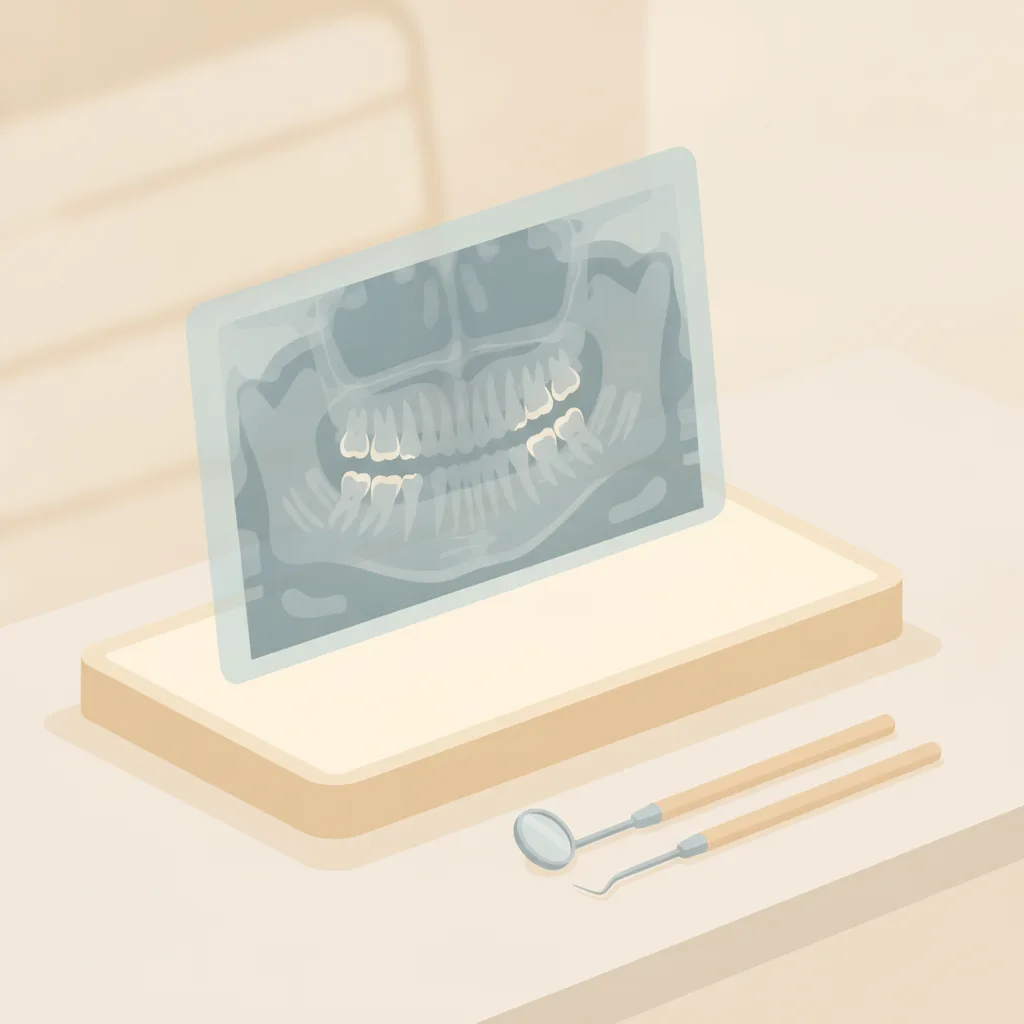
~36% профилактически удалённых зубов мудрости не потребовали бы удаления в течение 18 лет — операция (с её ~4% частотой осложнений) на зубе, который так и остался беспроблемным (прокси ненужной операции)
Молодые взрослые с бессимптомными третьими молярами; дополнение к 18-летней кумулятивной частоте удаления
на горизонте 18 лет
Сожаление о бездействии
Оставить бессимптомные зубы мудрости и наблюдать
64%
~64% сохранённых бессимптомных зубов мудрости всё равно удаляются в течение 18 лет — наблюдение обычно откладывает операцию, а не избавляет от неё (прокси отложенного удаления)
Молодые взрослые, сохраняющие бессимптомные третьи моляры; показатель привязан к объединённой по семи исследованиям кумулятивной оценке Bouloux 2015 (каждое исследование ≥50 участников), а не к одной когорте
кумулятивно за 18 лет наблюдения
% сожалеют об этом выборе
Профилактическое удаление бессимптомных зубов мудростиОставить бессимптомные зубы мудрости и наблюдать
36%64%
inaction dominates — Бездействие преобладает — большинство сожалеет, что не действовали.
Похожие решения
Семантически близкие решения — та же область, другие компромиссы.
Keeping asymptomatic wisdom teeth and watching is the choice that most often fails to close the matter: across seven longitudinal studies, about 64% of retained symptom-free third molars are extracted within 18 years, at a steady rate of roughly 3% per year (Bouloux et al., 2015). A same-era 18-year cohort found 73% of the teeth that were unerupted at baseline came out before follow-up ended (Ventä et al., 2004), though that study’s follow-up window overlaps the period Bouloux pooled, so the two are better read as consistent than as independent. The reasons are ordinary: caries, gum disease, later inflammation, and part of that 64% is care that was simply timed to need rather than regretted. The practical upshot is that watching usually defers the operation rather than avoiding it, and the extraction then falls later in life rather than in early adulthood.
Removing the tooth up front does not escape regret either; it relocates it. Because prophylactic removal is itself an extraction, its regret falls on the mirror-image group: the roughly 36% of removed teeth that would have stayed trouble-free over the same 18 years, operated on for nothing. Every one of those extractions carries about a 4.2% chance of a complication, overwhelmingly dry socket, with infection and jaw-joint symptoms far behind (Chen et al., 2021). The Cochrane review found only two studies and 493 people bearing on whether disease-free impacted wisdom teeth should come out at all, and rated the evidence very low certainty (Ghaeminia et al., 2020). NICE went further in 2000, concluding that prophylactic removal of pathology-free impacted third molars should be discontinued in the NHS — a position US practice frequently sets aside.
The two figures are close on purpose, because the decision is close. Both come from the same fact: about two-thirds of these teeth eventually need removal and about a third do not. Watch, and you carry a 64% chance of the surgery you were trying to avoid; remove, and you carry a 36% chance the surgery was needless. Severity runs opposite to frequency — the deferred operation is common but often appropriate, while the unnecessary one is rarer but incurred up front against a benefit the evidence cannot show. What survives the symmetry is a modest lean, consistent with Gilovich and Medvec’s temporal asymmetry: over a long horizon, more people end up back in the chair than are spared it. Whether that reads as regret or as a reasonable bet that mostly postponed a minor operation is the judgement the evidence declines to settle.
Источники: действие
Реестр утверждений
Каждое число ниже — это то, что сообщил источник, с дословной цитатой, на которую мы опирались, и тем, как мы пришли к нашей цифре. Нажмите на ссылку, чтобы проверить самостоятельно.
[1]Journal of Oral and Maxillofacial Surgery (Bouloux et al. 2015) — What is the risk of future extraction of asymptomatic third molars? A systematic review
Рецензируемая публикация
Seven longitudinal studies, follow-up 1 to 18 years: cumulative extraction incidence rose from 5% at 1 year to 64% at 18 years — leaving ~36% of retained asymptomatic third molars still not extracted at 18 years
Выдержка
“"The mean incidence rate for M3 extraction of previously asymptomatic M3s was 3.0% annually (range 1 to 9%). The cumulative incidence rate for M3 removal ranged from 5% at 1 year to 64% at 18 years. ... The cumulative risk of M3 extraction for young adults with asymptomatic M3s is sufficiently high to warrant its consideration when reviewing the risks and benefits of M3 retention as a management strategy."
”
Данные источника:
2015-05-01
Дата обращения
2026-07-14
Расчёт
The action-side proxy is the mirror image of the inaction figure. If 64% of retained asymptomatic third molars are extracted by 18 years, then roughly 36% are not — those teeth would have stayed trouble-free over that horizon, so removing them prophylactically was, in hindsight, an operation for nothing. We anchor the action proxy at 0.36, the complement of Bouloux's 64% cumulative extraction rate. This is an "unnecessary-surgery" proxy, not a regret survey, and 0.36 is an upper bound: over a full lifetime the never-needed fraction shrinks, because some of that 36% would eventually have required extraction after 18 years. Using the same dataset for both sides keeps the two proxies on one axis.
[2]National Institute for Health and Care Excellence (NICE), UK — Guidance on the extraction of wisdom teeth (Technology appraisal guidance TA1)
Правительственный отчёт
National guidance: the practice of prophylactic removal of pathology-free impacted third molars should be discontinued in the NHS; surgery limited to teeth with evidence of pathology
Выдержка
“"The practice of prophylactic removal of pathology-free impacted third molars should be discontinued in the NHS. ... Surgical removal of impacted third molars should be limited to patients with evidence of pathology. ... A first episode of pericoronitis, unless particularly severe, should not be considered an indication for surgery."
”
Данные источника:
2000-03-27
Дата обращения
2026-07-14
Расчёт
The policy basis for treating prophylactic removal as regret-prone. A national appraisal body concluded that routinely removing symptom-free impacted third molars should stop, because the benefit is unproven while every extraction carries surgical risk. US practice frequently diverges, which is why this decision is genuinely contested. Establishes the frame; not a rate.
[3]PLOS ONE (Chen, Chi & Lee 2021) — Revisit incidence of complications after impacted mandibular third molar extraction: A nationwide population-based cohort study↗ 1 other entry
Рецензируемая публикация
“"The overall cumulative complication rate for iLM3 extraction was 4.2%. ... The incidence of DS was the highest (3.66%) ... the incidence of SSI was very low (0.17%) ... about 4 out of 1000 patients had temporomandibular joint symptoms and sought treatment (0.41%)."
”
Данные источника:
2021-02-22
Дата обращения
2026-07-14
Расчёт
Quantifies what an unnecessary extraction costs. Every prophylactic removal — including the ~36% that were never needed — runs about a 4.2% chance of a complication, dry socket being the commonest and generally self-limiting. Permanent nerve injury is rarer, a few per thousand. Note the population: this cohort is all impacted lower-molar extractions, mixed symptomatic and asymptomatic, not solely prophylactic cases, so the 4.2% is a general operative-risk figure, not a rate specific to the unnecessary subset. Supplies the severity of the action harm, not its frequency.
[4]Cochrane Database of Systematic Reviews (Ghaeminia et al. 2020, CD003879) — Surgical removal versus retention for the management of asymptomatic disease-free impacted wisdom teeth
Рецензируемая публикация
Two included studies (one RCT with 77 adolescent participants analysed; one prospective cohort of 416 healthy males aged 24–84): only low- to very-low-certainty evidence; insufficient to determine whether asymptomatic disease-free impacted wisdom teeth should be removed or retained
Выдержка
“"This review update includes the same two studies that were identified in our previous version of the review ... We found only low- to very-low-certainty evidence of the effects of removal compared with retention ... Insufficient evidence is available to determine whether asymptomatic disease-free impacted wisdom teeth should be removed or retained."
”
Данные источника:
2020-05-04
Дата обращения
2026-07-14
Расчёт
The evidentiary weight behind the action-side regret framing. The benefit a prophylactic extraction is meant to buy — preventing future disease — cannot be demonstrated: the whole randomised-plus-cohort evidence base is two studies and 493 participants, rated low to very low certainty. This is why removing a symptom-free tooth is treated as regret-prone rather than clearly protective. Establishes the strength of the evidence, not a rate.
Источники: бездействие
Реестр утверждений
Каждое число ниже — это то, что сообщил источник, с дословной цитатой, на которую мы опирались, и тем, как мы пришли к нашей цифре. Нажмите на ссылку, чтобы проверить самостоятельно.
[1]Journal of Oral and Maxillofacial Surgery (Bouloux et al. 2015) — What is the risk of future extraction of asymptomatic third molars? A systematic review
Рецензируемая публикация
Seven longitudinal studies, follow-up 1 to 18 years: mean extraction incidence 3.0% per year (range 1–9%); cumulative extraction incidence rose from 5% at 1 year to 64% at 18 years
Выдержка
“"The mean incidence rate for M3 extraction of previously asymptomatic M3s was 3.0% annually (range 1 to 9%). The cumulative incidence rate for M3 removal ranged from 5% at 1 year to 64% at 18 years. ... The cumulative risk of M3 extraction for young adults with asymptomatic M3s is sufficiently high to warrant its consideration when reviewing the risks and benefits of M3 retention as a management strategy."
”
Данные источника:
2015-05-01
Дата обращения
2026-07-14
Расчёт
The inaction-side proxy. Retained asymptomatic third molars are extracted at about 3% per year, so the cumulative share removed climbs to 64% by 18 years. We anchor the inaction proxy at 0.64, taken directly from this figure. The regret construct: watching does not usually spare the surgery, it defers it, and the extraction then happens later in life. (Conventional oral-surgery teaching holds that later extraction in an older patient is harder, though Chen 2021 — cited below — found no age association with complications in its own cohort, so we do not lean on that claim.) This is a "needed extraction anyway" rate, not a survey asking whether people regret having waited, and part of that 64% is appropriately-timed care rather than a mistake.
[2]Journal of Oral and Maxillofacial Surgery (Ventä, Ylipaavalniemi & Turtola 2004) — Clinical outcome of third molars in adults followed during 18 years
Рецензируемая публикация
118 subjects followed from mean age 20 to 39: 73% of initially unerupted third molars and 64% of initially partially erupted third molars were removed during the 18-year follow-up (maxilla and mandible combined)
Выдержка
“"Most of the initially unerupted third molars were removed during the follow-up period (73%, maxilla and mandible together). ... More than half of the initially partially erupted third molars were removed during the follow-up period (64%, maxilla and mandible together)."
”
Данные источника:
2004-02-01
Дата обращения
2026-07-14
Расчёт
A same-order-of-magnitude 18-year cohort: 118 adults tracked from a mean age of 20 to 39, most third molars unerupted at baseline ending up removed (roughly two-thirds to three-quarters over ~18 years). Treat this as consistency, not clean independent replication: Bouloux 2015 is a systematic review whose only 18-year datapoint plausibly draws on this same cohort, so we cannot confirm this is a wholly separate measurement of the 64%. Small sample; supports the direction of the inaction proxy, not an independent rate.
Оговорки
Оба числа — прокси, выведенные из одного и того же факта: примерно 64% сохранённых бессимптомных третьих моляров удаляются в течение 18 лет (Bouloux 2015; согласуется с когортой Ventä 2004, чьё 18-летнее окно может пересекаться с исследованиями, которые объединял Bouloux), — поэтому они лежат на одной оси, но ни одно из них не является опросом о сожалении. 64% на стороне бездействия — это частота «в итоге операция всё же понадобилась»; 36% на стороне действия — её дополнение, доля профилактически удалённых зубов, которые остались бы спокойными на том же горизонте, то есть операция впустую. Сравнение близко намеренно, потому что близок сам выбор: профилактическое удаление — это гарантированные 100% экстракции, поэтому наблюдение никогда не проигрывает по оси «избежать операции» — оно даёт ~36% шанс никогда не нуждаться в операции и ~64% шанс операции, которая всё равно случилась бы, только позже. Именно поэтому дельта умеренная, а не однобокая, и ни одна из сторон не выигрывает чисто. Тяжесть движется против частоты: вред действия наступает сразу, на более молодой и проще оперируемой челюсти, ради пользы, которую кокрейновский обзор (Ghaeminia 2020 — всего 493 участника в двух исследованиях, очень низкая определённость) продемонстрировать не может; вред бездействия чаще, но нередко это просто отсрочка, и часть этих 64% — своевременная помощь после того, как зуб действительно заболел, а не ошибка, о которой сожалеют. Цифра действия 36% — верхняя граница по двум причинам. Во-первых, за целую жизнь удаления требует больше сохранённых зубов, и доля «никогда не понадобилось» сжимается. Во-вторых, она заимствует частоту когорты сохранения, но зубы, реально выбираемые для профилактического удаления, — не случайная выборка: клиницисты склонны удалять анатомически более рискованные (глубокая ретенция, мезиоангулярный наклон, тесный контакт со вторым моляром), которые вероятнее создадут проблемы позже. Так что доля «никогда не понадобилось» среди зубов, которые реально удаляют, вероятно, ниже 36%, и это смещение отбора в лечение работает против стороны действия. Показатель осложнений Chen 4,2% относится ко всем удалениям ретинированных нижних моляров, смешанным симптомным и бессимптомным, а не только к профилактическим случаям. Это по-настоящему спорное решение: NICE в 2000 году заключил, что профилактическое удаление свободных от патологии ретинированных третьих моляров в NHS следует прекратить, тогда как в США их часто удаляют. Популяции — тайваньская, финская и объединённая международная, а не американская. Направление преобладания бездействия согласуется с рамкой временной асимметрии Gilovich и Medvec, но здесь оно узко и зависит от того, как взвешивать частую отсрочку против более редкой ненужной операции, совершённой сразу.