
Перейти к содержанию
Likelier

Сожаление о действии против бездействия

Отдать ребёнка в частную школу или в государственную

Если вы действуете

Частная школа

13%

Если вы бездействуете

Государственная школа

41%

Доля тех, кто впоследствии жалеет о каждом выборе. Столбцы и полный реестр показаны ниже.


Семья

Последнее обновление 2026-04-26

Качество доказательств 4.38/5

Оценка по восьми измерениям согласно рубрике качества . Каждое измерение оценивается от 1 до 5.

D1 Проверка источников
5/5
D2 Авторитетность и независимость источника
4/5
D3 Точность уровня сожаления
2/5
D4 Сопоставимость источников
5/5
D5 Шаблон Гиловича
5/5
D6 Качество текста
5/5
D7 Полнота оговорок
5/5
D8 Качество выборки
4/5
Среднее 4.38/5
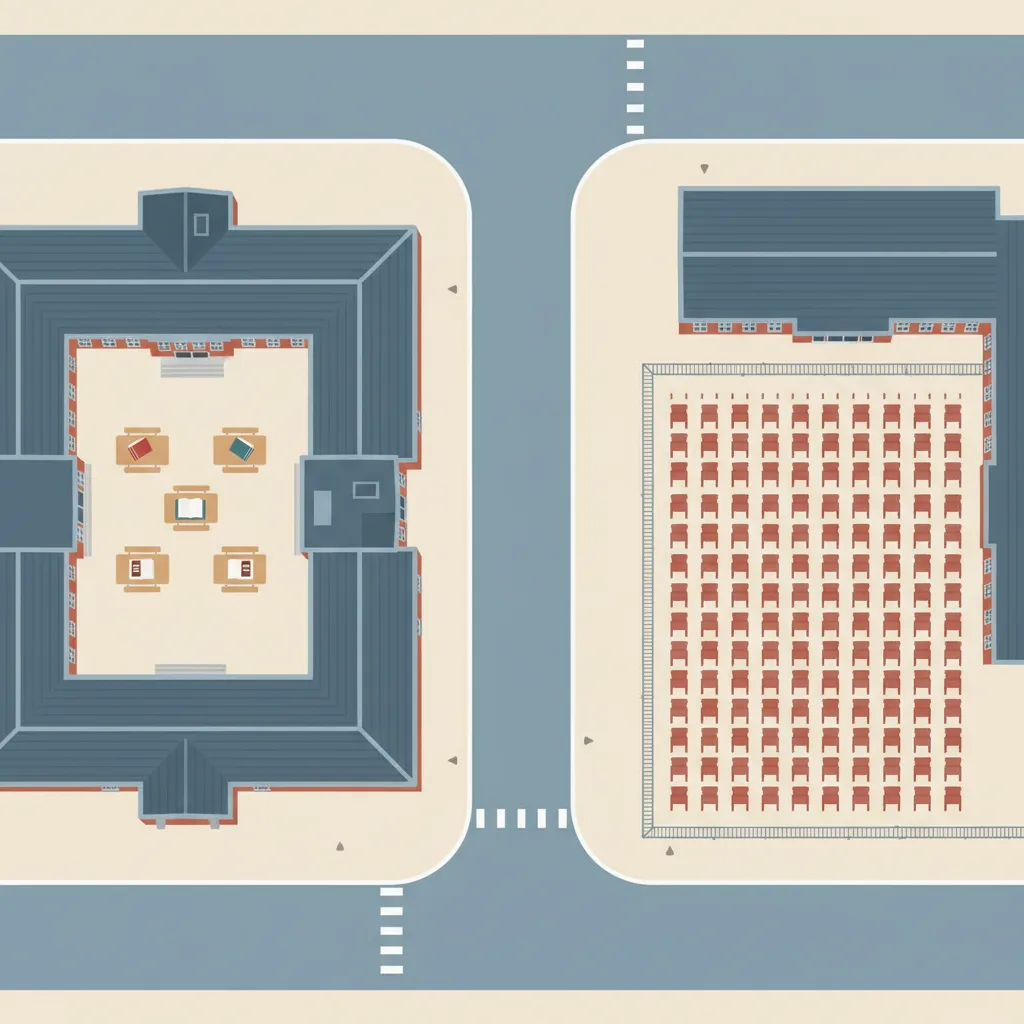
Two school buildings side by side, one with a small class and one with a large crowd, seen from above.

Сожаление о действии

Частная школа

13%

13% родителей учеников частных школ не выбрали бы ту же школу снова (приближение — вероятность повторного выбора)

Американские родители учеников K-12, общенационально репрезентативно

ретроспективно, без фиксированного периода

Сожаление о бездействии

Государственная школа

41%

41% родителей учеников государственных школ не выбрали бы ту же школу снова (приближение — вероятность повторного выбора)

Американские родители учеников K-12, общенационально репрезентативно

ретроспективно, без фиксированного периода

% сожалеют об этом выборе

inaction dominates — Бездействие преобладает — большинство сожалеет, что не действовали.

Похожие решения

Семантически близкие решения — та же область, другие компромиссы.

family

Дом или работа (родитель)

% сожалеют об этом выборе

Преобладает действие

Сожаление о действии в 1.3× выше

family

Кружки или свободная игра

% сожалеют об этом выборе

Преобладает действие

Сожаление о действии в 2.6× выше

family

Размер семьи

% сожалеют об этом выборе

Преобладает бездействие

Сожаление о бездействии в 2.6× выше

family

Спасать против дать разобраться

% сожалеют об этом выборе

Преобладает действие

Сожаление о действии в 1.2× выше

family

Семейные обеды

% сожалеют об этом выборе

Преобладает бездействие

Сожаление о бездействии в 6.9× выше

family

Позволить бросить против доделать

% сожалеют об этом выборе

Преобладает бездействие

Сожаление о бездействии в 2.3× выше

familyПрямые

Доступ ребёнка к социальным сетям

% сожалеют об этом выборе

Преобладает действие

Сожаление о действии в 5.4× выше

family

Свобода vs гиперопека

% сожалеют об этом выборе

Преобладает действие

Сожаление о действии в 2.3× выше

41% of traditional public-school parents say they would not choose the same school again, according to a nationally representative 50CAN/Edge Research survey. Among private-school parents the figure is only 13% — more than three times lower. Pew Research corroborates the gap from a different angle: 79% of private-school families report high satisfaction with educational quality, compared with 55% of public-school families. Neither instrument measures regret directly, but the consistency across surveys and constructs suggests the asymmetry is real, not an artifact of question wording.

The demand-side data makes the inaction story sharper. EdChoice’s 2024 Schooling in America survey found that 36% of parents would prefer private school, yet only 9% actually enroll — a 4:1 gap driven almost entirely by tuition costs and geographic access. That gap complicates the Gilovich framing: most public-school “inaction” is involuntary, constrained by money rather than by indecision. A parent who cannot afford private school and later wishes they could have is experiencing frustrated aspiration, not the freely-chosen inaction that typically intensifies over time in the regret literature.

Selection bias is the largest confounder. Private-school families are wealthier, more likely to have two parents in the household, and more educationally engaged on every metric NCES tracks. Their higher satisfaction may reflect resources and involvement rather than anything intrinsic to private schooling. Randomized voucher studies (e.g., Milwaukee, DC Opportunity Scholarship) show modest academic gains and higher parental satisfaction, but the effect sizes are far smaller than the raw satisfaction gap implies. The directional finding — parents who chose private school regret it less — holds up; the magnitude should be read with the income gradient firmly in mind.

Источники: действие

Реестр утверждений

Каждое число ниже — это то, что сообщил источник, с дословной цитатой, на которую мы опирались, и тем, как мы пришли к нашей цифре. Нажмите на ссылку, чтобы проверить самостоятельно.

2/2 источников независимо дословно сверены с указанным источником

  1. [1] 50CAN / Edge Research — The State of Educational Opportunity in America Проверено
    The State of Educational Opportunity in America
    Статистика
    87% of private-school parents would choose the same school again, vs 59% of traditional public-school parents
    Выдержка
    “"87 percent of private school parents and 82 percent of parochial/religious school parents would make the same choice, while the number drops to 59 percent for traditional public school parents." ”
    Данные источника:
    2024-10-15
    Дата обращения
    2026-04-26
    Проверка
    Выдержка независимо повторно загружена и подтверждена слово в слово по указанному источнику в ходе нашей проверки достоверности.
    Расчёт
    50CAN / Edge Research national survey. We derive action-regret as 1 − 0.87 = 0.13 (13% would not choose the same school). This is a proxy for regret — "would not choose again" conflates dissatisfaction, changed circumstances, and active regret.
  2. [2] Pew Research Center — Parents differ sharply by party over what their K-12 children should learn in school Проверено
    Parents differ sharply by party over what their K-12 children should learn in school
    Статистика
    79% of private-school parents report high satisfaction with the quality of their child's education, vs 55% of public-school parents
    Выдержка
    “"About eight-in-ten parents answering about a child in private school (79%) express high levels of satisfaction with the quality of education their child is receiving, compared with a narrower majority (55%) of those answering about a child who is in public school." ”
    Данные источника:
    2022-10-26
    Дата обращения
    2026-04-26
    Проверка
    Выдержка независимо повторно загружена и подтверждена слово в слово по указанному источнику в ходе нашей проверки достоверности.
    Расчёт
    Pew Research Center survey of U.S. parents of K-12 children (fielded Oct 2022). The 79% vs 55% satisfaction gap corroborates the 50CAN "would choose again" differential but measures a different construct (satisfaction vs hypothetical re-choice).

Источники: бездействие

Реестр утверждений

Каждое число ниже — это то, что сообщил источник, с дословной цитатой, на которую мы опирались, и тем, как мы пришли к нашей цифре. Нажмите на ссылку, чтобы проверить самостоятельно.

1/2 источников независимо дословно сверены с указанным источником

  1. [1] 50CAN / Edge Research — The State of Educational Opportunity in America
    The State of Educational Opportunity in America
    Статистика
    Only 59% of traditional public-school parents would choose the same school again
    Выдержка
    “"87 percent of private school parents would make the same choice, while the number drops to 59 percent for traditional public school parents." ”
    Данные источника:
    2024-10-15
    Дата обращения
    2026-04-26
    Расчёт
    Inaction-regret derived as 1 − 0.59 = 0.41. The 41% includes parents who would switch to private, charter, magnet, or homeschool — not exclusively to private school. This overstates the "wish I'd gone private" sentiment specifically.
  2. [2] EdChoice — Beyond Enrollment: What Parents Really Want from Their Children's Education Проверено
    Beyond Enrollment: What Parents Really Want from Their Children's Education
    Статистика
    36% of parents would most like to enroll in private school, but only 9% actually do
    Выдержка
    “"The most popular schooling option was private schooling, with over a third of parents (36%) stating they would most like to enroll their children that way. This is four times the rate of students enrolled in private schools (9%)." ”
    Данные источника:
    2024-08-01
    Дата обращения
    2026-04-26
    Проверка
    Выдержка независимо повторно загружена и подтверждена слово в слово по указанному источнику в ходе нашей проверки достоверности.
    Расчёт
    EdChoice 2024 Schooling in America Survey, n = 2,319 parents. The 4:1 ratio between stated preference and actual enrollment signals a large pool of constrained inaction — parents who want private school but face cost, location, or admissions barriers. This contextualizes but does not directly measure regret.

Оговорки

Both sides draw on the same 50CAN/Edge Research survey, so the regret-rate comparison is internally consistent, but the question "would you choose the same school again" conflates regret with changed circumstances — a parent who moved neighborhoods may answer "no" without regretting the original decision. The Pew Research satisfaction data (79% vs 55%) uses a different instrument and year (2022 vs 2024), so the two datasets corroborate the direction but not the exact magnitude. Selection bias is the elephant: families who pay private-school tuition are wealthier and more educationally engaged; their higher satisfaction may reflect income and involvement, not school type alone. The EdChoice 36%-want-vs-9%-enrolled gap suggests cost is the primary barrier, meaning inaction here is often involuntary — a departure from Gilovich's framework, which assumes the agent could have acted.

Исходные данные: /api/decisions.json

Недавно просмотрено на этом устройстве