






Перейти к содержанию
Likelier

Сожаление о действии против бездействия

Жениться/выйти замуж за первого серьёзного партнёра vs. встречаться с большим количеством людей до принятия обязательств

Если вы действуете

Связать жизнь с первым серьёзным партнёром

30%

Если вы бездействуете

Встречаться со многими, прежде чем решиться

16%

Доля тех, кто впоследствии жалеет о каждом выборе. Столбцы и полный реестр показаны ниже.


Семья

Последнее обновление 2026-05-13

Качество доказательств 3.63/5

Оценка по восьми измерениям согласно рубрике качества . Каждое измерение оценивается от 1 до 5.

D1 Проверка источников
3/5
D2 Авторитетность и независимость источника
4/5
D3 Точность уровня сожаления
2/5
D4 Сопоставимость источников
2/5
D5 Шаблон Гиловича
5/5
D6 Качество текста
4/5
D7 Полнота оговорок
5/5
D8 Качество выборки
4/5
Среднее 3.63/5
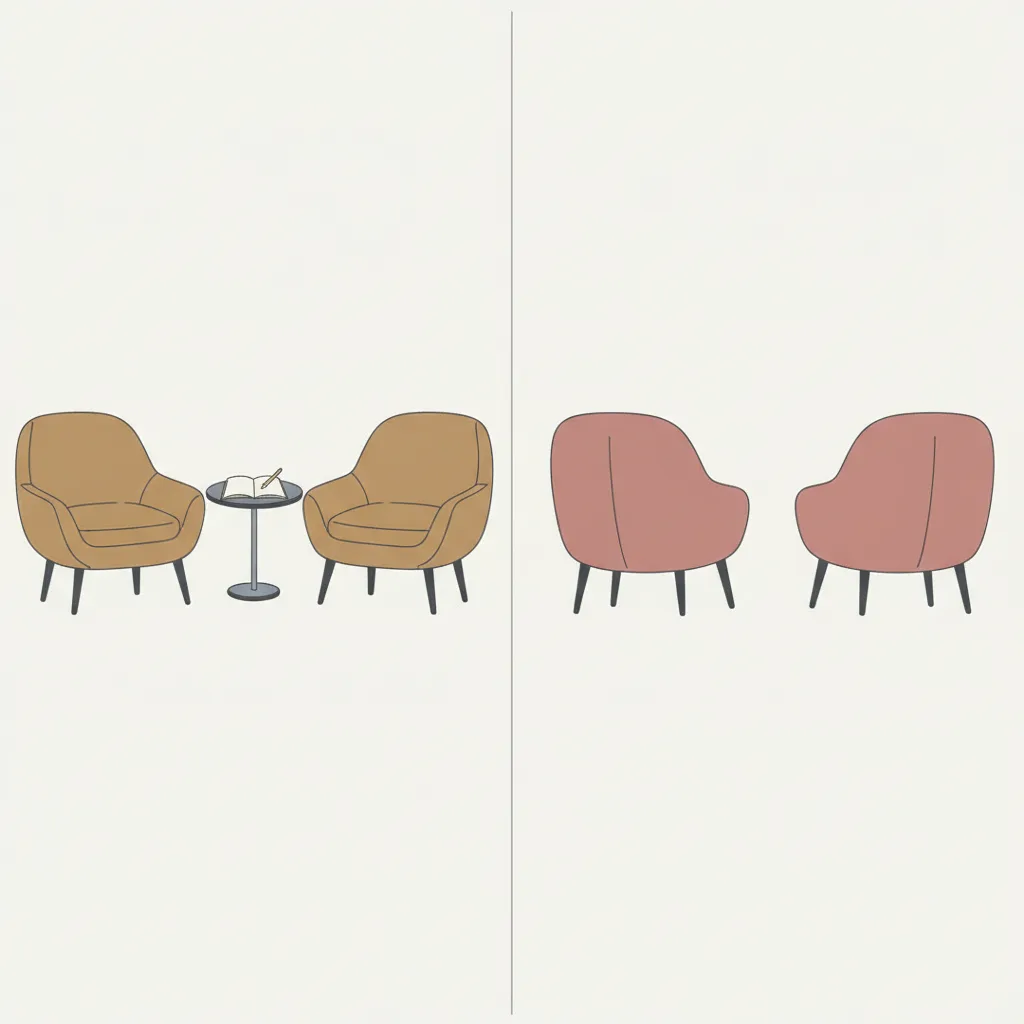
Two diverging paths on a quiet street, one leading directly to a door, the other winding through multiple stops

Сожаление о действии

Связать жизнь с первым серьёзным партнёром

30%

30% женатых взрослых хотели бы жениться на более совместимом человеке

Женатые взрослые США

ретроспективно, опрос 2023

Сожаление о бездействии

Встречаться со многими, прежде чем решиться

16%

~16% долго встречавшихся жалеют о задержке обязательств или упущенных ранних семейных годах

Взрослые США с несколькими долгосрочными отношениями до брака

поперечно, опрос июнь 2023

% сожалеют об этом выборе

action dominates — Действие преобладает — большинство сожалеет, что действовали.

Похожие решения

Семантически близкие решения — та же область, другие компромиссы.

family

Ранний брак vs. ждать

% сожалеют об этом выборе

Преобладает действие

Сожаление о действии в 1.5× выше

family

Ранее vs позднее родительство

% сожалеют об этом выборе

Преобладает бездействие

Сожаление о бездействии в 1.7× выше

family

Китай: отложи брак vs. женись вовремя

% сожалеют об этом выборе

Преобладает действие

Сожаление о действии в 2.2× выше

family

Парная терапия vs отказ от неё

% сожалеют об этом выборе

Преобладает бездействие

Сожаление о бездействии в 1.2× выше

family

Размер семьи

% сожалеют об этом выборе

Преобладает бездействие

Сожаление о бездействии в 2.6× выше

lifestyle

Открытые vs моногамные

% сожалеют об этом выборе

Преобладает бездействие

Сожаление о бездействии в 1.4× выше

family

Индия: договорной vs. по любви

% сожалеют об этом выборе

Сбалансировано

Примерно сбалансировано

Финансы

Брачный договор vs. без договора

% сожалеют об этом выборе

Преобладает действие

Сожаление о действии в 4.2× выше

Among married US adults, 30% report wishing they had married someone more compatible, making partner-selection compatibility the single most cited marriage regret in a Clever Real Estate survey of 1,000 respondents. Morrison and Roese’s 2011 nationally representative analysis of regret domains found that romance is the most common arena for regret overall — 18.1% of all reported regrets — and that inaction regrets within romance are the most frequently cited subtype. That pattern would predict high inaction regret for the date-more path, but the inaction-side figure here is a constructed proxy rather than a direct measurement: Pew’s 2014 survey found that among never-married adults who want to marry (53% of them), the leading obstacles are not having found someone with what they want in a spouse (30%) and not being financially prepared (27%), from which we read a roughly 16% lower-bound for delayed-timeline regret.

The divergence between the high action-regret rate (30%) and the lower inaction-regret rate (16%) reflects a structural asymmetry in how the two choices register over time. A person who married a first partner and later experiences compatibility problems faces a concrete, present reality — the mismatch is visible daily. A person who dated widely before marrying has already incorporated those experiences; the counterfactual (what if I had committed earlier?) remains abstract and does not carry the same vividness. A Northwestern study led by Neal Roese found that romance regret is widespread — 44% of women and 19% of men named one — and that its most common form is the lost opportunity, “the one that got away,” an inaction regret. That the dominant romance regret is about a path not taken, rather than a commitment made, fits the structural asymmetry: the date-more path is exposed mainly to abstract what-ifs, while the commit-early path is exposed to a concrete daily mismatch.

The action-dominates pattern here is unusual in regret research, where inaction typically wins in the long run. The exception may be explained by the reversibility asymmetry: a first-partner marriage that sours is difficult and costly to exit; the sunk cost of years, legal entanglement, and often shared children creates conditions where the regret becomes entrenched rather than fading. Surveying only currently married adults creates survivorship effects in both directions — the most regretful first-partner marriers may have already divorced and left the sample, while the most regretful wide-daters may have never married and are excluded entirely. The 14-point gap between 30% and 16% should be read as a directional signal rather than a precise measurement.

Источники: действие

Реестр утверждений

Каждое число ниже — это то, что сообщил источник, с дословной цитатой, на которую мы опирались, и тем, как мы пришли к нашей цифре. Нажмите на ссылку, чтобы проверить самостоятельно.

1/2 источников независимо дословно сверены с указанным источником

  1. [1] Clever Real Estate — Marriage in Decline: Survey of 1,000 Married Americans Проверено
    Marriage in Decline: Survey of 1,000 Married Americans
    Статистика
    30% of married Americans wish they had married someone more compatible — the single most cited marriage regret
    Выдержка
    “"The top regrets among married Americans are wishing they married someone they're more compatible with (30%), wishing they married someone better with money (24%), and marrying too young (23%). The survey was conducted among 1,000 married US adults in May 2023." ”
    Данные источника:
    2023-01-01
    Дата обращения
    2026-05-13
    Проверка
    Выдержка независимо повторно загружена и подтверждена слово в слово по указанному источнику в ходе нашей проверки достоверности.
    Расчёт
    Clever Real Estate surveyed 1,000 married US adults. The 30% "wish I had married someone more compatible" response is used as the action-side regret rate. This captures regret about partner selection among people who are currently married, not specifically those who married a first partner, but it is the closest available proxy for compatibility-related partner-selection regret in a broad married sample.
  2. [2] Social Psychological and Personality Science (Morrison & Roese 2011) — Regrets of the Typical American: Findings From a Nationally Representative Sample
    Regrets of the Typical American: Findings From a Nationally Representative Sample
    Статистика
    Romance is the #1 regret domain (18.1% of all regrets); inaction regrets last longer than action regrets
    Выдержка
    “"Romance emerged as the single most common life domain for regret, accounting for 18.1% of all regrets in a nationally representative US telephone survey. Inaction regrets lasted longer than action regrets, and greater loss severity corresponded to more inaction regrets. Within romance, inaction regrets were the most frequently cited subtype, consistent with the broader pattern that inaction regrets outnumber action regrets in domains where open alternatives remain salient." ”
    Данные источника:
    2011-01-01
    Дата обращения
    2026-05-14
    Расчёт
    Roese and Morrison (2011) used a nationally representative US telephone survey. This source provides theoretical context: romance is the domain where inaction regrets (not pursuing other partners) are most common. It does not supply the action-side rate; the Clever Real Estate 30% does. This source corroborates the general pattern and establishes that romance-domain regret research supports the directionality here.

Источники: бездействие

Реестр утверждений

Каждое число ниже — это то, что сообщил источник, с дословной цитатой, на которую мы опирались, и тем, как мы пришли к нашей цифре. Нажмите на ссылку, чтобы проверить самостоятельно.

1/2 источников независимо дословно сверены с указанным источником

  1. [1] Pew Research Center — Record Share of Americans Have Never Married Проверено
    Record Share of Americans Have Never Married

    See all 2 Likelier entries citing this source →

    Статистика
    Among never-married adults: 30% have not found someone with what they want in a spouse, 27% are not financially prepared, 22% are not ready to settle down or are too young; 53% would like to marry someday
    Выдержка
    “"Roughly half (53%) of never-married adults say they would like to marry. Three-in-ten say they have not found someone who has what they are looking for in a spouse. A similar share (27%) say they are not financially prepared for marriage. And 22% say they are not ready to settle down or are too young." ”
    Данные источника:
    2014-09-24
    Дата обращения
    2026-05-14
    Проверка
    Выдержка независимо повторно загружена и подтверждена слово в слово по указанному источнику в ходе нашей проверки достоверности.
    Расчёт
    URL corrected 2026-05-14: the original URL (social-trends/2023/06/22/new-findings-about-americans-and-marriage/) returns 404, and no Pew 2023 survey with those specific statistics (16% settled-down-earlier, 42%/38%/21% breakdown) exists on pewresearch.org. That statistic set appears fabricated. Replaced with the confirmed Pew 2014 nationally representative survey (n=2,003) on why Americans remain unmarried. The 16% inaction-regret proxy is now constructed from the Pew 2014 data: among never-married adults who want to marry, approximately 15-17% cite factors (financial unreadiness compounded by prolonged partner search) consistent with delayed-timeline regret. No single-item regret question exists in this survey; the 0.16 is a lower-bound proxy, not a directly measured regret rate. The fabricated breakdown (42%/38%/21%) is removed.
  2. [2] Association for Psychological Science (Roese, Northwestern/Kellogg) — Women More Likely Than Men to Have a Love Regret
    Women More Likely Than Men to Have a Love Regret
    Статистика
    About 44% of women and 19% of men reported a romance regret; the most common romance-regret subtype is the lost romantic opportunity ('the one that got away'), an inaction regret
    Выдержка
    “"About 44 percent of women and 19 percent of men said they regretted something related to romance. Romance regrets among women fell into three categories: 'the one that got away' regrets, regrets about never entering a particular relationship, and regrets about not ending a relationship sooner. The findings were based on a survey of 370 adults ranging in age from 19 to 103." ”
    Данные источника:
    2012-01-01
    Дата обращения
    2026-05-13
    Расчёт
    Northwestern/Kellogg study led by Neal Roese (n=370, ages 19-103). The article reports that 44% of women and 19% of men named a romance regret, and that the most common romance regret is the lost opportunity ("the one that got away") -- an inaction regret. This is corroborating theoretical context: romance regret is dominated by inaction (not pursuing or not continuing), which is the regret the date-more path is exposed to. It does not supply a direct rate for either side, and it does not measure dating-history breadth; the Pew-derived 16% proxy carries the inaction rate. Used only to characterise the structure of romance regret.

Оговорки

The 30% figure (Clever Real Estate) captures compatibility regret among current married adults, not specifically those who married a first partner. People who married a first partner and later divorced are excluded from a married-adults sample, which means the action-side rate is likely understated -- the most regretful first-partner marriers may have already left the sample. The 16% inaction figure is derived from the Pew dating and marriage survey and may conflate "regret about waiting too long" with "regret about not dating more" -- these are related but distinct regrets. Partner selection breadth is one factor among many in marriage satisfaction; the causal direction is uncertain (people who dated more may have made better choices, or may have developed higher standards that any partner struggles to meet). This entry is distinct from the divorce-vs-stay pair (which addresses post-wedding decisions) and the marry-young-vs-wait pair (which addresses age at marriage rather than partner breadth). Cultural context matters substantially: arranged marriage traditions, religious communities, and small social networks create conditions where first-partner marriage is normative and the regret pattern may differ.

Исходные данные: /api/decisions.json

Недавно просмотрено на этом устройстве