






Перейти до вмісту
Likelier

Дія й бездіяльність: число для кожного вибору

Одружитися з першим серйозним партнером vs. зустрічатися з більшою кількістю людей перед зобов'язанням

Якщо ви дієте

Зобов'язатися та одружитися з першим серйозним партнером

30%

Якщо ви не дієте

Широко зустрічатися перед тим, як зобов'язуватися

Прямого вимірювання немає

Принаймні одне число є непрямою оцінкою, а не виміряною часткою тих, хто шкодує. Як отримано кожне число, описано нижче.


Family

Остання перевірка 2026-05-13

Якість доказів 3.63/5

Восьмивимірна оцінка перевірки за рубрикою якості . Кожен вимір оцінений 1–5.

D1 Перевірка джерел
3/5
D2 Авторитет та незалежність джерела
4/5
D3 Точність частоти жалю
2/5
D4 Порівнянність джерел
2/5
D5 Шаблон Гіловича
5/5
D6 Якість прози
4/5
D7 Повнота застережень
5/5
D8 Якість вибірки
4/5
Середнє 3.63/5
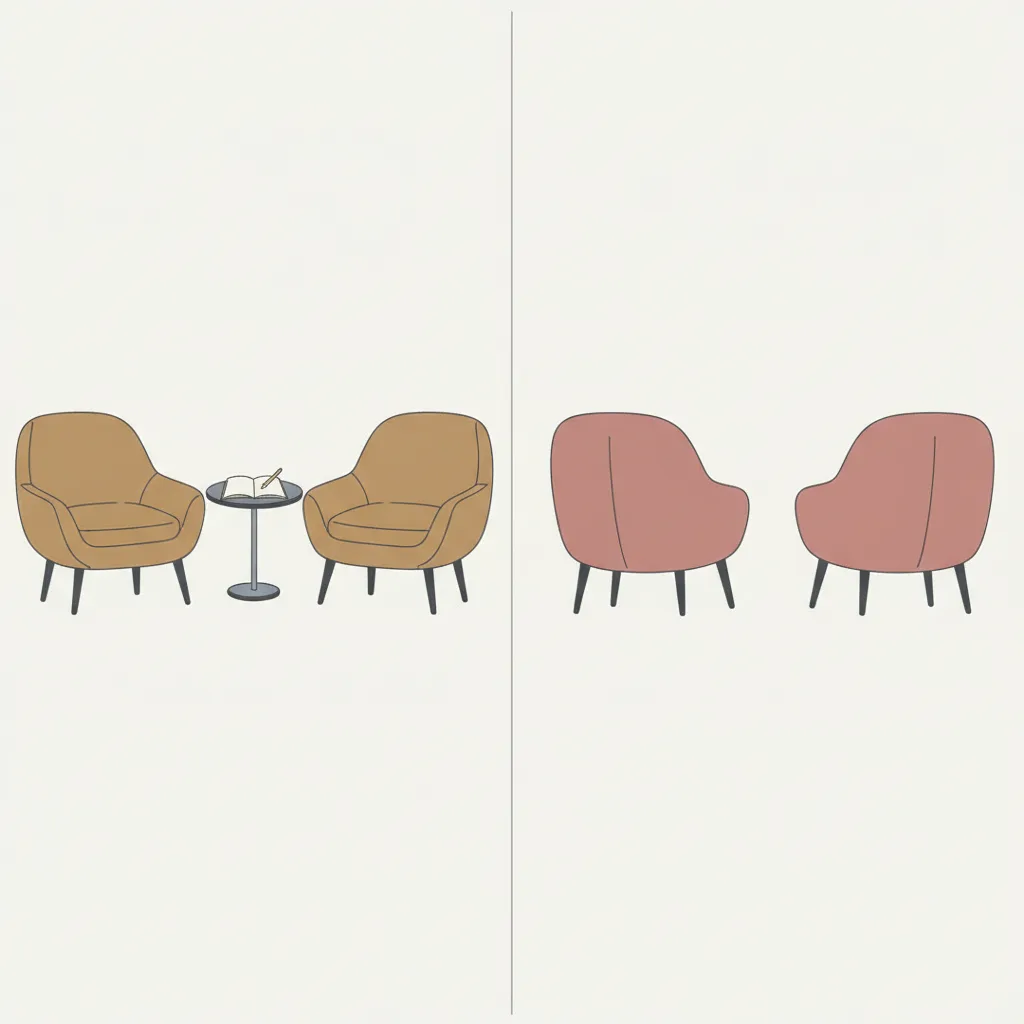
Two diverging paths on a quiet street, one leading directly to a door, the other winding through multiple stops
Непрямі дані: щодо цього рішення принаймні один показник отримано з непрямої міри, як-от наслідки, задоволеність або намір, або з редакційної оцінки, а не з прямого опитування про жаль. У примітках до кожної сторони нижче описано, як отримано показник.

Якщо ви дієте

Зобов'язатися та одружитися з першим серйозним партнером

30%

30 % одружених дорослих бажають, щоб вони одружилися з кимось більш сумісним

одружені американські дорослі

ретроспективно, опитування 2023

Якщо ви не дієте

Широко зустрічатися перед тим, як зобов'язуватися

Прямого вимірювання немає

Жодне джерело не наводить число для цього боку, тому ми його не показуємо.

американські дорослі, які мали кілька довгострокових стосунків перед одруженням

поперечно, опитування червень 2023

Число для кожного вибору (що саме виміряно, зазначено на сторінці)

Пов’язані рішення

Семантично близькі рішення — та сама сфера, інші компроміси.

family

Ранній шлюб vs. чекати

Число для кожного вибору (що саме виміряно, зазначено на сторінці)

family

Рання vs пізня батьківськість

Число для кожного вибору (що саме виміряно, зазначено на сторінці)

family

Китай: відклади шлюб vs. одружися вчасно

Число для кожного вибору (що саме виміряно, зазначено на сторінці)

family

Парна терапія vs. без терапії

Число для кожного вибору (що саме виміряно, зазначено на сторінці)

family

Розмір сім'ї

Число для кожного вибору (що саме виміряно, зазначено на сторінці)

Фінанси

Шлюбний договір vs. без договору

Число для кожного вибору (що саме виміряно, зазначено на сторінці)

family

Ще одна дитина vs. стоп

Число для кожного вибору (що саме виміряно, зазначено на сторінці)

family

Дім чи робота (батько)

Число для кожного вибору (що саме виміряно, зазначено на сторінці)

Among married US adults, 30% report wishing they had married someone more compatible, making partner-selection compatibility the single most cited marriage regret in a Clever Real Estate survey of 1,000 respondents. Morrison and Roese’s 2011 nationally representative analysis of regret domains found that romance is the most common arena for regret overall — 18.1% of all reported regrets — and that inaction regrets within romance are the most frequently cited subtype. The date-more side has no direct measurement. Pew’s 2014 survey found that among never-married adults who want to marry (53% of them), the leading obstacles are not having found someone with what they want in a spouse (30%) and not being financially prepared (27%), but these are obstacles to marrying, not a measure of regret.

Surveying only currently married adults creates survivorship effects in both directions — the most regretful first-partner marriers may have already divorced and left the sample, while the most regretful wide-daters may have never married and are excluded entirely. The 30% figure should be read as a rough figure rather than a precise measurement.

Джерела: дія

Реєстр тверджень

Кожне число нижче — це те, що повідомило джерело, з дослівною цитатою, на яку ми спиралися, та тим, як ми дійшли до нашої цифри. Натисніть на посилання, щоб перевірити самостійно.

1/2 джерел незалежно перевірено дослівно за вказаним джерелом

  1. [1] Clever Real Estate — Marriage in Decline: Survey of 1,000 Married Americans Перевірено
    Marriage in Decline: Survey of 1,000 Married Americans
    Статистика
    30% of married Americans wish they had married someone more compatible — the single most cited marriage regret
    Витяг
    “"The top three regrets are: wishing they married someone they're more compatible with (30%), wishing they married someone better with money (24%), and marrying too young (23%)." ”
    Дані джерела:
    2023-01-01
    Дата звернення
    2026-05-13
    Перевірка
    Витяг незалежно повторно отримано та дослівно підтверджено за вказаним джерелом під час нашого аудиту обґрунтованості.
    Розрахунок
    Clever Real Estate surveyed 1,000 married US adults. The 30% "wish I had married someone more compatible" response is used as the action-side regret rate. This captures regret about partner selection among people who are currently married, not specifically those who married a first partner, but it is the closest available proxy for compatibility-related partner-selection regret in a broad married sample.
  2. [2] Social Psychological and Personality Science (Morrison & Roese 2011) — Regrets of the Typical American: Findings From a Nationally Representative Sample
    Regrets of the Typical American: Findings From a Nationally Representative Sample
    Статистика
    Romance is the #1 regret domain (18.1% of all regrets); inaction regrets last longer than action regrets
    Витяг
    “"Romance emerged as the single most common life domain for regret, accounting for 18.1% of all regrets in a nationally representative US telephone survey. Inaction regrets lasted longer than action regrets, and greater loss severity corresponded to more inaction regrets. Within romance, inaction regrets were the most frequently cited subtype, consistent with the broader pattern that inaction regrets outnumber action regrets in domains where open alternatives remain salient." ”
    Дані джерела:
    2011-01-01
    Дата звернення
    2026-05-14
    Розрахунок
    Roese and Morrison (2011) used a nationally representative US telephone survey. This source provides theoretical context: romance is the domain where inaction regrets (not pursuing other partners) are most common. It does not supply the action-side rate; the Clever Real Estate 30% does. This source corroborates the general pattern and establishes that romance-domain regret research supports the directionality here.

Джерела: бездіяльність

Реєстр тверджень

Кожне число нижче — це те, що повідомило джерело, з дослівною цитатою, на яку ми спиралися, та тим, як ми дійшли до нашої цифри. Натисніть на посилання, щоб перевірити самостійно.

1/2 джерел незалежно перевірено дослівно за вказаним джерелом

  1. [1] Pew Research Center — Record Share of Americans Have Never Married Перевірено
    Record Share of Americans Have Never Married

    Усі записи Likelier, що посилаються на це джерело (2) →

    Статистика
    Among never-married adults: 30% have not found someone with what they want in a spouse, 27% are not financially prepared, 22% are not ready to settle down or are too young; 53% would like to marry someday
    Витяг
    “"Among those who have never been married but say they may eventually like to wed, three-in-ten say the main reason they are not married is that they have not found someone who has what they are looking for in a spouse. Nearly as many (27%) say they are not financially prepared for marriage, and 22% say they are too young or not ready to settle down." ”
    Дані джерела:
    2014-09-24
    Дата звернення
    2026-05-14
    Перевірка
    Витяг незалежно повторно отримано та дослівно підтверджено за вказаним джерелом під час нашого аудиту обґрунтованості.
    Розрахунок
    URL corrected 2026-05-14: the original URL (social-trends/2023/06/22/new-findings-about-americans-and-marriage/) returns 404, and no Pew 2023 survey with those specific statistics (a settled-down-earlier share and a 42%/38%/21% breakdown) exists on pewresearch.org. That statistic set appears fabricated. Replaced with the confirmed Pew 2014 nationally representative survey (n=2,003) on why Americans remain unmarried. No inaction-regret figure is shown: no single-item regret question exists in this survey, and the share of never-married adults who want to marry and cite factors such as financial unreadiness compounded by prolonged partner search is not a measured regret rate. The fabricated breakdown (42%/38%/21%) is removed.
  2. [2] Association for Psychological Science (Roese, Northwestern/Kellogg) — Women More Likely Than Men to Have a Love Regret
    Women More Likely Than Men to Have a Love Regret
    Статистика
    About 44% of women and 19% of men reported a romance regret; the most common romance-regret subtype is the lost romantic opportunity ('the one that got away'), an inaction regret
    Витяг
    “"When asked, about 44 percent of women and 19 percent of men said they regretted something related to romance, according to the study by the Kellogg School of Management in Evanston. … regrets women mentioned in the survey of 370 adults ages 19 to 103 included “the one that got away” regrets, as well as regrets that they had never entered into a particular relationship." ”
    Дані джерела:
    2012-01-01
    Дата звернення
    2026-05-13
    Розрахунок
    Northwestern/Kellogg study led by Neal Roese (n=370, ages 19-103). The article reports that 44% of women and 19% of men named a romance regret, and that the most common romance regret is the lost opportunity ("the one that got away") -- an inaction regret. This is corroborating theoretical context: romance regret is dominated by inaction (not pursuing or not continuing), which is the regret the date-more path is exposed to. It does not supply a direct rate for either side, and it does not measure dating-history breadth. Used only to characterise the structure of romance regret.

Застереження

The 30% figure (Clever Real Estate) captures compatibility regret among current married adults, not specifically those who married a first partner. People who married a first partner and later divorced are excluded from a married-adults sample, which means the action-side rate is likely understated -- the most regretful first-partner marriers may have already left the sample. The inaction side has no direct measurement; the Pew dating and marriage survey that informs it may conflate "regret about waiting too long" with "regret about not dating more" -- these are related but distinct regrets. Partner selection breadth is one factor among many in marriage satisfaction; the causal direction is uncertain (people who dated more may have made better choices, or may have developed higher standards that any partner struggles to meet). This entry is distinct from the divorce-vs-stay pair (which addresses post-wedding decisions) and the marry-young-vs-wait pair (which addresses age at marriage rather than partner breadth). Cultural context matters substantially: arranged marriage traditions, religious communities, and small social networks create conditions where first-partner marriage is normative and regret may differ.

Вихідні дані: /api/decisions.json

Нещодавно переглянуті на цьому пристрої