






Перейти до вмісту
Likelier

Жаль від дії проти бездіяльності

Навчання в приватному університеті проти вибору порівнянного державного університету

Якщо ви дієте

Приватний чотирирічний університет

17%

Якщо ви не дієте

Державний чотирирічний університет

14%

Відсоток тих, хто згодом шкодує про кожен вибір. Стовпчики та повний реєстр показані нижче.


Career

Остання перевірка 2026-05-01

Якість доказів 4.38/5

Восьмивимірна оцінка перевірки за рубрикою якості . Кожен вимір оцінений 1–5.

D1 Перевірка джерел
5/5
D2 Авторитет та незалежність джерела
4/5
D3 Точність частоти жалю
2/5
D4 Порівнянність джерел
5/5
D5 Шаблон Гіловича
5/5
D6 Якість прози
5/5
D7 Повнота застережень
5/5
D8 Якість вибірки
4/5
Середнє 4.38/5
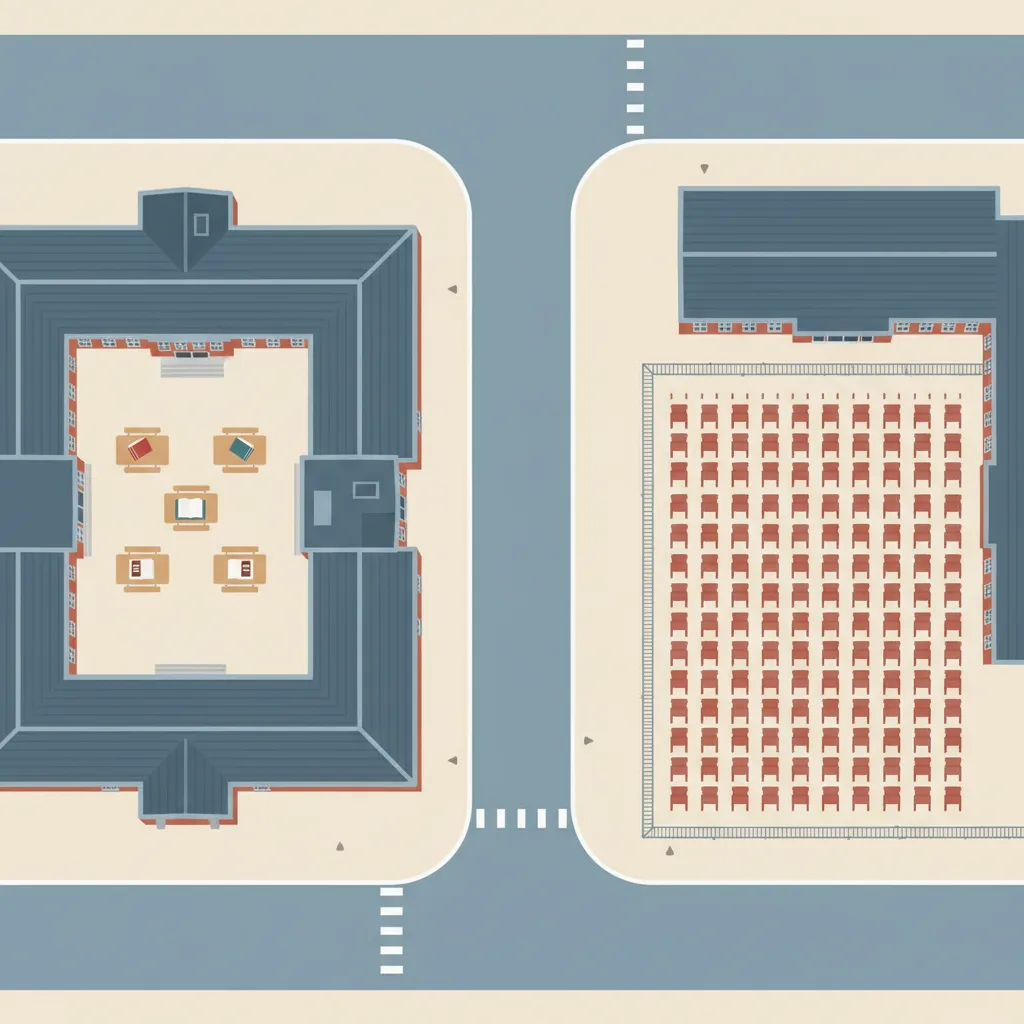
Two university campuses seen from above, one with a manicured courtyard and one with a sprawling modern campus.

Жаль за дію

Приватний чотирирічний університет

17%

17 % випускників приватних коледжів кажуть, що їх ступінь не варто було фінансової вартості (проксі)

американські дорослі, які відвідували приватний некомерційний чотирирічний коледж, національно репрезентативно

ретроспективно, без фіксованого часу

Жаль за бездіяльність

Державний чотирирічний університет

14%

14 % випускників державних коледжів кажуть, що їх ступінь не варто було фінансової вартості (проксі)

американські дорослі, які відвідували державний чотирирічний коледж, національно репрезентативно

ретроспективно, без фіксованого часу

% шкодує про цей вибір

balanced — Приблизно збалансовано — обидва вибори несуть подібний жаль.

Пов’язані рішення

Семантично близькі рішення — та сама сфера, інші компроміси.

careerПрямі

Відрахування vs. отримання ступеня

% шкодує про цей вибір

Переважає дія

Жаль за дію на 1.1× вищий

careerПрямі

Вибір спеціальності

% шкодує про цей вибір

Переважає бездіяльність

Жаль за бездіяльність на 1.6× вищий

career

Рішення про навчання

% шкодує про цей вибір

Переважає дія

Жаль за дію на 1.2× вищий

Фінанси

Студентський кредит vs. дешевший шлях

% шкодує про цей вибір

Переважає бездіяльність

Жаль за бездіяльність на 1.3× вищий

career

Шкільна робота, написана ШІ

% шкодує про цей вибір

Збалансовано

Приблизно збалансовано

family

Приватна чи держ. школа

% шкодує про цей вибір

Переважає бездіяльність

Жаль за бездіяльність на 3.2× вищий

career

Переговори про зарплату

% шкодує про цей вибір

Переважає бездіяльність

Жаль за бездіяльність на 1.2× вищий

career

Корея: держслужба vs. приватний сектор

% шкодує про цей вибір

Переважає дія

Жаль за дію на 1.6× вищий

Only 17% of private-university graduates had not yet seen a financial payoff from their degree, compared with 14% of public-university graduates, according to a 2014 Pew Research Center survey of 2,002 US adults. The difference is three percentage points — within the margin of error — making this one of the clearest “balanced” findings in the regret literature. This is a payoff-to-date question, not a direct “was it worth the cost” regret item: of the 17% of private graduates without a payoff yet, a further 5% told Pew they expect their education to pay off in the future, leaving only about 12% who said it will not pay off or were unsure (about 7% for public graduates). Both groups overwhelmingly report that college paid off, and neither camp shows the sustained, growing regret that Gilovich and Medvec associate with the inaction side of most long-term dilemmas.

A useful corroborating data point comes from the Strada-Gallup Education Consumer Pulse survey of approximately 90,000 US adults: 28% of respondents said they would choose a different institution if they could decide again, compared with 36% who would choose a different field of study. The survey does not break its findings out by public-versus-private attendance, so it cannot confirm or refute an asymmetry between the two — but it does suggest that institution-choice regret is real yet secondary to field-of-study regret, which is consistent with the Pew finding that the public/private gap is small enough to sit inside the margin of error.

Three limitations shape how this entry should be read. First, the primary data are from 2013, before the steepest phase of private-tuition growth and the student-debt expansion of the late 2010s; contemporary graduates carrying larger private-school debt loads may show a larger asymmetry. Second, both figures measure satisfaction retrospectively from a population that successfully graduated; students who enrolled at private universities and did not complete their degree are absent and likely report higher regret. Third, this entry is specific to the United States, where a sharp public/private cost divide exists. In most of Europe, the financial and prestige gap between private and public higher education is structured differently, and these numbers do not transfer.

Джерела: дія

Реєстр тверджень

Кожне число нижче — це те, що повідомило джерело, з дослівною цитатою, на яку ми спиралися, та тим, як ми дійшли до нашої цифри. Натисніть на посилання, щоб перевірити самостійно.

  1. [1] Pew Research Center — Public and private college grads about equal in satisfaction with their lives
    Public and private college grads about equal in satisfaction with their lives
    Статистика
    83% of private college graduates and 86% of public college graduates said they had already seen a payoff from their education
    Витяг
    “"Roughly equal shares of 83% among private school graduates and 86% among public school graduates said they had already seen a payoff." ”
    Дані джерела:
    2014-05-19
    Дата звернення
    2026-05-01
    Розрахунок
    Pew Research survey of 2,002 US adults conducted Oct 7-27, 2013. Action proxy derived as 1 - 0.83 = 0.17 (17% of private-college graduates had not yet seen a financial payoff from their education). This is a payoff-to-date perception, NOT a direct "was it worth the cost" regret measure. The 17% is not all dissatisfied: Pew reports a further 5% of private graduates "expect to see their educations pay off in the future", so the share who said it will not pay off or are unsure is the remainder, roughly 12%. Survey covered all college graduates; selection between private and public was not controlled. Subgroup sample sizes for private-college and public-college respondents within the n=2,002 survey are not separately reported; per-subgroup margin of error is wider than the approximately plus-or-minus 2.5 pp noted for the full sample.
  2. [2] Gallup / Strada Education Network — Half of U.S. Adults Would Change at Least One Education Decision
    Half of U.S. Adults Would Change at Least One Education Decision

    See all 4 Likelier entries citing this source →

    Статистика
    51% of US adults would change at least one aspect of their education experience; 28% would select a different institution
    Витяг
    “"Fifty-one percent of U.S. adults would change at least one aspect of their education experience. Significantly fewer (28%) would select a different institution." ”
    Дані джерела:
    2017-06-01
    Дата звернення
    2026-05-01
    Розрахунок
    Strada-Gallup Education Consumer Pulse survey, n approximately 90,000 US adults, June 2016 through March 2017. Report does not isolate private-4yr vs public-4yr regret rates as separate figures; used here as corroboration that institution-choice regret exists but is secondary to field-of-study regret.

Джерела: бездіяльність

Реєстр тверджень

Кожне число нижче — це те, що повідомило джерело, з дослівною цитатою, на яку ми спиралися, та тим, як ми дійшли до нашої цифри. Натисніть на посилання, щоб перевірити самостійно.

  1. [1] Pew Research Center — Public and private college grads about equal in satisfaction with their lives
    Public and private college grads about equal in satisfaction with their lives
    Статистика
    83% of private college graduates and 86% of public college graduates said they had already seen a payoff from their education
    Витяг
    “"Roughly equal shares of 83% among private school graduates and 86% among public school graduates said they had already seen a payoff." ”
    Дані джерела:
    2014-05-19
    Дата звернення
    2026-05-01
    Розрахунок
    Same Pew 2013/2014 survey as action_side (n = 2,002). Inaction proxy derived as 1 - 0.86 = 0.14 (14% of public-college graduates had not yet seen a financial payoff from their education). This is a payoff-to-date perception, NOT a direct "was it worth the cost" regret measure. A further 7% of public graduates "expect to see their educations pay off in the future", so the share who said it will not pay off or are unsure is the remainder, roughly 7%. Subgroup sample sizes for private-college and public-college respondents within the n=2,002 survey are not separately reported; per-subgroup margin of error is wider than the approximately plus-or-minus 2.5 pp noted for the full sample.
  2. [2] Gallup / Strada Education Network — Half of U.S. Adults Would Change at Least One Education Decision
    Half of U.S. Adults Would Change at Least One Education Decision

    See all 4 Likelier entries citing this source →

    Статистика
    51% of US adults would change at least one aspect of their education experience; 36% would choose a different field of study; 28% would select a different institution
    Витяг
    “"Fifty-one percent of U.S. adults would change at least one aspect of their education experience. Thirty-six percent of U.S. adults who pursued or completed a postsecondary degree would choose a different field of study. Significantly fewer (28%) would select a different institution." ”
    Дані джерела:
    2017-06-01
    Дата звернення
    2026-05-01
    Розрахунок
    The 28% who would choose a different institution includes all institution-type switches and is not specific to public-to-private transitions. Used here to establish that institution-choice regret exists but is secondary to major/field regret.

Застереження

Both sides draw from the same Pew 2014 survey, making the comparison internally consistent, but that survey measured whether graduates had "seen a payoff" from their education to date, not whether they regretted the choice or judged it worth the financial cost. Because a small share additionally expect a future payoff, the headline "no payoff yet" figures overstate the group that actively believes the degree will not pay off. The 3-percentage-point gap is within the survey's margin of error (approximately plus-or-minus 2.5 pp for the full sample) and should not be read as evidence that private university graduates regret their choice more; the honest reading is that satisfaction rates are statistically indistinguishable. The data are from 2013 and predate the 2015-2025 acceleration in private-institution tuition and the growth of student debt; current regret rates at private institutions may be higher. Selection bias is the largest confounder: students who attend private universities differ systematically from public-university counterparts in family income, academic preparation, and professional networks, so any outcome difference may reflect those pre-existing advantages rather than school type. The Strada-Gallup survey shows institution-choice regret (28%) is smaller than field-of-study regret (36%), suggesting what a graduate studied matters more than which type of institution they attended, though the survey does not separately report public-versus-private regret rates. Geographic scope is limited to the United States; in the United Kingdom, most of continental Europe, and Australia the distinction between private and state university carries different financial and social weight that these surveys do not capture.

Вихідні дані: /api/decisions.json

Нещодавно переглянуті на цьому пристрої