







Перейти до вмісту
Likelier

Жаль від дії проти бездіяльності

Висловитися про проблему чи промовчати заради миру

Якщо ви дієте

Висловлюватися

38%

Якщо ви не дієте

Мовчати

53%

Відсоток тих, хто згодом шкодує про кожен вибір. Стовпчики та повний реєстр показані нижче.


Career

Остання перевірка 2026-04-26

Якість доказів 4.75/5

Восьмивимірна оцінка перевірки за рубрикою якості . Кожен вимір оцінений 1–5.

D1 Перевірка джерел
5/5
D2 Авторитет та незалежність джерела
5/5
D3 Точність частоти жалю
4/5
D4 Порівнянність джерел
5/5
D5 Шаблон Гіловича
5/5
D6 Якість прози
5/5
D7 Повнота застережень
5/5
D8 Якість вибірки
4/5
Середнє 4.75/5
Прямі докази
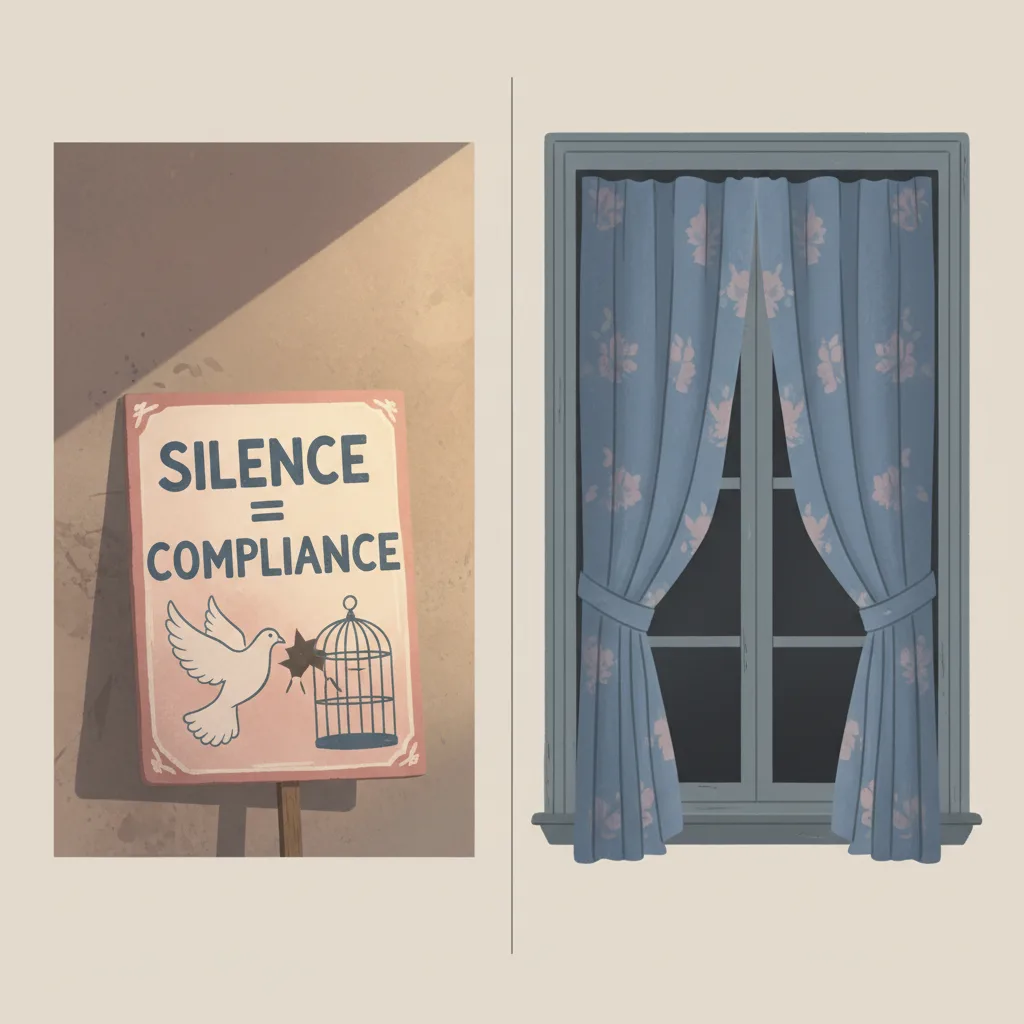
Two identical office chairs at a conference table, one pushed back with a microphone in front, the other tucked in with an empty place setting.

Жаль за дію

Висловлюватися

38%

38 % шкодують про висловлення на нараді

працівники в США, Великобританії, Франції, Німеччині

ретроспективно, без фіксованого часу

Жаль за бездіяльність

Мовчати

53%

53 % шкодують, що не висловилися на нараді

працівники в США, Великобританії, Франції, Німеччині

ретроспективно, без фіксованого часу

% шкодує про цей вибір

inaction dominates — Бездіяльність переважає — більшість шкодує, що не діяла.

Пов’язані рішення

Семантично близькі рішення — та сама сфера, інші компроміси.

career

Зміна кар'єри

% шкодує про цей вибір

Переважає бездіяльність

Жаль за бездіяльність на 1.5× вищий

careerПрямі

Просити підвищення зарплати

% шкодує про цей вибір

Переважає бездіяльність

Жаль за бездіяльність на 3.0× вищий

career

Звільнення

% шкодує про цей вибір

Переважає бездіяльність

Жаль за бездіяльність на 2.2× вищий

career

Кар'єра чи баланс

% шкодує про цей вибір

Переважає дія

Жаль за дію на 1.3× вищий

career

Гнатися за підвищенням vs прийняти роль

% шкодує про цей вибір

Переважає бездіяльність

Жаль за бездіяльність на 1.9× вищий

lifestyle

Визнати серйозну помилку vs. приховати

% шкодує про цей вибір

Переважає бездіяльність

Жаль за бездіяльність на 2.9× вищий

career

Свій бізнес

% шкодує про цей вибір

Переважає бездіяльність

Жаль за бездіяльність на 5.5× вищий

lifestyle

Протест vs. мовчання

% шкодує про цей вибір

Переважає бездіяльність

Жаль за бездіяльність на 3.3× вищий

53% of workers say they have regretted not speaking up in a meeting, compared to 38% who regret having spoken up, according to Resume Now’s International Career Regrets Survey of 1,000 workers across the US, UK, France, and Germany. The gap is real but moderate — a 1.4:1 ratio that puts workplace voice closer to “balanced” than the lopsided inaction dominance seen in domains like travel or career risk-taking. A separate Zety survey of over 1,000 US workers found that 98% harbored some form of career regret, with women regretting not speaking up at a rate 34% higher than men.

The academic underpinning comes from Detert and Edmondson’s 2011 research on implicit voice theories — the taken-for-granted beliefs employees hold about when speaking up is risky or futile. Across 190 interviews and follow-up survey studies, they documented five distinct self-censorship rules that suppress voice even when the message would benefit the organization. The mechanism is straightforward: people default to silence because the social cost of speaking up (embarrassing a manager, being labeled a troublemaker) feels immediate and concrete, while the cost of silence (a problem festers, an opportunity evaporates) is diffuse and delayed. Gilovich and Medvec’s temporal pattern predicts exactly this: the sting of having spoken up fades as people rationalize or forget, but the nagging sense of “I should have said something” compounds over time.

The modest delta here deserves a caveat the flashier regret pairs do not need. Speaking up at work is not costless — 43% of employees fear retaliation for voicing concerns, and research shows that frequent or low-quality voice can lower status and performance ratings. This is one of the few domains where action regret holds non-trivial ground because the consequences of speaking up (a damaged relationship, a lost promotion) can be concrete and lasting. The directional finding still favors action, consistent with the broader regret literature, but the margin is narrow enough that blanket advice to “always speak up” would overstate what the data support.

Джерела: дія

Реєстр тверджень

Кожне число нижче — це те, що повідомило джерело, з дослівною цитатою, на яку ми спиралися, та тим, як ми дійшли до нашої цифри. Натисніть на посилання, щоб перевірити самостійно.

1/2 джерел незалежно перевірено дослівно за вказаним джерелом

  1. [1] Resume Now — The Road Not Taken: Greatest Career Regrets Revealed Перевірено
    The Road Not Taken: Greatest Career Regrets Revealed

    See all 8 Likelier entries citing this source →

    Статистика
    38% of workers have regretted speaking up in a meeting
    Витяг
    “"53% have regretted not speaking up in a meeting, compared to 38% who have regretted speaking up in a meeting." ”
    Дані джерела:
    2025-01-10
    Дата звернення
    2026-04-26
    Перевірка
    Витяг незалежно повторно отримано та дослівно підтверджено за вказаним джерелом під час нашого аудиту обґрунтованості.
    Розрахунок
    Resume Now International Career Regrets Survey of 1,000 workers across four countries (US, UK, France, Germany), fielded January 2024. The 38% figure represents those who specifically regretted having voiced an opinion in a meeting. Used directly as action- side regret rate.
  2. [2] Journal of Management Studies — An Exploratory Study of Employee Silence: Issues that Employees Don't Communicate Upward and Why
    An Exploratory Study of Employee Silence: Issues that Employees Don't Communicate Upward and Why
    Статистика
    85% of employees reported situations where they felt unable to raise an issue to a supervisor despite believing it was important; the most frequent reason was fear of being labeled negatively
    Витяг
    “"85% of respondents said they had been in situations where they felt unable to raise an issue to a supervisor even though they felt the issue was important. The most frequently mentioned reason for remaining silent was the fear of being viewed or labeled negatively, and as a consequence, damaging valued relationships." ”
    Дані джерела:
    2003-09-01
    Дата звернення
    2026-04-26
    Розрахунок
    Milliken, Morrison & Hewlin (2003), Journal of Management Studies 40(6), 1453-1476. Interviewed 40 full-time employees across diverse industries. The 85% figure establishes that the vast majority of employees have experienced the voice/silence dilemma. The fear of negative labeling explains why action regret (38%) is non-trivially high in this domain — speaking up carries real social risk that does not fade easily.

Джерела: бездіяльність

Реєстр тверджень

Кожне число нижче — це те, що повідомило джерело, з дослівною цитатою, на яку ми спиралися, та тим, як ми дійшли до нашої цифри. Натисніть на посилання, щоб перевірити самостійно.

2/4 джерел незалежно перевірено дослівно за вказаним джерелом

  1. [1] Resume Now — The Road Not Taken: Greatest Career Regrets Revealed Перевірено
    The Road Not Taken: Greatest Career Regrets Revealed

    See all 8 Likelier entries citing this source →

    Статистика
    53% of workers have regretted not speaking up in a meeting
    Витяг
    “"53% have regretted not speaking up in a meeting, compared to 38% who have regretted speaking up in a meeting." ”
    Дані джерела:
    2025-01-10
    Дата звернення
    2026-04-26
    Перевірка
    Витяг незалежно повторно отримано та дослівно підтверджено за вказаним джерелом під час нашого аудиту обґрунтованості.
    Розрахунок
    Same Resume Now survey as the action side. The 53% figure represents those who specifically regretted remaining silent in a meeting when they had something to say. Used directly as inaction-side regret rate.
  2. [2] Academy of Management Journal — Implicit Voice Theories: Taken-for-Granted Rules of Self-Censorship at Work
    Implicit Voice Theories: Taken-for-Granted Rules of Self-Censorship at Work
    Статистика
    Employees hold five distinct implicit theories that systematically suppress workplace voice even when speaking up would be pro-organizational
    Витяг
    “"Qualitative data from 190 interviews conducted in a knowledge-intensive multinational corporation suggest that fine-grained implicit theories underlie reluctance to voice even pro-organizational suggestions. Survey measures across subsequent studies establish that these implicit voice theories are widely held and significantly augment explanation of workplace silence." ”
    Дані джерела:
    2011-06-01
    Дата звернення
    2026-04-26
    Розрахунок
    Detert & Edmondson (2011), Academy of Management Journal 54(3), 461-488. This peer-reviewed study does not provide a single regret percentage but establishes the psychological mechanism behind self-censorship at work. It documents that employees routinely silence themselves based on taken-for-granted beliefs about hierarchy, even when speaking up would benefit the organization. Used as the theoretical anchor for why inaction regret in this domain is so prevalent.
  3. [3] Crucial Learning (formerly VitalSmarts) — Costly Conversations: How Lack of Communication is Costing Organizations Thousands in Revenue Перевірено
    Costly Conversations: How Lack of Communication is Costing Organizations Thousands in Revenue
    Статистика
    43% of 1,100 employees estimate wasting two weeks or more ruminating about unresolved workplace problems; 1 in 3 estimate silence cost their organization at least $25,000
    Витяг
    “"43 percent of respondents estimate they waste two weeks or more ruminating about an unresolved problem at work. 1 in 3 employees estimate their inability to speak up in a crucial moment has cost their organization at least $25,000." ”
    Дані джерела:
    2022-02-15
    Дата звернення
    2026-04-26
    Перевірка
    Витяг незалежно повторно отримано та дослівно підтверджено за вказаним джерелом під час нашого аудиту обґрунтованості.
    Розрахунок
    Crucial Learning (formerly VitalSmarts) survey of 1,100 employees, December 2021 (follow-up to 2016 study). The 43% rumination figure and the financial cost estimates demonstrate that workplace silence generates significant ongoing regret and cognitive burden. Independently sourced from the Resume Now survey, corroborating the high inaction-regret pattern.
  4. [4] Zety — Biggest Career Regrets Revealed: Learn from Others' Mistakes
    Biggest Career Regrets Revealed: Learn from Others' Mistakes
    Статистика
    98% of 1,000+ respondents experienced career regret; women regretted not speaking up at work at a rate 34% higher than men
    Витяг
    “"Female respondents most frequently lamented not speaking up about a problem at work, at a rate of 34 percent more than men. Just 2 percent reported they had no career regrets." ”
    Дані джерела:
    2019-10-01
    Дата звернення
    2026-04-26
    Розрахунок
    Zety survey of 1,000+ US workers. The 98% figure refers to overall career regret, not speaking-up regret specifically. The 34% gender gap highlights that not speaking up is disproportionately regretted by women. Used as corroborating evidence for the inaction-regret pattern.

Застереження

The core action and inaction rates (38% and 53%) come from the same Resume Now survey, which is a strength for direct comparison but a limitation in that the sample is self-selected career-site users — likely more career-engaged than the general population. The question asks about meetings specifically, not all workplace silence; regret about staying silent on ethical or safety issues may be substantially higher. Independent corroboration comes from three additional sources: Milliken, Morrison & Hewlin (2003) found 85% of employees had experienced the voice/silence dilemma; Crucial Learning's 2021 survey of 1,100 employees found 43% waste two weeks or more ruminating on unresolved problems; and the Zety 34% gender gap points in the same direction. The 1.4:1 ratio is modest by regret-pair standards; workplace voice is one of the few domains where action regret is non-trivially high, likely because speaking up carries real professional risk (retaliation, status loss) that does not fade as easily as other action regrets.

Вихідні дані: /api/decisions.json

Нещодавно переглянуті на цьому пристрої