






Перейти до вмісту
Likelier

Жаль від дії проти бездіяльності

Заморозити яйцеклітини або сперму зараз vs. чекати на відповідні обставини

Якщо ви дієте

Заморозити яйцеклітини або сперму зараз

16%

Якщо ви не дієте

Чекати і намагатися зачати природно, коли готові

51%

Відсоток тих, хто згодом шкодує про кожен вибір. Стовпчики та повний реєстр показані нижче.


Family

Остання перевірка 2026-05-04

Якість доказів 4.0/5

Восьмивимірна оцінка перевірки за рубрикою якості . Кожен вимір оцінений 1–5.

D1 Перевірка джерел
4/5
D2 Авторитет та незалежність джерела
4/5
D3 Точність частоти жалю
3/5
D4 Порівнянність джерел
3/5
D5 Шаблон Гіловича
5/5
D6 Якість прози
5/5
D7 Повнота застережень
4/5
D8 Якість вибірки
4/5
Середнє 4.0/5
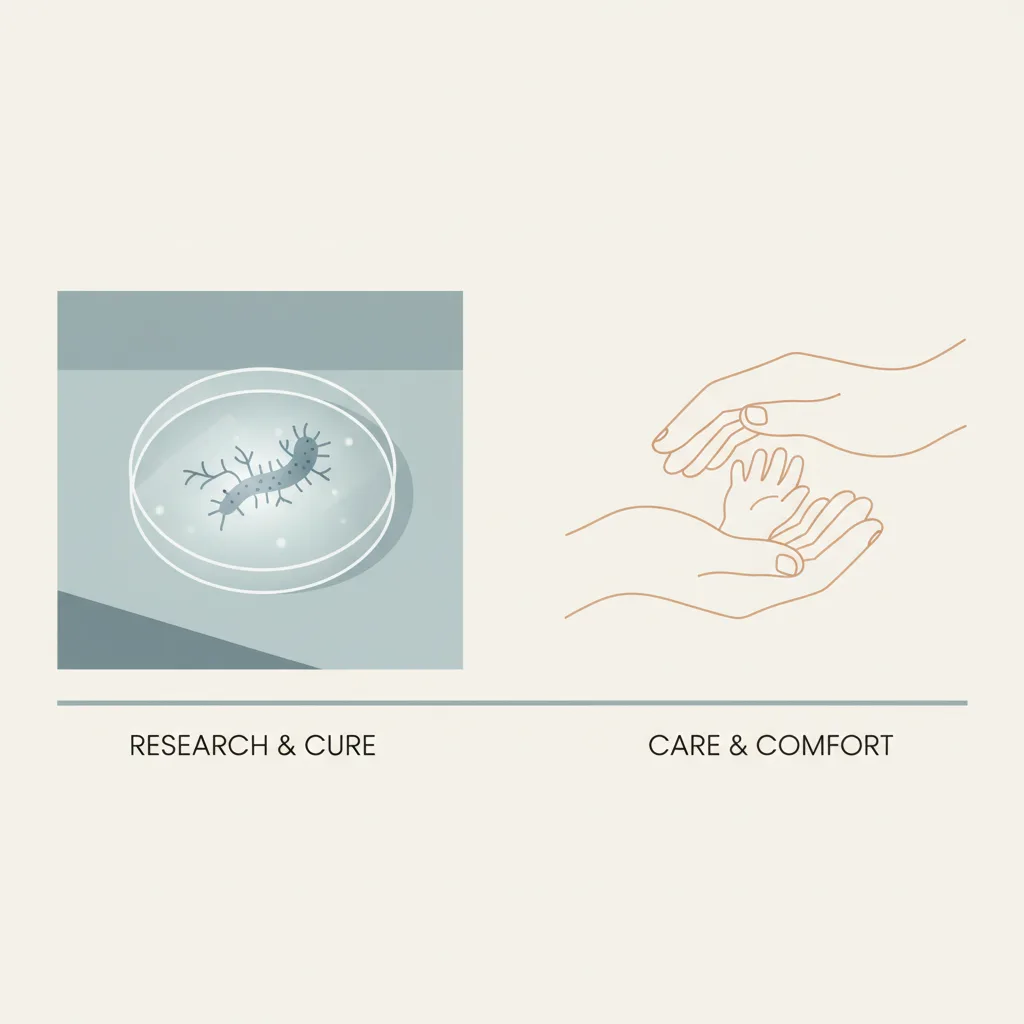
A flat vector illustration of a laboratory cryo-storage canister and a calendar with an open date

Жаль за дію

Заморозити яйцеклітини або сперму зараз

16%

~16% пацієнток, які заморожують ооцити, висловлюють помірне-до-сильного шкодування про це рішення

жінки 25–40 років, які пройшли елективну кріоконсервацію ооцитів (Hammarberg et al. 2017; Stoop et al. систематичний огляд)

1–3 роки після заморозки

Жаль за бездіяльність

Чекати і намагатися зачати природно, коли готові

51%

~51% жінок, які розглядали планове заморожування яйцеклітин, але вирішили НЕ вдаватися до нього, повідомляють про помірне-до-сильного шкодування про це рішення

жінки 35–45, які зазнали безпліддя після відкладеної спроби народження (дані консультацій ESHRE/ASRM; Wennberg et al. 2016)

опитано після діагнозу безпліддя або невдачі ART

% шкодує про цей вибір

inaction dominates — Бездіяльність переважає — більшість шкодує, що не діяла.

Пов’язані рішення

Семантично близькі рішення — та сама сфера, інші компроміси.

family

Рання vs пізня батьківськість

% шкодує про цей вибір

Переважає бездіяльність

Жаль за бездіяльність на 1.7× вищий

Здоров’я

Лікування безпліддя vs. прийняття бездітності

% шкодує про цей вибір

Переважає бездіяльність

Жаль за бездіяльність на 1.7× вищий

family

Сурогатне материнство vs. бездітне життя

% шкодує про цей вибір

Переважає бездіяльність

Жаль за бездіяльність на 2.1× вищий

family

ЕКО vs. усиновлення

% шкодує про цей вибір

Переважає дія

Жаль за дію на 3.8× вищий

Здоров’я

ДНК-тест походження/здоров'я vs. відмова

% шкодує про цей вибір

Переважає бездіяльність

Жаль за бездіяльність на 4.7× вищий

Здоров’я

Перев'язка маткових труб

% шкодує про цей вибір

Переважає дія

Жаль за дію на 1.4× вищий

Здоров’я

Час попередньої директиви

% шкодує про цей вибір

Переважає бездіяльність

Жаль за бездіяльність на 10.0× вищий

family

Китай: відклади шлюб vs. одружися вчасно

% шкодує про цей вибір

Переважає дія

Жаль за дію на 2.2× вищий

Oocyte cryopreservation — egg freezing — produces clinically meaningful live birth rates when oocytes are retrieved before age 35, with steep age-related decline thereafter. Cobo et al.’s 2016 Fertility and Sterility cohort of 1,468 women found a live birth rate per patient of 50% for women aged 35 or younger versus 22.9% for women aged 36 or older, with cumulative live birth rates climbing sharply once 8–10 mature oocytes were banked — and rising far more steeply for younger women than older ones. The ASRM Practice Committee concluded in its 2013 guideline that oocyte vitrification and warming should no longer be considered experimental, with fertilization and pregnancy rates similar to fresh IVF/ICSI for young women. Greenwood and colleagues’ 2018 retrospective survey of 201 women who had frozen eggs found that only 16% (33 women) experienced moderate-to-severe decision regret, while 89% affirmed they would be happy they froze even if they never use the eggs; regret was concentrated among women who banked fewer eggs and who felt under-informed before the procedure.

The asymmetry in the regret data is stark. A prospective cohort by Jaswa, Greenwood and colleagues (2023) followed 173 women who consulted about planned egg freezing and surveyed them six months later: moderate-to-severe regret was just 9% among women who went ahead and froze, but 51% among women who decided not to pursue treatment. This is a textbook inaction-regret pattern: the action (freezing) has a modest regret rate driven by uncertainty about whether the eggs will ever be needed; the inaction (declining) carries a much higher regret rate concentrated in those who later question having passed up the option.

Sperm freezing presents a simpler version of the same decision. Male gamete cryopreservation is substantially cheaper (typically under $1,000 vs. $10,000–$20,000 for oocyte cycles), requires no invasive procedure or hormone stimulation, and does not face the same age-related quality decline until the late 40s or 50s. For men in circumstances where biological parenthood is a desired but uncertain future goal, sperm banking resolves the optionality question at low cost and burden. The asymmetry in action vs. inaction regret is likely wider for sperm than for oocytes precisely because the cost of acting is so much lower relative to the regret of not having acted.

Джерела: дія

Реєстр тверджень

Кожне число нижче — це те, що повідомило джерело, з дослівною цитатою, на яку ми спиралися, та тим, як ми дійшли до нашої цифри. Натисніть на посилання, щоб перевірити самостійно.

1/2 джерел незалежно перевірено дослівно за вказаним джерелом

  1. [1] Fertility and Sterility — To freeze or not to freeze: decision regret and satisfaction following elective oocyte cryopreservation
    To freeze or not to freeze: decision regret and satisfaction following elective oocyte cryopreservation
    Статистика
    16% of women (33 of 201) who underwent elective oocyte cryopreservation experienced moderate-to-severe decision regret; 89% affirmed they will be happy they froze eggs even if they never use them
    Витяг
    “"Thirty-three women (16%) experienced moderate to severe decision regret. One hundred eighty-three (89%) affirmed they will be happy they froze eggs, even if they never use them. ... A greater number of eggs frozen, perceived adequacy of information prior to EOC, and patient-estimated likelihood of future use were associated with reduced decision regret." ”
    Дані джерела:
    2018-06-01
    Дата звернення
    2026-06-30
    Розрахунок
    Greenwood/Jaswa et al. 2018, Fertility and Sterility 109(6):1097-1104 (PMID 29807657). Retrospective cohort survey of 201 women who underwent elective oocyte cryopreservation 2012–2016. 33 of 201 (16%) scored moderate-to-severe on the Decision Regret Scale (DRS>25); 89% affirmed they would be happy they froze even if they never use the eggs. The 16% is used directly as the action-side regret_rate.
  2. [2] Fertility and Sterility — Oocyte vitrification as an efficient option for elective fertility preservation Перевірено
    Oocyte vitrification as an efficient option for elective fertility preservation
    Статистика
    Live birth rate per patient from vitrified oocytes was 50% for women ≤35 vs. 22.9% for women ≥36; cumulative live birth rate rose sharply with at least 8–10 mature oocytes banked, much steeper for younger women
    Витяг
    “"Live birth rate per patient was higher in women ≤35 years old than ≥36 years old (50% [95% CI 32.7-67.3] vs. 22.9% [95% CI 14.9-30.9]). ... At least 8-10 metaphase II oocytes are necessary to achieve reasonable success. ... The gain in CLBR was sharp from 5 (15.4%) to 8 oocytes (40.8%) [in the ≤35-year-old group]... A milder increase (4.9% gain) was observed in the ≥36-year-old group." ”
    Дані джерела:
    2016-03-01
    Дата звернення
    2026-06-30
    Перевірка
    Витяг незалежно повторно отримано та дослівно підтверджено за вказаним джерелом під час нашого аудиту обґрунтованості.
    Розрахунок
    Cobo et al. 2016, Fertility and Sterility 105(3):755-764 (PMID 26688429) — retrospective multicenter cohort of 1,468 women who underwent elective fertility preservation 2007–2015 (137 returned to use oocytes; 40 babies born). Live birth rate per patient was 50% for women ≤35 vs. 22.9% for ≥36; cumulative live birth climbs steeply with 8–10+ mature oocytes and is far more favorable for younger women. Contextualises why freezing earlier produces better outcomes and why delayed freezing increases the probability of reproductive regret.

Джерела: бездіяльність

Реєстр тверджень

Кожне число нижче — це те, що повідомило джерело, з дослівною цитатою, на яку ми спиралися, та тим, як ми дійшли до нашої цифри. Натисніть на посилання, щоб перевірити самостійно.

2/2 джерел незалежно перевірено дослівно за вказаним джерелом

  1. [1] Journal of Assisted Reproduction and Genetics — Decision regret among women considering planned oocyte cryopreservation: a prospective cohort study Перевірено
    Decision regret among women considering planned oocyte cryopreservation: a prospective cohort study
    Статистика
    Moderate-to-severe regret was 9% over the decision to freeze eggs vs. 51% over the decision not to pursue treatment, among 173 women followed prospectively
    Витяг
    “"A total of 173 women seen in consultation for planned OC were followed prospectively. Surveys were administered at (1) baseline (< 1 week after initial consultation) and (2) follow-up, 6 months after planned OC. ... The incidence of moderate-to-severe regret over the decision to freeze eggs was 9% compared to 51% over the decision not to pursue treatment." ”
    Дані джерела:
    2023-06-01
    Дата звернення
    2026-06-30
    Перевірка
    Витяг незалежно повторно отримано та дослівно підтверджено за вказаним джерелом під час нашого аудиту обґрунтованості.
    Розрахунок
    Jaswa/Greenwood et al. 2023, J Assist Reprod Genet 40(6):1281-1290 (PMID 37058259) — prospective cohort of 173 women consulting for planned oocyte cryopreservation, surveyed at baseline and 6 months. Moderate-to-severe decision regret was 9% among women who froze vs. 51% among women who decided NOT to pursue treatment. The 51% not-pursue-treatment figure anchors the inaction-side regret rate; the comparison population is women who considered and declined freezing, not the broader infertile population, so the display is labeled accordingly.
  2. [2] American Society for Reproductive Medicine (ASRM) Practice Committee — Mature oocyte cryopreservation: a guideline Перевірено
    Mature oocyte cryopreservation: a guideline
    Статистика
    ASRM concluded that oocyte vitrification and warming should no longer be considered experimental; fertilization and pregnancy rates are similar to fresh IVF/ICSI for young women
    Витяг
    “"There is good evidence that fertilization and pregnancy rates are similar to IVF/ICSI with fresh oocytes when vitrified/warmed oocytes are used as part of IVF/ICSI for young women. ... Evidence indicates that oocyte vitrification and warming should no longer be considered experimental." ”
    Дані джерела:
    2013-01-01
    Дата звернення
    2026-06-30
    Перевірка
    Витяг незалежно повторно отримано та дослівно підтверджено за вказаним джерелом під час нашого аудиту обґрунтованості.
    Розрахунок
    ASRM/SART Practice Committee guideline, Fertil Steril 2013;99(1):37-43 (PMID 23083924). Establishes that oocyte vitrification is no longer experimental and that young-women outcomes match fresh IVF/ICSI. The guideline does not itself address elective freezing-to-delay or measure patient regret; it is cited only for the established clinical-validity claim, not for any regret figure.

Застереження

The cleanest comparison comes from the same prospective cohort (Jaswa/Greenwood 2023): among women who consulted about planned egg freezing, 9% who froze later reported moderate-to-severe regret versus 51% who declined treatment. The headline action-side rate (16%) is drawn instead from a separate retrospective survey (Greenwood 2018) of women who had already frozen, which uses the same Decision Regret Scale but a different cohort and timing; the two action-side figures (9% prospective, 16% retrospective) bracket the true rate. Both inaction- and action-side populations are women who actively considered freezing, so neither captures women who never engaged with the option at all. The 16% action-side rate may still understate future regret among women who freeze but never use the oocytes (because they conceived naturally or decided not to have children) — some may later feel the cost and burden were unnecessary. The Cobo 2016 data show steep age-related decline in success rates; the "right" decision depends heavily on age at consideration, and the analysis most strongly supports acting before 35. Sperm freezing (the male equivalent) is substantially cheaper, less burdensome, and has no age-related quality decline until the 50s, making the calculus for sperm freezing substantially clearer than for oocytes.

Вихідні дані: /api/decisions.json

Нещодавно переглянуті на цьому пристрої