Evidence quality 4.88/5
Eight-dimension review score against the quality rubric . Each dimension scored 1–5.
- D1 Source grounding
- 4/5
- D2 Source authority
- 5/5
- D3 Arithmetic
- 5/5
- D4 Uncertainty
- 5/5
- D5 Scope
- 5/5
- D6 Prose
- 5/5
- D7 Perception honesty
- 5/5
- D8 Caveat completeness
- 5/5
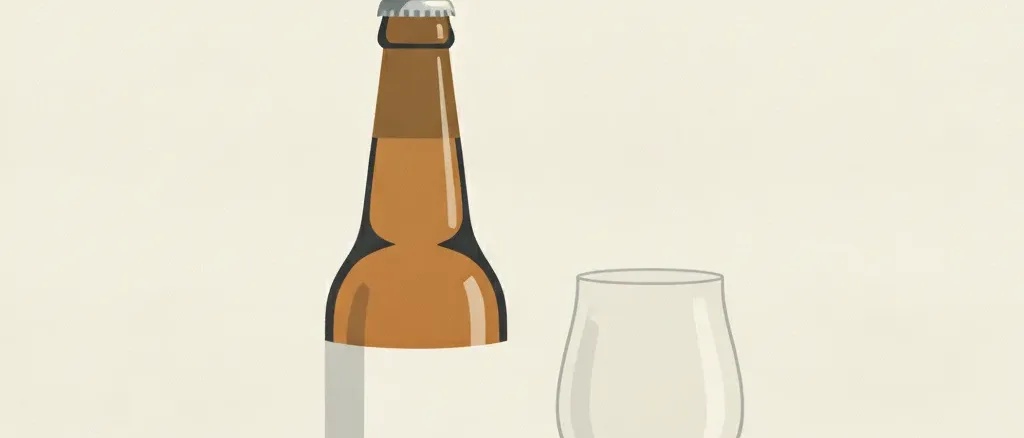
No study has measured the probability that a non-alcoholic beer harms a fetus or a nursing infant, so this entry carries no number. That is a statement about the evidence, not a verdict either way. What the literature does supply is the size of the dose and the reliability of the label, and those two facts are more useful than a manufactured probability. A US standard drink contains 14 grams of ethanol. A 12-ounce beer at the 0.5% legal ceiling for the “non-alcoholic” class holds about 1.4 grams, roughly a tenth of that, and many products in the category sit well below that ceiling. Framed against the food supply, a ceiling-strength non-alcoholic beer carries on the order of five times the ethanol per liter of a glass of orange or apple juice, and a weaker one falls into the range already present in juice, ripe fruit, and bread. Trace ethanol is not exotic; German market testing estimated children take in about 10 milligrams of dietary ethanol per kilogram of body weight each day from ordinary food.
The part that genuinely warrants attention is the one the drinker cannot check. In 2010, Motherisk researchers ran gas chromatography on 45 Canadian beverages labeled non- or low-alcohol and found that 13 of them, 29%, contained more ethanol than the label declared. Six products that claimed to contain no alcohol at all tested above 1% ethanol, more than double the ceiling for the non-alcoholic class. The failure was not that the labeled dose was dangerous but that the label was wrong, and it was wrong in the direction of more alcohol, not less. For a reader trying to hold exposure near zero, an unreliable label is the actual hazard, and it is one that no amount of careful serving-size arithmetic can offset. The regulatory categories themselves are worth keeping straight: “alcohol-free” means no detectable ethanol, which is the true 0.0% some readers have in mind, while “non-alcoholic” is a legal class that permits up to 0.5% by volume.
Breastfeeding is the more tractable half of the question. Alcohol in milk closely tracks alcohol in blood and then clears, peaking 30 to 60 minutes after a drink, so the infant dose scales with how much ethanol the drink actually delivered. A serving carrying a tenth of a standard drink’s alcohol produces a correspondingly small and short-lived peak: lactation guidance advises waiting about two to two and a half hours per standard drink before nursing, and a tenth of that dose clears far sooner.
None of this resolves into a harm rate, because the studies that would produce one do not exist at these trace doses, and the major obstetric bodies hold that no amount of alcohol has been established as safe in pregnancy. That guidance describes uncertainty at the low end, not a measured danger at 0.5%. The honest summary is narrow: the dose is small and comparable to everyday food, the breastfeeding transfer is small and brief, the harm probability is unknown rather than shown to be zero, and the one documented, quantified risk is that the number on the bottle cannot always be trusted.
Related tidbits
US labels split two ways: "non-alcoholic" legally allows up to 0.5% ABV, while "0.0%"/"alcohol-free" must contain none. Yet lab testing has caught "no alcohol" labels above 1% (a 2010 study). The stricter promise isn't automatically the more reliable one.
A "non-alcoholic" beer holds up to ~1.4 g of ethanol, about a tenth of a standard drink. Harm at that dose is unstudied, not shown safe — and a second uncertainty compounds it: a 2010 Canadian test of 45 such drinks found ~29% held more alcohol than the label declared.
Claim ledger
Every number below is what each source reported, with the verbatim quote we relied on and how we arrived at our figure. Click any link to verify directly.
-
[1] Canadian Journal of Clinical Pharmacology — Goh, Verjee & Koren (Motherisk, Hospital for Sick Children), 2010 — Alcohol content in declared non- or low alcoholic beverages: implications to pregnancy
Alcohol content in declared non- or low alcoholic beverages: implications to pregnancySee all 2 Likelier entries citing this source →
- Statistic
Of 45 beverages labeled non- or low-alcohol tested by gas chromatography, 13 (29%) contained ethanol above the concentration declared on the label; 6 products claiming to contain no alcohol were found to contain more than 1% ethanol- Excerpt
“"Pregnant women seeking replacement to alcoholic beverages may be misled by these labels, unknowingly exposing themselves and their unborn babies to ethanol." ”
- Source data from
- 2010-01-01
- Accessed
- 2026-08-01
- Calculation
- The load-bearing number for this entry: 13 of 45 (29%) declared non-/low-alcohol beverages measured higher ethanol than their label stated, and 6 of the 45 that claimed to contain no alcohol exceeded 1% ethanol — double the 0.5% legal ceiling for the non-alcoholic class. This is a per-product label-accuracy failure rate, not a lifetime harm probability, which is one reason the entry carries no normalized figure. Used to support the claim that the concrete hazard is label unreliability rather than the labeled dose. Canadian market, 2010; brand mix and QC have likely shifted since, so the exact 29% should be read as order-of-magnitude, not current.
-
[2] National Institute on Alcohol Abuse and Alcoholism (NIAAA), NIH — What Is A Standard Drink?
What Is A Standard Drink?See all 2 Likelier entries citing this source →
- Statistic
A US standard drink contains 14 grams (about 0.6 fluid ounces) of pure ethanol, the amount in 12 oz of regular 5% ABV beer- Excerpt
“"In the United States, one 'standard' drink (or one alcoholic drink equivalent) contains roughly 14 grams of pure alcohol, which is found in: 12 ounces of regular beer, which is usually about 5% alcohol." ”
- Source data from
- 2023-01-01
- Accessed
- 2026-08-01
- Calculation
- Anchors the dose comparison. A US standard drink = 14 g ethanol (NIAAA). At the 0.5% ABV legal ceiling for the non-alcoholic class, a 12 fl oz (355 mL) serving holds 355 × 0.005 = 1.775 mL ethanol × 0.789 g/mL density = 1.40 g ethanol. 1.40 / 14 = 0.10, so one ceiling-strength non-alcoholic beer ≈ one tenth of a standard drink; it would take about ten to equal one regular drink. Many non-alcoholic beers sit well below the 0.5% ceiling, delivering proportionally less. "Up to ~1.4 g, often less" is the honest phrasing.
-
[3] Journal of Analytical Toxicology — Gorgus, Hittinger & Schrenk, 2016 — Estimates of Ethanol Exposure in Children from Food not Labeled as Alcohol-Containing
Estimates of Ethanol Exposure in Children from Food not Labeled as Alcohol-Containing- Statistic
Orange, apple and grape juices contained up to 0.77 g ethanol/L; some packaged bakery products exceeded 1.2 g ethanol/100 g; estimated average daily dietary ethanol exposure in children was 10.3 mg/kg body weight- Excerpt
“"Orange, apple and grape juice contain substantial amounts of ethanol (up to 0.77 g/L)." "Certain packed bakery products such as burger rolls or sweet milk rolls contained more than 1.2 g ethanol/100 g." "An average daily exposure of 10.3 mg ethanol/kg body weight (b.w.) was estimated." ”
- Source data from
- 2016-09-01
- Accessed
- 2026-08-01
- Calculation
- The calibration anchor. A 0.5% ABV drink is 3.9 g ethanol/L (5 mL/L × 0.789 g/mL), so a ceiling-strength non-alcoholic beer carries roughly five times the ethanol per liter of orange or apple juice (up to 0.77 g/L), and non-alcoholic beers at the lower end of the category overlap the juice and bread range. Establishes that unlabeled trace ethanol is already a routine part of the food supply, which is why the trace dose in a sub-0.5% drink cannot honestly be framed as a categorically novel exposure. Does not measure harm; the authors note only that adverse effects of very low ethanol levels are "discussed."
-
[4] National Library of Medicine (NIH), Bethesda — Alcohol — Drugs and Lactation Database (LactMed)
Alcohol — Drugs and Lactation Database (LactMed)- Statistic
Breastmilk alcohol levels closely parallel maternal blood alcohol; milk levels peak 30–60 minutes after a drink; guidance is to wait ~2–2.5 hours per standard drink before nursing- Excerpt
“"Breastmilk alcohol levels closely parallel blood alcohol levels. The highest alcohol levels in milk occur 30 to 60 minutes after an alcoholic beverage, but food delays the time of peak milk alcohol levels." "With casual alcohol use (such as 1 glass of wine or beer) it is best to wait 2 to 2.5 hours per drink before nursing." ”
- Source data from
- 2024-05-15
- Accessed
- 2026-08-01
- Calculation
- Grounds the breastfeeding half of the question. Because milk ethanol tracks blood ethanol and then clears, the infant dose from a drink scales with that drink's alcohol content: a serving delivering a tenth of a standard drink's ethanol produces a correspondingly small, short-lived peak that is gone well within an hour. LactMed is a lactation-transfer reference, not a harm-rate study for sub-0.5% drinks specifically; no such harm rate exists, which is consistent with this entry carrying no number.
-
[5] American Journal of Obstetrics & Gynecology (author manuscript, PMC), 2025 — Perinatal use of non-alcoholic beverages that mirror alcohol
Perinatal use of non-alcoholic beverages that mirror alcoholSee all 2 Likelier entries citing this source →
- Statistic
'Alcohol-free' products contain no detectable alcohol; 'non-alcoholic' products legally contain up to 0.5% ABV. Providers interpret the ACOG/CDC 'no safe level of alcohol' guidance differently for these products- Excerpt
“"Providers offer varying advice on use of non-alcoholic beverages in the perinatal period, suggesting they interpret the 'no safe level of alcohol' guidance from ACOG and the CDC differently." ”
- Source data from
- 2025-03-01
- Accessed
- 2026-08-01
- Calculation
- Supplies the label taxonomy the question turns on: "alcohol-free" (no detectable ethanol, i.e. the 0.0% the user distinguishes) versus "non-alcoholic" (up to 0.5% ABV, the class this entry covers). Also documents that clinical guidance is genuinely unsettled — ACOG and CDC hold that no amount of alcohol is established as safe in pregnancy, while this review notes moderate non-alcoholic-beverage use is likely safe for most in the perinatal period, with specific caution for patients at risk of alcohol use disorder because the products can trigger cravings. The disagreement is itself the honest state of the evidence and is why no harm probability can be asserted.