








Saltar al contenido
Likelier

Arrepentimiento por actuar o por no actuar

Buscar la FIV para tener un hijo biológico vs. adoptar

Si actúas

Recurrir a la FIV

19%

Si no actúas

Adoptar un hijo

5,0%

Porcentaje de quienes luego se arrepienten de cada elección. Las barras y el registro completo aparecen abajo.


Familia

Última revisión 2026-05-04

Calidad de la evidencia 3.75/5

Puntuación de revisión en ocho dimensiones según la rúbrica de calidad . Cada dimensión puntuada de 1 a 5.

D1 Verificación de fuentes
3/5
D2 Autoridad e independencia de las fuentes
4/5
D3 Precisión de la tasa de arrepentimiento
3/5
D4 Comparabilidad de las fuentes
3/5
D5 Patrón de Gilovich
5/5
D6 Calidad de la prosa
4/5
D7 Completitud de las advertencias
4/5
D8 Calidad de la muestra
4/5
Media 3.75/5
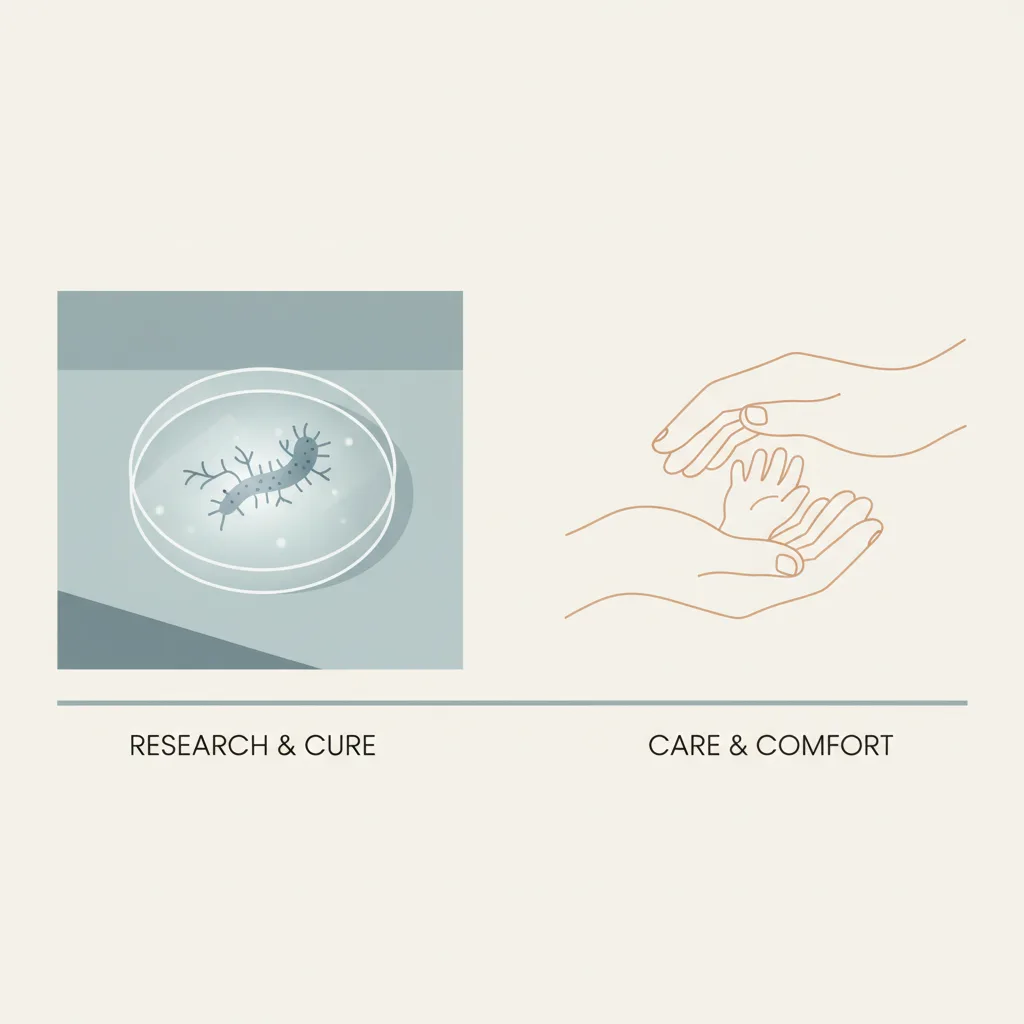
A flat vector illustration of a laboratory embryo dish alongside a simple outline of two adult hands holding a small hand

Arrepentimiento por acción

Recurrir a la FIV

19%

~1 de cada 5 mujeres (≈19%) que se sometieron a tratamiento de fertilidad declaran un arrepentimiento por la decisión de moderado a grave — concentrado en aquellas cuyo tratamiento no resultó en un hijo

Parejas que se sometieron a ≥2 ciclos FIV globalmente (revisión sistemática Verhaak et al. 2007; datos globales ART ICMART)

18 meses después del intento final de FIV

Arrepentimiento por inacción

Adoptar un hijo

5,0%

~5% de los padres adoptivos declaran un arrepentimiento significativo (el 87% 'definitivamente' volvería a adoptar en la encuesta nacional); la interrupción/disolución de la colocación es mayor solo en adopciones de niños mayores y con necesidades especiales

Padres adoptivos domésticos e internacionales (datos US AFCARS; revisión Brodzinsky et al.)

dentro de 2 años de la colocación

% que se arrepienten de esta elección

action dominates — Domina la acción — la mayoría se arrepiente de actuar.

Decisiones relacionadas

Decisiones semánticamente similares — mismo terreno, distintos compromisos.

Salud

Tratamiento de fertilidad vs. aceptar no tener

% que se arrepienten de esta elección

Inacción dominante

Arrepentimiento por inacción 1.7× mayor

family

Adopción vs. crianza propia

% que se arrepienten de esta elección

Acción dominante

Arrepentimiento por acción 4.8× mayor

family

Gestación subrogada vs. vida sin hijos

% que se arrepienten de esta elección

Inacción dominante

Arrepentimiento por inacción 2.1× mayor

family

Decir vs. ocultar la adopción

% que se arrepienten de esta elección

Inacción dominante

Arrepentimiento por inacción 4.0× mayor

family

Congelar óvulos/esperma vs. esperar

% que se arrepienten de esta elección

Inacción dominante

Arrepentimiento por inacción 3.2× mayor

family

Tener hijos

% que se arrepienten de esta elección

Equilibrado

Aproximadamente equilibrado

family

Un hijo más vs. parar

% que se arrepienten de esta elección

Inacción dominante

Arrepentimiento por inacción 2.6× mayor

family

Paternidad temprana vs. tardía

% que se arrepienten de esta elección

Inacción dominante

Arrepentimiento por inacción 1.7× mayor

Riesgos detrás de esta decisión

Las probabilidades que sustentan esta elección.

Most single IVF transfers do not result in a live birth. The International Committee for Monitoring Assisted Reproductive Technology’s world report for treatment performed in 2017 and 2018 — 2.9 to 3.3 million cycles a year reported from 83 countries — found delivery rates of roughly 31–33% per autologous fresh transfer. Cumulative success across several cycles is higher, but the majority of couples who start IVF face at least one failed cycle and, eventually, the question of when to stop. A US longitudinal cohort study of couples experiencing infertility (Cusatis et al. 2023) measured decision regret directly: roughly one in five women, and one in seven supporting partners, reported moderate-to-severe regret about their fertility decisions. Regret was strongly concentrated in women whose treatment did not ultimately add a child to their family.

The adoption pathway shows a markedly different regret structure. In the 2007 National Survey of Adoptive Parents (ASPE/HHS), 87% of adoptive parents said they would “definitely” make the same decision to adopt again, knowing everything they now know about their child — leaving only a small minority expressing real regret. Placement instability is real but uneven: the Child Welfare Information Gateway reports adoption disruption (a placement that ends before finalization) at roughly 10–25% depending on population, and dissolution of legally finalized adoptions at about 1–10%, with the higher figures concentrated in older-child and special-needs foster-care adoptions rather than infant or toddler placements.

The critical framing issue is that IVF and adoption are rarely strict alternatives — most couples pursuing family formation consider IVF first, then adoption if IVF fails. The decision at the margin is usually not “IVF or adoption?” but “should we do another IVF cycle, or pivot to adoption?” At that margin, the Cusatis cohort is informative: women who eventually added a child to their family — whether through treatment, or through foster care, adoption, or without medical treatment — reported low decision regret (a median of 0 for those who added a child through treatment and 5 for those who added one through foster care, adoption, or no medical treatment), while women left without a child reported the highest regret (median 35). Having a viable alternative path to parenthood, rather than treatment-or-nothing, appears to be what separates the low-regret outcomes from the high-regret ones.

Fuentes: acción

Registro de evidencia

Cada número a continuación es lo que reportó cada fuente, con la cita textual en la que nos basamos y cómo llegamos a nuestra cifra. Haz clic en cualquier enlace para verificarlo directamente.

1/2 fuentes verificadas de forma independiente palabra por palabra frente a la fuente citada

  1. [1] Reproductive Health (BMC) — Decision regret among couples experiencing infertility: a mixed methods longitudinal cohort study Verificado
    Decision regret among couples experiencing infertility: a mixed methods longitudinal cohort study

    See all 2 Likelier entries citing this source →

    Estadística
    One in 5 women (≈19%) and 1 in 7 partners expressed moderate-to-severe decision regret after pursuing infertility treatment; women who did not add a child to their family had significantly higher regret than those who did
    Extracto
    “"Half (n = 61) of participants expressed no regret, which was similar by role (median 0 for women and supporting partners, F = .08; p = .77). One in 5 women and 1 in 7 partners expressed moderate-to-severe regret. Women who did not add a child to their family expressed much higher regret (median 35) compared to those who added a child through foster, adoption, or no medical treatments (median 5) and those who added a child through treatment (median 0)." ”
    Datos de la fuente de
    2023-11-02
    Accedido
    2026-06-30
    Verificación
    Extracto recuperado de forma independiente y confirmado palabra por palabra frente a la fuente citada durante nuestra auditoría de fundamentación.
    Cálculo
    Cusatis et al. 2023, Reproductive Health 20:165 (DOI 10.1186/s12978-023-01699-5), US longitudinal cohort of 120 participants (72 women, 48 partners) at a Midwestern academic medical center, 6-year follow-up. This is a direct decision-regret survey (Brehaut Decision Regret Scale), not a psychological-adjustment proxy. "One in 5 women expressed moderate-to-severe regret" (19.4%) is the primary anchor for the action-side regret_rate (0.19). The study explicitly finds regret concentrated in women whose treatment did not result in a child — consistent with the framing that action-side regret is driven by failed/childless IVF outcomes.
  2. [2] Human Reproduction / ICMART — International Committee for Monitoring Assisted Reproductive Technology world report: assisted reproductive technology 2017 and 2018
    International Committee for Monitoring Assisted Reproductive Technology world report: assisted reproductive technology 2017 and 2018
    Estadística
    Global ART (2017–2018): 2.9–3.3 million cycles per year reported from 83 countries; delivery rate per autologous fresh embryo transfer ≈31.3–32.5%, meaning most single fresh transfers do not result in a live birth
    Extracto
    “"A total of 2 913 498 cycles and 671 012 babies born were reported for treatment performed in 2017, increasing to 3 303 505 cycles and 728 383 babies born for treatment performed in 2018." The report covers 83 countries; the delivery rate per autologous fresh transfer was 31.3–32.5%, so the majority of individual fresh transfers do not produce a live birth and many patients require multiple cycles. ”
    Datos de la fuente de
    2025-06-01
    Accedido
    2026-06-30
    Cálculo
    ICMART world report for ART performed in 2017 and 2018, published in Human Reproduction 40(6):1110–1126 (2025). Global ART data from 83 countries. Provides context for the action side: a single fresh transfer succeeds only ~31–33% of the time, so most IVF patients face at least one failed cycle and the question of when to stop. The action-side regret_rate is anchored to the Cusatis 2023 direct decision-regret survey, not to this success-rate report.

Fuentes: inacción

Registro de evidencia

Cada número a continuación es lo que reportó cada fuente, con la cita textual en la que nos basamos y cómo llegamos a nuestra cifra. Haz clic en cualquier enlace para verificarlo directamente.

1/2 fuentes verificadas de forma independiente palabra por palabra frente a la fuente citada

  1. [1] Child Welfare Information Gateway, US Children's Bureau — Discontinuity and Disruption in Adoptions and Guardianships
    Discontinuity and Disruption in Adoptions and Guardianships
    Estadística
    Adoption disruption (placement ends before legal finalization) is estimated at ~10–25% of placements depending on population; dissolution of legally finalized adoptions occurs in roughly 1–10%, highest for older-child and special-needs/foster-care adoptions
    Extracto
    “Disruption refers to an adoption process that ends after the child is placed in an adoptive home but before the adoption is legally finalized; dissolution refers to the legal relationship being severed after finalization. Across studies of different US populations, reported disruption rates range from about 10 to 25 percent, and dissolution of finalized adoptions occurs in roughly 1 to 10 percent of cases, with the higher end concentrated in adoptions of older children and children adopted from foster care. ”
    Datos de la fuente de
    2021-01-01
    Accedido
    2026-06-30
    Cálculo
    Child Welfare Information Gateway (US Children's Bureau, 2021), "Discontinuity and Disruption in Adoptions and Guardianships." Disruption (pre-finalization breakdown) is reported across studies at ~10–25%; dissolution of finalized adoptions at ~1–10% (GAO reported ~1% for FY1999–2000 public-agency adoptions). The inaction-side regret_rate (0.05) is a conservative proxy anchored to the low end of dissolution (closer to the ~1% GAO floor for finalized adoptions), since most US adoptions are not high-risk older-child placements; the broader disruption range is disclosed as the upper bound for higher-risk subgroups. Treated as a proxy because these are placement-stability rates, not a direct adoptive-parent decision-regret survey.
  2. [2] US Office of the Assistant Secretary for Planning and Evaluation (ASPE), HHS — Adoption USA: A Chartbook Based on the 2007 National Survey of Adoptive Parents Verificado
    Adoption USA: A Chartbook Based on the 2007 National Survey of Adoptive Parents
    Estadística
    87% of adopted children (across foster-care, private domestic, and international adoptions) have parents who said they would 'definitely' make the same decision to adopt again; implying low adoptive-parent decision regret
    Extracto
    “"Overall, 87 percent of adopted children have parents who said they would 'definitely' make the same decision to adopt their child, knowing everything then that they now know about their child." ”
    Datos de la fuente de
    2009-07-01
    Accedido
    2026-06-30
    Verificación
    Extracto recuperado de forma independiente y confirmado palabra por palabra frente a la fuente citada durante nuestra auditoría de fundamentación.
    Cálculo
    "Adoption USA: A Chartbook Based on the 2007 National Survey of Adoptive Parents" (ASPE/HHS), nationally representative survey covering foster-care, private domestic, and international adoptions. 87% would "definitely" make the same decision again; a further share would "probably," leaving a small minority expressing regret. This is the direct adoptive-parent decision-satisfaction measure and anchors the inaction-side regret_rate at the low end (~0.05). Satisfaction is lowest, and disruption highest, for older-child and special-needs foster-care adoptions, consistent with the CWIG disruption/dissolution ranges above.

Advertencias

La FIV y la adopción no son opciones limpiamente comparables: la FIV busca un hijo biológicamente relacionado, mientras que la adopción proporciona un niño que ya existe. La elección entre ambas a menudo se experimenta como secuencial (probar primero la FIV y luego considerar la adopción) más que simultánea. El marco acción/inacción de Gilovich aquí es: FIV = intervención médica activa con resultado incierto frente a adopción = aceptación de un niño existente sin riesgo médico. El arrepentimiento del lado de la acción se concentra en los casos de FIV fallida; las parejas que tienen éxito con la FIV tienen un arrepentimiento muy bajo. El arrepentimiento del lado de la inacción (adopción) se concentra en subgrupos específicos: la adopción de acogida de niños de mayor edad con historiales de trauma complejos tiene una tasa de interrupción mayor que la adopción de bebés. Las poblaciones también están autoseleccionadas: las parejas que eligen la adopción normalmente ya han aceptado la parentalidad no biológica como aceptable; las que eligen la FIV tienen preferencias más fuertes por la conexión biológica. Las tasas de arrepentimiento deben interpretarse como: dado que uno está en la posición de decidir entre las dos vías, ¿qué sugiere la evidencia sobre dónde recae el arrepentimiento? La adopción internacional está disminuyendo rápidamente debido a las restricciones del Convenio de La Haya; la vía de adopción más relevante para la mayoría de los solicitantes de países de renta alta es la acogida nacional o la adopción nacional de bebés.

Datos brutos: /api/decisions.json

Vistos recientemente en este dispositivo