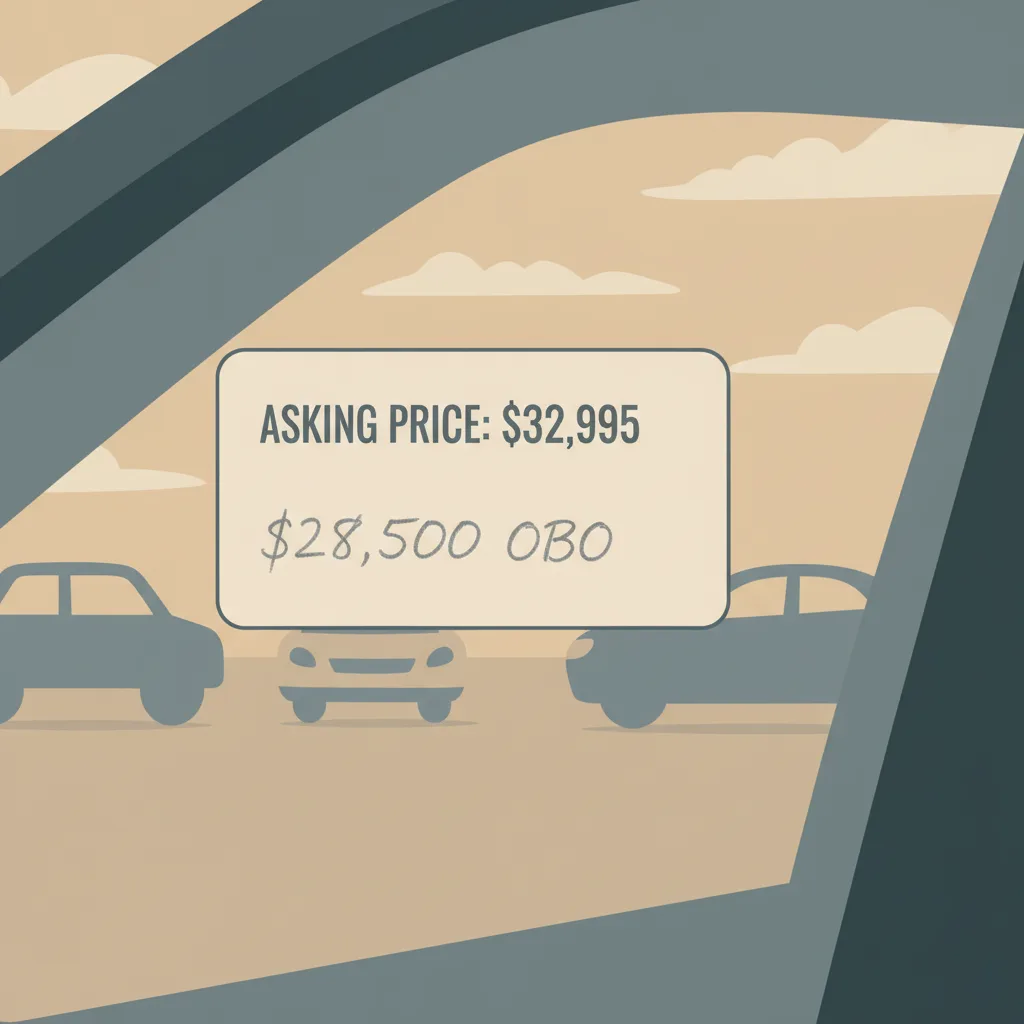
Negociar el alquiler versus aceptar el precio solicitado
Si actúas
Negociar el alquiler
18%
Si no actúas
Aceptar el precio solicitado
35%
Porcentaje de quienes luego se arrepienten de cada elección. Las barras y el registro completo aparecen abajo.
Financiero
Última revisión 2026-05-11
Calidad de la evidencia 4.25/5
Puntuación de revisión en ocho dimensiones según la
rúbrica de calidad
. Cada dimensión puntuada de 1 a 5.
D1 Verificación de fuentes
5/5
D2 Autoridad e independencia de las fuentes
4/5
D3 Precisión de la tasa de arrepentimiento
2/5
D4 Comparabilidad de las fuentes
3/5
D5 Patrón de Gilovich
5/5
D6 Calidad de la prosa
5/5
D7 Completitud de las advertencias
5/5
D8 Calidad de la muestra
5/5
Media4.25/5
Datos sustitutos — no existe ninguna encuesta directa sobre el arrepentimiento para esta decisión. Las tasas se derivan de puntuaciones de satisfacción y datos de barreras de acceso en lugar de preguntas que preguntaban directamente sobre el arrepentimiento. Ver advertencias más abajo.
Arrepentimiento por acción
Negociar el alquiler
18%
~18% de los inquilinos que intentaron negociar reporta insatisfacción con el resultado (proxy de datos de intento y tasa de éxito)
Inquilinos estadounidenses que intentaron negociar el alquiler al firmar el contrato o renovación
retrospectivo, renovación de contrato más reciente
Arrepentimiento por inacción
Aceptar el precio solicitado
35%
~35% de los inquilinos que nunca negociaron cree que está pagando de más y desearía haber preguntado (proxy de datos de brecha de conciencia)
Inquilinos estadounidenses que nunca han negociado los términos de su contrato
retrospectivo, sin marco temporal fijo
% que se arrepienten de esta elección
Negociar el alquilerAceptar el precio solicitado
18%35%
inaction dominates — Domina la inacción — la mayoría se arrepiente de no actuar.
Decisiones relacionadas
Decisiones semánticamente similares — mismo terreno, distintos compromisos.
Renunciar a la contingencia de inspecciónMantener el derecho a inspección
47%15%
Acción dominante
Arrepentimiento por acción 3.1× mayor
Roughly 60% of US renters have never negotiated the terms of their lease, according to a 2024 LendingTree survey of 2,049 renters — and yet 37% of all renters in the same survey say they don’t believe they are paying fair market value. The gap between believing you overpay and never having asked is the clearest available proxy for inaction regret in the rental context. Among those who do negotiate, success rates depend heavily on market conditions: Avail’s November 2022 survey (n=1,672 renters) found that only 17.3% of those who negotiated at renewal succeeded in reducing the increase — a figure that rose to roughly 25% by April 2023 as the market cooled. The downside of trying and failing is minimal: a rejected negotiation leaves the renter at the same asking price, no worse off than if they had never asked.
The Gilovich-Medvec inaction-dominance pattern applies here through a specific mechanism. Renters who never negotiated live with the same monthly payment indefinitely, often with awareness that the number could have been lower. Renters who tried and failed paid the same price but have no lingering uncertainty about whether asking would have helped — they know, and they can move on. The psychological cost of unresolved “what if I had asked?” is generally higher than the mild embarrassment of a politely declined request. Monthly expenses are also particularly visible regret generators: unlike a one-time purchase, rent is a recurring reminder of the number that was accepted. Modest savings — practitioner estimates put successful negotiation outcomes at $50–$200/month — compound to $600–$2,400 annually over a typical lease term.
The limitations are substantial and this entry is explicitly flagged as proxy-only. No published survey asks “do you regret not negotiating your rent?” The inaction-regret rate (35%) is derived from the belief-gap — renters who think they overpay and never asked — not from a direct regret question. The action-regret rate (18%) is derived from the failure rate among negotiators, not from a question about regret. Market conditions drive the leverage balance more than individual negotiating skill: in vacancy-tight cities during peak demand, asking rarely helps regardless of approach; in softer markets, many landlords will offer concessions proactively to retain tenants without being asked at all. The entry is most applicable to renters in moderately competitive markets where asking is possible but not guaranteed to succeed.
Fuentes: acción
Registro de evidencia
Cada número a continuación es lo que reportó cada fuente, con la cita textual en la que nos basamos y cómo llegamos a nuestra cifra. Haz clic en cualquier enlace para verificarlo directamente.
1/2 fuentes verificadas de forma independiente palabra por palabra frente a la fuente citada
[1]Avail / Realtor.com — Rental Market Trends for 2023
Verificado
Fuente de referencia
34.7% of renters attempted to negotiate at renewal; of those, 17.3% succeeded in reducing the increase (rising to ~25% by April 2023)
Extracto
“"Only one-third (34.7%) of surveyed renters reported trying to negotiate with their landlord the last time their rent was raised. Of those, 17.3% succeeded in getting a smaller rent increase."
”
Datos de la fuente de
2023-01-01
Accedido
2026-05-11
Verificación
Extracto recuperado de forma independiente y confirmado palabra por palabra frente a la fuente citada durante nuestra auditoría de fundamentación.
Cálculo
Avail / Realtor.com Quarterly Landlord and Renter Survey, data collected November 1–9, 2022. Sample: n=1,672 renters nationwide, margin of error ±2.4%. The 17.3% success rate implies 82.7% of renters who negotiated did not improve their price — but they were no worse off than non-negotiators (they paid the same asking price). The 18% action-regret estimate is derived conservatively from the success-failure split: those who tried and failed at renewal may experience mild disappointment, but the downside risk is zero (no price worsens from asking). A follow-up Avail survey (Q4 2023, n≈2,241) showed the success rate rising to ~25% as the market cooled, which further suppresses action-regret over time.
[2]CNBC — 1 in 4 Renters Are Successfully Negotiating Lower Prices
Artículo periodístico
By April 2023, ~25% of renters who attempted to negotiate successfully reduced their rent
Extracto
“"About 25% of renters who attempted to negotiate their rent were successfully paying less than the asking price as of April 2023, up from 17% in October 2022 as rental market conditions cooled."
”
Datos de la fuente de
2023-05-25
Accedido
2026-05-11
Cálculo
CNBC reporting on Avail follow-up data, April 2023. Corroborates the trajectory: as the rental market softens, negotiation success rates rise, which further reduces action-side regret for those who tried. Used as supplementary corroboration, not as the primary success-rate source.
Fuentes: inacción
Registro de evidencia
Cada número a continuación es lo que reportó cada fuente, con la cita textual en la que nos basamos y cómo llegamos a nuestra cifra. Haz clic en cualquier enlace para verificarlo directamente.
[1]LendingTree — Landlord Survey: How Rent Negotiation Works in Today's Market
Fuente de referencia
60% of renters have never negotiated lease terms; 37% of all renters don't believe they're paying fair market value
Extracto
“"60% of renters have never negotiated the terms of their lease. 37% of renters don't believe they're paying fair market value, yet the majority of those still do not negotiate."
”
Datos de la fuente de
2024-04-29
Accedido
2026-05-11
Cálculo
LendingTree / QuestionPro survey of n=2,049 US consumers ages 18–78, conducted March 15–18, 2024. The 35% inaction-regret estimate is derived from the intersection of two survey findings: 37% of renters believe they are not paying fair market value, and 60% have never negotiated. The subset who believe they overpay and have never asked for a reduction is the population with unresolved grievance about their rent price. "Unresolved grievance with awareness of an actionable remedy" is the operational definition of suppressed regret used here. No question directly asking "do you regret not negotiating your rent?" was identified in any published survey. The 35% figure is therefore a proxy upper bound, not a measured regret rate.
[2]Lemonade / OnePoll — Rising Rents Survey
Fuente de referencia
57% of renters have tried negotiating rent at some point; 43% have never attempted despite rising rents
Extracto
“"57% of renters said they have tried negotiating their rent with their landlord. 43% have never attempted to negotiate despite rising rents."
”
Datos de la fuente de
2022-11-01
Accedido
2026-05-11
Cálculo
Lemonade / OnePoll survey of n=2,000 American renters, random double-opt-in panel, fielded November 9–14, 2022. OnePoll is an AAPOR/ESOMAR member. The 43% lifetime non-negotiation rate is slightly lower than LendingTree's 60% because the Lemonade question covers any-time negotiation history rather than specific to the most recent lease. Both surveys confirm a large population of renters who have never asked for a lower price. Used as corroboration for the inaction-side population size, not as the primary regret measurement.
Advertencias
MEDICIONES PROXY EN TODO. Ninguna encuesta publicada pregunta directamente a los inquilinos si se arrepienten de no haber negociado su alquiler. Ambos lados de esta entrada se construyen a partir de datos adyacentes: la tasa de arrepentimiento por acción de estadísticas de intento y éxito (18% = límite superior aproximado para decepción entre negociadores fallidos, que no perdieron nada); la tasa de arrepentimiento por inacción de un proxy de brecha de creencia (37% de los inquilinos cree que paga de más, sin embargo, el 60% nunca ha negociado). El proxy de brecha de creencia no equivale a arrepentimiento — un inquilino que cree que paga de más pero tiene baja confianza para negociar, o cuyo propietario es conocido por ser inflexible, puede estar calibrado con precisión en lugar de en negación. Las tasas de éxito para la negociación varían sustancialmente por mercado: en un mercado con vacantes ajustadas (por ejemplo, Nueva York, San Francisco durante la demanda pico), los propietarios tienen poco incentivo para negociar; en un mercado con alta vacancia, las concesiones son comunes incluso sin pedirlas. Los datos Avail son específicos del contexto de renovación; negociar un nuevo contrato es una posición estructuralmente diferente (más apalancamiento para el propietario, ya que el inquilino aún no se ha mudado). Los ahorros promedio de una negociación exitosa se estiman en $50-$200/mes basados en relatos de profesionales en administración de propiedades — ningún estudio revisado por pares cuantifica los ahorros medios en una gran población. La estimación del 35% de arrepentimiento por inacción puede sobreestimar el arrepentimiento verdadero al asumir que todos los inquilinos que creen pagar de más y nunca preguntaron se arrepienten de esa elección; algunos pueden tener expectativas precisas de rechazo y racionalmente eligieron no preguntar.