




Saltar al contenido
Likelier

Arrepentimiento por actuar o por no actuar

Colocar a un padre anciano en una residencia frente a cuidarlo en casa uno mismo

Si actúas

Ingreso en una residencia

54%

Si no actúas

Cuidado familiar en el hogar

23%

Porcentaje de quienes luego se arrepienten de cada elección. Las barras y el registro completo aparecen abajo.


Familia

Última revisión 2026-05-02

Calidad de la evidencia 4.13/5

Puntuación de revisión en ocho dimensiones según la rúbrica de calidad . Cada dimensión puntuada de 1 a 5.

D1 Verificación de fuentes
5/5
D2 Autoridad e independencia de las fuentes
4/5
D3 Precisión de la tasa de arrepentimiento
2/5
D4 Comparabilidad de las fuentes
3/5
D5 Patrón de Gilovich
5/5
D6 Calidad de la prosa
5/5
D7 Completitud de las advertencias
5/5
D8 Calidad de la muestra
4/5
Media 4.13/5
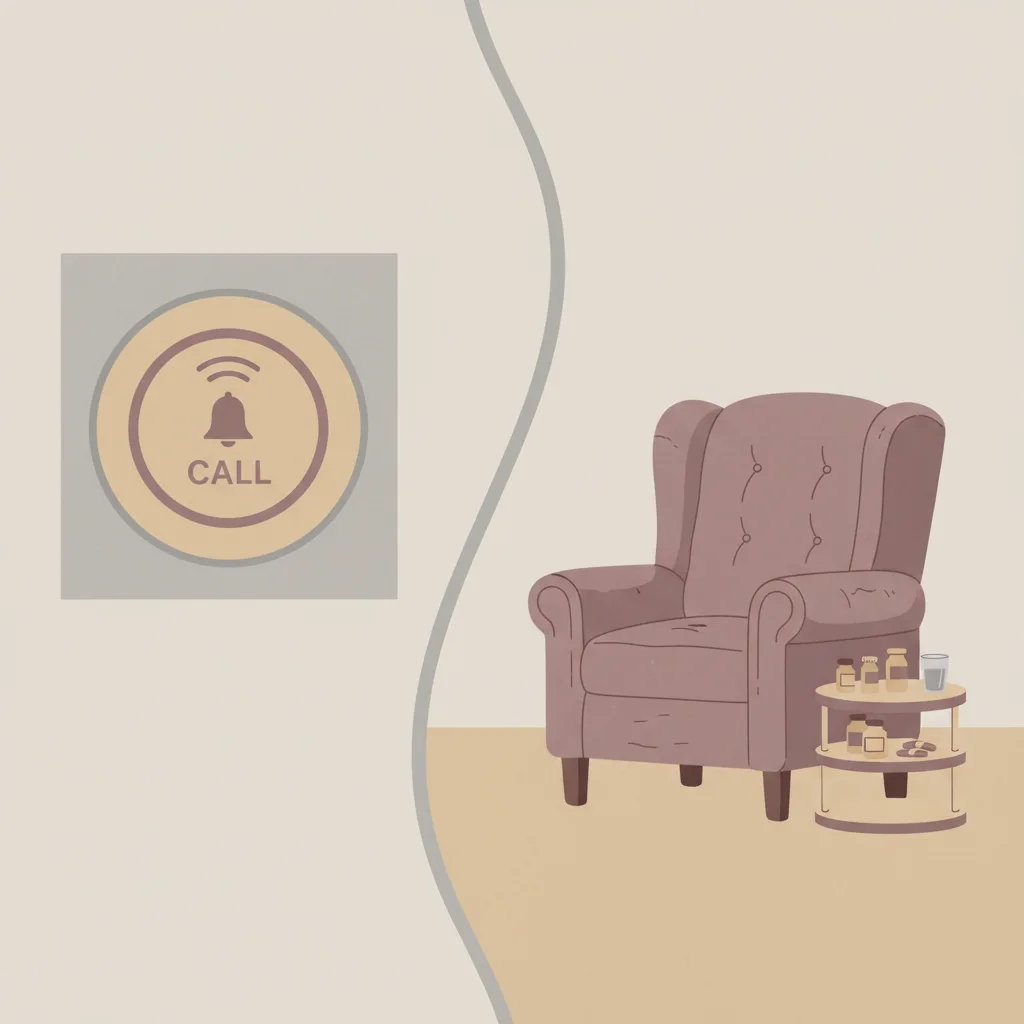
A hospital call button on the left and a home armchair with a medication tray on the right

Arrepentimiento por acción

Ingreso en una residencia

54%

54% de las familias reporta sentirse al menos algo culpable tras la colocación en hogar de ancianos (proxy de culpa)

Adultos estadounidenses con un familiar en un hogar de ancianos

transversal, retrospectivo

Arrepentimiento por inacción

Cuidado familiar en el hogar

23%

23% de los cuidadores domiciliarios reporta que su salud ha empeorado debido al cuidado (proxy de carga)

Cuidadores familiares estadounidenses, representativo a nivel nacional

transversal; cuidado en curso al momento de la encuesta

% que se arrepienten de esta elección

action dominates — Domina la acción — la mayoría se arrepiente de actuar.

Decisiones relacionadas

Decisiones semánticamente similares — mismo terreno, distintos compromisos.

familyDirecta

Autorizar donación de órganos familiar

% que se arrepienten de esta elección

Inacción dominante

Arrepentimiento por inacción 6.8× mayor

family

Quedarse en casa vs trabajar

% que se arrepienten de esta elección

Acción dominante

Arrepentimiento por acción 1.3× mayor

family

Adopción vs. crianza propia

% que se arrepienten de esta elección

Acción dominante

Arrepentimiento por acción 4.8× mayor

family

Privada vs pública

% que se arrepienten de esta elección

Inacción dominante

Arrepentimiento por inacción 3.2× mayor

family

Tutela plena vs toma de decisiones apoyada

% que se arrepienten de esta elección

Equilibrado

Aproximadamente equilibrado

family

Rescatar vs. dejar aprender

% que se arrepienten de esta elección

Acción dominante

Arrepentimiento por acción 1.2× mayor

family

Tener hijos

% que se arrepienten de esta elección

Equilibrado

Aproximadamente equilibrado

family

Crianza libre vs. helicóptero

% que se arrepienten de esta elección

Acción dominante

Arrepentimiento por acción 2.3× mayor

54% of families report feeling at least somewhat guilty after placing a relative in a nursing home, according to a Care.com survey of 978 US adults (2019), with 14% feeling “extremely guilty.” A peer-reviewed parallel from Statz et al. (2021), tracking 83 dementia caregivers through residential long-term care transitions, found that nearly half (46.3%) experienced guilt from the care recipient, other family members, or facility staff. Adult children reported markedly more guilt from other family members than spouses did — 29.8% versus 4.0%, the only guilt source that differed significantly by caregiver role — and the qualitative record is thick with the specific fear that placement happened “too soon.” Action-side guilt is well-documented, replicated across research designs, and begins immediately after the move.

The inaction side lacks a symmetrical direct-regret measure, but the burden data are substantial. The 2020 NAC/AARP nationally representative survey of 1,707 US caregivers found that 23% said caregiving had made their own health worse — up from 17% in 2015. The same report found 28% had stopped saving and 23% had taken on more debt because of caregiving. Schulz and Sherwood’s 2008 synthesis of three decades of caregiver health research concluded that caregiving “creates physical and psychological strain over extended periods of time” and that roughly two-thirds of caregivers experience some negative consequence. The floor of inaction-side harm is real but harder to frame as regret because most home caregivers are embedded in an ongoing situation rather than looking back on a discrete choice.

Under Gilovich and Medvec’s framework, actions generate more regret in the short term, and the placement guilt literature fits this pattern: guilt is highest immediately after the move and tends to attenuate as the care recipient stabilises and the caregiver observes professional care quality. Inaction regret — regret about not having placed sooner — is harder to study because it surfaces mainly when home care has already broken down (hospitalisation, caregiver health crisis, or care recipient injury from inadequate supervision). The 31-point gap between sides should be read cautiously: the two measures are not equivalent constructs, and a direct bilateral survey asking both groups the same retrospective question does not yet exist in the published literature.

Fuentes: acción

Registro de evidencia

Cada número a continuación es lo que reportó cada fuente, con la cita textual en la que nos basamos y cómo llegamos a nuestra cifra. Haz clic en cualquier enlace para verificarlo directamente.

  1. [1] Care.com / Statista — Guilt over leaving one or more relatives in a nursing home in the United States in 2019
    Guilt over leaving one or more relatives in a nursing home in the United States in 2019
    Estadística
    53.6% of respondents felt at least somewhat guilty: extremely (13.7%), moderately (20.9%), somewhat (19%); 23.7% slightly guilty; 22.7% not at all
    Extracto
    “"In the 2019, roughly 14 percent of people with a relative in a nursing home felt extremely guilty over their choice of leaving their relative in the nursing home." ”
    Datos de la fuente de
    2019-01-25
    Accedido
    2026-05-02
    Cálculo
    Care.com online survey, n=978 US adults with a family member in a nursing home, 2019. Regret proxy: respondents rating guilt as "extremely" (13.7%) + "moderately" (20.9%) + "somewhat" (19.0%) = 53.6%, rounded to 0.54. The AARP coping article independently summarises this as "over 50 percent felt at least somewhat guilty." "Slightly guilty" (23.7%) is excluded as below the "somewhat" threshold used by AARP's framing.
  2. [2] Couple and Family Psychology: Research and Practice (PMC) — "We Moved Her Too Soon": Navigating Guilt Among Adult Child and Spousal Caregivers of Persons Living with Dementia Following a Move into Residential Long-Term Care
    "We Moved Her Too Soon": Navigating Guilt Among Adult Child and Spousal Caregivers of Persons Living with Dementia Following a Move into Residential Long-Term Care
    Estadística
    46.3% of dementia caregivers (N=83) reported experiencing guilt from care recipient, other family members, or facility staff following nursing home placement
    Extracto
    “"Nearly half of caregivers reported experiencing guilt from their care recipient, other family members, or facility staff." ”
    Datos de la fuente de
    2021-05-13
    Accedido
    2026-05-02
    Cálculo
    Mixed-methods study, N=83 caregivers (25 spouses, 58 adult children) transitioning a family member with Alzheimer's disease or related dementia to residential long-term care. Quantitative analyses identified guilt prevalence at 46.3% for any source of guilt. Adult children reported guilt from other family members at 29.8% vs 4.0% for spouses. The peer-reviewed figure (46.3%) is conservative relative to the Care.com survey (53.6%); the entry uses the Care.com figure as the primary regret_rate because it covers a broader guilt construct and a larger, non-dementia-specific sample.

Fuentes: inacción

Registro de evidencia

Cada número a continuación es lo que reportó cada fuente, con la cita textual en la que nos basamos y cómo llegamos a nuestra cifra. Haz clic en cualquier enlace para verificarlo directamente.

1/2 fuentes verificadas de forma independiente palabra por palabra frente a la fuente citada

  1. [1] National Alliance for Caregiving (NAC) and AARP — Caregiving in the United States 2020
    Caregiving in the United States 2020
    Estadística
    23% of US caregivers say caregiving has made their own health worse, up from 17% in 2015; 23% find it hard to take care of their own health
    Extracto
    “"Family caregivers provide vital help and care for their loved ones, yet this survey shows that they keep getting stretched thinner and thinner." ”
    Datos de la fuente de
    2020-05-14
    Accedido
    2026-05-02
    Cálculo
    NAC/AARP nationally representative probability-based online survey of 1,707 US caregivers age 18+, conducted 2019 by Greenwald & Associates. Regret proxy: 23% reporting health has worsened. This is a burden/harm proxy, not a direct regret measure — no large-scale survey asks home caregivers retrospectively whether they regret choosing home care over facility placement. The 23% represents the floor of caregiver harm; separate data show 28% have stopped saving, 23% have taken on more debt, and 21% provide 41+ hours/week of care. The health-worsened figure is used as the regret_rate because health decline is the most proximate marker of caregiver regret in the absence of a direct question.
  2. [2] American Journal of Nursing — Physical and Mental Health Effects of Family Caregiving Verificado
    Physical and Mental Health Effects of Family Caregiving
    Estadística
    Caregiving creates physical and psychological strain over extended periods; about one third of caregivers report neither strain nor negative health effects, implying approximately two thirds experience some negative consequence
    Extracto
    “"Caregiving has all the features of a chronic stress experience: It creates physical and psychological strain over extended periods of time, is accompanied by high levels of unpredictability and uncontrollability, has the capacity to create secondary stress in multiple life domains such as work and family relationships, and frequently requires high levels of vigilance." ”
    Datos de la fuente de
    2008-09-01
    Accedido
    2026-05-02
    Verificación
    Extracto recuperado de forma independiente y confirmado palabra por palabra frente a la fuente citada durante nuestra auditoría de fundamentación.
    Cálculo
    Literature review by Schulz & Sherwood, American Journal of Nursing, September 2008, Vol. 108, No. 9 Supplement, pp. 23–27. DOI: 10.1097/01.NAJ.0000336406.45248.4c. Authors synthesise three decades of caregiver health research and note that approximately one third of caregivers report no strain, suggesting two thirds experience some negative health consequence. This is directionally consistent with the AARP 2020 figure of 23% reporting health explicitly worsened, which is the primary regret_rate used. The Schulz & Sherwood review corroborates that the AARP 23% is a reasonable lower bound.

Advertencias

Los dos lados miden constructos diferentes: las tasas lado acción son respuestas de culpa sobre una decisión de colocación completada, mientras que las tasas lado inacción son proxies de carga de salud entre cuidadores domiciliarios en curso — ninguna encuesta a gran escala pregunta directamente a los cuidadores domiciliarios si se arrepienten de no haber buscado atención en instalaciones. La encuesta Care.com lado acción (n=978) fue un panel en línea opt-in, no muestreado probabilísticamente, lo que puede sobrerrepresentar a cuidadores que buscan activamente información sobre culpa. La cifra revisada por pares de Gaugler (46,3%) es específica de demencia y usa un constructo de culpa más estrecho; la cifra de la entrada del 54% de Care.com cubre todas las relaciones con hogares de ancianos. Ambas cifras lado acción son proxies de culpa, no arrepentimiento medido en un horizonte retrospectivo fijo. La carga del cuidado varía enormemente por diagnóstico, intensidad y apoyo disponible: los datos AARP muestran que el 21% de los cuidadores domiciliarios proporciona 41+ horas por semana, un subgrupo probable experimentando tasas de arrepentimiento mucho más altas que el titular del 23%. Finalmente, la decisión de colocar o cuidar en casa rara vez se elige libremente — las restricciones financieras, geografía, dinámicas familiares y necesidad clínica todas la moldean, haciendo el arrepentimiento parcialmente atribuible a circunstancias en lugar de la decisión misma.

Datos brutos: /api/decisions.json

Vistos recientemente en este dispositivo