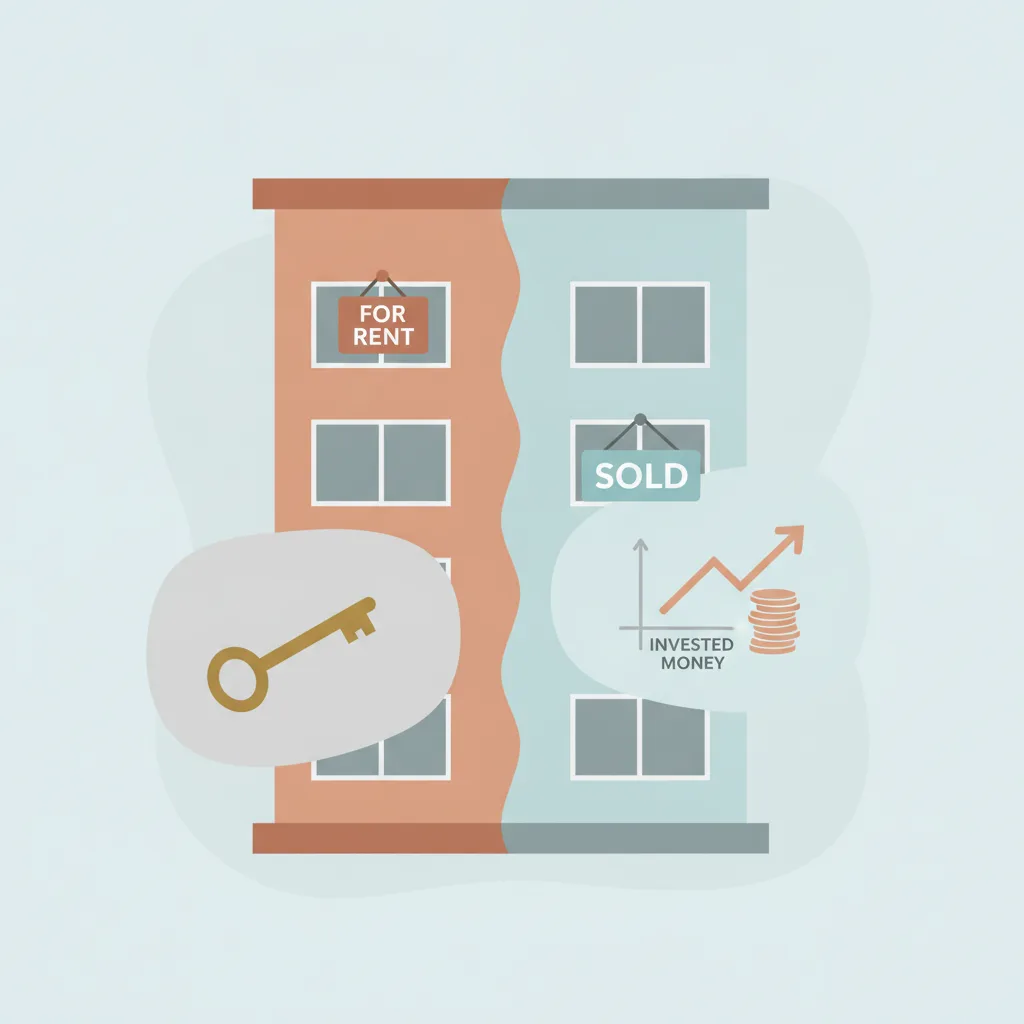
Alquilar una propiedad que posees frente a venderla e invertir el dinero
Si actúas
Vender e invertir
25%
Si no actúas
Conservar y alquilar
40%
Porcentaje de quienes luego se arrepienten de cada elección. Las barras y el registro completo aparecen abajo.
Financiero
Última revisión 2026-07-09
Calidad de la evidencia 4.13/5
Puntuación de revisión en ocho dimensiones según la
rúbrica de calidad
. Cada dimensión puntuada de 1 a 5.
D1 Verificación de fuentes
4/5
D2 Autoridad e independencia de las fuentes
4/5
D3 Precisión de la tasa de arrepentimiento
3/5
D4 Comparabilidad de las fuentes
4/5
D5 Patrón de Gilovich
4/5
D6 Calidad de la prosa
5/5
D7 Completitud de las advertencias
4/5
D8 Calidad de la muestra
5/5
Media4.13/5
Datos sustitutos — no existe ninguna encuesta directa sobre el arrepentimiento para esta decisión. Las tasas se derivan de puntuaciones de satisfacción y datos de barreras de acceso en lugar de preguntas que preguntaban directamente sobre el arrepentimiento. Ver advertencias más abajo.
Arrepentimiento por acción
Vender e invertir
25%
El 25% de quienes venden su casa se arrepiente — echa de menos el hogar que dejó
Adultos estadounidenses que vendieron una vivienda en 2021–2022 (encuesta Clever Real Estate 2022)
retrospectivamente, en ~1–2 años tras la venta
Arrepentimiento por inacción
Conservar y alquilar
40%
El 40% de los propietarios de vivienda en alquiler desearía no haber empezado nunca
Inversores estadounidenses del mercado inmobiliario residencial / arrendadores (encuesta Clever Real Estate 2024)
retrospectivamente, propietarios actuales
% que se arrepienten de esta elección
Vender e invertirConservar y alquilar
25%40%
inaction dominates — Domina la inacción — la mayoría se arrepiente de no actuar.
Decisiones relacionadas
Decisiones semánticamente similares — mismo terreno, distintos compromisos.
No survey pits “rent it out” directly against “sell it and invest the money,” so this pairs the two closest measured regrets. About 40% of residential rental owners wish they’d never started investing in real estate (Clever Real Estate’s 2024 survey of 764 investors), against about 25% of recent sellers who regret selling because they miss the home they gave up (Clever’s 2022 survey of 1,000 sellers). On those proxies, keeping-and-renting is the more-regretted path — the opposite of the intuition that selling is the move you might kick yourself for later.
The reason keep-and-rent regret runs high is that landlording is not the passive income it is sold as. In the same 2024 survey, 56% of owners had already had to evict a tenant, 61% were still chasing missed rent every month, and 87% reported some regret about their investment decisions. The NBER study of landlords’ own lease ledgers puts a price on the hassle: filing a single eviction costs the equivalent of two to three months’ rent, and nonpayment is common enough that many landlords tolerate months of it before acting. Against that, the seller’s regret is quieter and more emotional — missing a home — rather than a recurring operational drain.
Read the gap cautiously. This is a proxy pairing, flagged as such: the two numbers come from different people surveyed in different years, the seller figure includes forced moves that mix circumstance with choice, and the investor sample leans toward heavily-invested owners who may regret more than a one-flat landlord would. It also says nothing about the money — whether renting out or selling-and-investing wins financially depends on rental yield, local price growth, and what the sale proceeds earn elsewhere, none of which a regret rate measures. The Gilovich pattern (holding-and-managing regret accumulates while the sold home fades into a wistful memory) fits the direction here, but the evidence is indicative, not a head-to-head test.
Fuentes: acción
Registro de evidencia
Cada número a continuación es lo que reportó cada fuente, con la cita textual en la que nos basamos y cómo llegamos a nuestra cifra. Haz clic en cualquier enlace para verificarlo directamente.
[1]Clever Real Estate — American Home Seller Report: 2022 Edition
Fuente de referencia
One-fourth of home sellers (25%) regretted selling because they miss their old home
Extracto
“"One-fourth of respondents (25%) regretted selling because they miss their old home" — from a survey of 1,000 people who sold a home in 2021 or 2022 (fielded Sept. 29 – Oct. 2, 2022).
”
Datos de la fuente de
2022-10-12
Accedido
2026-07-09
Cálculo
Used as a proxy for regret about the decision to sell itself. The 25% "miss their old home" figure is the cleanest available decision-construct regret for sellers — distinct from the much larger "process" regret numbers (priced too low, sold too fast, commission too high) that other seller surveys report, which measure regret about how the sale went, not regret about having sold. Because it is a proxy (not a head-to-head "sell vs rent-out" survey), this entry is flagged proxy_only.
Fuentes: inacción
Registro de evidencia
Cada número a continuación es lo que reportó cada fuente, con la cita textual en la que nos basamos y cómo llegamos a nuestra cifra. Haz clic en cualquier enlace para verificarlo directamente.
[1]Clever Real Estate — Residential Real Estate Investing in 2024: More Rent Money, More Rental Problems↗ 1 other entry
Fuente de referencia
40% of residential real estate investors wish they'd never started investing in real estate; 87% have regrets about their investment decisions; 56% have had to evict a tenant
Extracto
“"40% say they wish they'd never started investing in real estate [...] 87% [...] have regrets about their investment decisions [...] More than half of respondents (56%) have had to evict a tenant at some point." — survey of 764 US residential real estate investors, fielded May 18–June 9, 2024.
”
Datos de la fuente de
2024-07-01
Accedido
2026-07-09
Cálculo
The 40% "wish they'd never started" figure is used as the regret proxy for the keep-and-rent side. The broader 87% "have regrets" figure is not used as the headline because it spans market and financial regrets, not the decision to become a landlord specifically. Sample skews toward active, heavily-invested owners (90% had lost money on an investment).
[2]National Bureau of Economic Research (NBER Working Paper 33155) — Nonpayment and Eviction in the Rental Housing Market↗ 1 other entry
Estudio primario
Filing an eviction costs landlords the equivalent of 2–3 months of rent; nonpayment is common and frequently tolerated before eviction
Extracto
“"Filing an eviction costs landlords the equivalent of 2-3 months of rent [...] Nonpayment is common, is frequently tolerated by landlords, and is often followed by recovery."
”
Datos de la fuente de
2024-11-01
Accedido
2026-07-09
Cálculo
Cited to explain why keep-and-rent regret runs high: landlording carries real, recurring costs (an eviction alone runs 2–3 months' rent), which the "passive income" framing understates. Corroboration for the regret driver, not a regret rate itself.
Advertencias
Este emparejamiento se basa únicamente en indicadores indirectos: ninguna encuesta pregunta a las mismas personas si se arrepienten de haber decidido alquilar una propiedad en lugar de venderla e invertir el dinero, así que cada lado emplea el equivalente más cercano disponible. El lado de la venta se aproxima con el 25% de quienes vendieron recientemente y «echan de menos su antiguo hogar» (Clever 2022); el lado de conservar y alquilar, con el 40% de propietarios que «desearían no haber empezado nunca a invertir en inmuebles» (Clever 2024). Ambas cifras proceden de muestras distintas (vendedores frente a inversores) de años distintos (2022 frente a 2024), por lo que la comparación es orientativa, no controlada. El porcentaje de «echo de menos mi casa» incluye a personas obligadas a mudarse por un cambio de trabajo o por motivos económicos, lo que mezcla circunstancia con elección; la muestra de inversores está sesgada hacia propietarios activos y muy implicados (el 90% había perdido dinero en alguna inversión), lo que probablemente exagera el arrepentimiento de quien alquila un único piso heredado o desocupado. Y algo crucial: las tasas de arrepentimiento no dicen nada sobre el dinero: si conviene más alquilar o vender e invertir depende de la rentabilidad del alquiler, la revalorización local de los precios y el rendimiento del capital invertido tras la venta — todo ello dependiente del momento y del mercado, y no recogido aquí. El enfoque es estadounidense; la ley de protección al inquilino y los costes de transacción difieren notablemente entre países.