

Saltar al contenido
Likelier

Arrepentimiento por actuar o por no actuar

Comprar lo justo para ahora o comprar más grande de lo necesario

Si actúas

Comprar lo que se ajusta a tus necesidades actuales

8,0%

Si no actúas

Comprar más grande de lo que necesitas

5,0%

Porcentaje de quienes luego se arrepienten de cada elección. Las barras y el registro completo aparecen abajo.


Financiero

Última revisión 2026-05-04

Calidad de la evidencia 4.13/5

Puntuación de revisión en ocho dimensiones según la rúbrica de calidad . Cada dimensión puntuada de 1 a 5.

D1 Verificación de fuentes
5/5
D2 Autoridad e independencia de las fuentes
4/5
D3 Precisión de la tasa de arrepentimiento
4/5
D4 Comparabilidad de las fuentes
5/5
D5 Patrón de Gilovich
2/5
D6 Calidad de la prosa
5/5
D7 Completitud de las advertencias
4/5
D8 Calidad de la muestra
4/5
Media 4.13/5
Evidencia directa
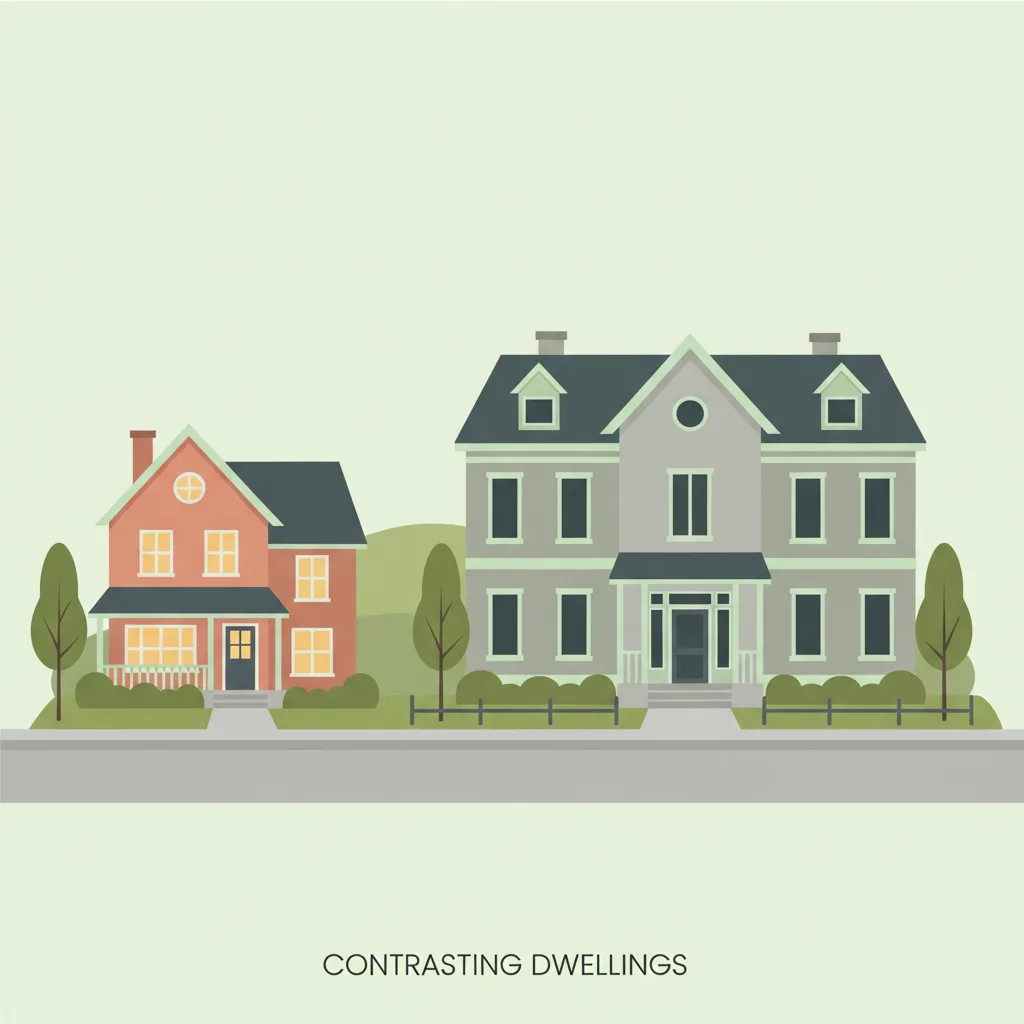
Two houses side by side — one compact and tidy, the other larger with several dark, unused windows.

Arrepentimiento por acción

Comprar lo que se ajusta a tus necesidades actuales

8,0%

~8% de los propietarios desearía haber comprado más grande

Propietarios estadounidenses, representativo a nivel nacional

retrospectivo, sin marco temporal fijo

Arrepentimiento por inacción

Comprar más grande de lo que necesitas

5,0%

~5% de los propietarios se arrepiente de haber comprado demasiado espacio

Propietarios estadounidenses, representativo a nivel nacional

retrospectivo, sin marco temporal fijo

% que se arrepienten de esta elección

action dominates — Domina la acción — la mayoría se arrepiente de actuar.

Decisiones relacionadas

Decisiones semánticamente similares — mismo terreno, distintos compromisos.

FinancieroDirecta

Comprar casa

% que se arrepienten de esta elección

Inacción dominante

Arrepentimiento por inacción 5.6× mayor

Financiero

Renovación del hogar

% que se arrepienten de esta elección

Acción dominante

Arrepentimiento por acción 2.3× mayor

Financiero

Hipoteca fija vs. ARM

% que se arrepienten de esta elección

Acción dominante

Arrepentimiento por acción 3.6× mayor

Financiero

Renunciar a inspección del inmueble

% que se arrepienten de esta elección

Acción dominante

Arrepentimiento por acción 3.1× mayor

Financiero

Negociación del alquiler

% que se arrepienten de esta elección

Inacción dominante

Arrepentimiento por inacción 1.9× mayor

Financiero

Nuevo vs usado

% que se arrepienten de esta elección

Equilibrado

Aproximadamente equilibrado

lifestyle

Eléctrico vs gasolina

% que se arrepienten de esta elección

Acción dominante

Arrepentimiento por acción 2.9× mayor

lifestyle

Orgánico vs. convencional

% que se arrepienten de esta elección

Inacción dominante

Arrepentimiento por inacción 3.1× mayor

About 8% of US homeowners wish they had bought a bigger home, versus roughly 5% who regret buying too much space, according to Bankrate’s 2024 survey of homeowners with purchase regrets. The gap is narrow — 3 percentage points — and the finding cuts against the popular “don’t buy too much house” advice. Among homeowners who have any regret at all (47% of the total), “too small” ranks second at 18%, while “too big” comes in at 10%, behind maintenance costs, location, overpaying, and mortgage rates. The pattern extends beyond housing: vehicle buyers who chose a compact car and later needed a larger one face modest upgrade costs, while those who bought an oversized SUV absorb years of higher fuel, insurance, and depreciation on capacity they never use.

The small gap masks an asymmetry in how the two regrets feel. Right-sizers who outgrow their space experience a concrete, daily friction: the cramped home office, the bedroom that doubled as a nursery. Oversizers, by contrast, often absorb their regret into adjacent financial complaints. Bankrate’s survey found 40% of regretful owners citing maintenance and hidden costs as their top grievance, and 13% citing an unaffordable mortgage — both categories that disproportionately affect those who bought more home than they needed. Genesove and Mayer’s study of Boston condominiums showed that owners anchored to their purchase price set asking prices 25–35% above market when facing a loss, creating a psychological lock-in that makes downsizing from an oversized home especially painful. Hedonic adaptation compounds the problem: the pleasure of extra square footage fades within months, but the mortgage payment never adapts.

Neither side of this decision carries catastrophic regret rates. Both land under 10%, well below the 45% of renters who wish they had bought at all. The honest read is that most homeowners, whether they sized up or sized down, would do the same thing again. For buyers weighing the tradeoff today, the financial math favors right-sizing: transaction costs for a future upgrade ($1,000–$5,000 for a local move) are modest compared to years of carrying costs on unused space. But the data does not support a strong directional claim. Individual variables — market trajectory, family plans, remote-work permanence — swamp the aggregate signal.

Fuentes: acción

Registro de evidencia

Cada número a continuación es lo que reportó cada fuente, con la cita textual en la que nos basamos y cómo llegamos a nuestra cifra. Haz clic en cualquier enlace para verificarlo directamente.

  1. [1] Bankrate — Bankrate 2024 Homeowner Regrets Survey
    Bankrate 2024 Homeowner Regrets Survey
    Estadística
    18% of homeowners with regrets say they bought too small a house; 47% of all homeowners have at least one regret
    Extracto
    “"Nearly half (47 percent) of current U.S. homeowners have a regret about their purchase. Among those with regrets, 18% say they bought too small of a house." ”
    Datos de la fuente de
    2024-05-01
    Accedido
    2026-04-28
    Cálculo
    Bankrate's April 2024 nationally representative survey. 47% of homeowners report at least one regret. Of those, 18% cite "too small" as their regret. Population-level rate: 0.47 × 0.18 = 0.085, rounded to 0.08. This represents homeowners who, looking back, wish they had purchased a larger home — not necessarily people who deliberately right-sized, but the closest available proxy.
  2. [2] Clever Real Estate — American Home Buyer Report: 2024 Edition
    American Home Buyer Report: 2024 Edition
    Estadística
    24% of recent homebuyers with regrets say their home doesn't meet all their needs
    Extracto
    “"82% of recent buyers have at least one regret about their purchase. Among those with regrets, 24% say their home doesn't meet all their needs." ”
    Datos de la fuente de
    2024-05-13
    Accedido
    2026-04-28
    Cálculo
    Clever Real Estate survey of 920 Americans who bought in 2023-2024. The 24% "doesn't meet all needs" is broader than pure size regret — it includes layout, features, and location — but corroborates the Bankrate finding that undersizing is a common regret category.

Fuentes: inacción

Registro de evidencia

Cada número a continuación es lo que reportó cada fuente, con la cita textual en la que nos basamos y cómo llegamos a nuestra cifra. Haz clic en cualquier enlace para verificarlo directamente.

  1. [1] Bankrate — Bankrate 2024 Homeowner Regrets Survey
    Bankrate 2024 Homeowner Regrets Survey
    Estadística
    10% of homeowners with regrets say they bought too big a house; 47% of all homeowners have at least one regret
    Extracto
    “"Among homeowners with regrets, 10% say their regret is that their home is too big. The most common regret overall is maintenance and hidden costs (40%), followed by buying too small (18%)." ”
    Datos de la fuente de
    2024-05-01
    Accedido
    2026-04-28
    Cálculo
    Same Bankrate 2024 survey. 47% have regrets, 10% of those cite "too big." Population-level rate: 0.47 × 0.10 = 0.047, rounded to 0.05. Note that oversizing regret may be underreported because its costs (maintenance, utilities, mortgage strain) are captured by adjacent categories: 40% cite "maintenance/hidden costs" and 13% cite "mortgage too high." Those who bought too big may attribute regret to cost rather than size.
  2. [2] The Quarterly Journal of Economics — Loss Aversion and Seller Behavior: Evidence from the Housing Market
    Loss Aversion and Seller Behavior: Evidence from the Housing Market
    Estadística
    Owners facing nominal losses set asking prices 25-35% above expected sale price and exhibit much lower sale hazard
    Extracto
    “"Condominium owners subject to nominal losses set higher asking prices of 25-35 percent of the difference between the property's expected selling price and their original purchase price, attain higher selling prices of 3-18 percent of that difference, and exhibit a much lower sale hazard than other sellers." ”
    Datos de la fuente de
    2001-11-01
    Accedido
    2026-04-28
    Cálculo
    Genesove and Mayer (2001), data from downtown Boston condos in the 1990s. This study doesn't directly measure oversizing regret but documents the mechanism that traps oversizers: loss aversion anchors owners to their purchase price, making them reluctant to sell even when the home no longer fits. Owner-occupants show effects twice as large as investors. Cited as evidence that overprovisioning creates psychological lock-in beyond the financial cost.

Advertencias

Ninguna encuesta hace la pregunta precisa planteada aquí — "¿dimensionó deliberadamente bien y se arrepiente, o sobreproporcionó deliberadamente y se arrepiente?". Las tasas de Bankrate se derivan de propietarios juzgando retrospectivamente si su hogar es demasiado pequeño o demasiado grande, lo que confunde la estrategia deliberada con las restricciones presupuestarias y los cambios de vida. La brecha de 3 puntos porcentuales es lo suficientemente pequeña como para que las circunstancias individuales dominen la señal agregada. Los datos de vivienda son los más fuertes; la evidencia de vehículos y compras generales es direccional pero más delgada. En mercados que se aprecian rápidamente, los sobredimensionadores son parcialmente rescatados por el crecimiento del patrimonio; en mercados planos o en declive, la penalización por costo de pies cuadrados extra se amplifica. El 40% que cita los costos de mantenimiento puede incluir a muchos sobredimensionadores que enmarcan su arrepentimiento como financiero en lugar de espacial, lo que estrecharía o invertiría la brecha si se recodificara.

Datos brutos: /api/decisions.json

Vistos recientemente en este dispositivo