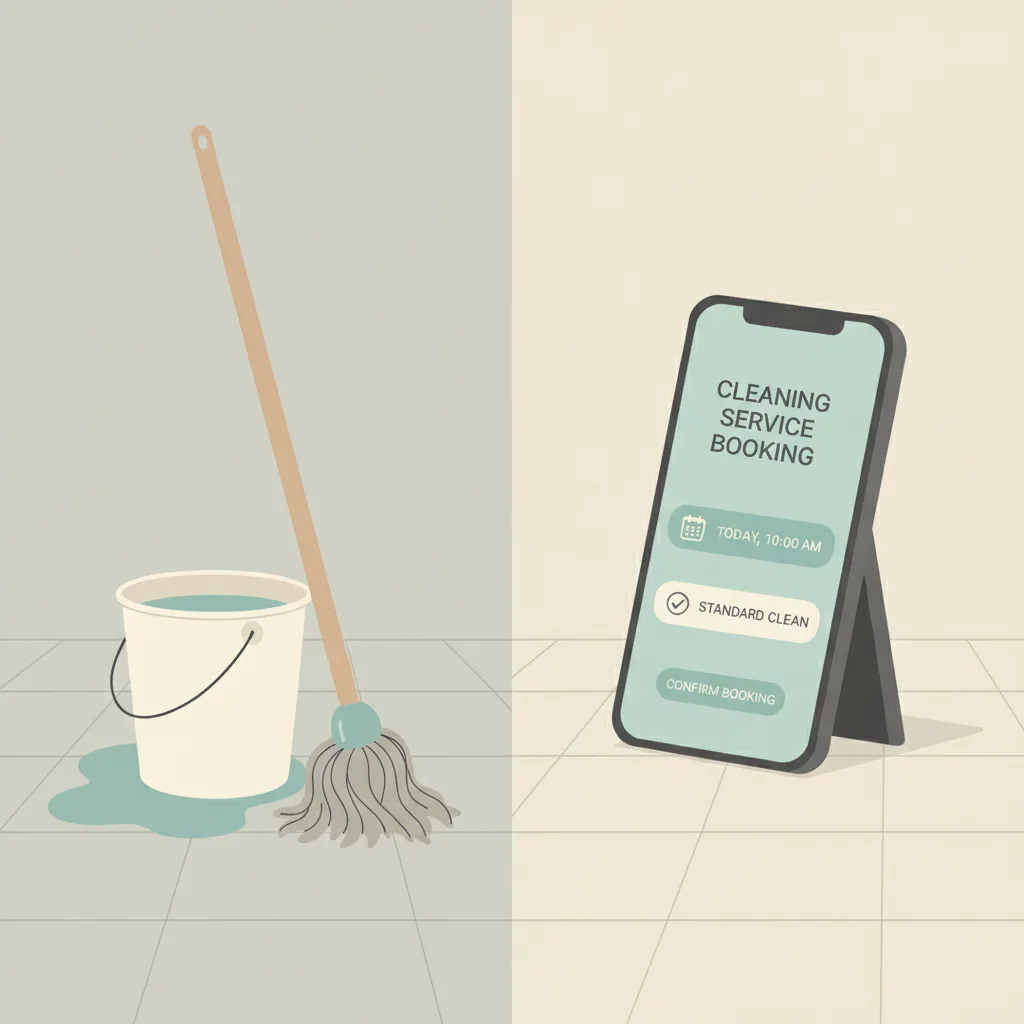
Porcentaje de quienes luego se arrepienten de cada elección. Las barras y el registro completo aparecen abajo.
Estilo de vida
Última revisión 2026-04-26
Calidad de la evidencia 4.13/5
Puntuación de revisión en ocho dimensiones según la
rúbrica de calidad
. Cada dimensión puntuada de 1 a 5.
D1 Verificación de fuentes
5/5
D2 Autoridad e independencia de las fuentes
4/5
D3 Precisión de la tasa de arrepentimiento
2/5
D4 Comparabilidad de las fuentes
3/5
D5 Patrón de Gilovich
5/5
D6 Calidad de la prosa
5/5
D7 Completitud de las advertencias
5/5
D8 Calidad de la muestra
4/5
Media4.13/5
Datos sustitutos — no existe ninguna encuesta directa sobre el arrepentimiento para esta decisión. Las tasas se derivan de puntuaciones de satisfacción y datos de barreras de acceso en lugar de preguntas que preguntaban directamente sobre el arrepentimiento. Ver advertencias más abajo.
Arrepentimiento por acción
Contratar ayuda de limpieza
9,0%
No existe ninguna encuesta directa de arrepentimiento; gastar para ahorrar tiempo aumentó la felicidad de media en todos los niveles de ingresos, por lo que el arrepentimiento por acción se trata como bajo (proxy nominal de bienestar, no una tasa encuestada)
~50% de los hogares acomodados no gastan nada en externalizar tareas que les disgustan a pesar de poder permitírselo (proxy conductual de no uso, no una encuesta de arrepentimiento)
Millonarios holandeses y adultos trabajadores, 4 países
retrospectivo, sin marco temporal fijo
% que se arrepienten de esta elección
Contratar ayuda de limpiezaLimpiar uno mismo
9,0%50%
inaction dominates — Domina la inacción — la mayoría se arrepiente de no actuar.
Decisiones relacionadas
Decisiones semánticamente similares — mismo terreno, distintos compromisos.
Among Dutch millionaires — people for whom cost is irrelevant — just
under half spent nothing on outsourcing disliked tasks, according to
Whillans et al.’s PNAS study. That non-outsourcing fraction is the closest
available proxy for inaction in this domain: roughly half of those who
could easily afford to outsource cleaning choose not to. Importantly, the
paper does not report that non-outsourcers have lower life satisfaction —
it reports a positive association for those who do buy time, so the 50%
here is a behavioral non-use figure, not a measured regret rate. On the
action side, Whillans et al. surveyed 6,271 working adults across four
countries and found that those who spent on time-saving services reported
higher life satisfaction; a field experiment gave 60 adults $40 to spend
on a time-saving purchase one weekend and a material purchase the next,
and the time-saving weekend produced higher positive affect (mean 4.00
vs 3.71 on the SPANE scale, d=0.33). The benefit was not moderated by
income or wealth (Z=−0.35, P=0.729), and subsequent research found that
time-saving spending also improved relationship satisfaction regardless of
whether the specific purchase was practical or indulgent.
The paradox is that almost nobody acts on this. When 98 working adults were
asked how they would spend a $40 windfall, only 2% chose time-saving.
Among 818 Dutch millionaires — people for whom cost is irrelevant — nearly
half spent nothing on outsourcing disliked tasks in a typical month. Trübner
(2024) catalogued the barriers in a German sample of 1,479 couples: guilt
about perceived laziness, gendered expectations that housework is a domestic
duty, privacy concerns about strangers in the home, and discomfort with
anything resembling “servant culture.” These are psychological barriers, not
economic ones, and they track cleanly with Gilovich’s inaction-dominance
pattern: people forgo a well-documented happiness gain, and the status quo
persists because the cost of inaction is diffuse and invisible.
The caveat worth flagging is that this entry measures well-being and
behavior, not regret. The evidence shows that buying time tends to raise
happiness; it does not show that people who clean their own homes feel
worse off, and it certainly does not measure whether they regret the
choice — some genuinely prefer the routine, the exercise, or the sense of
control. The rates here are proxies, not direct survey findings, and the
ratio between the two sides should be read as a well-being-and-behavior
asymmetry rather than a regret asymmetry in the strict Gilovich sense. The directional finding
is clear: outsourcing time-draining tasks improves well-being for most people
who try it. Whether not doing so constitutes “regret” depends on how much
you trust revealed preferences over stated ones.
Fuentes: acción
Registro de evidencia
Cada número a continuación es lo que reportó cada fuente, con la cita textual en la que nos basamos y cómo llegamos a nuestra cifra. Haz clic en cualquier enlace para verificarlo directamente.
1/2 fuentes verificadas de forma independiente palabra por palabra frente a la fuente citada
[1]PNAS / Whillans, Dunn, Smeets, Bekkers & Norton — Buying time promotes happiness
Revisado por pares
In a field experiment (n=60), working adults reported greater end-of-day positive affect after a time-saving purchase (mean 4.00) than a material one (mean 3.71), t(59)=2.57, P=0.007, d=0.33; the benefit was not moderated by income or wealth (Z=-0.35, P=0.729)
Extracto
“"Using large, diverse samples from the United States, Canada, Denmark, and The Netherlands (n = 6,271), we show that individuals who spend money on time-saving services report greater life satisfaction. A field experiment provides causal evidence that working adults report greater happiness after spending money on a time-saving purchase than on a material purchase."
”
Datos de la fuente de
2017-08-08
Accedido
2026-04-26
Cálculo
Whillans et al. surveyed 6,271 adults across four countries and ran a field experiment with 60 working adults spending $40 on a time-saving vs a material purchase on consecutive weekends. The time-saving weekend produced higher positive affect (4.00 vs 3.71 on the SPANE, d=0.33), and the effect did not vary by income or wealth (Z=-0.35, P=0.729). The paper reports a positive well-being effect, not a regret rate or a "no-gain" fraction; the study did not survey regret about hiring cleaning help. The display rate is a well-being proxy, not a surveyed regret figure (see proxy_only and caveats). The study included cleaning, cooking, and errand outsourcing as time-saving categories.
[2]Harvard Business School Working Knowledge — Why Outsourcing Chores Is Good for Your Relationship
Verificado
Fuente de referencia
Couples who spent money to save time reported greater relationship satisfaction regardless of whether the purchase was practical or fun
Extracto
“"It didn't matter if they bought products or services or if they paid for a practical service like Instacart or a fun treat like gourmet takeout — they still reported greater relationship satisfaction if they spent money to save time."
”
Datos de la fuente de
2023-05-15
Accedido
2026-04-26
Verificación
Extracto recuperado de forma independiente y confirmado palabra por palabra frente a la fuente citada durante nuestra auditoría de fundamentación.
Cálculo
HBS research building on Whillans's earlier work. Extends the finding from individual happiness to relationship satisfaction, strengthening the case that outsourcing domestic tasks produces broad well-being gains. The effect was consistent across income levels and purchase types.
Fuentes: inacción
Registro de evidencia
Cada número a continuación es lo que reportó cada fuente, con la cita textual en la que nos basamos y cómo llegamos a nuestra cifra. Haz clic en cualquier enlace para verificarlo directamente.
[1]PNAS / Whillans, Dunn, Smeets, Bekkers & Norton — Buying time promotes happiness
Revisado por pares
Just under half of the 818 surveyed Dutch millionaires — people for whom cost is no barrier — spent no money outsourcing disliked tasks; across samples, those who bought time reported greater life satisfaction
Extracto
“"Despite the potential benefits of buying time, many respondents allocated no discretionary income to buying time, even when they could afford it: just under half of the 818 millionaires that we surveyed spent no money outsourcing disliked tasks."
”
Datos de la fuente de
2017-08-08
Accedido
2026-04-26
Cálculo
The ~50% inaction display is anchored to a real BEHAVIORAL fraction: just under half of the 818 Dutch millionaires — people with no financial barrier — spent no money outsourcing disliked tasks. The paper does NOT report that non-outsourcers had lower life satisfaction; it reports a positive association for those who bought time. The display therefore states the measured construct (the non-outsourcing fraction among the financially able), not a surveyed regret rate. Many non-outsourcers genuinely prefer cleaning themselves, so this is a proxy, not direct regret (see proxy_only and caveats).
[2]International Journal of Consumer Studies / Trübner — Sociocultural barriers to outsourcing housework: Unraveling the non-use of domestic services
Revisado por pares
Guilt, perceived laziness, and gendered norms are the primary sociocultural barriers preventing households from outsourcing housework even when they can afford it
Extracto
“"Demand for paid domestic services is low, even for households with sufficient financial resources. Women are significantly more likely to be personal and complete rejectors of outsourcing than men, confirming expectations about gendered attitudes toward outsourcing."
”
Datos de la fuente de
2024-01-15
Accedido
2026-04-26
Cálculo
Trübner (2024) surveyed 1,479 German cohabiting couples who had not used domestic services. Five distinct barrier profiles were identified, with guilt and perceived laziness as dominant factors. This explains why the inaction rate remains high even among affluent households — the barrier is psychological, not financial.
Advertencias
ADVERTENCIA DE PROXY: ninguna de las dos tasas es una medición directa del arrepentimiento, y ninguna encuesta publicada pregunta a las personas si se arrepienten de haber contratado (o no) a una persona de limpieza. El estudio de Whillans en PNAS midió la satisfacción vital y el afecto positivo derivados de las compras para ahorrar tiempo en general (entrega de comidas, limpieza, recados), no la limpieza de forma aislada. La tasa de acción del 9% NO es una cifra encuestada: el artículo informa de un efecto positivo sobre el bienestar, no de una fracción de "sin-ganancia" o de arrepentimiento, por lo que la baja tasa de acción es un valor de referencia nominal para "comprar tiempo ayudó de media". La tasa de inacción del 50% es una fracción conductual de no uso — algo menos de la mitad de los 818 millonarios neerlandeses no gastaron nada en externalizar tareas que les disgustan a pesar de poder permitírselo. El artículo NO informa de que estos no externalizadores tuvieran menor satisfacción vital; equiparar "eligió no externalizar" con "arrepentimiento" sobrestima la evidencia. Por esa razón se establece proxy_only en esta entrada. No se encontró ninguna encuesta publicada que pregunte directamente "¿te arrepientes de haber contratado / de no haber contratado a una persona de limpieza?". Muchas personas prefieren genuinamente hacer sus propias tareas domésticas y no declaran arrepentimiento. El estudio de Trübner sobre barreras es alemán, no de EE. UU., y las actitudes culturales hacia la ayuda doméstica varían sustancialmente. El sesgo de autoselección está presente en ambos lados: las personas que contratan servicio de limpieza pueden ser disposicionalmente más felices, y las que se niegan pueden valorar la autosuficiencia de maneras que compensan cualquier coste de bienestar. La proporción de 5,6:1 debe leerse como una asimetría de bienestar, no como una asimetría de arrepentimiento en el sentido estricto de Gilovich. Los datos primarios de bienestar proceden de muestras de Estados Unidos y de Europa Occidental; las tasas de satisfacción y arrepentimiento en países con estructuras institucionales diferentes — normas de consumo, costes de la mano de obra doméstica y actitudes hacia la ayuda contratada — pueden diferir sustancialmente.