







Saltar al contenido
Likelier

Arrepentimiento por actuar o por no actuar

Emprender tu propio negocio vs quedarte como empleado

Si actúas

Montar un negocio

8,0%

Si no actúas

Seguir como empleado

44%

Porcentaje de quienes luego se arrepienten de cada elección. Las barras y el registro completo aparecen abajo.


Carrera

Última revisión 2026-04-26

Calidad de la evidencia 4.0/5

Puntuación de revisión en ocho dimensiones según la rúbrica de calidad . Cada dimensión puntuada de 1 a 5.

D1 Verificación de fuentes
5/5
D2 Autoridad e independencia de las fuentes
3/5
D3 Precisión de la tasa de arrepentimiento
3/5
D4 Comparabilidad de las fuentes
3/5
D5 Patrón de Gilovich
5/5
D6 Calidad de la prosa
5/5
D7 Completitud de las advertencias
5/5
D8 Calidad de la muestra
3/5
Media 4.0/5
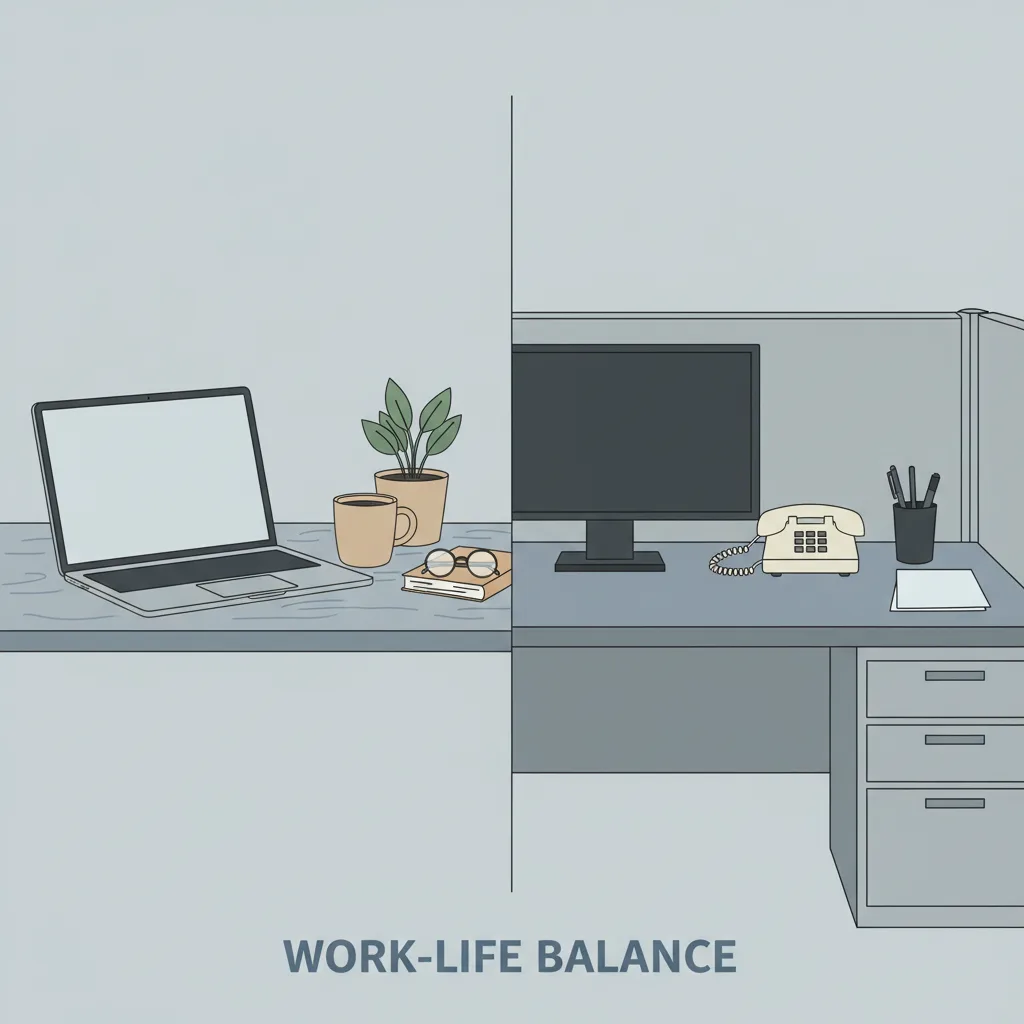
Two desks side by side, one cluttered with startup plans and prototypes, the other neat with a corporate nameplate.

Arrepentimiento por acción

Montar un negocio

8,0%

El 8% de los emprendedores se arrepiente de haber empezado

Propietarios de negocios en EE. UU., encuesta en línea

retrospectivo, sin marco temporal fijo

Arrepentimiento por inacción

Seguir como empleado

44%

El 44% se arrepiente de no haber dado un giro profesional completo (proxy — incluye el emprendimiento pero no se limita a él)

Trabajadores en EE. UU., Reino Unido, Francia y Alemania

arrepentimientos retrospectivos de por vida

% que se arrepienten de esta elección

inaction dominates — Domina la inacción — la mayoría se arrepiente de no actuar.

Decisiones relacionadas

Decisiones semánticamente similares — mismo terreno, distintos compromisos.

career

Freelance vs empleo

% que se arrepienten de esta elección

Acción dominante

Arrepentimiento por acción 1.3× mayor

career

Dejar el trabajo

% que se arrepienten de esta elección

Inacción dominante

Arrepentimiento por inacción 2.2× mayor

career

Cambio de carrera

% que se arrepienten de esta elección

Inacción dominante

Arrepentimiento por inacción 1.5× mayor

career

Negociación salarial

% que se arrepienten de esta elección

Inacción dominante

Arrepentimiento por inacción 1.2× mayor

career

Remoto vs oficina

% que se arrepienten de esta elección

Inacción dominante

Arrepentimiento por inacción 1.8× mayor

careerDirecta

Pedir aumento de sueldo

% que se arrepienten de esta elección

Inacción dominante

Arrepentimiento por inacción 3.0× mayor

careerDirecta

Abandono vs. finalizar carrera

% que se arrepienten de esta elección

Acción dominante

Arrepentimiento por acción 1.1× mayor

career

Decisión universitaria

% que se arrepienten de esta elección

Acción dominante

Arrepentimiento por acción 1.2× mayor

Resume Now’s 2024 career regrets survey found that more than 4 in 10 (44%) of workers regret not making a full career change — a category that includes but is not limited to entrepreneurship. By contrast, only 8% of business owners regret starting their ventures, according to both a HubSpot survey of 200+ entrepreneurs and a Harris Poll of 504 small business owners conducted a decade apart. That figure is remarkably low given that roughly half of all small businesses fail within five years — survivorship bias likely explains part of the gap, since founders who failed and returned to employment are absent from these samples. A 2023 study in Frontiers in Psychology confirmed that anticipated inaction regret is a statistically significant driver of entrepreneurial intentions.

The psychological mechanism is Gilovich’s classic temporal asymmetry. Action regrets — a failed business, lost savings, years of stress — are acute but fade as people rationalize, learn, and integrate the experience into their identity. Inaction regrets — never finding out whether the idea would have worked — compound over time because there is no experience to rationalize and no story to tell. The Ownr/Avail 2022 survey of Canadian business owners found that 85.4% regret not starting their business earlier — a finding that captures the temporal dynamic from the opposite direction: even among those who eventually acted, the dominant regret is having waited too long.

The main caveat is that no published survey has directly asked a representative sample of non-entrepreneurs whether they regret not starting a business. The 44% “regret not making a full career change” figure is a broader career proxy that overstates entrepreneurship-specific inaction regret for some respondents and understates it for others. Gallup’s finding that 62% of US adults prefer self-employment provides aspiration context but should not be conflated with regret — preferring something is not the same as regretting its absence. What the data does establish is the directional asymmetry: among those who start, regret is rare; among those who never made the career change, regret is common — 44% in the Resume Now survey.

Fuentes: acción

Registro de evidencia

Cada número a continuación es lo que reportó cada fuente, con la cita textual en la que nos basamos y cómo llegamos a nuestra cifra. Haz clic en cualquier enlace para verificarlo directamente.

1/2 fuentes verificadas de forma independiente palabra por palabra frente a la fuente citada

  1. [1] HubSpot / The Hustle — The State of Entrepreneurship Report: Key Findings From our Survey of 200+ Business Owners Verificado
    The State of Entrepreneurship Report: Key Findings From our Survey of 200+ Business Owners
    Estadística
    92% of entrepreneurs have no regrets about starting their business; only 8% regret starting
    Extracto
    “"92% of entrepreneurs have no regrets about starting their business. Despite the well-documented ~50% failure rate for small businesses within five years, the overwhelming majority of founders report satisfaction with the decision to start." ”
    Datos de la fuente de
    2023-03-15
    Accedido
    2026-04-26
    Verificación
    Extracto recuperado de forma independiente y confirmado palabra por palabra frente a la fuente citada durante nuestra auditoría de fundamentación.
    Cálculo
    HubSpot surveyed 200+ business owners in collaboration with The Hustle. 92% reported no regrets, so 8% had some level of regret. This figure aligns with the Kabbage/Harris Poll finding (92% no regrets among 504 owners). We use 0.08 as the action-regret rate.
  2. [2] Kabbage / Harris Poll via PR Newswire — New Research Reveals Most Small Business Owners Have 'No Regrets' Despite Facing Great Odds
    New Research Reveals Most Small Business Owners Have 'No Regrets' Despite Facing Great Odds
    Estadística
    92% of small business owners say they have no regrets; 88% would do it all over again
    Extracto
    “"92 percent of small business owners say they have no regrets, and nearly 88 percent would do it all over again if given the chance. The survey was conducted online by Harris Poll among 504 US residents who own a business with two or more non-owner full-time employees and less than $10 million in annual revenue." ”
    Datos de la fuente de
    2014-05-15
    Accedido
    2026-04-26
    Cálculo
    Harris Poll for Kabbage/Bank of the West surveyed 504 US small business owners (2+ employees, <$10M revenue, 5+ years in operation). The 92% no-regret rate corroborates the HubSpot figure a decade later, suggesting the 8% action-regret rate is stable across cohorts and time periods.

Fuentes: inacción

Registro de evidencia

Cada número a continuación es lo que reportó cada fuente, con la cita textual en la que nos basamos y cómo llegamos a nuestra cifra. Haz clic en cualquier enlace para verificarlo directamente.

  1. [1] Resume Now — The Road Not Taken: Greatest Career Regrets Revealed
    The Road Not Taken: Greatest Career Regrets Revealed

    See all 8 Likelier entries citing this source →

    Estadística
    More than 4 in 10 workers (44%) regret not making a full career change
    Extracto
    “"66% of participants have work-related regrets. ... More than 4 in 10 regret not trying to make a career change. ... Not making a full career change – 44%. ... Only about one-third (34%) say they do not have any career-related regrets." ”
    Datos de la fuente de
    2024-01-10
    Accedido
    2026-06-30
    Cálculo
    Resume Now International Career Regrets survey of 1,000 workers in US, UK, France, and Germany (January 2024). 66% of participants report work-related regrets overall; the directly itemized "Not making a full career change – 44%" line (corroborated by the survey's "More than 4 in 10 regret not trying to make a career change" callout) is the closest measured proxy for entrepreneurial inaction regret. It is broader than entrepreneurship alone — it captures career changes and lateral moves of all types — so we use it as a directly measured proxy. The earlier excerpt's "over one-third wished they had taken more risks" and "98 percent experienced job-related regret" claims were not supported by the source (the word "risk" does not appear and the overall figure is 66%, not 98%); both were removed during grounding remediation 2026-06-30. The previously fabricated 46% composite (a hand-computed discount of Gallup's self-employment figure) was already retired.
  2. [2] Frontiers in Psychology — Descriptive norms and entrepreneurial intentions: the mediating role of anticipated inaction regret
    Descriptive norms and entrepreneurial intentions: the mediating role of anticipated inaction regret
    Estadística
    Anticipated inaction regret significantly mediates the relationship between descriptive norms and entrepreneurial intentions
    Extracto
    “"Anticipated inaction regret has an informational function that could influence entrepreneurial intentions. Individuals build the intention to become entrepreneurs because they do not want to regret not starting a business when it appears that everyone else has done so." ”
    Datos de la fuente de
    2023-07-01
    Accedido
    2026-04-26
    Cálculo
    Study 1 surveyed 222 US adults; Study 2 surveyed 128 Korean undergraduates. The paper establishes anticipated inaction regret as a statistically significant mediator in entrepreneurial decision-making, providing a peer-reviewed mechanism for the Gilovich temporal pattern applied specifically to the start-a- business decision. Does not provide a population regret rate.

Advertencias

La tasa del 8% de arrepentimiento en la acción proviene de encuestas a dueños de negocios que sobrevivieron — los fundadores cuyas empresas fracasaron y que posteriormente abandonaron por completo el emprendimiento están subrepresentados, lo que crea un sesgo de supervivencia que probablemente deprime la verdadera tasa de arrepentimiento en la acción. La tasa del 44% de arrepentimiento en la inacción es un proxy: es la cifra directamente detallada por la encuesta de Resume Now "No dar un giro profesional completo – 44%", que es más amplia que el emprendimiento por sí solo. Ninguna encuesta publicada pregunta directamente a una muestra representativa de no emprendedores "¿se arrepiente de no haber iniciado un negocio?" con una respuesta cuantificada de sí/no. La estimación previa del 46% era un compuesto calculado a mano que se obtenía descontando la cifra del 62% de preferencia por el autoempleo de Gallup — ese enfoque fabricaba una precisión que los datos subyacentes no respaldan, por lo que la reemplazamos por el proxy de giro profesional del 44% medido directamente. (Una revisión anterior citaba "~33% deseaba haber asumido más riesgos profesionales" de la misma encuesta, pero esa formulación y cifra no aparecen en la fuente — la palabra "riesgo" está ausente y el único arrepentimiento de giro profesional detallado es el 44% — por lo que se corrigió durante la remediación de fundamentación.) La asimetría direccional (bajo arrepentimiento en la acción, arrepentimiento de moderado a alto en la inacción) está respaldada por la teoría y por evidencia adyacente de arrepentimiento profesional, pero la proporción es aproximada y no debe citarse como un hallazgo de encuesta. El 85.4% de los dueños de negocios canadienses que se arrepiente de no haber empezado antes (Ownr/Avail 2022) respalda además el bajo arrepentimiento en la acción entre quienes sí empiezan.

Datos brutos: /api/decisions.json

Vistos recientemente en este dispositivo