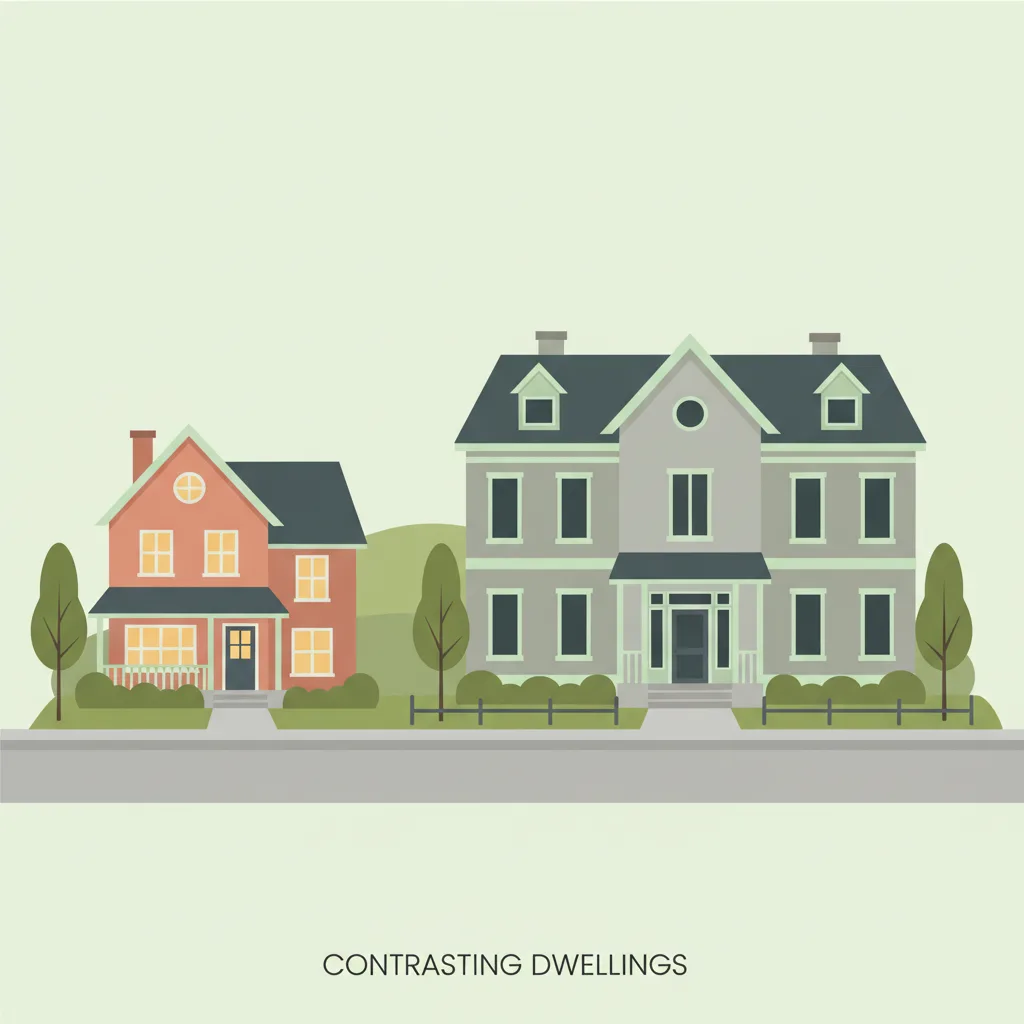
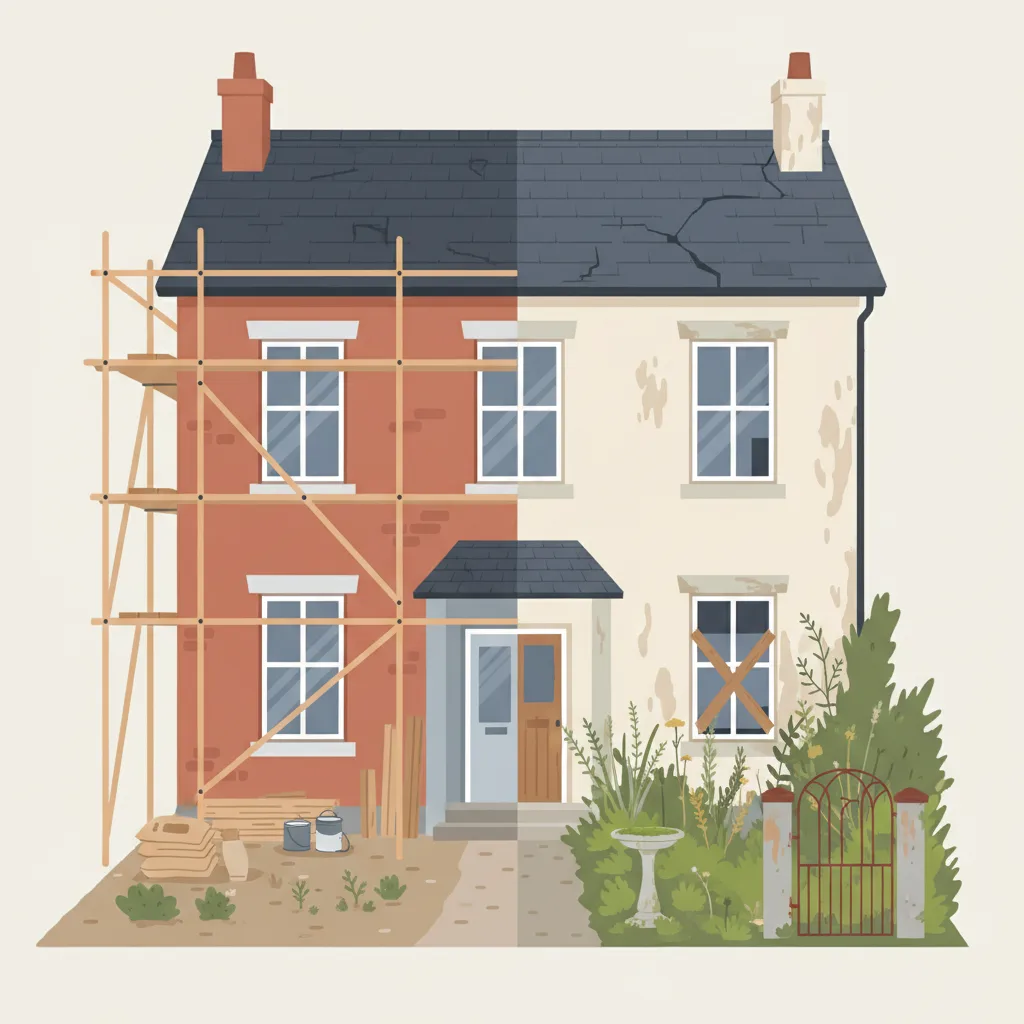
Choisir un prêt immobilier à taux fixe versus un prêt immobilier à taux variable
Si vous agissez
Prêt immobilier à taux variable
43%
Si vous n’agissez pas
Prêt immobilier à taux fixe
Aucune mesure directe
Au moins un chiffre est une estimation indirecte, et non un taux de regret mesuré. La façon dont chaque chiffre a été obtenu est expliquée plus bas.
Financier
Dernière révision 2026-05-13
Qualité des preuves 3.88/5
Score d’évaluation en huit dimensions selon la
grille de qualité
. Chaque dimension notée de 1 à 5.
D1 Vérification des sources
4/5
D2 Autorité et indépendance des sources
3/5
D3 Précision du taux de regret
3/5
D4 Comparabilité des sources
2/5
D5 Motif de Gilovich
5/5
D6 Qualité de la prose
5/5
D7 Complétude des réserves
5/5
D8 Qualité de l’échantillon
4/5
Moyenne3.88/5
Données indirectes : pour cette décision, au moins un chiffre provient d'une mesure indirecte, comme les conséquences, la satisfaction ou l'intention, ou d'une estimation de la rédaction, et non d'une enquête qui mesure directement le regret. Les notes de chaque côté, plus bas, expliquent comment chaque chiffre a été obtenu.
Si vous agissez
Prêt immobilier à taux variable
43%
43% des emprunteurs à taux variable regrettent d'avoir choisi un prêt hypothécaire à taux ajustable
Propriétaires américains avec un prêt hypothécaire à taux ajustable, panel en ligne
sondés en décembre 2022, après le début des hausses de taux de la Fed
Si vous n’agissez pas
Prêt immobilier à taux fixe
Aucune mesure directe
Aucune source ne donne de chiffre pour ce côté, nous n'en affichons donc aucun.
Propriétaires américains, échantillon en ligne représentatif au niveau national
sondés en avril 2025
Chiffre pour chaque choix (la mesure est nommée sur la page)
Prêt immobilier à taux variablePrêt immobilier à taux fixe
43%Aucune mesure directe
Décisions associées
Décisions sémantiquement similaires — même terrain, compromis différents.
Chiffre pour chaque choix (la mesure est nommée sur la page)
Contracter le crédit sur salaireSe passer du crédit
37%81%
Forty-three percent of US homeowners with an adjustable-rate mortgage reported regretting their choice in a December 2022 survey of 1,203 ARM holders conducted by PureSpectrum for U.S. News & World Report, the larger and earlier-fielded of the two ARM-regret surveys cited here. The primary driver, cited by 44% of regretters, was that their interest rate had adjusted to a higher level than they anticipated. A follow-up survey by Point in January 2024, drawing on 332 ARM holders, placed the regret rate at 70%, consistent with the pattern of escalating regret as further Federal Reserve rate increases pushed variable payments well above their initial levels. By contrast, no survey measures regret among fixed-rate holders as such: Bankrate’s 2025 general homeowner survey (n=1,363) did not separate borrowers by mortgage type, so the fixed-rate side has no direct measurement.
The evidence base is asymmetric. Both ARM surveys asked a direct regret question to ARM holders specifically; the fixed-rate side has no direct measurement. No published study has asked matched samples of ARM and fixed-rate borrowers the same regret question in the same instrument. What the surveys do show is that the ARM regret rate climbed from 43% to 70% between the two survey waves as the rate environment deteriorated. In the US context, the fixed-rate mortgage is taken here to be the dominant default (an assumption; no source listed gives the share), so choosing an ARM represents an active deviation from that default, a bet that rates would stay low.
The survey timing matters for interpretation. Both ARM surveys were fielded during or shortly after a historically rapid rate-tightening cycle (2022-2023), creating a period of maximum regret exposure. ARM regret in a falling-rate environment would likely be far lower, since resets would land at or below the initial rate rather than well above it. The 43% figure (the more conservative primary estimate) is a rate-cycle-specific snapshot, not a structural truth about the product. What is structural is the uncertainty asymmetry: fixed-rate borrowers know their payment in advance; ARM borrowers do not. That uncertainty is the proximate cause of regret in both surveys, not the product category per se.
Sources : action
Registre des sources
Chaque chiffre ci-dessous correspond à ce que la source a rapporté, avec la citation textuelle sur laquelle nous nous sommes appuyés et la méthode de calcul. Cliquez sur un lien pour vérifier directement.
[1]U.S. News & World Report / PureSpectrum — ARM Borrowers Gamble Short-Term Savings on Long-Term Risk
Étude primaire
43% of ARM borrowers regret choosing an adjustable-rate mortgage; the most common reason was that their interest rate adjusted to a higher rate than expected (44% of regretters)
Extrait
“"Forty-three percent of survey respondents regret choosing an ARM. Among them, the most common reason was that their interest rate adjusted to a higher rate than expected (44%)."
”
Données source de
2022-12-20
Consulté le
2026-05-13
Calcul
U.S. News & World Report commissioned PureSpectrum to conduct a nationwide online survey of 1,203 homeowners who currently hold an adjustable-rate mortgage, fielded December 14-20, 2022. Only ARM holders participated. The 43% regret rate is a direct self-report and is used here as the action-side regret rate without adjustment. The survey was conducted at the peak of the 2022 Federal Reserve tightening cycle, when the federal funds rate had risen from near-zero to 4.25-4.50% in under 12 months, so the 43% figure reflects rate-hike conditions and may understate regret relative to the longer-run reset exposure faced by 3/1 and 5/1 ARM holders who originated in 2019-2021.
[2]Point / SurveyMonkey — 70% of Homeowners with an Adjustable-Rate Mortgage Regret It
Étude primaire
70% of homeowners who have taken out an adjustable-rate mortgage in the past 10 years regret it (January 2024, n=332)
Extrait
“"70% of homeowners with an adjustable-rate mortgage regret it"
”
Données source de
2024-01-20
Consulté le
2026-05-13
Calcul
Point (a home equity investment platform) commissioned a SurveyMonkey online panel survey of 332 homeowners who obtained an ARM within the prior 10 years, fielded January 20, 2024. The 70% regret rate is the primary reported finding. The sample is smaller (332) and the platform is an industry participant with a commercial interest in home equity products, so this figure is treated as a corroborating upper-bound estimate rather than the primary rate. The primary rate used in regret_rate is 0.43 (U.S. News/PureSpectrum, n=1,203), which has a larger sample, an independent research firm, and was fielded closer to the moment of rate shock. The Point figure (70%, n=332, 13 months later) is consistent with escalating regret as further rate resets occurred through 2023.
Sources : inaction
Registre des sources
Chaque chiffre ci-dessous correspond à ce que la source a rapporté, avec la citation textuelle sur laquelle nous nous sommes appuyés et la méthode de calcul. Cliquez sur un lien pour vérifier directement.
[1]Bankrate / YouGov — Nearly Half of Homeowners Have at Least One Regret About the Purchase of Their Current Home (Bankrate 2025 Homeowner Regrets Survey)
Étude primaire
Among homeowners with at least one regret, 10% regret not getting the best mortgage rate and 16% regret that their mortgage payment is too high; nearly half (45%) of homeowners overall have at least one regret about their home purchase
Extrait
“"Nearly half of current homeowners (45%) say they have at least one regret about the purchase of their current home [...] Among homeowners with some type of regret about the purchase of their current home, buying too small of a house (21%) was the second most common regret after costlier-than-expected maintenance and hidden costs. Other regrets include the mortgage payment being too high (16%), overpaying or paying too much for the house (15%), buying a house in a bad location (14%), buying too big of a house (11%), not getting the best mortgage rate (10%), and not thinking it’s a good investment (6%)."
”
Données source de
2025-05-14
Consulté le
2026-05-13
Calcul
Bankrate's 2025 Home Affordability Report surveyed 2,487 adults (1,363 current homeowners) via YouGov online panel (April 2-4, 2025), with demographic quotas for representativeness. The survey did not separately ask fixed-rate vs. ARM holders about their mortgage-type choice; it asked all homeowners about homeownership regrets broadly. No inaction-side regret figure is shown: the survey reports none, and a figure built from it would rest on assumptions. Nearly half (45%) of homeowners report at least one regret; the two mortgage-rate items (payment too high, 16%; not getting the best rate, 10%) are listed as separate items and respondents may have named more than one, so they cannot be added into a share of regretters. No source listed here gives the share of homeowners in the sample who hold fixed-rate loans. No survey directly asks fixed-rate holders whether they regret not choosing an ARM.
[2]National Mortgage News — Adjustable-rate mortgage borrowers express regret over loans
Article de presse
Approximately 70% of ARM holders say they now regret their choice, driven by interest-rate rises since 2022 to more than two-decade highs (Point survey, January)
Extrait
“"Approximately 70% of ARM holders, including homeowners in both the introductory and variable-rate phase, said they now regret their choice. … The rise of interest rates since 2022 to more than two-decade highs drove the sentiment, as ARM borrowers find a substantially different financial environment today versus the last 10 years,"
”
Données source de
2024-01-20
Consulté le
2026-05-13
Calcul
National Mortgage News coverage of the Point (SurveyMonkey) ARM-regret survey fielded in January 2024. Reports the same headline finding as the Point source above (~70% of ARM holders regret their choice), attributing the sentiment to the 2022 onward rate rises. Used here as a second, independent outlet corroborating the elevated ARM-regret level that underpins the action-vs-inaction asymmetry. No independent new data beyond the Point survey it reports.
Réserves
Les chiffres côté action et côté inaction ne proviennent pas d'une seule enquête comparative. Aucune étude publiée n'a posé à des échantillons appariés d'emprunteurs ARM et à taux fixe la même question de regret dans la même vague d'enquête. Le taux de regret ARM (43%) provient d'une enquête limitée exclusivement aux détenteurs ARM (U.S. News/PureSpectrum, décembre 2022, n=1 203) ; le côté taux fixe n'a pas de mesure directe, seulement une enquête générale de propriétaires (Bankrate/YouGov, avril 2025, n=1 363 propriétaires) qui n'a pas segmenté par type d'hypothèque. Les deux enquêtes ont été menées pendant un environnement de taux élevés (2022-2025), ce qui amplifie le regret ARM. Le taux de regret ARM est élevé dans deux enquêtes ARM indépendantes avec différentes dates de terrain et échantillons (43% en décembre 2022 ; 70% en janvier 2024), mais il n'existe pas de mesure comparable pour le taux fixe. Dans le contexte américain, l'hypothèque à taux fixe est le défaut dominant (hypothèse de cette entrée ; aucune source listée ne chiffre la part), donc choisir un ARM représente une déviation active — un pari que les taux resteraient bas — faisant de l'ARM le côté action et du taux fixe le côté inaction.