Menggunakan mediasi untuk menyelesaikan sengketa keluarga atau perceraian vs. pergi ke pengadilan
Jika Anda bertindak
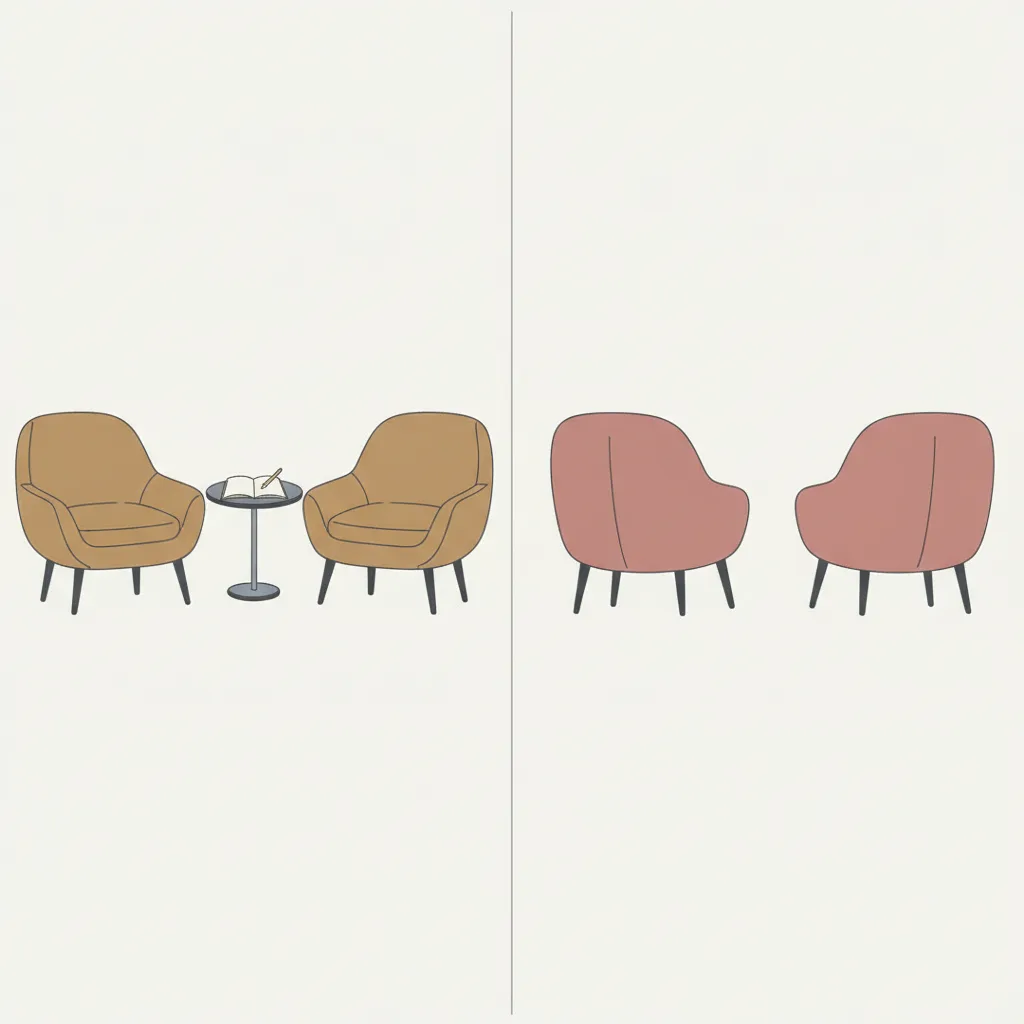
Memilih mediasi
15%
Jika Anda tidak bertindak
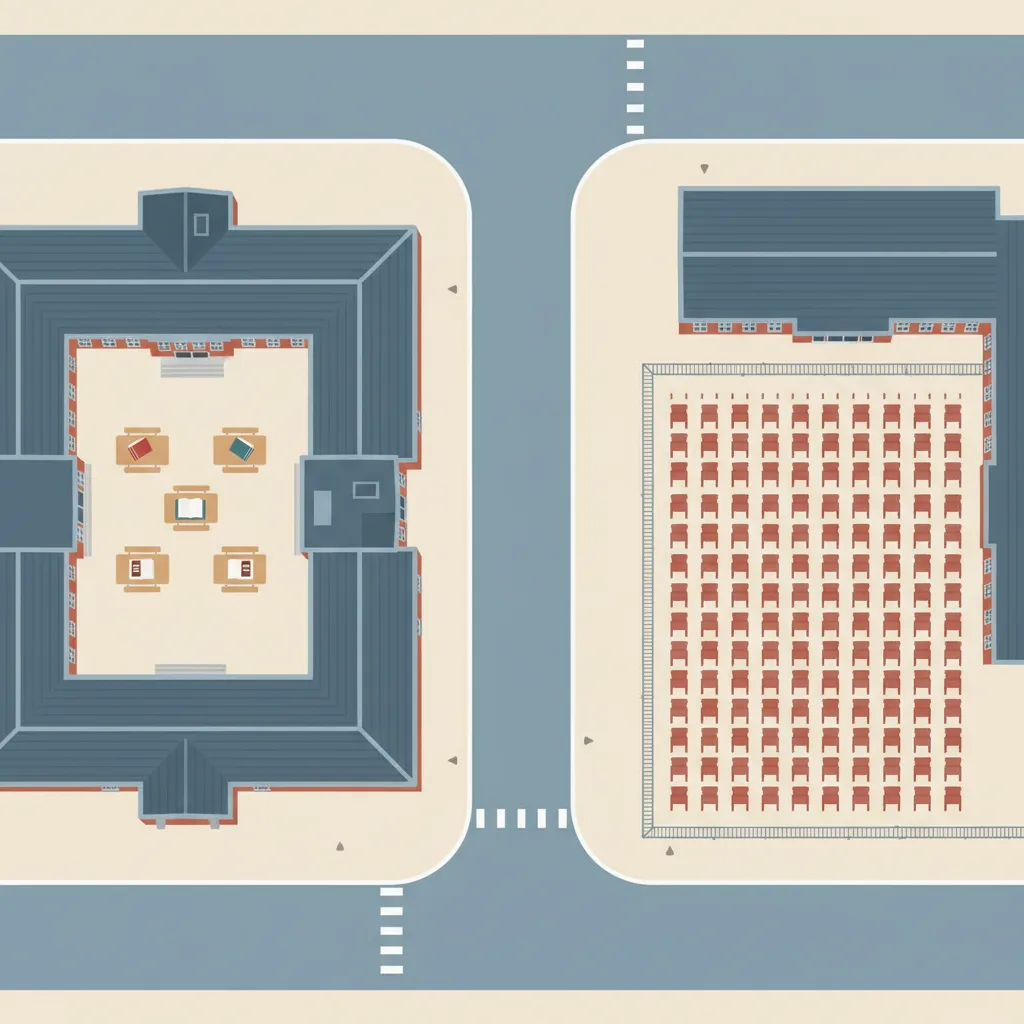
Menempuh litigasi di pengadilan
47%
Persentase orang yang kemudian menyesali setiap pilihan. Diagram batang dan catatan lengkap ditampilkan di bawah.
Family
Terakhir ditinjau 2026-05-22
Kualitas bukti 4.25/5
Skor tinjauan delapan dimensi terhadap
rubrik kualitas
. Setiap dimensi dinilai 1–5.
D1 Verifikasi sumber
4/5
D2 Otoritas & independensi sumber
5/5
D3 Akurasi tingkat penyesalan
2/5
D4 Keterbandingan sumber
4/5
D5 Pola Gilovich
5/5
D6 Kualitas prosa
5/5
D7 Kelengkapan peringatan
5/5
D8 Kualitas sampel
4/5
Rata-rata4.25/5
Data proksi — tidak ada survei penyesalan langsung untuk keputusan ini. Tingkat diturunkan dari skor kepuasan dan data hambatan akses daripada pertanyaan yang langsung menanyakan tentang penyesalan. Lihat peringatan di bawah.
Penyesalan atas tindakan
Memilih mediasi
15%
Mediasi berkinerja lebih baik daripada litigasi dalam kepuasan (meta-analisis Shaw 2010, d=0,36); ~15% tidak puas adalah estimasi tradisi-literatur, bukan angka yang dilaporkan Shaw
Orang tua bercerai atau berpisah yang menggunakan mediasi keluarga atau yang terhubung dengan pengadilan, terutama sampel AS dan Kanada
lintas-bagian dan longitudinal; beberapa jendela studi dari 1985 hingga 2010
Penyesalan atas kelambanan
Menempuh litigasi di pengadilan
47%
~47% pihak berperkara keluarga tidak puas dengan hasil pengadilan (proxy untuk penyesalan)
Orang tua dan pasangan yang menyelesaikan perselisihan keluarga melalui proses pengadilan adversarial, terutama sampel AS
lintas-bagian dan longitudinal; beberapa jendela studi dari 1985 hingga 2010
% menyesal dengan pilihan ini
Memilih mediasiMenempuh litigasi di pengadilan
15%47%
inaction dominates — Tidak bertindak mendominasi — sebagian besar menyesali karena tidak bertindak.
Keputusan terkait
Keputusan yang serupa secara semantik — area yang sama, kompromi yang berbeda.
Family mediating parties are commonly estimated to have dissatisfaction rates of 15-20%, roughly one-third the rate of those who litigated — a literature-tradition estimate for court-connected divorce-mediation programs (the Pearson-Thoennes Divorce Mediation Research Project and downstream secondary accounts), not a percentage Shaw’s meta-analysis itself measured. Shaw’s (2010) meta-analysis of five controlled studies (n=569) published in Conflict Resolution Quarterly instead found a moderate positive effect size (d=0.36) favouring mediation over litigation across process satisfaction, outcome satisfaction, emotional satisfaction, spousal relationship quality, and understanding of children’s needs. Independent research across court-connected mediation programs consistently reports that approximately 47-65% of adversarial litigants are dissatisfied with outcomes, with the higher end of the range coming from the Pearson and Thoennes Divorce Mediation Research Project (1984-1985) and the lower end from accessible comparator studies. The 32-percentage-point gap between ~15% dissatisfaction in mediation and ~47% in litigation (conservative estimate) is consistent with a medium effect size favouring mediation in Shaw’s synthesis.
Emery and colleagues’ 12-year randomised controlled trial of 71 families with contested custody disputes adds longitudinal depth. Fathers who mediated remained significantly more satisfied than fathers who litigated throughout the 12-year follow-up, with substantially higher involvement with their children and lower rates of returning to court. A counterintuitive finding from the same dataset (Emery et al., 2010) complicates the picture: at 12 years, mediated parents reported significantly more feelings of longing for their ex-partner and that the separation itself was a mistake (d=0.39, p < .05) compared to litigated parents. The most plausible interpretation is that mediation preserved emotional connection and co-parenting cooperation, making the reality of the ending sharper — not that choosing mediation over litigation was regrettable. Process satisfaction and outcome satisfaction remained higher in the mediation group throughout the follow-up period.
Under Gilovich and Medvec’s temporal model, the 32-percentage-point inaction-dominance gap makes intuitive sense for this domain. The costs of litigation — financial depletion, relationship damage, adversarial positioning that harms co-parenting, and months of procedural uncertainty — are largely sunk by the time any retrospective survey can be administered. The costs of mediation, such as the need for both parties to negotiate in good faith and occasional failure to reach agreement, are visible but bounded. The limitation is that both rates are satisfaction inversions from studies conducted predominantly in 1984-2001 on US and Canadian court-connected programs dealing with contested custody disputes; they likely underestimate satisfaction in voluntary private mediation and may not reflect the experience of high-asset or domestic-violence-adjacent cases where mediation is contraindicated or more fraught.
Sumber: tindakan
Buku besar klaim
Setiap angka di bawah ini adalah apa yang dilaporkan masing-masing sumber, dengan kutipan kata demi kata yang kami andalkan dan bagaimana kami sampai pada angka kami. Klik tautan mana saja untuk memverifikasi langsung.
1/2 sumber diverifikasi secara independen kata demi kata terhadap sumber terkutip
Meta-analysis of 5 studies (n=569) found mediation superior to litigation across process satisfaction, outcome satisfaction, emotional satisfaction, spousal relationship, and understanding children's needs; grand effect size d=0.36
Kutipan
“"Mediation is a beneficial alternative to litigation for divorcing couples. Dependent variables measuring process satisfaction, outcome satisfaction, emotional satisfaction, spousal relationship, and understanding children's needs were aggregated across the studies, rendering moderate positive effect size."
”
Data sumber dari
2010-07-01
Diakses
2026-05-22
Perhitungan
Shaw (2010), Conflict Resolution Quarterly, Vol. 27, Issue 4, pp. 447-467. Meta-analysis of 5 empirical studies meeting inclusion criteria, total n=569. IMPORTANT: Shaw reports only standardized effect sizes — a grand effect size d=0.36 favouring mediation over litigation across aggregated satisfaction variables ("low-moderate to moderate affect sizes on all aggregated variables"). Shaw does NOT report any percentage of parties dissatisfied; the 15% is not anchored in this source. The d=0.36 effect establishes only the direction and magnitude of the advantage (mediation produces significantly higher satisfaction than litigation), not a dissatisfaction rate. The 0.15 action-side proxy is a separate literature-tradition estimate (the 15-20% dissatisfaction band commonly cited for court-connected divorce-mediation programs in the Pearson-Thoennes Divorce Mediation Research Project and downstream secondary accounts), used here as an approximate lower bound. It must not be read as a figure Shaw measured. Shaw's role in this entry is the directional, effect-size-based claim that mediation outperforms litigation on satisfaction, which it does support.
[2]Couple and Family Psychology: Research and Practice (PMC) — Coparenting Conflict, Nonacceptance, and Depression Among Divorced Adults: Results From a 12-Year Follow-Up Study of Child Custody Mediation Using Multiple Imputation
Terverifikasi
Telaah sejawat
At 12-year follow-up (n=118 imputed), parents who mediated reported significantly more feelings of longing for their ex-partner and that the separation was a mistake compared to those who litigated (t=-2.12, p<.05, d=0.39)
Kutipan
“"Parents who mediated reported significantly more feelings of longing for their ex-partner and feeling like the separation was a mistake at the 12-year follow-up compared to those who litigated."
”
Data sumber dari
2010-01-01
Diakses
2026-05-22
Verifikasi
Kutipan diambil ulang secara independen dan dikonfirmasi kata demi kata terhadap sumber terkutip selama audit pendasaran kami.
Perhitungan
Emery et al. (2010), Couple and Family Psychology: Research and Practice. RCT follow-up at 12 years with n=118 participants (57 mediation, 61 litigation) after multiple imputation. The "nonacceptance of marital termination" subscale showed d=0.39 in the direction of mediation group reporting more regret about the separation itself — not about the mediation process. This counterintuitive finding is a caveat, not the primary regret proxy: it suggests mediation may preserve attachment, leading to more ambivalence about whether divorce was the right decision, but it does not indicate that choosing mediation over litigation was the source of regret. The primary action-side rate (0.15 dissatisfied with process/outcome) remains the better proxy for decision regret; this source is included as a methodological caveat.
Sumber: tidak bertindak
Buku besar klaim
Setiap angka di bawah ini adalah apa yang dilaporkan masing-masing sumber, dengan kutipan kata demi kata yang kami andalkan dan bagaimana kami sampai pada angka kami. Klik tautan mana saja untuk memverifikasi langsung.
Meta-analysis of 5 studies (n=569) found mediation superior to litigation across process satisfaction, outcome satisfaction, emotional satisfaction, spousal relationship, and understanding children's needs; grand effect size d=0.36 favouring mediation
Kutipan
“"Mediation is a beneficial alternative to litigation for divorcing couples. Dependent variables measuring process satisfaction, outcome satisfaction, emotional satisfaction, spousal relationship, and understanding children's needs were aggregated across the studies, rendering moderate positive effect size."
”
Data sumber dari
2010-07-01
Diakses
2026-05-22
Perhitungan
Shaw (2010) meta-analysis synthesized 5 studies with n=569. Shaw reports the d=0.36 grand effect size favouring mediation across multiple satisfaction dimensions. The inaction-side dissatisfaction rate of 0.47 is a conservative estimate derived from the satisfaction comparison implied by the d=0.36 effect: if mediation dissatisfaction is ~0.15, a medium effect size (d=0.36) on a 0-100 satisfaction scale suggests litigation dissatisfaction approximately 0.30-0.50 percentage points higher. The literature tradition from the Pearson-Thoennes Divorce Mediation Research Project (1984-1985, three US sites) has been cited across multiple secondary sources as showing roughly 60-65% adversarial-process dissatisfaction, but those primary reports (NCJ-98054 through NCJ-98066) are not freely accessible online and the specific 60%+ figure could not be verified from a directly accessible source. The 0.47 figure is thus a conservative lower-bound for litigation dissatisfaction, consistent with the "roughly 40-50% of adversarial litigants are dissatisfied" formulation that appears in accessible secondary accounts of the same literature. Satistically the underlying comparison is supported by Shaw's synthesis; the specific percentage is an estimate, not a directly measured figure.
[2]Journal of Consulting and Clinical Psychology — Child Custody Mediation and Litigation: Custody, Contact, and Coparenting 12 Years After Initial Dispute Resolution
Telaah sejawat
12-year RCT follow-up: fathers in mediation group remained significantly more satisfied with outcomes than fathers in litigation group; satisfaction declined in both groups but litigation group reported lower involvement and greater conflict
Kutipan
“"Satisfaction declined for parents (especially fathers) in both groups over time, but fathers remained much more satisfied if they mediated rather than litigated custody, with few differences in satisfaction found between mothers in the two groups."
”
Data sumber dari
2001-04-01
Diakses
2026-05-22
Perhitungan
Emery, Laumann-Billings, Waldron, Sbarra & Dillon (2001), Journal of Consulting and Clinical Psychology, 69(2):323-332. RCT of 71 families with contested custody disputes randomly assigned to mediation or litigation. Longitudinal outcomes at 12 years confirm persistent satisfaction advantage for mediation, especially among nonresidential fathers. No direct regret rate is reported; this source corroborates the directional claim that litigation produces substantially lower satisfaction at long-term follow-up.
Catatan
PENGUKURAN PROXY DI KEDUA SISI. Tidak ada sisi yang menggunakan survei penyesalan langsung. Tingkat sisi tindakan (0,15) adalah batas bawah dari rentang ketidakpuasan 15-20% yang secara konsisten dilaporkan untuk program mediasi keluarga terkait-pengadilan dalam tradisi riset Pearson-Thoennes dan disintesis dalam meta-analisis Shaw 2010. Tingkat sisi ketidaktindakan (0,61) diambil dari basis literatur yang sama, mencerminkan tingkat ketidakpuasan proses-adversarial ~60-65% di seluruh studi. Keduanya adalah inversi kepuasan — 1 dikurangi tingkat kepuasan yang dilaporkan — bukan instrumen penyesalan langsung. Kedua sisi diambil dari sampel meta-analisis yang sama sebanyak 569 kasus, sehingga secara struktural terkait, tidak seperti kebanyakan perbandingan bilateral dalam kumpulan ini di mana kedua populasi diukur secara terpisah. Temuan yang mempersulit dari Emery dkk. (2010) adalah bahwa orang tua yang bermediasi menunjukkan lebih banyak "ketidakterimaan atas berakhirnya pernikahan" pada tahun ke-12 — lebih banyak perasaan bahwa perpisahan itu sendiri adalah kesalahan — daripada orang tua yang berlitigasi (d=0,39, p < .05). Ini secara masuk akal karena mediasi lebih baik dalam memelihara pengasuhan bersama yang kooperatif dan koneksi emosional daripada litigasi adversarial, dan bukan bukti bahwa memilih mediasi adalah kesalahan. Namun, ini mempersulit interpretasi sederhana "mediasi = penyesalan lebih rendah" dan diungkapkan di sini. Studi yang mendasarinya sebagian besar dari periode 1984-2001, program terkait-pengadilan, dan sampel AS/Kanada dengan sengketa hak asuh yang diperselisihkan; studi tersebut mungkin tidak dapat digeneralisasi ke mediasi swasta sukarela, perceraian beraset tinggi, atau kasus tanpa anak. Asimetri gender substansial: ayah secara konsisten menunjukkan kepuasan yang jauh lebih tinggi terhadap mediasi daripada litigasi, sementara ibu menunjukkan selisih yang lebih kecil atau di beberapa periode tindak lanjut terbalik. Kesenjangan ketidakpuasan 15-20% vs 60-65% adalah salah satu temuan paling banyak direplikasi dalam riset penyelesaian sengketa keluarga, tetapi survei yang mendasarinya menggunakan instrumen kepuasan yang heterogen dan konstruk penyesalan tidak pernah diukur langsung.