




Lewati ke konten
Likelier

Penyesalan bertindak vs. tidak bertindak

Menempatkan orang tua yang sudah tua di fasilitas perawatan versus merawat mereka sendiri di rumah

Jika Anda bertindak

Penempatan di panti perawatan

54%

Jika Anda tidak bertindak

Perawatan keluarga di rumah

23%

Persentase orang yang kemudian menyesali setiap pilihan. Diagram batang dan catatan lengkap ditampilkan di bawah.


Family

Terakhir ditinjau 2026-05-02

Kualitas bukti 4.13/5

Skor tinjauan delapan dimensi terhadap rubrik kualitas . Setiap dimensi dinilai 1–5.

D1 Verifikasi sumber
5/5
D2 Otoritas & independensi sumber
4/5
D3 Akurasi tingkat penyesalan
2/5
D4 Keterbandingan sumber
3/5
D5 Pola Gilovich
5/5
D6 Kualitas prosa
5/5
D7 Kelengkapan peringatan
5/5
D8 Kualitas sampel
4/5
Rata-rata 4.13/5
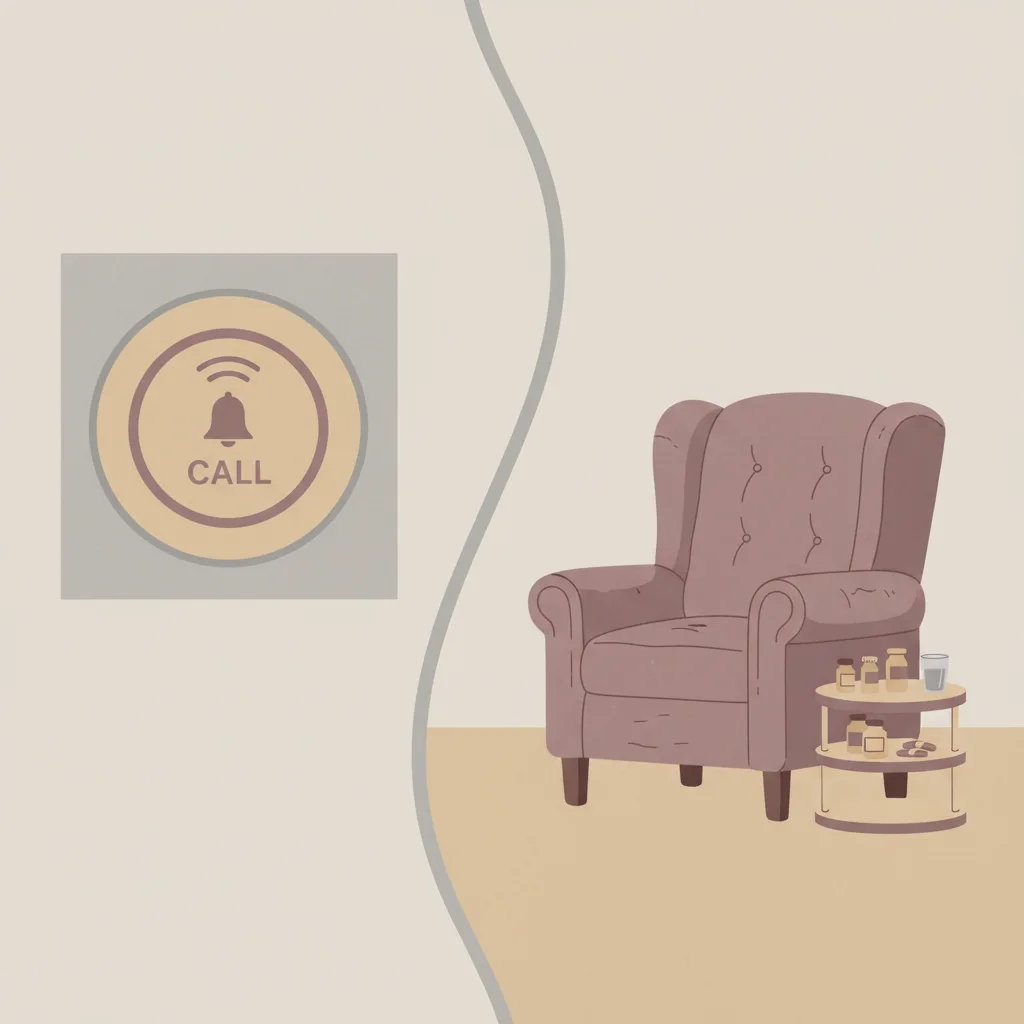
A hospital call button on the left and a home armchair with a medication tray on the right

Penyesalan atas tindakan

Penempatan di panti perawatan

54%

54% keluarga melaporkan merasa setidaknya agak bersalah setelah penempatan di panti jompo (proksi rasa bersalah — rasa bersalah tidak sama dengan menilai penempatan itu keliru)

Orang dewasa AS dengan anggota keluarga di panti jompo

lintas-bagian, retrospektif

Penyesalan atas kelambanan

Perawatan keluarga di rumah

23%

23% pengasuh di rumah melaporkan kesehatan mereka memburuk akibat mengasuh (proksi beban — mengukur kerugian pengasuh, bukan penyesalan langsung atas memilih perawatan di rumah)

Pengasuh keluarga AS, representatif nasional

lintas-bagian; pengasuhan berkelanjutan pada saat survei

% menyesal dengan pilihan ini

action dominates — Bertindak mendominasi — sebagian besar menyesali karena bertindak.

Keputusan terkait

Keputusan yang serupa secara semantik — area yang sama, kompromi yang berbeda.

familyLangsung

Izinkan donasi organ keluarga vs. tolak

% menyesal dengan pilihan ini

Ketidakaktifan mendominasi

Penyesalan tidak bertindak 6.8× lebih tinggi

family

Di rumah vs bekerja

% menyesal dengan pilihan ini

Tindakan mendominasi

Penyesalan bertindak 1.3× lebih tinggi

family

Adopsi vs. besarkan sendiri

% menyesal dengan pilihan ini

Tindakan mendominasi

Penyesalan bertindak 4.8× lebih tinggi

family

Swasta vs negeri

% menyesal dengan pilihan ini

Ketidakaktifan mendominasi

Penyesalan tidak bertindak 3.2× lebih tinggi

family

Perwalian penuh vs. pengambilan keputusan didukung

% menyesal dengan pilihan ini

Seimbang

Hampir seimbang

family

Menolong vs. biarkan mandiri

% menyesal dengan pilihan ini

Tindakan mendominasi

Penyesalan bertindak 1.2× lebih tinggi

family

Memiliki anak

% menyesal dengan pilihan ini

Seimbang

Hampir seimbang

family

Bebas vs. pengawasan ketat

% menyesal dengan pilihan ini

Tindakan mendominasi

Penyesalan bertindak 2.3× lebih tinggi

54% of families report feeling at least somewhat guilty after placing a relative in a nursing home, according to a Care.com survey of 978 US adults (2019), with 14% feeling “extremely guilty.” A peer-reviewed parallel from Statz et al. (2021), tracking 83 dementia caregivers through residential long-term care transitions, found that nearly half (46.3%) experienced guilt from the care recipient, other family members, or facility staff. Adult children reported markedly more guilt from other family members than spouses did — 29.8% versus 4.0%, the only guilt source that differed significantly by caregiver role — and the qualitative record is thick with the specific fear that placement happened “too soon.” Action-side guilt is well-documented, replicated across research designs, and begins immediately after the move.

The inaction side lacks a symmetrical direct-regret measure, but the burden data are substantial. The 2020 NAC/AARP nationally representative survey of 1,707 US caregivers found that 23% said caregiving had made their own health worse — up from 17% in 2015. The same report found 28% had stopped saving and 23% had taken on more debt because of caregiving. Schulz and Sherwood’s 2008 synthesis of three decades of caregiver health research concluded that caregiving “creates physical and psychological strain over extended periods of time” and that roughly two-thirds of caregivers experience some negative consequence. The floor of inaction-side harm is real but harder to frame as regret because most home caregivers are embedded in an ongoing situation rather than looking back on a discrete choice.

Under Gilovich and Medvec’s framework, actions generate more regret in the short term, and the placement guilt literature fits this pattern: guilt is highest immediately after the move and tends to attenuate as the care recipient stabilises and the caregiver observes professional care quality. Inaction regret — regret about not having placed sooner — is harder to study because it surfaces mainly when home care has already broken down (hospitalisation, caregiver health crisis, or care recipient injury from inadequate supervision). The 31-point gap between sides should be read cautiously: the two measures are not equivalent constructs, and a direct bilateral survey asking both groups the same retrospective question does not yet exist in the published literature.

Sumber: tindakan

Buku besar klaim

Setiap angka di bawah ini adalah apa yang dilaporkan masing-masing sumber, dengan kutipan kata demi kata yang kami andalkan dan bagaimana kami sampai pada angka kami. Klik tautan mana saja untuk memverifikasi langsung.

  1. [1] Care.com / Statista — Guilt over leaving one or more relatives in a nursing home in the United States in 2019
    Guilt over leaving one or more relatives in a nursing home in the United States in 2019
    Statistik
    53.6% of respondents felt at least somewhat guilty: extremely (13.7%), moderately (20.9%), somewhat (19%); 23.7% slightly guilty; 22.7% not at all
    Kutipan
    “"In the 2019, roughly 14 percent of people with a relative in a nursing home felt extremely guilty over their choice of leaving their relative in the nursing home." ”
    Data sumber dari
    2019-01-25
    Diakses
    2026-05-02
    Perhitungan
    Care.com online survey, n=978 US adults with a family member in a nursing home, 2019. Regret proxy: respondents rating guilt as "extremely" (13.7%) + "moderately" (20.9%) + "somewhat" (19.0%) = 53.6%, rounded to 0.54. The AARP coping article independently summarises this as "over 50 percent felt at least somewhat guilty." "Slightly guilty" (23.7%) is excluded as below the "somewhat" threshold used by AARP's framing.
  2. [2] Couple and Family Psychology: Research and Practice (PMC) — "We Moved Her Too Soon": Navigating Guilt Among Adult Child and Spousal Caregivers of Persons Living with Dementia Following a Move into Residential Long-Term Care
    "We Moved Her Too Soon": Navigating Guilt Among Adult Child and Spousal Caregivers of Persons Living with Dementia Following a Move into Residential Long-Term Care
    Statistik
    46.3% of dementia caregivers (N=83) reported experiencing guilt from care recipient, other family members, or facility staff following nursing home placement
    Kutipan
    “"Nearly half of caregivers reported experiencing guilt from their care recipient, other family members, or facility staff." ”
    Data sumber dari
    2021-05-13
    Diakses
    2026-05-02
    Perhitungan
    Mixed-methods study, N=83 caregivers (25 spouses, 58 adult children) transitioning a family member with Alzheimer's disease or related dementia to residential long-term care. Quantitative analyses identified guilt prevalence at 46.3% for any source of guilt. Adult children reported guilt from other family members at 29.8% vs 4.0% for spouses. The peer-reviewed figure (46.3%) is conservative relative to the Care.com survey (53.6%); the entry uses the Care.com figure as the primary regret_rate because it covers a broader guilt construct and a larger, non-dementia-specific sample.

Sumber: tidak bertindak

Buku besar klaim

Setiap angka di bawah ini adalah apa yang dilaporkan masing-masing sumber, dengan kutipan kata demi kata yang kami andalkan dan bagaimana kami sampai pada angka kami. Klik tautan mana saja untuk memverifikasi langsung.

1/2 sumber diverifikasi secara independen kata demi kata terhadap sumber terkutip

  1. [1] National Alliance for Caregiving (NAC) and AARP — Caregiving in the United States 2020
    Caregiving in the United States 2020
    Statistik
    23% of US caregivers say caregiving has made their own health worse, up from 17% in 2015; 23% find it hard to take care of their own health
    Kutipan
    “"Family caregivers provide vital help and care for their loved ones, yet this survey shows that they keep getting stretched thinner and thinner." ”
    Data sumber dari
    2020-05-14
    Diakses
    2026-05-02
    Perhitungan
    NAC/AARP nationally representative probability-based online survey of 1,707 US caregivers age 18+, conducted 2019 by Greenwald & Associates. Regret proxy: 23% reporting health has worsened. This is a burden/harm proxy, not a direct regret measure — no large-scale survey asks home caregivers retrospectively whether they regret choosing home care over facility placement. The 23% represents the floor of caregiver harm; separate data show 28% have stopped saving, 23% have taken on more debt, and 21% provide 41+ hours/week of care. The health-worsened figure is used as the regret_rate because health decline is the most proximate marker of caregiver regret in the absence of a direct question.
  2. [2] American Journal of Nursing — Physical and Mental Health Effects of Family Caregiving Terverifikasi
    Physical and Mental Health Effects of Family Caregiving
    Statistik
    Caregiving creates physical and psychological strain over extended periods; about one third of caregivers report neither strain nor negative health effects, implying approximately two thirds experience some negative consequence
    Kutipan
    “"Caregiving has all the features of a chronic stress experience: It creates physical and psychological strain over extended periods of time, is accompanied by high levels of unpredictability and uncontrollability, has the capacity to create secondary stress in multiple life domains such as work and family relationships, and frequently requires high levels of vigilance." ”
    Data sumber dari
    2008-09-01
    Diakses
    2026-05-02
    Verifikasi
    Kutipan diambil ulang secara independen dan dikonfirmasi kata demi kata terhadap sumber terkutip selama audit pendasaran kami.
    Perhitungan
    Literature review by Schulz & Sherwood, American Journal of Nursing, September 2008, Vol. 108, No. 9 Supplement, pp. 23–27. DOI: 10.1097/01.NAJ.0000336406.45248.4c. Authors synthesise three decades of caregiver health research and note that approximately one third of caregivers report no strain, suggesting two thirds experience some negative health consequence. This is directionally consistent with the AARP 2020 figure of 23% reporting health explicitly worsened, which is the primary regret_rate used. The Schulz & Sherwood review corroborates that the AARP 23% is a reasonable lower bound.

Catatan

Kedua sisi mengukur konstruk yang berbeda: tingkat sisi-tindakan adalah respons rasa bersalah tentang keputusan penempatan yang telah selesai, sementara tingkat sisi-diam adalah proksi beban-kesehatan di antara pengasuh di rumah yang sedang berlangsung — tidak ada survei skala besar yang secara langsung menanyakan pengasuh di rumah apakah mereka menyesal tidak menempuh perawatan fasilitas. Survei Care.com sisi-tindakan (n=978) adalah panel daring bersedia-ikut, bukan sampel probabilitas, yang mungkin terlalu mewakili pengasuh yang aktif mencari informasi tentang rasa bersalah. Angka Gaugler yang telah ditinjau sejawat (46,3%) khusus demensia dan menggunakan konstruk rasa bersalah yang lebih sempit; angka entri 54% dari Care.com mencakup semua hubungan panti jompo. Kedua angka sisi-tindakan adalah proksi rasa bersalah, bukan penyesalan yang diukur pada cakrawala retrospektif yang tetap. Beban mengasuh sangat bervariasi menurut diagnosis, intensitas, dan dukungan yang tersedia: data AARP menunjukkan 21% pengasuh di rumah memberi 41+ jam per minggu, subkelompok yang kemungkinan mengalami tingkat penyesalan jauh lebih tinggi daripada angka utama 23%. Akhirnya, keputusan untuk menempatkan atau merawat di rumah jarang dipilih secara bebas — kendala finansial, geografi, dinamika keluarga, dan kebutuhan klinis semuanya membentuknya, membuat penyesalan sebagian dapat diatribusikan pada keadaan, bukan pada keputusan itu sendiri.

Data mentah: /api/decisions.json

Baru-baru ini dilihat di perangkat ini