







Lewati ke konten
Likelier

Penyesalan bertindak vs. tidak bertindak

Memulai bisnis sendiri vs tetap bekerja kantoran

Jika Anda bertindak

Memulai usaha

8,0%

Jika Anda tidak bertindak

Tetap menjadi karyawan

44%

Persentase orang yang kemudian menyesali setiap pilihan. Diagram batang dan catatan lengkap ditampilkan di bawah.


Career

Terakhir ditinjau 2026-04-26

Kualitas bukti 4.0/5

Skor tinjauan delapan dimensi terhadap rubrik kualitas . Setiap dimensi dinilai 1–5.

D1 Verifikasi sumber
5/5
D2 Otoritas & independensi sumber
3/5
D3 Akurasi tingkat penyesalan
3/5
D4 Keterbandingan sumber
3/5
D5 Pola Gilovich
5/5
D6 Kualitas prosa
5/5
D7 Kelengkapan peringatan
5/5
D8 Kualitas sampel
3/5
Rata-rata 4.0/5
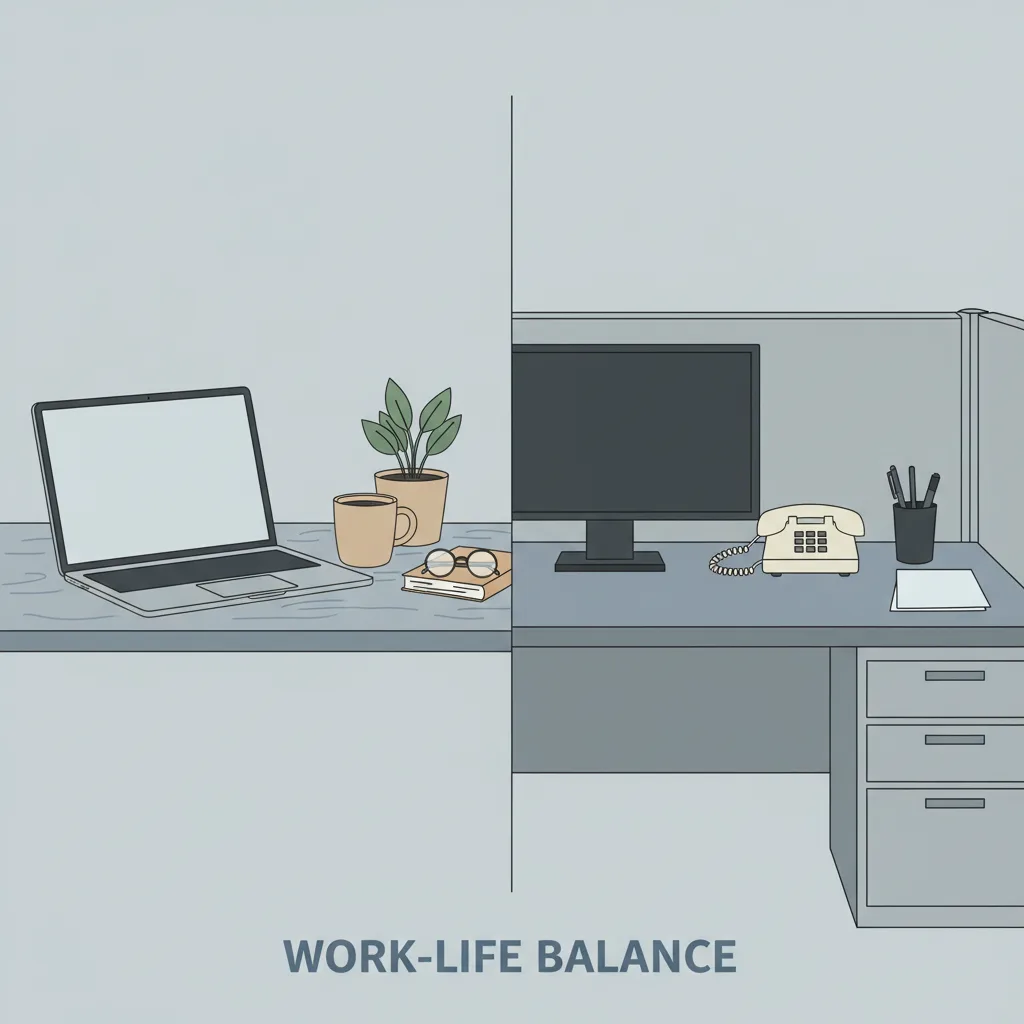
Two desks side by side, one cluttered with startup plans and prototypes, the other neat with a corporate nameplate.

Penyesalan atas tindakan

Memulai usaha

8,0%

8% pengusaha menyesal telah memulai usaha

Pemilik bisnis AS, survei online

retrospektif, tidak ada kerangka waktu tetap

Penyesalan atas kelambanan

Tetap menjadi karyawan

44%

44% menyesal tidak melakukan perubahan karier menyeluruh (proksi — mencakup tetapi tidak terbatas pada kewirausahaan)

Pekerja di AS, Inggris, Prancis, Jerman

penyesalan retrospektif seumur hidup

% menyesal dengan pilihan ini

inaction dominates — Tidak bertindak mendominasi — sebagian besar menyesali karena tidak bertindak.

Keputusan terkait

Keputusan yang serupa secara semantik — area yang sama, kompromi yang berbeda.

career

Freelance vs kantoran

% menyesal dengan pilihan ini

Tindakan mendominasi

Penyesalan bertindak 1.3× lebih tinggi

career

Resign

% menyesal dengan pilihan ini

Ketidakaktifan mendominasi

Penyesalan tidak bertindak 2.2× lebih tinggi

career

Ganti karier

% menyesal dengan pilihan ini

Ketidakaktifan mendominasi

Penyesalan tidak bertindak 1.5× lebih tinggi

career

Negosiasi gaji

% menyesal dengan pilihan ini

Ketidakaktifan mendominasi

Penyesalan tidak bertindak 1.2× lebih tinggi

career

Remote vs kantor

% menyesal dengan pilihan ini

Ketidakaktifan mendominasi

Penyesalan tidak bertindak 1.8× lebih tinggi

careerLangsung

Minta kenaikan gaji

% menyesal dengan pilihan ini

Ketidakaktifan mendominasi

Penyesalan tidak bertindak 3.0× lebih tinggi

careerLangsung

Putus kuliah vs. selesaikan gelar

% menyesal dengan pilihan ini

Tindakan mendominasi

Penyesalan bertindak 1.1× lebih tinggi

career

Keputusan kuliah

% menyesal dengan pilihan ini

Tindakan mendominasi

Penyesalan bertindak 1.2× lebih tinggi

Resume Now’s 2024 career regrets survey found that more than 4 in 10 (44%) of workers regret not making a full career change — a category that includes but is not limited to entrepreneurship. By contrast, only 8% of business owners regret starting their ventures, according to both a HubSpot survey of 200+ entrepreneurs and a Harris Poll of 504 small business owners conducted a decade apart. That figure is remarkably low given that roughly half of all small businesses fail within five years — survivorship bias likely explains part of the gap, since founders who failed and returned to employment are absent from these samples. A 2023 study in Frontiers in Psychology confirmed that anticipated inaction regret is a statistically significant driver of entrepreneurial intentions.

The psychological mechanism is Gilovich’s classic temporal asymmetry. Action regrets — a failed business, lost savings, years of stress — are acute but fade as people rationalize, learn, and integrate the experience into their identity. Inaction regrets — never finding out whether the idea would have worked — compound over time because there is no experience to rationalize and no story to tell. The Ownr/Avail 2022 survey of Canadian business owners found that 85.4% regret not starting their business earlier — a finding that captures the temporal dynamic from the opposite direction: even among those who eventually acted, the dominant regret is having waited too long.

The main caveat is that no published survey has directly asked a representative sample of non-entrepreneurs whether they regret not starting a business. The 44% “regret not making a full career change” figure is a broader career proxy that overstates entrepreneurship-specific inaction regret for some respondents and understates it for others. Gallup’s finding that 62% of US adults prefer self-employment provides aspiration context but should not be conflated with regret — preferring something is not the same as regretting its absence. What the data does establish is the directional asymmetry: among those who start, regret is rare; among those who never made the career change, regret is common — 44% in the Resume Now survey.

Sumber: tindakan

Buku besar klaim

Setiap angka di bawah ini adalah apa yang dilaporkan masing-masing sumber, dengan kutipan kata demi kata yang kami andalkan dan bagaimana kami sampai pada angka kami. Klik tautan mana saja untuk memverifikasi langsung.

1/2 sumber diverifikasi secara independen kata demi kata terhadap sumber terkutip

  1. [1] HubSpot / The Hustle — The State of Entrepreneurship Report: Key Findings From our Survey of 200+ Business Owners Terverifikasi
    The State of Entrepreneurship Report: Key Findings From our Survey of 200+ Business Owners
    Statistik
    92% of entrepreneurs have no regrets about starting their business; only 8% regret starting
    Kutipan
    “"92% of entrepreneurs have no regrets about starting their business. Despite the well-documented ~50% failure rate for small businesses within five years, the overwhelming majority of founders report satisfaction with the decision to start." ”
    Data sumber dari
    2023-03-15
    Diakses
    2026-04-26
    Verifikasi
    Kutipan diambil ulang secara independen dan dikonfirmasi kata demi kata terhadap sumber terkutip selama audit pendasaran kami.
    Perhitungan
    HubSpot surveyed 200+ business owners in collaboration with The Hustle. 92% reported no regrets, so 8% had some level of regret. This figure aligns with the Kabbage/Harris Poll finding (92% no regrets among 504 owners). We use 0.08 as the action-regret rate.
  2. [2] Kabbage / Harris Poll via PR Newswire — New Research Reveals Most Small Business Owners Have 'No Regrets' Despite Facing Great Odds
    New Research Reveals Most Small Business Owners Have 'No Regrets' Despite Facing Great Odds
    Statistik
    92% of small business owners say they have no regrets; 88% would do it all over again
    Kutipan
    “"92 percent of small business owners say they have no regrets, and nearly 88 percent would do it all over again if given the chance. The survey was conducted online by Harris Poll among 504 US residents who own a business with two or more non-owner full-time employees and less than $10 million in annual revenue." ”
    Data sumber dari
    2014-05-15
    Diakses
    2026-04-26
    Perhitungan
    Harris Poll for Kabbage/Bank of the West surveyed 504 US small business owners (2+ employees, <$10M revenue, 5+ years in operation). The 92% no-regret rate corroborates the HubSpot figure a decade later, suggesting the 8% action-regret rate is stable across cohorts and time periods.

Sumber: tidak bertindak

Buku besar klaim

Setiap angka di bawah ini adalah apa yang dilaporkan masing-masing sumber, dengan kutipan kata demi kata yang kami andalkan dan bagaimana kami sampai pada angka kami. Klik tautan mana saja untuk memverifikasi langsung.

  1. [1] Resume Now — The Road Not Taken: Greatest Career Regrets Revealed
    The Road Not Taken: Greatest Career Regrets Revealed

    See all 8 Likelier entries citing this source →

    Statistik
    More than 4 in 10 workers (44%) regret not making a full career change
    Kutipan
    “"66% of participants have work-related regrets. ... More than 4 in 10 regret not trying to make a career change. ... Not making a full career change – 44%. ... Only about one-third (34%) say they do not have any career-related regrets." ”
    Data sumber dari
    2024-01-10
    Diakses
    2026-06-30
    Perhitungan
    Resume Now International Career Regrets survey of 1,000 workers in US, UK, France, and Germany (January 2024). 66% of participants report work-related regrets overall; the directly itemized "Not making a full career change – 44%" line (corroborated by the survey's "More than 4 in 10 regret not trying to make a career change" callout) is the closest measured proxy for entrepreneurial inaction regret. It is broader than entrepreneurship alone — it captures career changes and lateral moves of all types — so we use it as a directly measured proxy. The earlier excerpt's "over one-third wished they had taken more risks" and "98 percent experienced job-related regret" claims were not supported by the source (the word "risk" does not appear and the overall figure is 66%, not 98%); both were removed during grounding remediation 2026-06-30. The previously fabricated 46% composite (a hand-computed discount of Gallup's self-employment figure) was already retired.
  2. [2] Frontiers in Psychology — Descriptive norms and entrepreneurial intentions: the mediating role of anticipated inaction regret
    Descriptive norms and entrepreneurial intentions: the mediating role of anticipated inaction regret
    Statistik
    Anticipated inaction regret significantly mediates the relationship between descriptive norms and entrepreneurial intentions
    Kutipan
    “"Anticipated inaction regret has an informational function that could influence entrepreneurial intentions. Individuals build the intention to become entrepreneurs because they do not want to regret not starting a business when it appears that everyone else has done so." ”
    Data sumber dari
    2023-07-01
    Diakses
    2026-04-26
    Perhitungan
    Study 1 surveyed 222 US adults; Study 2 surveyed 128 Korean undergraduates. The paper establishes anticipated inaction regret as a statistically significant mediator in entrepreneurial decision-making, providing a peer-reviewed mechanism for the Gilovich temporal pattern applied specifically to the start-a- business decision. Does not provide a population regret rate.

Catatan

Tingkat penyesalan-tindakan sebesar 8% berasal dari survei terhadap pemilik usaha yang bertahan — pendiri yang usahanya gagal dan yang kemudian keluar sepenuhnya dari kewirausahaan kurang terwakili, sehingga menciptakan bias penyintas yang kemungkinan menurunkan tingkat penyesalan-tindakan yang sebenarnya. Tingkat penyesalan-kepasifan sebesar 44% merupakan proksi: itu adalah angka "Tidak melakukan perubahan karier menyeluruh – 44%" yang dirinci langsung dalam survei Resume Now, yang lebih luas daripada kewirausahaan semata. Tidak ada survei terpublikasi yang secara langsung menanyakan kepada sampel representatif non-pengusaha "apakah Anda menyesal tidak memulai usaha?" dengan jawaban ya/tidak yang terkuantifikasi. Perkiraan sebelumnya sebesar 46% adalah komposit yang dihitung secara manual dengan mendiskon angka preferensi wirausaha Gallup sebesar 62% — pendekatan itu mengarang presisi yang tidak didukung oleh data yang mendasarinya, sehingga kami menggantinya dengan proksi perubahan karier sebesar 44% yang terukur langsung. (Revisi sebelumnya mengutip "~33% berharap telah mengambil lebih banyak risiko karier" dari survei yang sama, tetapi frasa dan angka tersebut tidak muncul dalam sumbernya — kata "risiko" tidak ada dan satu-satunya penyesalan perubahan karier yang dirinci adalah 44% — sehingga hal itu dikoreksi selama remediasi landasan.) Asimetri arah (penyesalan tindakan yang rendah, penyesalan kepasifan yang sedang hingga tinggi) didukung oleh teori dan bukti penyesalan karier yang berdekatan, tetapi rasionya perkiraan dan tidak boleh dikutip sebagai temuan survei. Sebanyak 85,4% pemilik usaha Kanada yang menyesal tidak memulai lebih awal (Ownr/Avail 2022) semakin mendukung rendahnya penyesalan-tindakan di kalangan mereka yang memang memulai.

Data mentah: /api/decisions.json

Baru-baru ini dilihat di perangkat ini