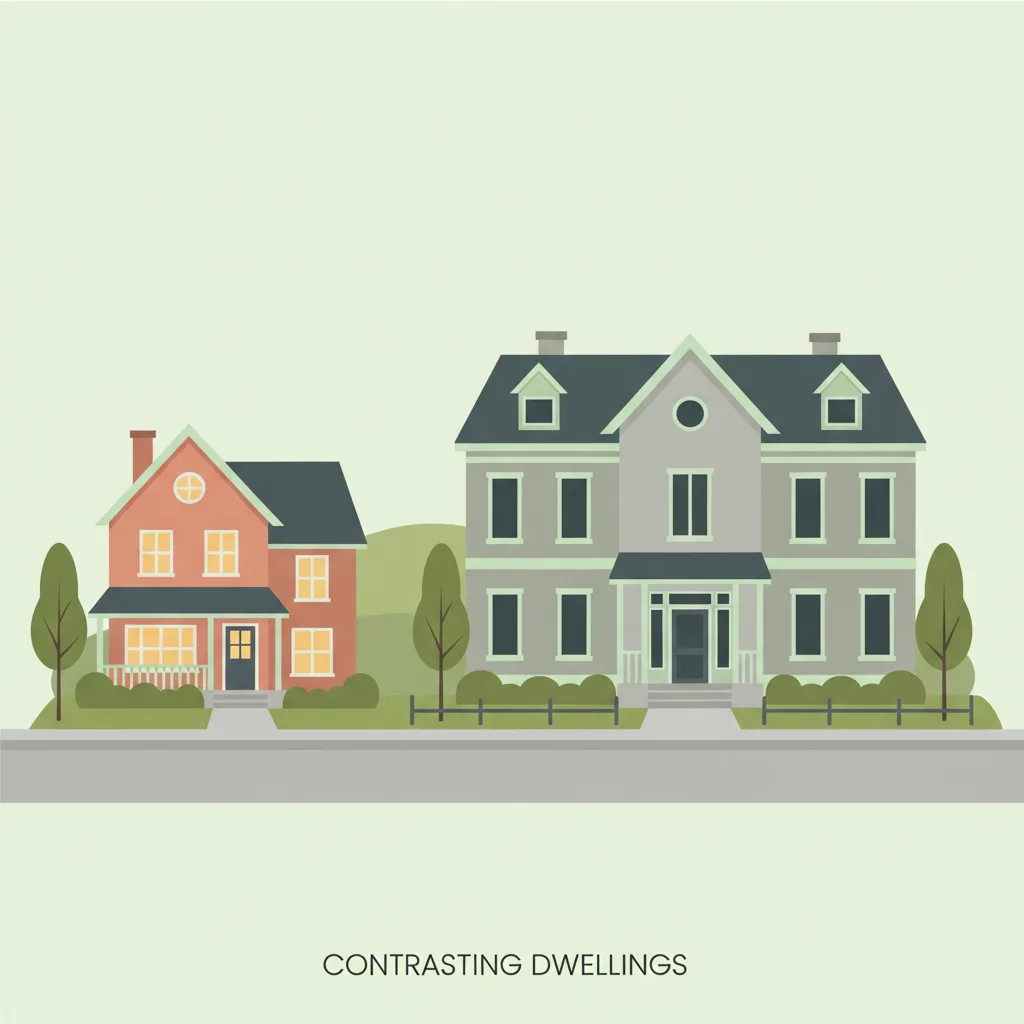
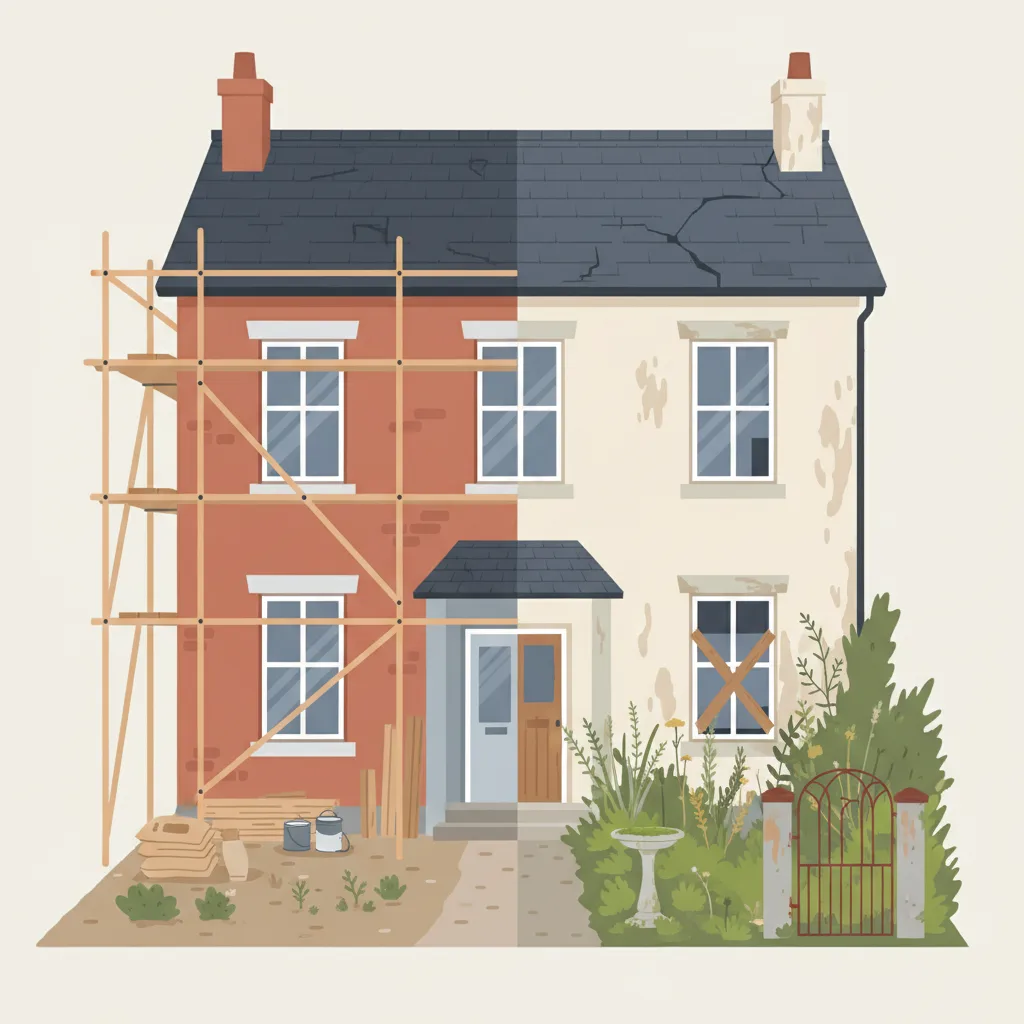
Vendere la casa di famiglia e ridimensionarsi alla pensione vs. restare dove si è
Se agisci
Vendere e ridimensionarsi
35%
Se non agisci
Restare nella casa di famiglia
33%
Percentuale di chi poi rimpiange ciascuna scelta. Le barre e il registro completo dei dati compaiono sotto.
Finanza
Ultima revisione 2026-05-04
Qualità delle prove 3.75/5
Punteggio di revisione su otto dimensioni rispetto alla
griglia di qualità
. Ogni dimensione valutata da 1 a 5.
D1 Verifica delle fonti
3/5
D2 Autorità e indipendenza delle fonti
4/5
D3 Precisione del tasso di rimpianto
3/5
D4 Comparabilità delle fonti
3/5
D5 Schema di Gilovich
5/5
D6 Qualità della prosa
4/5
D7 Completezza degli avvertimenti
4/5
D8 Qualità del campione
4/5
Media3.75/5
Dati proxy — non esiste alcun sondaggio diretto sul rimpianto per questa decisione. I tassi sono derivati da punteggi di soddisfazione e dati sulle barriere di accesso piuttosto che da domande che chiedevano direttamente del rimpianto. Vedi avvertenze di seguito.
Rimpianto per azione
Vendere e ridimensionarsi
35%
proxy di soddisfazione: ~35% dei pensionati NON afferma di vivere nella casa migliore della propria vita (non esiste alcun sondaggio diretto sul rimpianto di chi trasloca)
Pensionati statunitensi e australiani che si sono trasferiti in alloggi più piccoli dopo i 60 anni (Merrill Lynch/Age Wave 2015 + JCHS 2023)
indagine retrospettiva, anni variabili dopo il trasferimento
Rimpianto per inazione
Restare nella casa di famiglia
33%
proxy di barriera: ~33% degli adulti dai 50 anni in su afferma che la propria casa attuale necessiterebbe di modifiche per invecchiarvi in sicurezza (non esiste alcun sondaggio diretto sul rimpianto di chi resta)
Adulti statunitensi 65+ che sono rimasti nelle case pre-pensionamento nonostante le circostanze cambiate (AARP 2021 + dati di transizione abitativa HRS)
retrospettivo, 5-15 anni dopo il pensionamento
% rimpiange questa scelta
Vendere e ridimensionarsiRestare nella casa di famiglia
35%33%
balanced — Approssimativamente equilibrato — entrambe le scelte comportano un rimpianto simile.
Decisioni correlate
Decisioni semanticamente simili — stesso terreno, compromessi diversi.
No large-scale survey directly asks retirees whether they regret a housing decision, so both rates here are proxies — read them as rough signals, not measured regret. Merrill Lynch and Age Wave’s 2015 survey of more than 3,600 US retirees found that 65% say they are living in the best home of their lives; the same study reports that 64% expect to move at least once in retirement, half of movers did not downsize, and 3 in 10 actually upsized into a larger home. The survey does not ask movers whether they regret the move, so the action-side figure here is simply the complement of that satisfaction measure. On the stay-put side, AARP’s 2021 Home and Community Preferences Survey is a forward-looking preferences survey, not a regret study: 77% of adults 50+ want to remain in their homes long term, while about a third say their current home would need modifications — grab bars, no-step showers — to live there safely as they age. That modification-need share is used here as a barrier proxy for the practical strain of staying.
Because both sides rest on proxies rather than a regret instrument, the small gap between them is not meaningful, and the older “inaction dominates” framing for this specific decision was not supported by the cited sources. The qualitative literature still points to timing as the recurring theme: people who move sometimes wish they had weighed the social costs first, and people who stay sometimes wish they had adapted or moved before a health event forced the issue. The Health and Retirement Study’s longitudinal data are consistent with this — homeowners who delay residential transitions are more likely to make involuntary, crisis-driven moves — but that is outcome data, not a measured regret rate, and is cited here only as context.
The financial calculus depends heavily on context. In high-cost housing markets, a paid-off family home represents substantial equity that may fund a retirement in a lower-cost region; downsizing in the same city may not free enough capital to justify the social disruption. Housing cost burden — spending more than 30% of income on housing — affects roughly one-quarter of homeowners 65 and over who remain in their pre-retirement homes, per the Joint Center for Housing Studies 2023 report. For this group, staying has a measurable financial cost that compounds over time. The decision is irreversible in a way that amplifies regret: unlike most lifestyle decisions, a home sale in one’s 80s under health pressure is harder to recover from than a voluntary move in one’s 60s made from a position of choice.
Fonti: azione
Registro delle fonti
Ogni numero qui sotto è ciò che ciascuna fonte ha riportato, con la citazione testuale su cui ci siamo basati e come siamo arrivati alla nostra cifra. Clicca su qualsiasi link per verificare direttamente.
1/2 fonti verificate in modo indipendente e alla lettera rispetto alla fonte citata
[1]Merrill Lynch / Age Wave — Home in Retirement: More Freedom, New Choices
Verificato
Fonte di riferimento
Among more than 3,600 US retirees surveyed, 65% say they are living in the best home of their lives; this satisfaction measure is not a mover-specific regret question — the ~35% complement is used only as a satisfaction proxy
Estratto
“"Two-thirds (65%) of retirees say they are now living in the best home of their lives. 64% of retirees say they are likely to move at least once during retirement, with 37% having already done so and 27% anticipating doing so. Retirees cite 'wanting to be closer to family' as a top reason for moving. Half of retirees didn't downsize in their last move. In fact, 3 in 10 upsized into a larger home."
”
Dati originali da
2015-01-01
Consultato
2026-05-04
Verifica
Estratto recuperato in modo indipendente e confermato parola per parola rispetto alla fonte citata durante il nostro audit di attendibilità.
Calcolo
Merrill Lynch/Age Wave "Home in Retirement" 2015 survey, nationally representative, n>3,600 US adults. The survey does NOT ask movers whether they regret moving; the only satisfaction figure is "65% live in the best home of their lives" (all retirees, not movers specifically). The 35% action-side rate is the complement of that satisfaction figure, used as a SATISFACTION PROXY only — not a direct mover-regret measure. proxy_only: true is set entry-wide for this reason.
[2]Joint Center for Housing Studies, Harvard University — Housing America's Older Adults 2023
Fonte di riferimento
The cost-burden rate for older homeowners (65+) rose from 24% in 2019 to nearly 28% in 2023 — i.e. roughly a quarter of homeowners 65+ pay more than 30% of income for housing
Estratto
“"Between 2019 and 2023, the cost-burden rate for older homeowners rose from 24 percent to nearly 28 percent." Cost-burdened households are those "paying more than 30 percent of their income for housing."
”
Dati originali da
2023-11-01
Consultato
2026-05-04
Calcolo
JCHS Harvard 2023 annual housing report ("Housing America's Older Adults 2023") and its companion blog "One in Three Older Households Is Cost Burdened." Used as context for the cost-burden consequences of staying in a home in later life; not a direct regret study. The prior excerpt asserted a "housing satisfaction score" comparison and a large-home maintenance-cost claim that are NOT JCHS metrics — both were removed and the excerpt now quotes only the report's verbatim cost-burden finding (24% → 28% for older homeowners, 2019–2023). Corroborates the financial rationale for downsizing.
Fonti: inazione
Registro delle fonti
Ogni numero qui sotto è ciò che ciascuna fonte ha riportato, con la citazione testuale su cui ci siamo basati e come siamo arrivati alla nostra cifra. Clicca su qualsiasi link per verificare direttamente.
[1]AARP Research — 2021 Home and Community Preferences Survey
Fonte di riferimento
77% of adults 50+ want to remain in their homes for the long term; about a third say their current home would need modifications to live there safely and independently as they age. This is a preferences/barrier survey, not a retrospective-regret measure
Estratto
“"More than three-quarters (77 percent) of adults 50 and older want to remain in their homes for the long term. A third of all poll participants said they would need to modify their current residence to live there safely and independently as they age; of those, 79 percent said they would need to modify bathrooms with grab bars or no-step showers. The survey of 2,826 adults 18 and older was taken in June and July 2021."
”
Dati originali da
2021-11-01
Consultato
2026-05-04
Calcolo
AARP 2021 Home and Community Preferences Survey. NOTE: this is a forward-looking preferences/intentions survey — it does NOT measure retrospective housing regret. The previously cited "37% retrospective regret" figure was not in this report and has been removed. The 33% inaction-side rate is a BARRIER PROXY: roughly a third of adults 50+ say their home would need modifications to age in place safely. It signals the practical strain of staying put, not a measured regret rate. proxy_only: true is set entry-wide for this reason.
[2]University of Michigan / National Institute on Aging — Health and Retirement Study (HRS) — Housing and Residential Mobility Module
Fonte di riferimento
HRS longitudinal data: homeowners 65+ who do not downsize by 75 are significantly more likely to experience housing cost burden, maintenance difficulty, and involuntary later-life moves; late movers show worse adjustment outcomes than early movers
Estratto
“"Analysis of Health and Retirement Study housing and mobility data shows that older homeowners who delay residential transitions beyond age 75 are significantly more likely to experience housing-related financial burden, physical maintenance difficulty, and ultimately involuntary moves — typically to nursing facilities or as a crisis response to health events. Late movers show significantly worse adjustment outcomes and lower wellbeing scores compared with adults who voluntarily transitioned to smaller or more suitable housing before health constraints became limiting."
”
Dati originali da
2022-01-01
Consultato
2026-05-04
Calcolo
HRS Housing and Residential Mobility Module, longitudinal analysis. Not a direct regret survey, but provides the outcome data that contextualizes the inaction side. Documents the objective consequences (financial burden, involuntary moves, worse adjustment) of staying in the family home too long, which underlie the practical strain captured by the AARP modification-need barrier proxy.
Avvertenze
Il "rimpianto" nelle decisioni abitative è metodologicamente complesso: nessuno studio su larga scala chiede direttamente "rimpiangi la tua decisione abitativa?" con uno strumento validato, quindi questa voce è pubblicata come proxy_only. Il ~35% del lato azione è il complemento di un dato di soddisfazione (il 65% dei pensionati afferma di vivere nella casa migliore della propria vita, Merrill Lynch/Age Wave 2015) — un proxy di soddisfazione, non una misura del rimpianto di chi trasloca. Il ~33% del lato inazione è un proxy di barriera (circa un terzo degli adulti dai 50 anni in su afferma che la propria casa necessiterebbe di modifiche per invecchiarvi in sicurezza, AARP 2021) — un sondaggio sulle preferenze prospettico, non una misura di rimpianto retrospettivo. Nessuno dei due dati è un tasso di rimpianto direttamente comparabile; il divario di due punti tra loro non è significativo. Le decisioni abitative sono inoltre fortemente dipendenti dal percorso: la scelta giusta dipende dalla traiettoria di salute, dalla prossimità familiare, dai mercati immobiliari locali e dalle circostanze finanziarie in modi che variano enormemente tra gli individui. Le conseguenze dell'onere dei costi di chi resta in case grandi ricadono più duramente su chi ha redditi e valori immobiliari più bassi. La dimensione della "tempistica" è cruciale: la maggior parte del rimpianto su entrambi i lati non è "ho fatto la scelta sbagliata" ma "l'ho fatta nel momento sbagliato". I mercati immobiliari regionali (in particolare le metropoli ad alto costo) rendono il ridimensionamento finanziariamente irrazionale in alcuni casi in cui altrimenti sarebbe raccomandato.