




Vai al contenuto
Likelier

Rimpianto per l’azione vs. l’inazione

Inserire un genitore anziano in una struttura di cura versus prestare assistenza a domicilio di persona

Se agisci

Ricovero in struttura assistenziale

54%

Se non agisci

Assistenza familiare a domicilio

23%

Percentuale di chi poi rimpiange ciascuna scelta. Le barre e il registro completo dei dati compaiono sotto.


Famiglia

Ultima revisione 2026-05-02

Qualità delle prove 4.13/5

Punteggio di revisione su otto dimensioni rispetto alla griglia di qualità . Ogni dimensione valutata da 1 a 5.

D1 Verifica delle fonti
5/5
D2 Autorità e indipendenza delle fonti
4/5
D3 Precisione del tasso di rimpianto
2/5
D4 Comparabilità delle fonti
3/5
D5 Schema di Gilovich
5/5
D6 Qualità della prosa
5/5
D7 Completezza degli avvertimenti
5/5
D8 Qualità del campione
4/5
Media 4.13/5
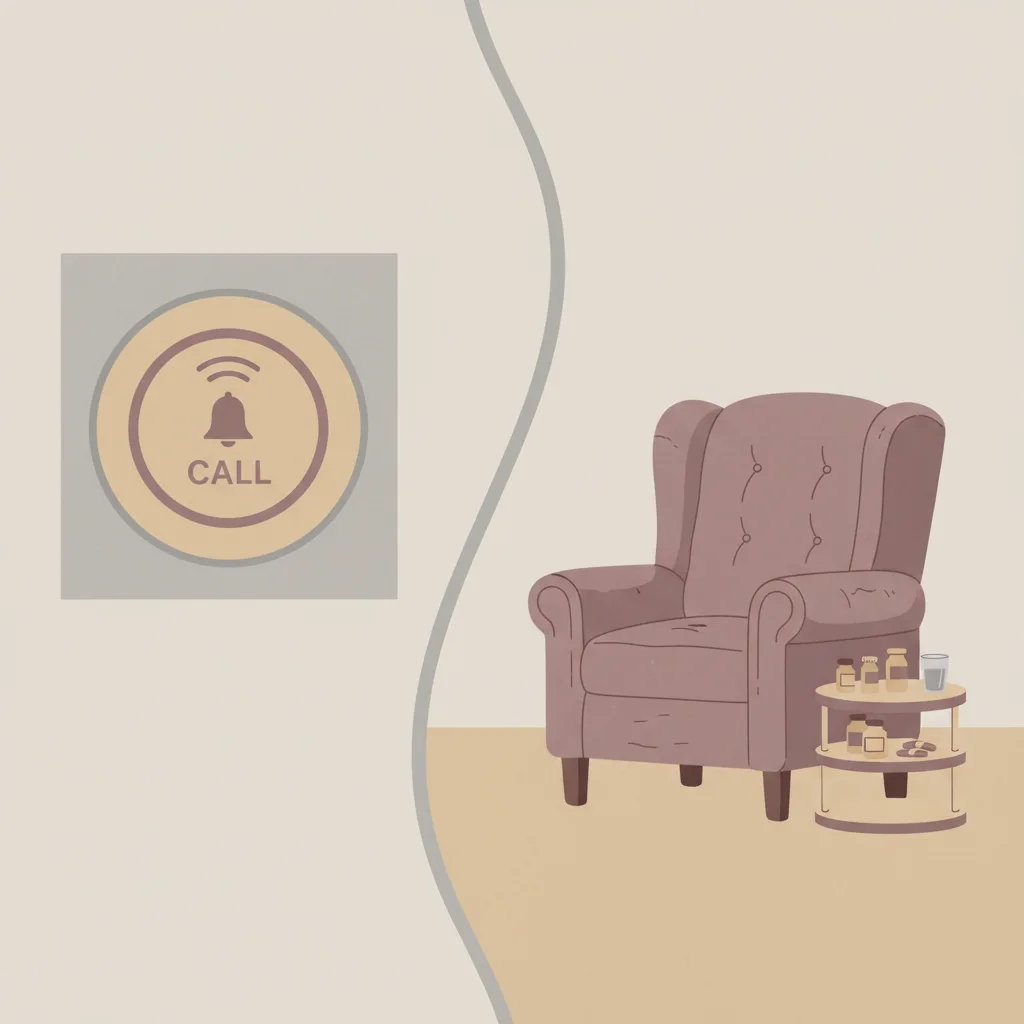
A hospital call button on the left and a home armchair with a medication tray on the right

Rimpianto per azione

Ricovero in struttura assistenziale

54%

Il 54% delle famiglie riferisce di sentirsi almeno un po' colpevole dopo il collocamento in casa di cura (proxy di colpa)

Adulti statunitensi con un familiare in casa di cura

trasversale, retrospettivo

Rimpianto per inazione

Assistenza familiare a domicilio

23%

Il 23% dei caregiver domestici riferisce che la propria salute è peggiorata a causa dell'assistenza (proxy di carico)

Caregiver familiari statunitensi, rappresentativo a livello nazionale

trasversale; assistenza in corso al momento dell'indagine

% rimpiange questa scelta

action dominates — L'azione domina — la maggior parte si pente di aver agito.

Decisioni correlate

Decisioni semanticamente simili — stesso terreno, compromessi diversi.

familyDiretta

Autorizza donazione organi familiare vs. rifiuta

% rimpiange questa scelta

L'inazione prevale

Rimpianto per l'inazione 6.8× maggiore

family

Genitore a casa vs lavoratore

% rimpiange questa scelta

L'azione prevale

Rimpianto per l'azione 1.3× maggiore

family

Adozione vs. crescere da soli

% rimpiange questa scelta

L'azione prevale

Rimpianto per l'azione 4.8× maggiore

family

Privata vs pubblica

% rimpiange questa scelta

L'inazione prevale

Rimpianto per l'inazione 3.2× maggiore

family

Tutela totale vs. processo decisionale supportato

% rimpiange questa scelta

Equilibrato

Approssimativamente equilibrato

family

Soccorrere vs. lasciar fare

% rimpiange questa scelta

L'azione prevale

Rimpianto per l'azione 1.2× maggiore

family

Avere figli

% rimpiange questa scelta

Equilibrato

Approssimativamente equilibrato

family

Libertà vs. genitorialità apprensiva

% rimpiange questa scelta

L'azione prevale

Rimpianto per l'azione 2.3× maggiore

54% of families report feeling at least somewhat guilty after placing a relative in a nursing home, according to a Care.com survey of 978 US adults (2019), with 14% feeling “extremely guilty.” A peer-reviewed parallel from Statz et al. (2021), tracking 83 dementia caregivers through residential long-term care transitions, found that nearly half (46.3%) experienced guilt from the care recipient, other family members, or facility staff. Adult children reported markedly more guilt from other family members than spouses did — 29.8% versus 4.0%, the only guilt source that differed significantly by caregiver role — and the qualitative record is thick with the specific fear that placement happened “too soon.” Action-side guilt is well-documented, replicated across research designs, and begins immediately after the move.

The inaction side lacks a symmetrical direct-regret measure, but the burden data are substantial. The 2020 NAC/AARP nationally representative survey of 1,707 US caregivers found that 23% said caregiving had made their own health worse — up from 17% in 2015. The same report found 28% had stopped saving and 23% had taken on more debt because of caregiving. Schulz and Sherwood’s 2008 synthesis of three decades of caregiver health research concluded that caregiving “creates physical and psychological strain over extended periods of time” and that roughly two-thirds of caregivers experience some negative consequence. The floor of inaction-side harm is real but harder to frame as regret because most home caregivers are embedded in an ongoing situation rather than looking back on a discrete choice.

Under Gilovich and Medvec’s framework, actions generate more regret in the short term, and the placement guilt literature fits this pattern: guilt is highest immediately after the move and tends to attenuate as the care recipient stabilises and the caregiver observes professional care quality. Inaction regret — regret about not having placed sooner — is harder to study because it surfaces mainly when home care has already broken down (hospitalisation, caregiver health crisis, or care recipient injury from inadequate supervision). The 31-point gap between sides should be read cautiously: the two measures are not equivalent constructs, and a direct bilateral survey asking both groups the same retrospective question does not yet exist in the published literature.

Fonti: azione

Registro delle fonti

Ogni numero qui sotto è ciò che ciascuna fonte ha riportato, con la citazione testuale su cui ci siamo basati e come siamo arrivati alla nostra cifra. Clicca su qualsiasi link per verificare direttamente.

  1. [1] Care.com / Statista — Guilt over leaving one or more relatives in a nursing home in the United States in 2019
    Guilt over leaving one or more relatives in a nursing home in the United States in 2019
    Statistica
    53.6% of respondents felt at least somewhat guilty: extremely (13.7%), moderately (20.9%), somewhat (19%); 23.7% slightly guilty; 22.7% not at all
    Estratto
    “"In the 2019, roughly 14 percent of people with a relative in a nursing home felt extremely guilty over their choice of leaving their relative in the nursing home." ”
    Dati originali da
    2019-01-25
    Consultato
    2026-05-02
    Calcolo
    Care.com online survey, n=978 US adults with a family member in a nursing home, 2019. Regret proxy: respondents rating guilt as "extremely" (13.7%) + "moderately" (20.9%) + "somewhat" (19.0%) = 53.6%, rounded to 0.54. The AARP coping article independently summarises this as "over 50 percent felt at least somewhat guilty." "Slightly guilty" (23.7%) is excluded as below the "somewhat" threshold used by AARP's framing.
  2. [2] Couple and Family Psychology: Research and Practice (PMC) — "We Moved Her Too Soon": Navigating Guilt Among Adult Child and Spousal Caregivers of Persons Living with Dementia Following a Move into Residential Long-Term Care
    "We Moved Her Too Soon": Navigating Guilt Among Adult Child and Spousal Caregivers of Persons Living with Dementia Following a Move into Residential Long-Term Care
    Statistica
    46.3% of dementia caregivers (N=83) reported experiencing guilt from care recipient, other family members, or facility staff following nursing home placement
    Estratto
    “"Nearly half of caregivers reported experiencing guilt from their care recipient, other family members, or facility staff." ”
    Dati originali da
    2021-05-13
    Consultato
    2026-05-02
    Calcolo
    Mixed-methods study, N=83 caregivers (25 spouses, 58 adult children) transitioning a family member with Alzheimer's disease or related dementia to residential long-term care. Quantitative analyses identified guilt prevalence at 46.3% for any source of guilt. Adult children reported guilt from other family members at 29.8% vs 4.0% for spouses. The peer-reviewed figure (46.3%) is conservative relative to the Care.com survey (53.6%); the entry uses the Care.com figure as the primary regret_rate because it covers a broader guilt construct and a larger, non-dementia-specific sample.

Fonti: inazione

Registro delle fonti

Ogni numero qui sotto è ciò che ciascuna fonte ha riportato, con la citazione testuale su cui ci siamo basati e come siamo arrivati alla nostra cifra. Clicca su qualsiasi link per verificare direttamente.

1/2 fonti verificate in modo indipendente e alla lettera rispetto alla fonte citata

  1. [1] National Alliance for Caregiving (NAC) and AARP — Caregiving in the United States 2020
    Caregiving in the United States 2020
    Statistica
    23% of US caregivers say caregiving has made their own health worse, up from 17% in 2015; 23% find it hard to take care of their own health
    Estratto
    “"Family caregivers provide vital help and care for their loved ones, yet this survey shows that they keep getting stretched thinner and thinner." ”
    Dati originali da
    2020-05-14
    Consultato
    2026-05-02
    Calcolo
    NAC/AARP nationally representative probability-based online survey of 1,707 US caregivers age 18+, conducted 2019 by Greenwald & Associates. Regret proxy: 23% reporting health has worsened. This is a burden/harm proxy, not a direct regret measure — no large-scale survey asks home caregivers retrospectively whether they regret choosing home care over facility placement. The 23% represents the floor of caregiver harm; separate data show 28% have stopped saving, 23% have taken on more debt, and 21% provide 41+ hours/week of care. The health-worsened figure is used as the regret_rate because health decline is the most proximate marker of caregiver regret in the absence of a direct question.
  2. [2] American Journal of Nursing — Physical and Mental Health Effects of Family Caregiving Verificato
    Physical and Mental Health Effects of Family Caregiving
    Statistica
    Caregiving creates physical and psychological strain over extended periods; about one third of caregivers report neither strain nor negative health effects, implying approximately two thirds experience some negative consequence
    Estratto
    “"Caregiving has all the features of a chronic stress experience: It creates physical and psychological strain over extended periods of time, is accompanied by high levels of unpredictability and uncontrollability, has the capacity to create secondary stress in multiple life domains such as work and family relationships, and frequently requires high levels of vigilance." ”
    Dati originali da
    2008-09-01
    Consultato
    2026-05-02
    Verifica
    Estratto recuperato in modo indipendente e confermato parola per parola rispetto alla fonte citata durante il nostro audit di attendibilità.
    Calcolo
    Literature review by Schulz & Sherwood, American Journal of Nursing, September 2008, Vol. 108, No. 9 Supplement, pp. 23–27. DOI: 10.1097/01.NAJ.0000336406.45248.4c. Authors synthesise three decades of caregiver health research and note that approximately one third of caregivers report no strain, suggesting two thirds experience some negative health consequence. This is directionally consistent with the AARP 2020 figure of 23% reporting health explicitly worsened, which is the primary regret_rate used. The Schulz & Sherwood review corroborates that the AARP 23% is a reasonable lower bound.

Avvertenze

I due lati misurano costrutti diversi: i tassi lato azione sono risposte di colpa su una decisione di collocamento completata, mentre i tassi lato inazione sono proxy di carico sulla salute tra i caregiver domestici in corso — nessuna indagine su larga scala chiede direttamente ai caregiver domestici se si pentono di non aver perseguito le cure in struttura. L'indagine Care.com lato azione (n=978) era un panel online opt-in, non campionato probabilisticamente, che può sovrarappresentare i caregiver che cercano attivamente informazioni sulla colpa. La cifra Gaugler sottoposta a revisione paritaria (46,3%) è specifica per la demenza e usa un costrutto di colpa più stretto; la cifra della voce del 54% da Care.com copre tutte le relazioni con la casa di cura. Entrambe le cifre lato azione sono proxy di colpa, non rimpianto misurato a un orizzonte retrospettivo fisso. Il carico dell'assistenza varia enormemente per diagnosi, intensità e supporto disponibile: i dati AARP mostrano che il 21% dei caregiver domestici fornisce 41+ ore a settimana, un sottogruppo che probabilmente sperimenta tassi di rimpianto molto più alti rispetto al titolo del 23%. Infine, la decisione di collocare o assistere a casa è raramente liberamente scelta — vincoli finanziari, geografia, dinamiche familiari e bisogno clinico tutti la modellano, rendendo il rimpianto in parte attribuibile alle circostanze piuttosto che alla decisione stessa.

Dati grezzi: /api/decisions.json

Visti di recente su questo dispositivo