

Vai al contenuto
Likelier

Rimpianto per l’azione vs. l’inazione

Comprare la misura giusta o comprare più grande del necessario

Se agisci

Comprare ciò che serve davvero

8,0%

Se non agisci

Comprare più grande del necessario

5,0%

Percentuale di chi poi rimpiange ciascuna scelta. Le barre e il registro completo dei dati compaiono sotto.


Finanza

Ultima revisione 2026-05-04

Qualità delle prove 4.13/5

Punteggio di revisione su otto dimensioni rispetto alla griglia di qualità . Ogni dimensione valutata da 1 a 5.

D1 Verifica delle fonti
5/5
D2 Autorità e indipendenza delle fonti
4/5
D3 Precisione del tasso di rimpianto
4/5
D4 Comparabilità delle fonti
5/5
D5 Schema di Gilovich
2/5
D6 Qualità della prosa
5/5
D7 Completezza degli avvertimenti
4/5
D8 Qualità del campione
4/5
Media 4.13/5
Prova diretta
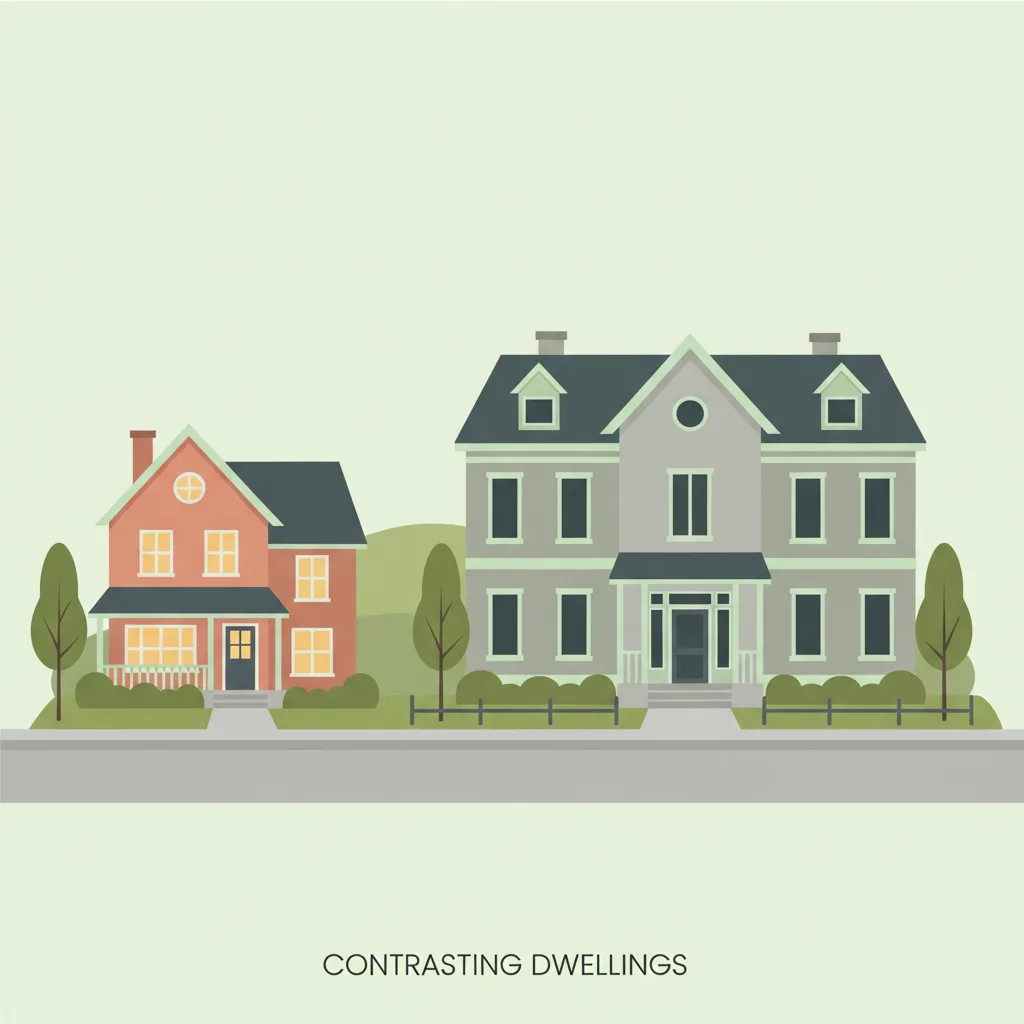
Two houses side by side — one compact and tidy, the other larger with several dark, unused windows.

Rimpianto per azione

Comprare ciò che serve davvero

8,0%

~8% dei proprietari di case vorrebbe aver comprato più grande

Proprietari di case statunitensi, rappresentativo a livello nazionale

retrospettivo, nessun arco temporale fisso

Rimpianto per inazione

Comprare più grande del necessario

5,0%

~5% dei proprietari di case si pente di aver comprato troppo spazio

Proprietari di case statunitensi, rappresentativo a livello nazionale

retrospettivo, nessun arco temporale fisso

% rimpiange questa scelta

action dominates — L'azione domina — la maggior parte si pente di aver agito.

Decisioni correlate

Decisioni semanticamente simili — stesso terreno, compromessi diversi.

FinanzaDiretta

Acquisto casa

% rimpiange questa scelta

L'inazione prevale

Rimpianto per l'inazione 5.6× maggiore

Finanza

Ristrutturazione

% rimpiange questa scelta

L'azione prevale

Rimpianto per l'azione 2.3× maggiore

Finanza

Mutuo fisso vs. variabile

% rimpiange questa scelta

L'azione prevale

Rimpianto per l'azione 3.6× maggiore

Finanza

Rinunciare alla perizia immobiliare

% rimpiange questa scelta

L'azione prevale

Rimpianto per l'azione 3.1× maggiore

Finanza

Negoziazione dell'affitto

% rimpiange questa scelta

L'inazione prevale

Rimpianto per l'inazione 1.9× maggiore

Finanza

Nuova vs usata

% rimpiange questa scelta

Equilibrato

Approssimativamente equilibrato

lifestyle

Elettrica vs benzina

% rimpiange questa scelta

L'azione prevale

Rimpianto per l'azione 2.9× maggiore

lifestyle

Biologico vs convenzionale

% rimpiange questa scelta

L'inazione prevale

Rimpianto per l'inazione 3.1× maggiore

About 8% of US homeowners wish they had bought a bigger home, versus roughly 5% who regret buying too much space, according to Bankrate’s 2024 survey of homeowners with purchase regrets. The gap is narrow — 3 percentage points — and the finding cuts against the popular “don’t buy too much house” advice. Among homeowners who have any regret at all (47% of the total), “too small” ranks second at 18%, while “too big” comes in at 10%, behind maintenance costs, location, overpaying, and mortgage rates. The pattern extends beyond housing: vehicle buyers who chose a compact car and later needed a larger one face modest upgrade costs, while those who bought an oversized SUV absorb years of higher fuel, insurance, and depreciation on capacity they never use.

The small gap masks an asymmetry in how the two regrets feel. Right-sizers who outgrow their space experience a concrete, daily friction: the cramped home office, the bedroom that doubled as a nursery. Oversizers, by contrast, often absorb their regret into adjacent financial complaints. Bankrate’s survey found 40% of regretful owners citing maintenance and hidden costs as their top grievance, and 13% citing an unaffordable mortgage — both categories that disproportionately affect those who bought more home than they needed. Genesove and Mayer’s study of Boston condominiums showed that owners anchored to their purchase price set asking prices 25–35% above market when facing a loss, creating a psychological lock-in that makes downsizing from an oversized home especially painful. Hedonic adaptation compounds the problem: the pleasure of extra square footage fades within months, but the mortgage payment never adapts.

Neither side of this decision carries catastrophic regret rates. Both land under 10%, well below the 45% of renters who wish they had bought at all. The honest read is that most homeowners, whether they sized up or sized down, would do the same thing again. For buyers weighing the tradeoff today, the financial math favors right-sizing: transaction costs for a future upgrade ($1,000–$5,000 for a local move) are modest compared to years of carrying costs on unused space. But the data does not support a strong directional claim. Individual variables — market trajectory, family plans, remote-work permanence — swamp the aggregate signal.

Fonti: azione

Registro delle fonti

Ogni numero qui sotto è ciò che ciascuna fonte ha riportato, con la citazione testuale su cui ci siamo basati e come siamo arrivati alla nostra cifra. Clicca su qualsiasi link per verificare direttamente.

  1. [1] Bankrate — Bankrate 2024 Homeowner Regrets Survey
    Bankrate 2024 Homeowner Regrets Survey
    Statistica
    18% of homeowners with regrets say they bought too small a house; 47% of all homeowners have at least one regret
    Estratto
    “"Nearly half (47 percent) of current U.S. homeowners have a regret about their purchase. Among those with regrets, 18% say they bought too small of a house." ”
    Dati originali da
    2024-05-01
    Consultato
    2026-04-28
    Calcolo
    Bankrate's April 2024 nationally representative survey. 47% of homeowners report at least one regret. Of those, 18% cite "too small" as their regret. Population-level rate: 0.47 × 0.18 = 0.085, rounded to 0.08. This represents homeowners who, looking back, wish they had purchased a larger home — not necessarily people who deliberately right-sized, but the closest available proxy.
  2. [2] Clever Real Estate — American Home Buyer Report: 2024 Edition
    American Home Buyer Report: 2024 Edition
    Statistica
    24% of recent homebuyers with regrets say their home doesn't meet all their needs
    Estratto
    “"82% of recent buyers have at least one regret about their purchase. Among those with regrets, 24% say their home doesn't meet all their needs." ”
    Dati originali da
    2024-05-13
    Consultato
    2026-04-28
    Calcolo
    Clever Real Estate survey of 920 Americans who bought in 2023-2024. The 24% "doesn't meet all needs" is broader than pure size regret — it includes layout, features, and location — but corroborates the Bankrate finding that undersizing is a common regret category.

Fonti: inazione

Registro delle fonti

Ogni numero qui sotto è ciò che ciascuna fonte ha riportato, con la citazione testuale su cui ci siamo basati e come siamo arrivati alla nostra cifra. Clicca su qualsiasi link per verificare direttamente.

  1. [1] Bankrate — Bankrate 2024 Homeowner Regrets Survey
    Bankrate 2024 Homeowner Regrets Survey
    Statistica
    10% of homeowners with regrets say they bought too big a house; 47% of all homeowners have at least one regret
    Estratto
    “"Among homeowners with regrets, 10% say their regret is that their home is too big. The most common regret overall is maintenance and hidden costs (40%), followed by buying too small (18%)." ”
    Dati originali da
    2024-05-01
    Consultato
    2026-04-28
    Calcolo
    Same Bankrate 2024 survey. 47% have regrets, 10% of those cite "too big." Population-level rate: 0.47 × 0.10 = 0.047, rounded to 0.05. Note that oversizing regret may be underreported because its costs (maintenance, utilities, mortgage strain) are captured by adjacent categories: 40% cite "maintenance/hidden costs" and 13% cite "mortgage too high." Those who bought too big may attribute regret to cost rather than size.
  2. [2] The Quarterly Journal of Economics — Loss Aversion and Seller Behavior: Evidence from the Housing Market
    Loss Aversion and Seller Behavior: Evidence from the Housing Market
    Statistica
    Owners facing nominal losses set asking prices 25-35% above expected sale price and exhibit much lower sale hazard
    Estratto
    “"Condominium owners subject to nominal losses set higher asking prices of 25-35 percent of the difference between the property's expected selling price and their original purchase price, attain higher selling prices of 3-18 percent of that difference, and exhibit a much lower sale hazard than other sellers." ”
    Dati originali da
    2001-11-01
    Consultato
    2026-04-28
    Calcolo
    Genesove and Mayer (2001), data from downtown Boston condos in the 1990s. This study doesn't directly measure oversizing regret but documents the mechanism that traps oversizers: loss aversion anchors owners to their purchase price, making them reluctant to sell even when the home no longer fits. Owner-occupants show effects twice as large as investors. Cited as evidence that overprovisioning creates psychological lock-in beyond the financial cost.

Avvertenze

Nessuna indagine chiede la domanda precisa posta qui — "ha deliberatamente dimensionato giustamente e se ne pente, o deliberatamente sovradimensionato e se ne pente?" I tassi Bankrate sono derivati da proprietari di case che giudicano retrospettivamente se la loro casa è troppo piccola o troppo grande, che confonde la strategia deliberata con i vincoli di budget e i cambiamenti di vita. Il divario di 3 punti percentuali è abbastanza piccolo che le circostanze individuali dominano il segnale aggregato. I dati immobiliari sono i più forti; l'evidenza di veicoli e acquisti generali è direzionale ma più sottile. Nei mercati in rapido apprezzamento, i sovradimensionatori sono parzialmente salvati dalla crescita del patrimonio; nei mercati piatti o in declino, la penalità di costo della metratura extra è amplificata. Il 40% che cita i costi di manutenzione può includere molti sovradimensionatori che inquadrano il loro rimpianto come finanziario piuttosto che spaziale, il che restringerebbe o invertirebbe il divario se ricodificato.

Dati grezzi: /api/decisions.json

Visti di recente su questo dispositivo