






Vai al contenuto
Likelier

Rimpianto per l’azione vs. l’inazione

Passare a un veicolo elettrico vs tenere un'auto a benzina

Se agisci

Passare all'auto elettrica

46%

Se non agisci

Tenere l'auto a benzina

16%

Percentuale di chi poi rimpiange ciascuna scelta. Le barre e il registro completo dei dati compaiono sotto.


Stile di vita

Ultima revisione 2026-04-26

Qualità delle prove 4.25/5

Punteggio di revisione su otto dimensioni rispetto alla griglia di qualità . Ogni dimensione valutata da 1 a 5.

D1 Verifica delle fonti
5/5
D2 Autorità e indipendenza delle fonti
4/5
D3 Precisione del tasso di rimpianto
2/5
D4 Comparabilità delle fonti
3/5
D5 Schema di Gilovich
5/5
D6 Qualità della prosa
5/5
D7 Completezza degli avvertimenti
5/5
D8 Qualità del campione
5/5
Media 4.25/5
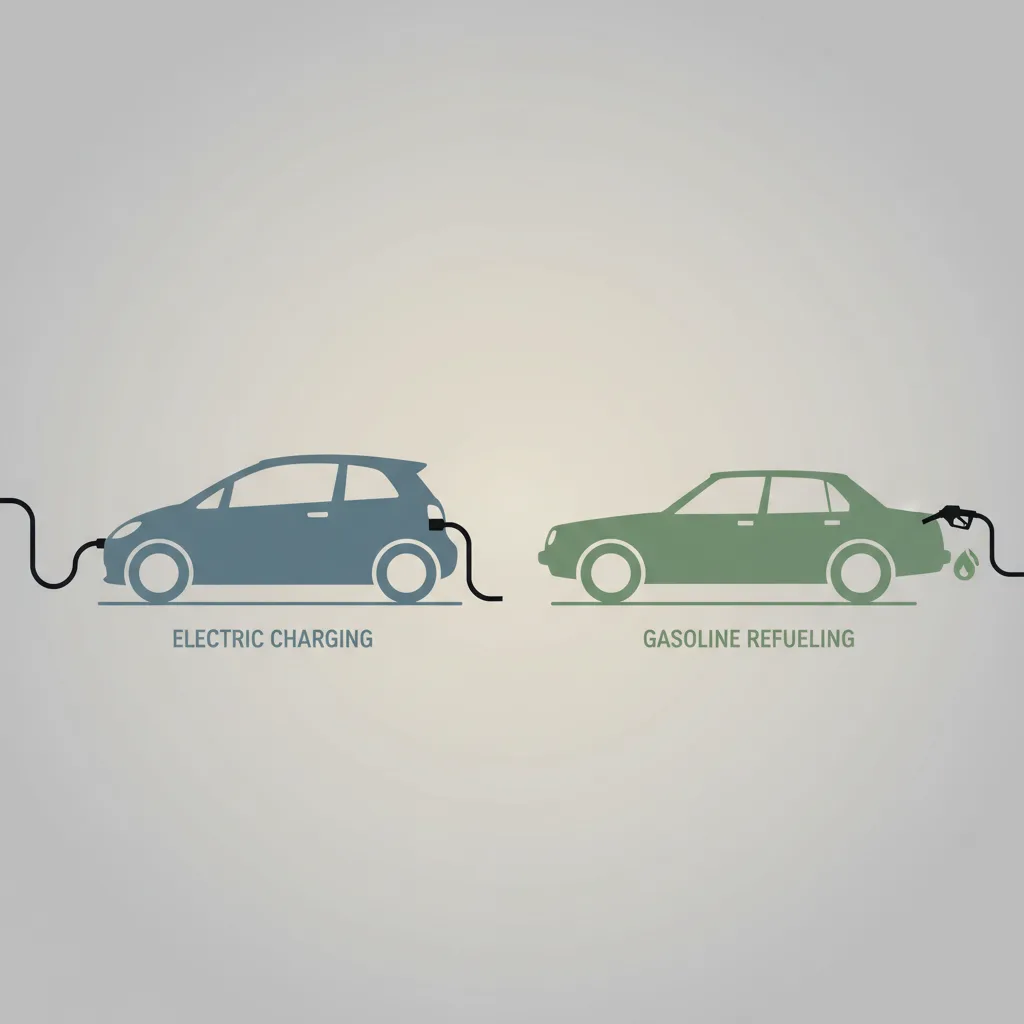
Two car silhouettes side by side, one with an electric plug, the other with a gas pump nozzle.

Rimpianto per azione

Passare all'auto elettrica

46%

Il 46% dei proprietari statunitensi di EV vuole tornare indietro (proxy di intenzione)

Proprietari statunitensi di EV, panel online

retrospettivo, nessun arco temporale fisso

Rimpianto per inazione

Tenere l'auto a benzina

16%

Il 16% degli adulti statunitensi probabilmente comprerà un EV come prossima auto (proxy di intenzione)

Adulti statunitensi, panel basato sulla probabilità

retrospettivo, nessun arco temporale fisso

% rimpiange questa scelta

action dominates — L'azione domina — la maggior parte si pente di aver agito.

Decisioni correlate

Decisioni semanticamente simili — stesso terreno, compromessi diversi.

Finanza

Ristrutturazione

% rimpiange questa scelta

L'azione prevale

Rimpianto per l'azione 2.3× maggiore

lifestyle

Dieta vegetariana

% rimpiange questa scelta

L'azione prevale

Rimpianto per l'azione 3.8× maggiore

Finanza

Crypto vs. investimento tradizionale

% rimpiange questa scelta

L'azione prevale

Rimpianto per l'azione 2.9× maggiore

lifestyle

Spese di viaggio

% rimpiange questa scelta

L'inazione prevale

Rimpianto per l'inazione 11.8× maggiore

FinanzaDiretta

Giusto vs. sovradimensionato

% rimpiange questa scelta

L'azione prevale

Rimpianto per l'azione 1.6× maggiore

FinanzaDiretta

Acquisto casa

% rimpiange questa scelta

L'inazione prevale

Rimpianto per l'inazione 5.6× maggiore

lifestyle

Tenere o dare in adozione l'animale

% rimpiange questa scelta

L'inazione prevale

Rimpianto per l'inazione 5.7× maggiore

Finanza

Trattativa sul prezzo dell'auto

% rimpiange questa scelta

L'inazione prevale

Rimpianto per l'inazione 1.6× maggiore

Nearly 46% of American EV owners say they are “very likely” to switch back to a gas-powered vehicle, according to McKinsey’s 2024 Mobility Consumer Pulse survey of over 4,000 US respondents. The top complaints are predictable infrastructure gripes: inadequate public charging (35%), high total ownership costs (34%), and the logistical headache of planning long trips (32%). On the other side, only 16% of US adults say they are likely to buy an EV as their next car, per AAA’s 2025 survey — a figure that has been falling, not rising. Both figures are intent proxies, not direct regret measures, which makes the 30-point delta less certain than it appears.

The McKinsey number deserves heavy caveats. InsideEVs and other analysts noted that the survey’s “switch back” framing may capture people who want to add a gas car to their household fleet, not necessarily abandon electric entirely. The respondent pool skewed toward newer, non-Tesla owners — people who bought affordable EVs on lease deals but lack home charging and rely on patchy public networks. J.D. Power’s competing 2025 EVX study found that only 12% of EV owners would consider an ICE replacement — implying action regret closer to 4–12%, not 46%. The 2026 J.D. Power study raised BEV repurchase intent to 96%, leaving only about 4% who would not consider another EV. The gulf between 46% wanting to “switch back” and the 4-12% who won’t consider another EV or lean toward ICE suggests the McKinsey question is measuring something broader than pure regret.

The asymmetry may also be transient. Early adoption of any technology produces higher buyer’s remorse because infrastructure, pricing, and product quality are still maturing. Gas cars benefit from a century of sunk-cost infrastructure that makes inaction nearly frictionless. If charging networks densify and battery costs continue falling, the action- regret rate will likely compress. For now, the data says what it says: most gas-car owners feel no pull toward EVs, and a large minority of EV owners express interest in returning to gas — though whether that constitutes regret or merely flexibility remains genuinely unclear.

Fonti: azione

Registro delle fonti

Ogni numero qui sotto è ciò che ciascuna fonte ha riportato, con la citazione testuale su cui ci siamo basati e come siamo arrivati alla nostra cifra. Clicca su qualsiasi link per verificare direttamente.

1/3 fonti verificate in modo indipendente e alla lettera rispetto alla fonte citata

  1. [1] McKinsey & Company — New twists in the electric-vehicle transition: A consumer perspective
    New twists in the electric-vehicle transition: A consumer perspective
    Statistica
    46% of US EV owners said they were 'very likely' to switch back to a gas-powered vehicle for their next purchase
    Estratto
    “"Forty-six percent of battery electric vehicle owners in the United States said they were 'very likely' to switch back to owning an internal-combustion-engine vehicle for their next purchase. Thirty-five percent cited inadequate public charging infrastructure, 34% said total costs were too high, and 32% said long-trip planning was too difficult." ”
    Dati originali da
    2024-06-18
    Consultato
    2026-04-26
    Calcolo
    McKinsey Mobility Consumer Pulse, February 2024. Surveyed 36,954 mobility users across nine countries; US subsample N = 4,112. The 46% figure reflects those selecting "very likely" to switch back to ICE. This measures switching intent, not regret directly — some respondents may want to add a gas car while keeping their EV, not abandon electric entirely.
  2. [2] InsideEVs — Are Half Of EV Owners Really 'Switching Back' To Gas? It's Complicated.
    Are Half Of EV Owners Really 'Switching Back' To Gas? It's Complicated.
    Statistica
    The 46% figure includes new EV owners who lack home charging, bought non-Tesla EVs with weaker charging networks, and may be considering adding a gas car rather than fully abandoning EVs
    Estratto
    “"Those new owners surveyed are increasingly moving away from the profile that long-defined EV life: upper-income or wealthy, probably a single-family homeowner and probably buying a Tesla. Instead, they're buying from other brands at more affordable prices, often enticed by aggressive leasing and financing deals for EVs. But that also means that they're living without Tesla's robust and reliable fast-charging network; may live in apartments without easy access to charging; and are less willing to put up with the kinds of EV-related headaches that many early adopters took in stride." ”
    Dati originali da
    2024-06-25
    Consultato
    2026-04-26
    Calcolo
    InsideEVs contextual analysis. Notes that "switch back" may include adding a gas vehicle to the household fleet rather than pure abandonment. The McKinsey methodology was not fully disclosed, and the question wording may conflate fleet diversification with outright regret.
  3. [3] J.D. Power — 2025 U.S. Electric Vehicle Experience (EVX) Ownership Study Verificato
    2025 U.S. Electric Vehicle Experience (EVX) Ownership Study
    Statistica
    94% of BEV owners are likely to consider purchasing another BEV; only 12% likely to consider replacing EV with ICE
    Estratto
    “"94% of pure EV (BEV) owners are likely to consider purchasing another BEV for their next vehicle. Only 12% of BEV owners are likely to consider replacing their EV with an internal combustion engine-powered vehicle during their next purchase." ”
    Dati originali da
    2025-03-12
    Consultato
    2026-04-26
    Verifica
    Estratto recuperato in modo indipendente e confermato parola per parola rispetto alla fonte citata durante il nostro audit di attendibilità.
    Calcolo
    J.D. Power 2025 EVX Ownership Study provides a contradicting data point. The 12% ICE-switch rate vs McKinsey's 46% likely reflects differences in question wording, sample composition, and what "switch back" means. J.D. Power's 2026 study raised BEV repurchase intent to 96%. The true action-regret rate likely falls between 12% and 46% depending on how strictly one defines "regret."

Fonti: inazione

Registro delle fonti

Ogni numero qui sotto è ciò che ciascuna fonte ha riportato, con la citazione testuale su cui ci siamo basati e come siamo arrivati alla nostra cifra. Clicca su qualsiasi link per verificare direttamente.

2/2 fonti verificate in modo indipendente e alla lettera rispetto alla fonte citata

  1. [1] AAA — AAA: Americans Slow to Adopt Electric Vehicles Verificato
    AAA: Americans Slow to Adopt Electric Vehicles
    Statistica
    Only 16% of US adults said they were 'very likely' or 'likely' to purchase an EV as their next vehicle; 63% said they were 'unlikely' or 'very unlikely'
    Estratto
    “"Only 16% of U.S. adults report being 'very likely' or 'likely' to purchase a fully electric vehicle (EV) as their next car. The percentage of consumers indicating they would be 'unlikely' or 'very unlikely' to purchase an EV rose to 63%, the highest since 2022." ”
    Dati originali da
    2025-06-12
    Consultato
    2026-04-26
    Verifica
    Estratto recuperato in modo indipendente e confermato parola per parola rispetto alla fonte citata durante il nostro audit di attendibilità.
    Calcolo
    AAA survey conducted March 6-10, 2025, probability-based panel representative of US households, N = 1,128. The 16% "likely to buy EV" figure is an upper-bound proxy for inaction regret among gas-car keepers — it captures aspiration toward switching, not regret per se. The true inaction-regret rate is likely lower because stated purchase intent overstates actual switching behavior.
  2. [2] Gallup — EV Ownership Ticks Up, but Fewer Nonowners Want to Buy One Verificato
    EV Ownership Ticks Up, but Fewer Nonowners Want to Buy One
    Statistica
    Only 44% of US adults say they are 'seriously considering or might consider' buying an EV, down from 55% in 2023; 48% say they do not intend to buy one
    Estratto
    “"Less than half of adults, 44%, now say they are either seriously considering or might consider buying an EV in the future, down from 55% in 2023, while the proportion not intending to buy one has increased from 41% to 48%. Sixty-one percent of lower-income Americans say they would not buy an EV, up 18 percentage points from 43% in 2023." ”
    Dati originali da
    2024-04-08
    Consultato
    2026-04-26
    Verifica
    Estratto recuperato in modo indipendente e confermato parola per parola rispetto alla fonte citata durante il nostro audit di attendibilità.
    Calcolo
    Gallup annual tracking poll. The declining EV interest corroborates the AAA finding that most gas-car owners are content with their choice. Among non-owners, interest has fallen 7 points year-over-year, suggesting inaction regret is not intensifying.

Avvertenze

AVVISO PROXY: Nessuno dei due tassi è una misura diretta del rimpianto. Il 46% di McKinsey cattura l'intenzione dichiarata di "tornare indietro", che confonde il rimpianto vero e proprio con la diversificazione del parco veicoli — alcuni intervistati potrebbero semplicemente voler aggiungere un'auto a benzina mantenendo il loro EV. Il 16% AAA cattura la probabilità di acquisto, non il rimpianto; la maggior parte dei proprietari di auto a benzina contenti semplicemente non pensa mai agli EV. Indagini concorrenti contraddicono nettamente la cifra McKinsey: lo studio J.D. Power EVX 2025 ha rilevato che il 94% dei proprietari di EV considererebbe l'acquisto di un altro EV (solo il 12% considera il passaggio a ICE) e il loro studio 2026 ha portato tale cifra al 96%. La discrepanza deriva probabilmente dalla formulazione delle domande, dalla composizione del campione (il panel McKinsey includeva molti proprietari per la prima volta, non Tesla, senza ricarica domestica) e se "tornare indietro" significhi "abbandonare gli EV interamente" o "aggiungere un'auto a benzina". Il risultato di dominanza dell'azione è insolito nella letteratura Gilovich e può riflettere un momento di tecnologia di transizione piuttosto che un modello stabile di rimpianto a lungo termine. Entrambe le cifre dovrebbero essere lette come proxy di intenzione, non come misure dirette del rimpianto. I dati delle indagini provengono esclusivamente da campioni statunitensi; i tassi di soddisfazione e rimpianto in paesi con strutture istituzionali diverse — norme dei consumatori, sviluppo dell'infrastruttura di ricarica, tasse sui carburanti e strutture di incentivi per gli EV — possono differire sostanzialmente.

Dati grezzi: /api/decisions.json

Visti di recente su questo dispositivo