



Vai al contenuto
Likelier

Rimpianto per l’azione vs. l’inazione

Bere alcol regolarmente vs astenersi

Se agisci

Bere alcol

70%

Se non agisci

Astenersi dall'alcol

12%

Percentuale di chi poi rimpiange ciascuna scelta. Le barre e il registro completo dei dati compaiono sotto.


Salute

Ultima revisione 2026-04-26

Qualità delle prove 4.25/5

Punteggio di revisione su otto dimensioni rispetto alla griglia di qualità . Ogni dimensione valutata da 1 a 5.

D1 Verifica delle fonti
5/5
D2 Autorità e indipendenza delle fonti
4/5
D3 Precisione del tasso di rimpianto
2/5
D4 Comparabilità delle fonti
3/5
D5 Schema di Gilovich
5/5
D6 Qualità della prosa
5/5
D7 Completezza degli avvertimenti
5/5
D8 Qualità del campione
5/5
Media 4.25/5
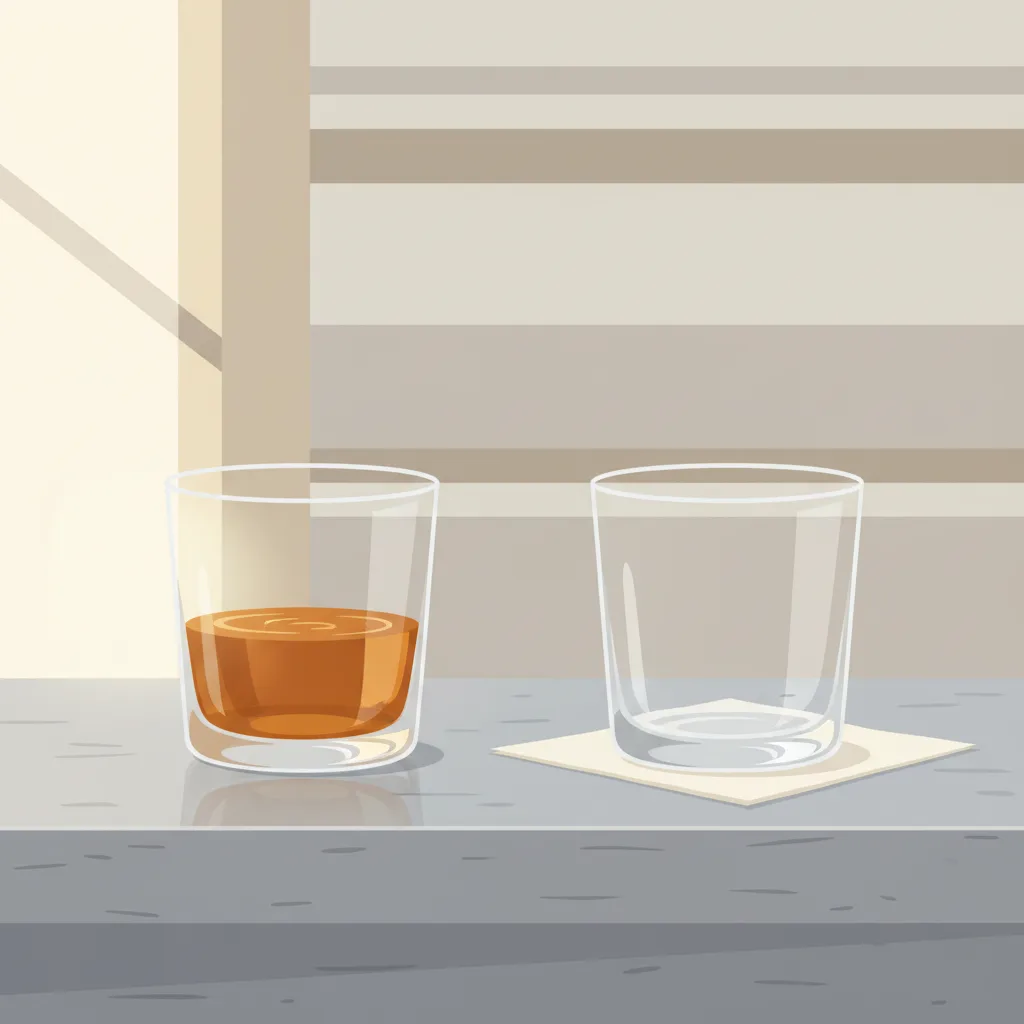
Two identical glasses on a bar surface, one filled with amber liquid, the other empty and clean.

Rimpianto per azione

Bere alcol

70%

Il 70% dei bevitori ha rimpianto di essersi ubriacato nell'ultimo anno

Globale, 31 paesi, panel online auto-selezionato

ultimi 12 mesi

Rimpianto per inazione

Astenersi dall'alcol

12%

~12% (proxy di attrito sociale, non rimpianto diretto per l'astinenza)

Adulti finlandesi tra i 15 e i 79 anni, basato sulla popolazione

retrospettivo, nessun arco temporale fisso

% rimpiange questa scelta

action dominates — L'azione domina — la maggior parte si pente di aver agito.

Decisioni correlate

Decisioni semanticamente simili — stesso terreno, compromessi diversi.

lifestyle

Sostituto NA

% rimpiange questa scelta

L'inazione prevale

Rimpianto per l'inazione 2.1× maggiore

lifestyle

Pornografia vs astinenza

% rimpiange questa scelta

L'azione prevale

Rimpianto per l'azione 3.0× maggiore

lifestyle

Dieta vegetariana

% rimpiange questa scelta

L'azione prevale

Rimpianto per l'azione 3.8× maggiore

Salute

Abitudini sportive

% rimpiange questa scelta

L'inazione prevale

Rimpianto per l'inazione 13.4× maggiore

Salute

Smettere di fumare

% rimpiange questa scelta

L'inazione prevale

Rimpianto per l'inazione 90.0× maggiore

lifestyle

Masturbazione vs NoFap

% rimpiange questa scelta

L'inazione prevale

Rimpianto per l'inazione 3.0× maggiore

lifestyle

Ride-sharing vs. guidare dopo aver bevuto

% rimpiange questa scelta

L'inazione prevale

Rimpianto per l'inazione 5.7× maggiore

Salute

Iniziare a fumare da adolescente

% rimpiange questa scelta

L'azione prevale

Rimpianto per l'azione 36.0× maggiore

Seventy percent of drinkers regretted getting drunk at least once in the prior year, according to the Global Drug Survey’s 2020 wave (82,821 respondents, 31 countries). The peer-reviewed analysis by Davies et al. in Substance Use & Misuse found that the median drinker got drunk six times a year and regretted two of those occasions. Among occasions when they got drunk, women regretted a higher median share (30%) than men (16.67%), against an overall median of 20%. Separately, a 2025 NCSolutions survey found that nearly half of Americans (49%) plan to drink less in 2025, up sharply from 34% in 2023 — a trend suggesting broad and growing dissatisfaction with current consumption levels. On the other side of the ledger, population-level data from Finland’s Drinking Habits Survey found that non-drinkers reported mostly positive social feedback, with only a small minority experiencing negative social consequences from abstaining.

The asymmetry here is striking but not symmetric in its evidence base. The action-regret figure is robust: an 82,821-person sample, replicated across dozens of countries, measuring a concrete experience (“did you regret getting drunk?”). The inaction figure is far weaker — and measures a different construct entirely. The Finnish study tracked negative social consequences (pressure, exclusion) among non-drinkers, not regret about the decision to abstain. No large study has directly asked non-drinkers whether they regret abstaining, because the question barely arises in public-health research. Alcohol Change UK’s Dry January data shows that 70% of participants still drink less six months later and only 28% revert to prior habits — suggesting that abstinence generates little lasting dissatisfaction, though this too measures behavior rather than regret.

The GDS found an inverse relationship between frequency and per-occasion regret — heavier drinkers regretted a smaller share of episodes — which hints at habituation rather than genuine satisfaction. The main caveat is sample bias: GDS respondents are self-selected, younger, and heavier- drinking than the general population. The true action-regret rate among all adults who drink, including the moderate majority, is certainly lower than 70%. The directional finding — that drinking generates far more regret than not drinking — is robust; the magnitude is an upper bound.

Fonti: azione

Registro delle fonti

Ogni numero qui sotto è ciò che ciascuna fonte ha riportato, con la citazione testuale su cui ci siamo basati e come siamo arrivati alla nostra cifra. Clicca su qualsiasi link per verificare direttamente.

  1. [1] Substance Use & Misuse / Davies, Puljević, Winstock & Ferris — Regrets, I've Had a Few: Exploring Factors Associated with Getting Drunk and Regret in an International Study of People Who Drink Alcohol
    Regrets, I've Had a Few: Exploring Factors Associated with Getting Drunk and Regret in an International Study of People Who Drink Alcohol

    See all 2 Likelier entries citing this source →

    Statistica
    70% of respondents who drank alcohol in the past 12 months reported regretting getting drunk at least once; median regretted occasions was 2 out of a median 6 times drunk
    Estratto
    “"In the last 12 months, the median times drunk was 6 and the median number of regretted occasions was 2. There was an inverse relationship between times drunk and regret, with respondents who got drunk more often regretting it a smaller percentage of the time than those who got drunk less often." ”
    Dati originali da
    2024-01-16
    Consultato
    2026-04-26
    Calcolo
    Data from the Global Drug Survey 2020 (n = 82,821, 31 countries). The 70% figure represents respondents who regretted getting drunk at least once in the prior year (28.3% reported zero regret). The per-occasion median regret percentage was 20% overall (women 30%, men 16.67%). We use the any-regret prevalence (70%) as the action-regret rate because it captures the share of drinkers who experienced regret at all, not the per-episode rate. The GDS sample is self-selected and skews younger and heavier- drinking than the general population, so 70% is an upper bound.
  2. [2] NCSolutions — Alcohol Statistics 2025 – Sober Curious Nation & Beverage Trends
    Alcohol Statistics 2025 – Sober Curious Nation & Beverage Trends
    Statistica
    49% of Americans plan to drink less in 2025, up from 34% in 2023 — a rising sober-curious trend
    Estratto
    “"Nearly half (49%) of Americans say they plan to drink less alcohol in 2025, up from 34% in 2023." ”
    Dati originali da
    2025-01-01
    Consultato
    2026-04-26
    Calcolo
    NCSolutions 2025 consumer survey. The plan-to-drink-less figure has risen year over year (34% in 2023, 41% in 2024, 49% in 2025). While not a direct regret measure, this rising share of people intending to cut back is directional evidence that drinking generates more dissatisfaction than abstinence. This replaces the prior second source (GDS 2020 report), which was the same underlying dataset as the Davies et al. peer-reviewed paper.

Fonti: inazione

Registro delle fonti

Ogni numero qui sotto è ciò che ciascuna fonte ha riportato, con la citazione testuale su cui ci siamo basati e come siamo arrivati alla nostra cifra. Clicca su qualsiasi link per verificare direttamente.

1/2 fonti verificate in modo indipendente e alla lettera rispetto alla fonte citata

  1. [1] Substance Use & Misuse / Mustonen & Mäkelä — Non-Drinkers' Experiences of Drinking Occasions: A Population-Based Study of Social Consequences of Abstaining from Alcohol
    Non-Drinkers' Experiences of Drinking Occasions: A Population-Based Study of Social Consequences of Abstaining from Alcohol
    Statistica
    Non-drinkers reported mostly positive feedback from their social environments; negative consequences were reported most commonly among youth and former drinkers, least in the oldest age group
    Estratto
    “"The study indicates that nondrinkers' social environments may be more supportive than what has been suggested previously, yet coping mechanisms are required especially from youth and former drinkers. Nondrinkers reported relatively low levels of negative consequences, with reported consequences being least frequent in the oldest age group." ”
    Dati originali da
    2022-01-15
    Consultato
    2026-04-26
    Calcolo
    Finnish Drinking Habits Survey 2016 (N = 2,285 total; 330 nondrinkers; response rate 60%). The study does NOT report a single regret percentage. The 12% is estimated from the proportion of nondrinkers who reported any negative social consequence from abstaining. IMPORTANT: social consequences (pressure, exclusion) are not the same as regret about abstaining. This is a social friction proxy — no published survey directly measures abstinence regret in a general population sample. Dry January data (70% of participants still drinking less at 6 months, only 28% reverting) corroborates that abstinence generates minimal lasting dissatisfaction.
  2. [2] Alcohol Change UK — Dry January 2024: Kick-starting a year of change Verificato
    Dry January 2024: Kick-starting a year of change
    Statistica
    70% of Dry January participants were still drinking less six months later; only 28% returned to previous drinking levels
    Estratto
    “"70% of those who take part are still drinking less alcohol six months later. 67% of people who take part in Dry January and access free tools and resources have a completely alcohol-free month." ”
    Dati originali da
    2024-01-02
    Consultato
    2026-04-26
    Verifica
    Estratto recuperato in modo indipendente e confermato parola per parola rispetto alla fonte citata durante il nostro audit di attendibilità.
    Calcolo
    Alcohol Change UK campaign data, not a peer-reviewed cohort study. The 28% who returned to prior levels is a ceiling for possible abstinence regret; even among that 28%, returning to old habits does not necessarily imply regretting the break. The sober-curious movement further supports low abstinence regret: 49% of Americans plan to drink less (NCSolutions 2025), and nearly 4 in 10 US consumers follow a sober curious lifestyle (Mintel). These trends indicate that abstaining from alcohol generates satisfaction rather than regret in the general population.

Avvertenze

I dati sull'azione e sull'inazione provengono da strumenti fondamentalmente diversi e misurano costrutti diversi. Il tasso del 70% di rimpianto-azione misura il rimpianto per qualsiasi episodio tra i bevitori attivi (GDS 2020, panel online auto-selezionato sbilanciato verso bevitori più giovani e più pesanti rispetto alla popolazione generale). Il campione GDS sovrarappresenta persone che bevono abbastanza da ubriacarsi; il vero tasso di rimpianto-azione a livello di popolazione per tutti i bevitori, inclusi i moderati che non si ubriacano mai, è certamente più basso. Il 12% sul lato inazione è un proxy derivato dalle conseguenze sociali negative riportate dai non-bevitori finlandesi — pressione sociale ed esclusione, non rimpianto per la decisione di astenersi. Nessuna indagine pubblicata chiede direttamente ai non-bevitori se rimpiangono l'astinenza. Le due popolazioni (bevitori globali auto-selezionati vs non-bevitori finlandesi) non sono campioni comparabili. Il rapporto di ~6:1 dovrebbe essere letto come direzionalmente forte — i bevitori regolari riportano in modo schiacciante rimpianto — ma la magnitudine precisa è gonfiata sia dall'asimmetria del campione che dal mismatch del costrutto (rimpianto vs attrito sociale).

Dati grezzi: /api/decisions.json

Visti di recente su questo dispositivo