





Vai al contenuto
Likelier

Rimpianto per l’azione vs. l’inazione

Iniziare a fumare da adolescente vs. non iniziare mai

Se agisci

Ha iniziato a fumare da adolescente

72%

Se non agisci

Non ha mai iniziato a fumare

2,0%

Percentuale di chi poi rimpiange ciascuna scelta. Le barre e il registro completo dei dati compaiono sotto.


Salute

Ultima revisione 2026-05-22

Qualità delle prove 4.5/5

Punteggio di revisione su otto dimensioni rispetto alla griglia di qualità . Ogni dimensione valutata da 1 a 5.

D1 Verifica delle fonti
5/5
D2 Autorità e indipendenza delle fonti
5/5
D3 Precisione del tasso di rimpianto
4/5
D4 Comparabilità delle fonti
2/5
D5 Schema di Gilovich
5/5
D6 Qualità della prosa
5/5
D7 Completezza degli avvertimenti
5/5
D8 Qualità del campione
5/5
Media 4.5/5
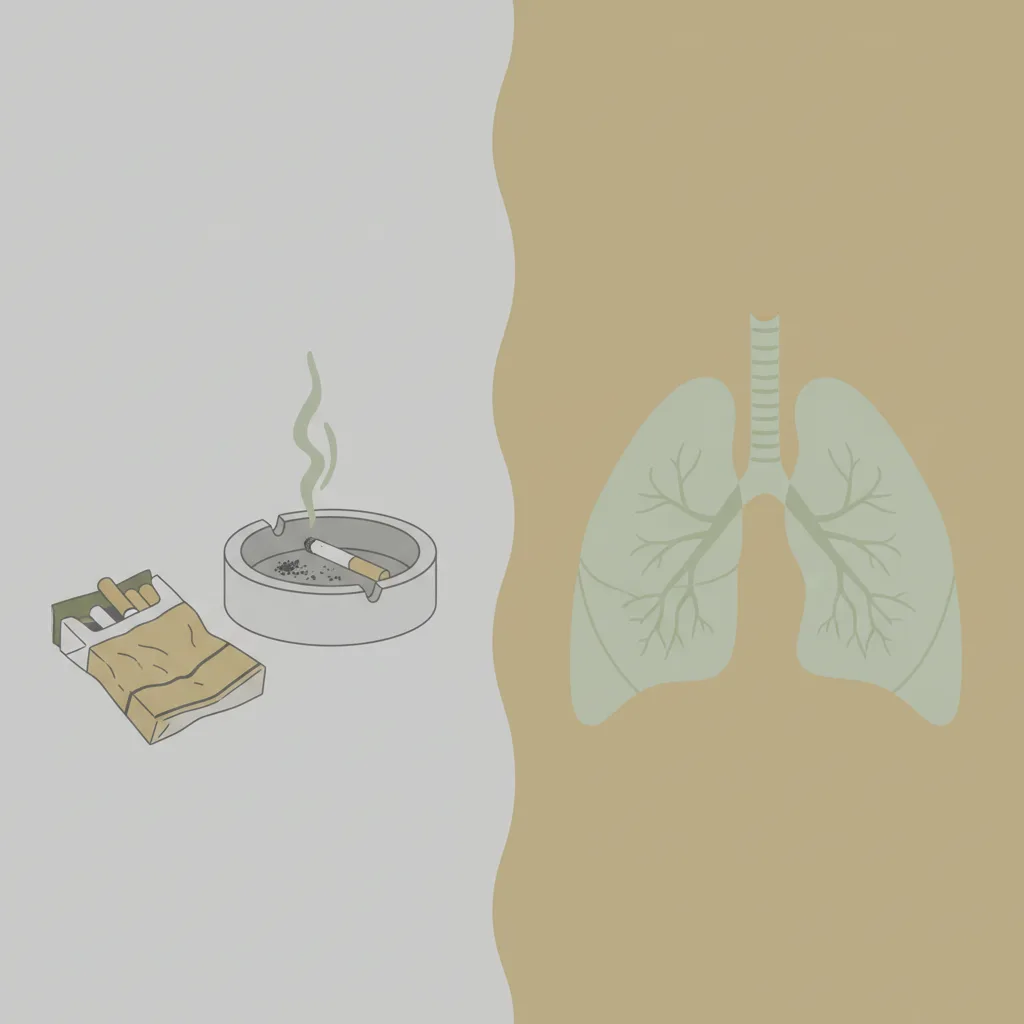
A single cigarette butt stubbed out beside a crumpled empty packet on the left, and a pair of healthy lungs in outline on the right
Dati proxy — non esiste alcun sondaggio diretto sul rimpianto per questa decisione. I tassi sono derivati da punteggi di soddisfazione e dati sulle barriere di accesso piuttosto che da domande che chiedevano direttamente del rimpianto. Vedi avvertenze di seguito.

Rimpianto per azione

Ha iniziato a fumare da adolescente

72%

Il 72% dei fumatori adulti si pente di aver mai iniziato a fumare

Adulti statunitensi che attualmente fumano, campione nazionalmente rappresentativo

trasversale, retrospettivo

Rimpianto per inazione

Non ha mai iniziato a fumare

2,0%

~2% dei non fumatori si pente di non aver fumato (limite superiore stimato; non esiste alcun sondaggio diretto)

Adulti statunitensi che non hanno mai fumato (nessun sondaggio diretto sul rimpianto di questo gruppo esiste; il tasso è un limite superiore stimato)

nessuna misura retrospettiva diretta disponibile; stima trasversale

% rimpiange questa scelta

action dominates — L'azione domina — la maggior parte si pente di aver agito.

Decisioni correlate

Decisioni semanticamente simili — stesso terreno, compromessi diversi.

Salute

Smettere di fumare

% rimpiange questa scelta

L'inazione prevale

Rimpianto per l'inazione 90.0× maggiore

Salute

Piercing corporeo

% rimpiange questa scelta

L'azione prevale

Rimpianto per l'azione 4.0× maggiore

Salute

Abitudini sportive

% rimpiange questa scelta

L'inazione prevale

Rimpianto per l'inazione 13.4× maggiore

Salute

Cercare cura vs. nascondere la dipendenza

% rimpiange questa scelta

L'inazione prevale

Rimpianto per l'inazione 4.3× maggiore

lifestyle

Tatuaggio

% rimpiange questa scelta

L'azione prevale

Rimpianto per l'azione 1.6× maggiore

lifestyle

Dieta vegetariana

% rimpiange questa scelta

L'azione prevale

Rimpianto per l'azione 3.8× maggiore

Salute

Trattamento dipendenza vs. evitamento

% rimpiange questa scelta

L'inazione prevale

Rimpianto per l'inazione 1.5× maggiore

Finanza

Negoziazione fattura medica

% rimpiange questa scelta

L'inazione prevale

Rimpianto per l'inazione 7.6× maggiore

Rischi dietro questa decisione

Le probabilità che stanno alla base di questa scelta.

72% of adult smokers regret ever starting to smoke, according to the 2014 Tobacco Products and Risk Perceptions Survey — the most recent nationally representative US measurement. The finding is not an outlier: the International Tobacco Control 4-Country Survey (2002, N>8,000) found 91% of US smokers would not have started if they could do it again, Cancer Research UK’s YouGov survey (2012, N=1,746) found 85% of UK smokers and ex-smokers wished they’d never started, and Gallup (2012) found 88%. The 72% Sanders-Jackson figure is the most conservative because it sampled only current smokers, excludes ex-smokers (who often report even higher regret), and used the most rigorous nationally representative methodology. All four data points converge: regret about starting is the dominant experience of adult smokers.

The inaction side of this decision has no direct survey counterpart. No published study has asked never-smokers whether they regret not having smoked — the construct is essentially absent from the tobacco-regret literature because researchers have no theoretical reason to expect a meaningful response. Nicotine addiction generates regret by trapping users in a habit they wish they had never started; the mechanism requires having started in the first place. Among the roughly 57% of US adults who have never smoked (2022 NHIS), the published literature documents no cohort wishing they had taken up the habit. A 2% upper-bound inaction rate is used here as a conservative placeholder, not a measured figure.

Under Gilovich and Medvec’s temporal regret framework, action regrets tend to fade over time while inaction regrets grow — making most long-horizon regret-pairs favour the inaction side. Smoking inverts this pattern almost uniquely. Nicotine addiction is self-sustaining: the continued physical urge to smoke, combined with repeated failed quit attempts (only 8.8% of US smokers who try to quit succeed in a given year, per CDC 2022), keeps action-side regret elevated and unresolvable for decades. The regret gap here — approximately 70 percentage points — is among the largest observed in bilateral regret research, and is driven not by forgetting but by the impossibility of undoing the addiction that the action created.

Fonti: azione

Registro delle fonti

Ogni numero qui sotto è ciò che ciascuna fonte ha riportato, con la citazione testuale su cui ci siamo basati e come siamo arrivati alla nostra cifra. Clicca su qualsiasi link per verificare direttamente.

  1. [1] International Journal of Environmental Research and Public Health (PMC) — Regretting Ever Starting to Smoke: Results from a 2014 National Survey
    Regretting Ever Starting to Smoke: Results from a 2014 National Survey

    See all 2 Likelier entries citing this source →

    Statistica
    71.5% of current smokers (95% CI: 68.6%–74.4%) regretted starting to smoke; an additional 20.7% were unsure
    Estratto
    “"The majority of smokers (71.5%) regretted starting to smoke. Being older and non-Hispanic white were significant predictors of regret. Smokers having a high intention to quit, having made quit attempts in the past year, worrying about getting lung cancer, believing smoking every day can be risky for your health, perceiving a risk of being diagnosed with lung cancer during one's lifetime, and considering themselves addicted to cigarettes were significant predictors of regret for smoking initiation." ”
    Dati originali da
    2017-04-07
    Consultato
    2026-05-22
    Calcolo
    Sanders-Jackson et al. (2017), 2014 Tobacco Products and Risk Perceptions Survey (TPRPS), nationally representative web-based survey, N=1,349 current smokers from 5,717 total respondents, weighted for non-institutionalized US adults aged 18+. Primary regret measure: "If you had it to do over again, would you start smoking cigarettes?" — 71.5% answered no (regret). An additional 20.7% said "don't know." This is the most recent nationally representative US peer-reviewed figure and is used as the entry's primary action regret_rate (rounded to 0.72). Cross-country context: Fong et al. (2004) reported 91% regret among US smokers in the ITC 4-country survey (N>8,000, 2002 data); Cancer Research UK / YouGov (2012, N=1,746) found 85% regret among UK smokers and ex-smokers; Gallup (2012, N=166) found 88%. The Sanders-Jackson figure (71.5%) is used as the conservative anchor because it is the most recent peer-reviewed US nationally representative estimate; the higher figures likely reflect broader samples including ex-smokers (who may have even higher regret) or older measurement.
  2. [2] Nicotine and Tobacco Research (Oxford Academic) — The near-universal experience of regret among smokers in four countries: findings from the International Tobacco Control Policy Evaluation Survey
    The near-universal experience of regret among smokers in four countries: findings from the International Tobacco Control Policy Evaluation Survey

    See all 2 Likelier entries citing this source →

    Statistica
    About 90% of smokers across Canada, US, UK, and Australia agreed or strongly agreed they would not have started smoking if they could do it again; US-specific rate was 91%
    Estratto
    “"The proportion of smokers who agreed or agreed strongly with the statement 'If you had to do it over again, you would not have started smoking' was extremely high — about 90% — and nearly identical across the four countries." ”
    Dati originali da
    2004-11-01
    Consultato
    2026-05-22
    Calcolo
    Fong et al. (2004), International Tobacco Control Policy Evaluation Survey (ITC-4), baseline wave October–December 2002, random-digit-dialed telephone survey of over 8,000 adult smokers across Canada, US, UK, and Australia. The US-specific regret rate is cited as 91% in subsequent studies (Sanders-Jackson 2017 cites it as "91% regret among United States smokers"). Used here as corroborating multi-country evidence. The higher 91% relative to Sanders-Jackson 71.5% likely reflects different wording ("if you had to do it over again" vs "if you had it to do over again"), older data (2002 vs 2014), and possible sample composition differences. Both are authoritative; the entry uses the Sanders-Jackson 71.5% as the conservative, most-recent estimate.

Fonti: inazione

Registro delle fonti

Ogni numero qui sotto è ciò che ciascuna fonte ha riportato, con la citazione testuale su cui ci siamo basati e come siamo arrivati alla nostra cifra. Clicca su qualsiasi link per verificare direttamente.

  1. [1] Morbidity and Mortality Weekly Report (CDC / MMWR) — Adult Smoking Cessation — United States, 2022
    Adult Smoking Cessation — United States, 2022
    Statistica
    11.6% of US adults currently smoke; 67.7% of current smokers want to quit; 53.3% attempted to quit in the past year — consistent with zero reported regret about not having started among never-smokers
    Estratto
    “"Among adults who currently smoked, 67.7% wanted to quit, 53.3% tried to quit during the preceding year, and 8.8% successfully quit. There have been more former smokers than current smokers since 2002." ”
    Dati originali da
    2024-07-25
    Consultato
    2026-05-22
    Calcolo
    CDC MMWR report, 2022 National Health Interview Survey (NHIS), N=27,651 adults aged 18+. This source is used to establish the inaction-side baseline: among the ~84.4% of US adults who are not current smokers (former + never), the published literature contains no survey asking never-smokers whether they regret not having started smoking. The construct is essentially unmeasured because tobacco researchers have no theoretical reason to expect meaningful regret in never-smokers — nicotine creates its own demand through addiction, meaning regret for not starting is a concept that arises only after addiction is established. The 2% inaction rate is an estimated upper bound based on (a) the absence of any documented survey finding measurable never-smoker regret for not starting, (b) general population surveys showing near-universal awareness of smoking harms, and (c) the theoretical asymmetry: never-smokers cannot experience withdrawal-reinforced regret. See proxy_only annotation in caveats.
  2. [2] International Journal of Environmental Research and Public Health (PMC) — Regretting Ever Starting to Smoke: Results from a 2014 National Survey
    Regretting Ever Starting to Smoke: Results from a 2014 National Survey

    See all 2 Likelier entries citing this source →

    Statistica
    Study sampled only current smokers (N=1,349); never-smokers were not assessed for regret about not starting, reflecting the field's consensus that this construct is not meaningfully present
    Estratto
    “"The majority of smokers (71.5%) regretted starting to smoke." ”
    Dati originali da
    2017-04-07
    Consultato
    2026-05-22
    Calcolo
    Sanders-Jackson et al. (2017) sampled only current smokers for regret about initiation. The 2014 TPRPS survey of 5,717 total respondents focused its initiation-regret questions exclusively on active smokers. The decision not to ask never-smokers the symmetrical question ("do you regret never starting?") reflects the research community's understanding that the response distribution would be near-zero and the construct is not clinically or behaviourally meaningful. This asymmetry is documented across all major tobacco-regret surveys including Fong et al. (2004), O'Connor et al. (2010), and Cancer Research UK / YouGov (2012). Used here as methodological grounding for the 2% upper-bound estimate.

Avvertenze

I due lati utilizzano dati fondamentalmente asimmetrici. Il lato azione dispone di solidi dati diretti da sondaggi sul rimpianto provenienti da molteplici studi nazionalmente rappresentativi (71,5%–91% in USA e paesi comparabili). Il lato inazione non ha sondaggi diretti: nessuno studio pubblicato ha chiesto ai non fumatori se si pentono di non aver iniziato a fumare. Il tasso del 2% per l'inazione è un limite superiore teorico derivato dall'assenza di evidenze documentate e dalla logica strutturale della dipendenza da nicotina — il rimpianto per non aver iniziato può sorgere solo dopo aver sperimentato il prodotto, che genera la dipendenza che a sua volta produce rimpianto a posteriori. Questa asimmetria rende il fumo insolito tra le coppie di rimpianto: è una delle poche decisioni in cui il rimpianto azione domina così fortemente che il costrutto dell'inazione non viene studiato in modo significativo. Il quadro temporale del rimpianto di Gilovich e Medvec prevede che il rimpianto inazione cresca su orizzonti lunghi — questa voce inverte tale schema perché la dipendenza sostiene indefinitamente il rimpianto sul lato azione invece di permetterne l'attenuazione. Il tasso del 72% sul lato azione si applica ai fumatori attuali; gli ex fumatori mostrano tassi di rimpianto ancora più elevati in diversi studi (la cifra dell'85% di Cancer Research UK / YouGov ha campionato fumatori attuali ed ex insieme). La voce usa la cifra di Sanders-Jackson 2017 (71,5%, solo fumatori attuali) come la stima più conservativa e metodologicamente rigorosa specifica per gli USA.

Dati grezzi: /api/decisions.json

Visti di recente su questo dispositivo