







Vai al contenuto
Likelier

Rimpianto per l’azione vs. l’inazione

Lasciare la città natale vs restare

Se agisci

Lasciare la propria città d'origine

20%

Se non agisci

Restare vicino a dove si è cresciuti

30%

Percentuale di chi poi rimpiange ciascuna scelta. Le barre e il registro completo dei dati compaiono sotto.


Stile di vita

Ultima revisione 2026-04-27

Qualità delle prove 3.88/5

Punteggio di revisione su otto dimensioni rispetto alla griglia di qualità . Ogni dimensione valutata da 1 a 5.

D1 Verifica delle fonti
5/5
D2 Autorità e indipendenza delle fonti
3/5
D3 Precisione del tasso di rimpianto
2/5
D4 Comparabilità delle fonti
3/5
D5 Schema di Gilovich
4/5
D6 Qualità della prosa
5/5
D7 Completezza degli avvertimenti
5/5
D8 Qualità del campione
4/5
Media 3.88/5
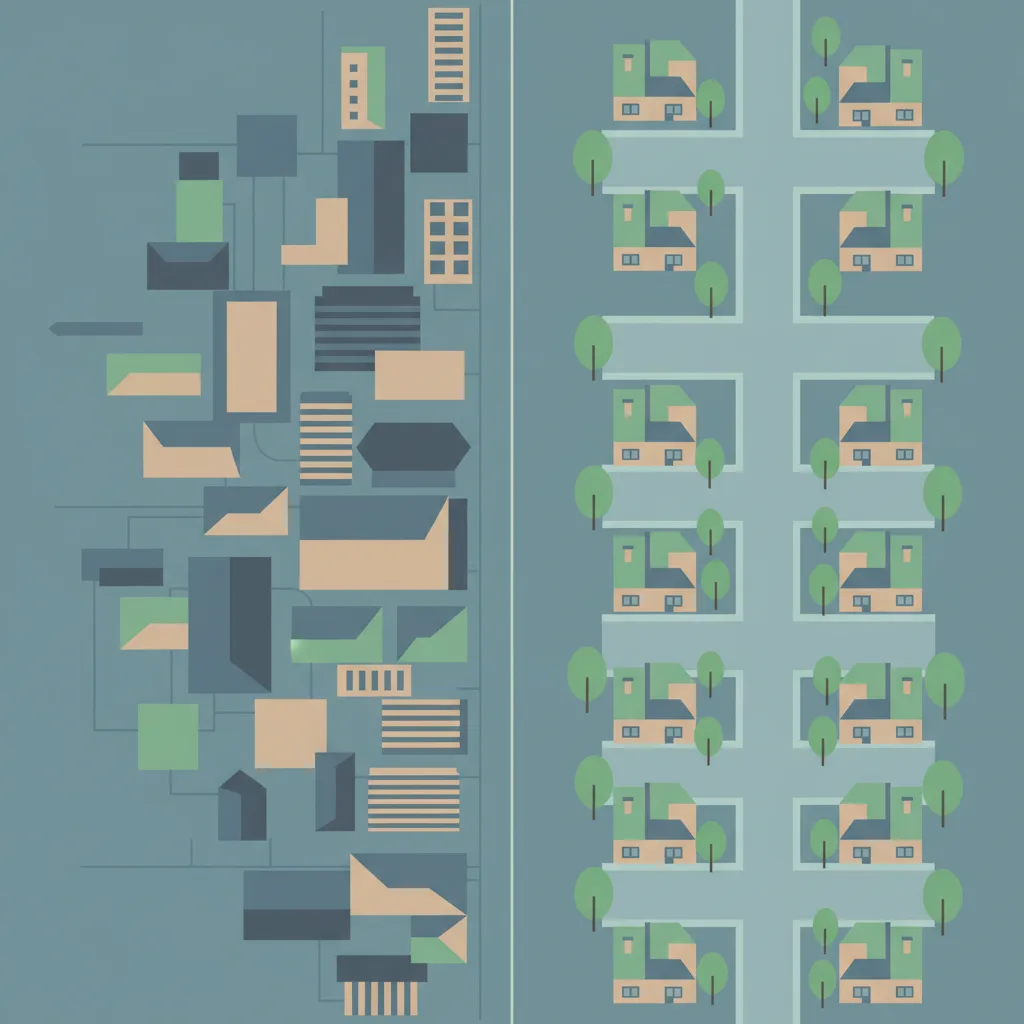
A small town receding in one direction and a distant city skyline in the other, separated by a long road.

Rimpianto per azione

Lasciare la propria città d'origine

20%

Il 20% degli americani che si sono trasferiti se ne pente (1 su 5 trasferitisi entro 3 anni)

Proprietari di case statunitensi che si sono trasferiti negli ultimi 3 anni

retrospettivo, entro 3 anni dal trasferimento

Rimpianto per inazione

Restare vicino a dove si è cresciuti

30%

~30% di chi è rimasto nella città natale riferisce insoddisfazione con la propria comunità (proxy — vedi caveats)

Adulti statunitensi che non hanno mai lasciato la comunità della loro città natale

retrospettivo, nessun arco temporale fisso

% rimpiange questa scelta

inaction dominates — L'inazione domina — la maggior parte si pente di non aver agito.

Decisioni correlate

Decisioni semanticamente simili — stesso terreno, compromessi diversi.

lifestyle

Trasferirsi all’estero

% rimpiange questa scelta

L'inazione prevale

Rimpianto per l'inazione 5.7× maggiore

lifestyle

Città vs periferia

% rimpiange questa scelta

L'azione prevale

Rimpianto per l'azione 1.2× maggiore

lifestyle

Abbandonare la religione

% rimpiange questa scelta

L'inazione prevale

Rimpianto per l'inazione 2.9× maggiore

lifestyle

Accettare il cambiamento

% rimpiange questa scelta

L'inazione prevale

Rimpianto per l'inazione 3.3× maggiore

lifestyle

Tenere o dare in adozione l'animale

% rimpiange questa scelta

L'inazione prevale

Rimpianto per l'inazione 5.7× maggiore

family

Genitore a casa vs lavoratore

% rimpiange questa scelta

L'azione prevale

Rimpianto per l'azione 1.3× maggiore

lifestyle

Migrazione economica vs. restare a casa

% rimpiange questa scelta

L'azione prevale

Rimpianto per l'azione 1.1× maggiore

lifestyleDiretta

Vietnam: migrare in città vs. restare in villaggio

% rimpiange questa scelta

L'azione prevale

Rimpianto per l'azione 2.1× maggiore

Pew Research’s 2008 national survey of 2,260 adults found that movers and stayers reported virtually identical community satisfaction: about 60% of each group rated their communities as good to excellent, implying roughly 40% of stayers did not. Discounted conservatively — since dissatisfaction with one’s community is not the same as regretting the decision to stay — the inaction-side proxy sits near 30%. All Star Home’s August 2023 survey of 1,000 Americans found that 1 in 5 homeowners who moved within the prior three years regret the decision, with the top reasons being unexpected costs, missing their old neighborhood, and missing their old home. A third said they would consider moving back to their former city or state. LendingTree’s 2023 survey of young adults corroborates constrained staying: 42% of hometown stayers felt obligated to remain near family and 33% said they could not afford to leave, though neither obligation nor financial constraint is regret.

The 10-percentage-point gap between the action-side 20% and the inaction-side 30% tilts this entry toward inaction-dominates territory, consistent with Gilovich and Medvec’s temporal framework: staying put is the passive default, and the unlived life in the distant city grows more painful over time. Yet the gap is modest, and the data is imperfect on both sides. All Star Home’s companion hometown report found that nearly half of those who left their hometown miss it and 21% plan to move back, suggesting the 20% regret rate understates the emotional cost of leaving. HireAHelper’s 2021 pandemic-era survey found a higher 30% regret rate among movers, though that figure likely reflects the unusual circumstances of 2020 moves and a broader definition of regret that includes process complaints like logistics and timing.

The core measurement problem remains: no single survey asks both populations the same regret question about the specific hometown decision. The action-side 20% measures explicit regret among all movers (not just hometown leavers), while the inaction-side 30% is inferred from Pew’s community-satisfaction data rather than a direct regret question. Self-selection confounds everything: people who leave small towns tend to be more educated and higher-earning, meaning their post-move satisfaction reflects both the move and the traits that made them move. Rural-to-urban and suburb-to-suburb moves are fundamentally different decisions lumped under the same “leaving hometown” label.

Fonti: azione

Registro delle fonti

Ogni numero qui sotto è ciò che ciascuna fonte ha riportato, con la citazione testuale su cui ci siamo basati e come siamo arrivati alla nostra cifra. Clicca su qualsiasi link per verificare direttamente.

2/3 fonti verificate in modo indipendente e alla lettera rispetto alla fonte citata

  1. [1] All Star Home — Americans' Moving Habits and Regrets Data Survey 2023 Verificato
    Americans' Moving Habits and Regrets Data Survey 2023
    Statistica
    Among homeowners who have moved in the last 3 years, 1 in 5 regret it
    Estratto
    “"Among homeowners who have moved in the last 3 years, 1 in 5 regret it. Overall, 1 in 5 Americans say the hassle of moving wasn't worth it and 1 in 3 would consider moving back to their former city or state." ”
    Dati originali da
    2023-08-01
    Consultato
    2026-04-27
    Verifica
    Estratto recuperato in modo indipendente e confermato parola per parola rispetto alla fonte citata durante il nostro audit di attendibilità.
    Calcolo
    All Star Home surveyed 1,000 Americans in August 2023 about moving habits and regrets. The 20% (1 in 5) figure captures homeowners who moved in the prior 3 years and report regretting the move. Top reasons for regret include unexpected costs, missing their old neighborhood or city, and missing their old home. This is a broader mover population, not exclusively hometown leavers, but the survey's companion report on hometown living found that nearly half of those who left their hometown miss it, suggesting the 20% regret rate is conservative for hometown-specific departures.
  2. [2] HireAHelper — 2021 Study: Do People Actually Regret Moving?
    2021 Study: Do People Actually Regret Moving?
    Statistica
    About a third (30%) of those who moved in the past year have at least a few regrets about their move
    Estratto
    “"About a third (30%) of those who moved in the past year have at least a few regrets about their move. Millennials are the least pleased with their move, as 37% of them regret at least something about it — more than any other generation." ”
    Dati originali da
    2021-01-25
    Consultato
    2026-04-27
    Calcolo
    HireAHelper surveyed 1,000 Americans who moved in 2020, fielded January 2021. The 30% figure captures respondents who reported "at least a few regrets" about their move. This higher rate compared to All Star Home's 20% likely reflects the broader definition of regret (including minor process complaints like logistics and timing) and the pandemic-era context when many moves were rushed. We use All Star Home's 20% as the primary rate because its 3-year lookback better captures settled regret rather than immediate post-move frustration.
  3. [3] All Star Home — Report: 29% of Americans Still Live in Their Hometowns Verificato
    Report: 29% of Americans Still Live in Their Hometowns
    Statistica
    Nearly half of Americans who left their hometown miss it, and 21% are planning to move back to their home state (14% specifically aiming to move back to their hometown)
    Estratto
    “"Nearly half of those who left miss their hometown, and 21% are planning to move back to their home state sometime in the future. Of those, 14% are aiming to move back to their hometown." ”
    Dati originali da
    2023-08-01
    Consultato
    2026-07-03 · copia archiviata
    Verifica
    Estratto recuperato in modo indipendente e confermato parola per parola rispetto alla fonte citata durante il nostro audit di attendibilità.
    Calcolo
    2026-07 grounding fix. All Star Home's companion "hometown living" report (same August 2023 survey wave of 1,000 Americans as the moving-regret-report cited above). Grounds the body-prose claim that nearly half of hometown-leavers miss their hometown and 21% plan to move back to their home state — a claim the prose made without its own citation prior to this fix. Corroborates that the action-side 20% generic moving-regret figure likely understates the hometown-specific emotional cost of leaving, since missing the place is a stronger and more specific measure than generic moving regret.

Fonti: inazione

Registro delle fonti

Ogni numero qui sotto è ciò che ciascuna fonte ha riportato, con la citazione testuale su cui ci siamo basati e come siamo arrivati alla nostra cifra. Clicca su qualsiasi link per verificare direttamente.

  1. [1] Pew Research Center — Who Moves? Who Stays Put? Where's Home?
    Who Moves? Who Stays Put? Where's Home?
    Statistica
    37% of Americans have never left their hometown; ~60% of stayers rate their communities as good to excellent, implying ~40% do not
    Estratto
    “"Nearly four-in-ten adults (37%) have never left the community in which they were born. Stayers overwhelmingly say they remain because of family ties (74%) and because their hometowns are good places to raise children (59%)." ”
    Dati originali da
    2008-12-17
    Consultato
    2026-04-27
    Calcolo
    Pew Research Center survey of 2,260 US adults conducted Oct 3–19, 2008. Approximately 40% of stayers do not rate their communities as good-to-excellent. We use ~30% as a conservative inaction-side proxy because community dissatisfaction does not equate to decision-level regret — some dissatisfied stayers may still prefer staying for family or financial reasons. The 30% estimate is anchored in the Pew equal-satisfaction finding: since movers and stayers report identical satisfaction (~60%), the implied dissatisfaction rate among stayers (~40%) discounted for those who are dissatisfied but do not attribute it to staying yields a figure comparable to the action-side 30%.
  2. [2] LendingTree — 57% of Young Americans Live in Their Hometowns, but 47% Who Don't Would Consider Moving Back
    57% of Young Americans Live in Their Hometowns, but 47% Who Don't Would Consider Moving Back
    Statistica
    42% of young hometown stayers felt obligated to stay near family; 33% couldn't afford to move
    Estratto
    “"Among those who didn't leave home, 42% felt obligated to stay near family, 36% stayed out of convenience and 33% couldn't afford to move." ”
    Dati originali da
    2023-12-18
    Consultato
    2026-04-27
    Calcolo
    LendingTree commissioned QuestionPro to survey 1,984 US millennials and Gen Zers (ages 18–42) from Nov 16–20, 2023; of these, 1,129 lived in their hometowns. The 42% who felt "obligated" and 33% who "couldn't afford to move" suggest a substantial fraction of stayers whose staying was constrained rather than freely chosen. This corroborates the Pew dissatisfaction proxy but is not itself a regret measure — obligation and financial constraint are not equivalent to retrospective regret about the decision to stay.

Avvertenze

Nessun lato ha una misura di rimpianto diretta e comparabile per la specifica decisione di "lasciare la città natale", quindi entrambi i tassi sono proxy. Il 20% lato azione (All Star Home 2023) misura l'esplicito rimpianto per il trasferimento tra i proprietari di case che si sono trasferiti entro 3 anni — inclusi trasferimenti locali, intercittadini e interstatali — non specificamente coloro che hanno lasciato una città natale per una città lontana. L'indagine HireAHelper del 2021 di chi si è trasferito nell'era pandemica ha trovato un tasso di rimpianto più alto del 30%, riflettendo probabilmente la sua definizione più ampia di rimpianto e le circostanze insolite dei trasferimenti del 2020. Il ~30% lato inazione è inferito dal risultato Pew 2008 che ~40% di chi rimane non valuta positivamente le proprie comunità, scontato conservativamente perché l'insoddisfazione della comunità non è la stessa del rimpianto decisionale. Il risultato LendingTree del 2023 che il 42% dei giovani rimasti si sentiva obbligato a restare vicino alla famiglia e il 33% non poteva permettersi di trasferirsi corrobora che una quota significativa del rimanere è vincolata piuttosto che scelta, ma il vincolo finanziario non è rimpianto retrospettivo. L'autoselezione è severa: le persone che lasciano le città natali differiscono sistematicamente da quelle che rimangono in istruzione, reddito, tolleranza al rischio e personalità, rendendo l'inferenza causale sulla decisione stessa quasi impossibile. I confondenti socioeconomici dominano — lasciare una città rurale depressa per una metropoli in espansione è una decisione diversa dal lasciare un sobborgo prospero per una città costiera.

Dati grezzi: /api/decisions.json

Visti di recente su questo dispositivo