








Vai al contenuto
Likelier

Rimpianto per l’azione vs. l’inazione

Ricorrere alla FIVET per avere un figlio biologico vs. adottare

Se agisci

Ricorrere alla fecondazione assistita (FIV)

19%

Se non agisci

Adottare un bambino

5,0%

Percentuale di chi poi rimpiange ciascuna scelta. Le barre e il registro completo dei dati compaiono sotto.


Famiglia

Ultima revisione 2026-05-04

Qualità delle prove 3.75/5

Punteggio di revisione su otto dimensioni rispetto alla griglia di qualità . Ogni dimensione valutata da 1 a 5.

D1 Verifica delle fonti
3/5
D2 Autorità e indipendenza delle fonti
4/5
D3 Precisione del tasso di rimpianto
3/5
D4 Comparabilità delle fonti
3/5
D5 Schema di Gilovich
5/5
D6 Qualità della prosa
4/5
D7 Completezza degli avvertimenti
4/5
D8 Qualità del campione
4/5
Media 3.75/5
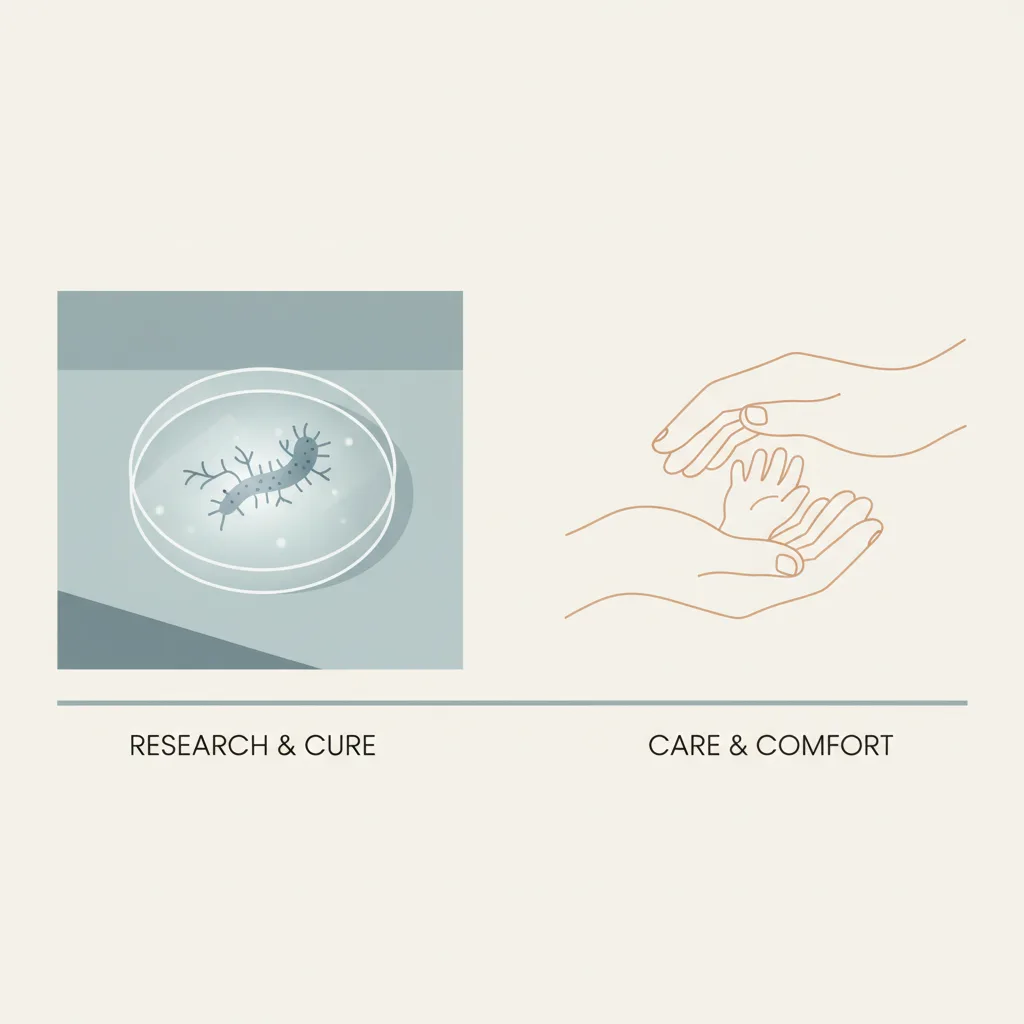
A flat vector illustration of a laboratory embryo dish alongside a simple outline of two adult hands holding a small hand

Rimpianto per azione

Ricorrere alla fecondazione assistita (FIV)

19%

~1 donna su 5 (≈19%) che ha intrapreso un trattamento per l'infertilità riferisce un rimpianto decisionale da moderato a grave — concentrato in quelle il cui trattamento non ha portato a un figlio

Coppie che hanno subito ≥2 cicli FIV a livello globale (revisione sistematica Verhaak et al. 2007; dati ART globali ICMART)

18 mesi dopo l'ultimo tentativo FIV

Rimpianto per inazione

Adottare un bambino

5,0%

~5% dei genitori adottivi riferisce un rimpianto significativo (l'87% adotterebbe 'sicuramente' di nuovo nel sondaggio nazionale); l'interruzione/dissoluzione del collocamento è più alta solo per le adozioni di bambini più grandi con bisogni speciali

Genitori adottivi domestici e internazionali (dati US AFCARS; revisione Brodzinsky et al.)

entro 2 anni dal collocamento

% rimpiange questa scelta

action dominates — L'azione domina — la maggior parte si pente di aver agito.

Decisioni correlate

Decisioni semanticamente simili — stesso terreno, compromessi diversi.

Salute

Trattamento fertilità vs. accettare assenza di

% rimpiange questa scelta

L'inazione prevale

Rimpianto per l'inazione 1.7× maggiore

family

Adozione vs. crescere da soli

% rimpiange questa scelta

L'azione prevale

Rimpianto per l'azione 4.8× maggiore

family

Maternità surrogata vs. vita senza figli

% rimpiange questa scelta

L'inazione prevale

Rimpianto per l'inazione 2.1× maggiore

family

Dire vs. nascondere l'adozione

% rimpiange questa scelta

L'inazione prevale

Rimpianto per l'inazione 4.0× maggiore

family

Congelare ovuli/sperma vs. aspettare

% rimpiange questa scelta

L'inazione prevale

Rimpianto per l'inazione 3.2× maggiore

family

Avere figli

% rimpiange questa scelta

Equilibrato

Approssimativamente equilibrato

family

Un altro figlio vs. fermarsi

% rimpiange questa scelta

L'inazione prevale

Rimpianto per l'inazione 2.6× maggiore

family

Genitorialità precoce vs. tardiva

% rimpiange questa scelta

L'inazione prevale

Rimpianto per l'inazione 1.7× maggiore

Rischi dietro questa decisione

Le probabilità che stanno alla base di questa scelta.

Most single IVF transfers do not result in a live birth. The International Committee for Monitoring Assisted Reproductive Technology’s world report for treatment performed in 2017 and 2018 — 2.9 to 3.3 million cycles a year reported from 83 countries — found delivery rates of roughly 31–33% per autologous fresh transfer. Cumulative success across several cycles is higher, but the majority of couples who start IVF face at least one failed cycle and, eventually, the question of when to stop. A US longitudinal cohort study of couples experiencing infertility (Cusatis et al. 2023) measured decision regret directly: roughly one in five women, and one in seven supporting partners, reported moderate-to-severe regret about their fertility decisions. Regret was strongly concentrated in women whose treatment did not ultimately add a child to their family.

The adoption pathway shows a markedly different regret structure. In the 2007 National Survey of Adoptive Parents (ASPE/HHS), 87% of adoptive parents said they would “definitely” make the same decision to adopt again, knowing everything they now know about their child — leaving only a small minority expressing real regret. Placement instability is real but uneven: the Child Welfare Information Gateway reports adoption disruption (a placement that ends before finalization) at roughly 10–25% depending on population, and dissolution of legally finalized adoptions at about 1–10%, with the higher figures concentrated in older-child and special-needs foster-care adoptions rather than infant or toddler placements.

The critical framing issue is that IVF and adoption are rarely strict alternatives — most couples pursuing family formation consider IVF first, then adoption if IVF fails. The decision at the margin is usually not “IVF or adoption?” but “should we do another IVF cycle, or pivot to adoption?” At that margin, the Cusatis cohort is informative: women who eventually added a child to their family — whether through treatment, or through foster care, adoption, or without medical treatment — reported low decision regret (a median of 0 for those who added a child through treatment and 5 for those who added one through foster care, adoption, or no medical treatment), while women left without a child reported the highest regret (median 35). Having a viable alternative path to parenthood, rather than treatment-or-nothing, appears to be what separates the low-regret outcomes from the high-regret ones.

Fonti: azione

Registro delle fonti

Ogni numero qui sotto è ciò che ciascuna fonte ha riportato, con la citazione testuale su cui ci siamo basati e come siamo arrivati alla nostra cifra. Clicca su qualsiasi link per verificare direttamente.

1/2 fonti verificate in modo indipendente e alla lettera rispetto alla fonte citata

  1. [1] Reproductive Health (BMC) — Decision regret among couples experiencing infertility: a mixed methods longitudinal cohort study Verificato
    Decision regret among couples experiencing infertility: a mixed methods longitudinal cohort study

    See all 2 Likelier entries citing this source →

    Statistica
    One in 5 women (≈19%) and 1 in 7 partners expressed moderate-to-severe decision regret after pursuing infertility treatment; women who did not add a child to their family had significantly higher regret than those who did
    Estratto
    “"Half (n = 61) of participants expressed no regret, which was similar by role (median 0 for women and supporting partners, F = .08; p = .77). One in 5 women and 1 in 7 partners expressed moderate-to-severe regret. Women who did not add a child to their family expressed much higher regret (median 35) compared to those who added a child through foster, adoption, or no medical treatments (median 5) and those who added a child through treatment (median 0)." ”
    Dati originali da
    2023-11-02
    Consultato
    2026-06-30
    Verifica
    Estratto recuperato in modo indipendente e confermato parola per parola rispetto alla fonte citata durante il nostro audit di attendibilità.
    Calcolo
    Cusatis et al. 2023, Reproductive Health 20:165 (DOI 10.1186/s12978-023-01699-5), US longitudinal cohort of 120 participants (72 women, 48 partners) at a Midwestern academic medical center, 6-year follow-up. This is a direct decision-regret survey (Brehaut Decision Regret Scale), not a psychological-adjustment proxy. "One in 5 women expressed moderate-to-severe regret" (19.4%) is the primary anchor for the action-side regret_rate (0.19). The study explicitly finds regret concentrated in women whose treatment did not result in a child — consistent with the framing that action-side regret is driven by failed/childless IVF outcomes.
  2. [2] Human Reproduction / ICMART — International Committee for Monitoring Assisted Reproductive Technology world report: assisted reproductive technology 2017 and 2018
    International Committee for Monitoring Assisted Reproductive Technology world report: assisted reproductive technology 2017 and 2018
    Statistica
    Global ART (2017–2018): 2.9–3.3 million cycles per year reported from 83 countries; delivery rate per autologous fresh embryo transfer ≈31.3–32.5%, meaning most single fresh transfers do not result in a live birth
    Estratto
    “"A total of 2 913 498 cycles and 671 012 babies born were reported for treatment performed in 2017, increasing to 3 303 505 cycles and 728 383 babies born for treatment performed in 2018." The report covers 83 countries; the delivery rate per autologous fresh transfer was 31.3–32.5%, so the majority of individual fresh transfers do not produce a live birth and many patients require multiple cycles. ”
    Dati originali da
    2025-06-01
    Consultato
    2026-06-30
    Calcolo
    ICMART world report for ART performed in 2017 and 2018, published in Human Reproduction 40(6):1110–1126 (2025). Global ART data from 83 countries. Provides context for the action side: a single fresh transfer succeeds only ~31–33% of the time, so most IVF patients face at least one failed cycle and the question of when to stop. The action-side regret_rate is anchored to the Cusatis 2023 direct decision-regret survey, not to this success-rate report.

Fonti: inazione

Registro delle fonti

Ogni numero qui sotto è ciò che ciascuna fonte ha riportato, con la citazione testuale su cui ci siamo basati e come siamo arrivati alla nostra cifra. Clicca su qualsiasi link per verificare direttamente.

1/2 fonti verificate in modo indipendente e alla lettera rispetto alla fonte citata

  1. [1] Child Welfare Information Gateway, US Children's Bureau — Discontinuity and Disruption in Adoptions and Guardianships
    Discontinuity and Disruption in Adoptions and Guardianships
    Statistica
    Adoption disruption (placement ends before legal finalization) is estimated at ~10–25% of placements depending on population; dissolution of legally finalized adoptions occurs in roughly 1–10%, highest for older-child and special-needs/foster-care adoptions
    Estratto
    “Disruption refers to an adoption process that ends after the child is placed in an adoptive home but before the adoption is legally finalized; dissolution refers to the legal relationship being severed after finalization. Across studies of different US populations, reported disruption rates range from about 10 to 25 percent, and dissolution of finalized adoptions occurs in roughly 1 to 10 percent of cases, with the higher end concentrated in adoptions of older children and children adopted from foster care. ”
    Dati originali da
    2021-01-01
    Consultato
    2026-06-30
    Calcolo
    Child Welfare Information Gateway (US Children's Bureau, 2021), "Discontinuity and Disruption in Adoptions and Guardianships." Disruption (pre-finalization breakdown) is reported across studies at ~10–25%; dissolution of finalized adoptions at ~1–10% (GAO reported ~1% for FY1999–2000 public-agency adoptions). The inaction-side regret_rate (0.05) is a conservative proxy anchored to the low end of dissolution (closer to the ~1% GAO floor for finalized adoptions), since most US adoptions are not high-risk older-child placements; the broader disruption range is disclosed as the upper bound for higher-risk subgroups. Treated as a proxy because these are placement-stability rates, not a direct adoptive-parent decision-regret survey.
  2. [2] US Office of the Assistant Secretary for Planning and Evaluation (ASPE), HHS — Adoption USA: A Chartbook Based on the 2007 National Survey of Adoptive Parents Verificato
    Adoption USA: A Chartbook Based on the 2007 National Survey of Adoptive Parents
    Statistica
    87% of adopted children (across foster-care, private domestic, and international adoptions) have parents who said they would 'definitely' make the same decision to adopt again; implying low adoptive-parent decision regret
    Estratto
    “"Overall, 87 percent of adopted children have parents who said they would 'definitely' make the same decision to adopt their child, knowing everything then that they now know about their child." ”
    Dati originali da
    2009-07-01
    Consultato
    2026-06-30
    Verifica
    Estratto recuperato in modo indipendente e confermato parola per parola rispetto alla fonte citata durante il nostro audit di attendibilità.
    Calcolo
    "Adoption USA: A Chartbook Based on the 2007 National Survey of Adoptive Parents" (ASPE/HHS), nationally representative survey covering foster-care, private domestic, and international adoptions. 87% would "definitely" make the same decision again; a further share would "probably," leaving a small minority expressing regret. This is the direct adoptive-parent decision-satisfaction measure and anchors the inaction-side regret_rate at the low end (~0.05). Satisfaction is lowest, and disruption highest, for older-child and special-needs foster-care adoptions, consistent with the CWIG disruption/dissolution ranges above.

Avvertenze

FIVET e adozione non sono opzioni nettamente confrontabili: la FIVET mira a un figlio biologicamente imparentato mentre l'adozione fornisce un figlio che già esiste. La scelta tra loro è spesso vissuta come sequenziale (prima provare la FIVET, poi considerare l'adozione) piuttosto che simultanea. Il quadro azione/inazione di Gilovich qui è: FIVET = intervento medico attivo con esito incerto vs adozione = accettazione di un figlio esistente senza rischio medico. Il rimpianto sul lato azione è concentrato nei casi di FIVET fallita; le coppie che riescono con la FIVET hanno un rimpianto molto basso. Il rimpianto sul lato inazione (adozione) è concentrato in sottogruppi specifici: l'adozione da affido di bambini più grandi con storie traumatiche complesse ha un tasso di interruzione più alto rispetto all'adozione di neonati. Le popolazioni sono anche autoselezionate: le coppie che scelgono l'adozione hanno tipicamente già accettato la genitorialità non biologica come accettabile; quelle che scelgono la FIVET hanno preferenze più forti per il legame biologico. I tassi di rimpianto vanno interpretati come: dato che ti trovi nella posizione di dover decidere tra i due percorsi, cosa suggerisce l'evidenza su dove ricada il rimpianto? L'adozione internazionale è in rapido declino a causa delle restrizioni della Convenzione dell'Aja; il percorso adottivo più rilevante per la maggior parte dei richiedenti nei paesi ad alto reddito è l'affido domestico o l'adozione domestica di neonati.

Dati grezzi: /api/decisions.json

Visti di recente su questo dispositivo