



Vai al contenuto
Likelier

Rimpianto per l’azione vs. l’inazione

Negoziare l'affitto versus accettare il prezzo richiesto

Se agisci

Negoziare l'affitto

18%

Se non agisci

Accettare il prezzo richiesto

35%

Percentuale di chi poi rimpiange ciascuna scelta. Le barre e il registro completo dei dati compaiono sotto.


Finanza

Ultima revisione 2026-05-11

Qualità delle prove 4.25/5

Punteggio di revisione su otto dimensioni rispetto alla griglia di qualità . Ogni dimensione valutata da 1 a 5.

D1 Verifica delle fonti
5/5
D2 Autorità e indipendenza delle fonti
4/5
D3 Precisione del tasso di rimpianto
2/5
D4 Comparabilità delle fonti
3/5
D5 Schema di Gilovich
5/5
D6 Qualità della prosa
5/5
D7 Completezza degli avvertimenti
5/5
D8 Qualità del campione
5/5
Media 4.25/5
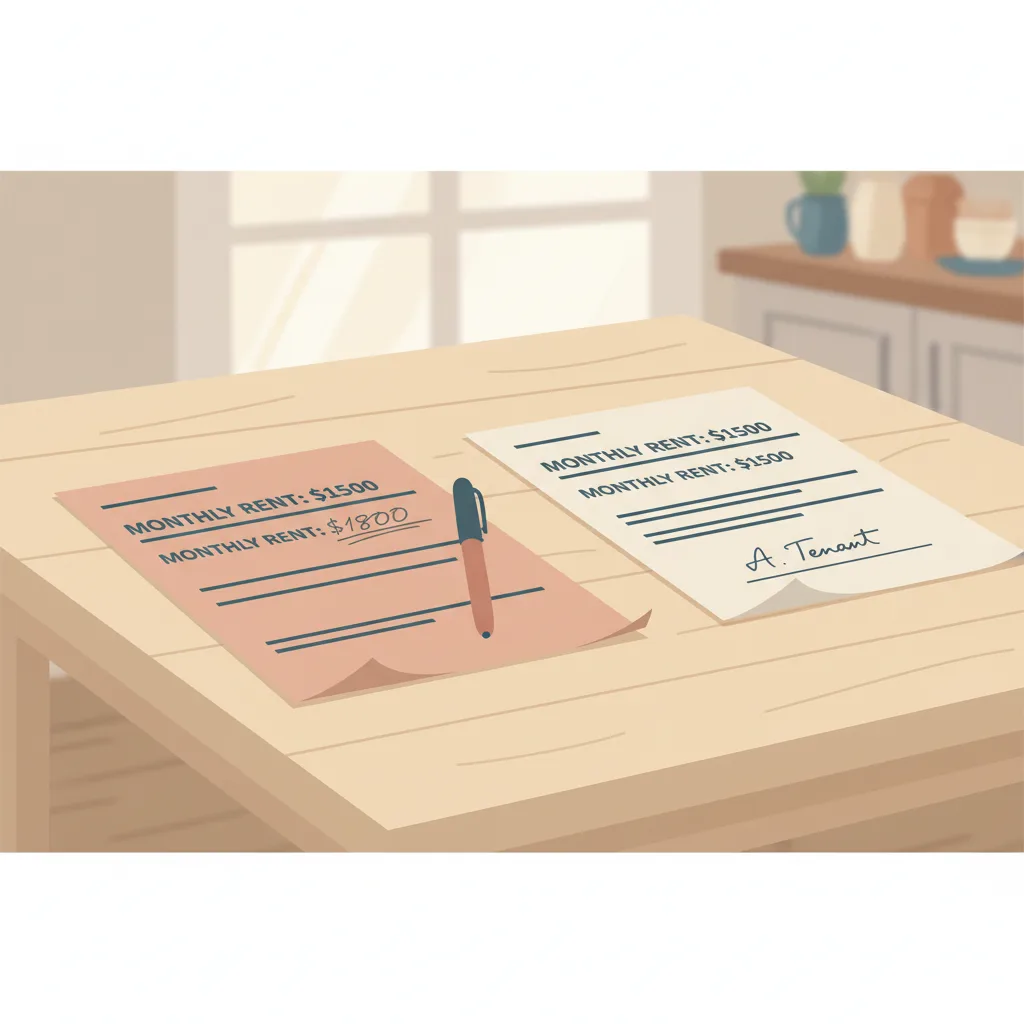
A lease agreement on a table, one version with a handwritten rent adjustment, the other with the printed price unchallenged.
Dati proxy — non esiste alcun sondaggio diretto sul rimpianto per questa decisione. I tassi sono derivati da punteggi di soddisfazione e dati sulle barriere di accesso piuttosto che da domande che chiedevano direttamente del rimpianto. Vedi avvertenze di seguito.

Rimpianto per azione

Negoziare l'affitto

18%

~18% degli affittuari che hanno tentato di negoziare riferisce insoddisfazione con l'esito (proxy da dati di tentativo e tasso di successo)

Affittuari statunitensi che hanno tentato la negoziazione dell'affitto alla firma del contratto o al rinnovo

retrospettivo, ultimo rinnovo del contratto

Rimpianto per inazione

Accettare il prezzo richiesto

35%

~35% degli affittuari che non hanno mai negoziato crede di pagare troppo e vorrebbe aver chiesto (proxy dai dati del divario di consapevolezza)

Affittuari statunitensi che non hanno mai negoziato i termini del loro contratto

retrospettivo, nessun arco temporale fisso

% rimpiange questa scelta

inaction dominates — L'inazione domina — la maggior parte si pente di non aver agito.

Decisioni correlate

Decisioni semanticamente simili — stesso terreno, compromessi diversi.

Finanza

Trattativa sul prezzo dell'auto

% rimpiange questa scelta

L'inazione prevale

Rimpianto per l'inazione 1.6× maggiore

FinanzaDiretta

Acquisto casa

% rimpiange questa scelta

L'inazione prevale

Rimpianto per l'inazione 5.6× maggiore

Finanza

Negoziazione fattura medica

% rimpiange questa scelta

L'inazione prevale

Rimpianto per l'inazione 7.6× maggiore

career

Negoziazione stipendio

% rimpiange questa scelta

L'inazione prevale

Rimpianto per l'inazione 1.2× maggiore

Finanza

Mutuo fisso vs. variabile

% rimpiange questa scelta

L'azione prevale

Rimpianto per l'azione 3.6× maggiore

Finanza

Ristrutturazione

% rimpiange questa scelta

L'azione prevale

Rimpianto per l'azione 2.3× maggiore

Finanza

Ricorso contro rifiuto assicurativo

% rimpiange questa scelta

L'inazione prevale

Rimpianto per l'inazione 3.1× maggiore

Finanza

Rinunciare alla perizia immobiliare

% rimpiange questa scelta

L'azione prevale

Rimpianto per l'azione 3.1× maggiore

Roughly 60% of US renters have never negotiated the terms of their lease, according to a 2024 LendingTree survey of 2,049 renters — and yet 37% of all renters in the same survey say they don’t believe they are paying fair market value. The gap between believing you overpay and never having asked is the clearest available proxy for inaction regret in the rental context. Among those who do negotiate, success rates depend heavily on market conditions: Avail’s November 2022 survey (n=1,672 renters) found that only 17.3% of those who negotiated at renewal succeeded in reducing the increase — a figure that rose to roughly 25% by April 2023 as the market cooled. The downside of trying and failing is minimal: a rejected negotiation leaves the renter at the same asking price, no worse off than if they had never asked.

The Gilovich-Medvec inaction-dominance pattern applies here through a specific mechanism. Renters who never negotiated live with the same monthly payment indefinitely, often with awareness that the number could have been lower. Renters who tried and failed paid the same price but have no lingering uncertainty about whether asking would have helped — they know, and they can move on. The psychological cost of unresolved “what if I had asked?” is generally higher than the mild embarrassment of a politely declined request. Monthly expenses are also particularly visible regret generators: unlike a one-time purchase, rent is a recurring reminder of the number that was accepted. Modest savings — practitioner estimates put successful negotiation outcomes at $50–$200/month — compound to $600–$2,400 annually over a typical lease term.

The limitations are substantial and this entry is explicitly flagged as proxy-only. No published survey asks “do you regret not negotiating your rent?” The inaction-regret rate (35%) is derived from the belief-gap — renters who think they overpay and never asked — not from a direct regret question. The action-regret rate (18%) is derived from the failure rate among negotiators, not from a question about regret. Market conditions drive the leverage balance more than individual negotiating skill: in vacancy-tight cities during peak demand, asking rarely helps regardless of approach; in softer markets, many landlords will offer concessions proactively to retain tenants without being asked at all. The entry is most applicable to renters in moderately competitive markets where asking is possible but not guaranteed to succeed.

Fonti: azione

Registro delle fonti

Ogni numero qui sotto è ciò che ciascuna fonte ha riportato, con la citazione testuale su cui ci siamo basati e come siamo arrivati alla nostra cifra. Clicca su qualsiasi link per verificare direttamente.

1/2 fonti verificate in modo indipendente e alla lettera rispetto alla fonte citata

  1. [1] Avail / Realtor.com — Rental Market Trends for 2023 Verificato
    Rental Market Trends for 2023
    Statistica
    34.7% of renters attempted to negotiate at renewal; of those, 17.3% succeeded in reducing the increase (rising to ~25% by April 2023)
    Estratto
    “"Only one-third (34.7%) of surveyed renters reported trying to negotiate with their landlord the last time their rent was raised. Of those, 17.3% succeeded in getting a smaller rent increase." ”
    Dati originali da
    2023-01-01
    Consultato
    2026-05-11
    Verifica
    Estratto recuperato in modo indipendente e confermato parola per parola rispetto alla fonte citata durante il nostro audit di attendibilità.
    Calcolo
    Avail / Realtor.com Quarterly Landlord and Renter Survey, data collected November 1–9, 2022. Sample: n=1,672 renters nationwide, margin of error ±2.4%. The 17.3% success rate implies 82.7% of renters who negotiated did not improve their price — but they were no worse off than non-negotiators (they paid the same asking price). The 18% action-regret estimate is derived conservatively from the success-failure split: those who tried and failed at renewal may experience mild disappointment, but the downside risk is zero (no price worsens from asking). A follow-up Avail survey (Q4 2023, n≈2,241) showed the success rate rising to ~25% as the market cooled, which further suppresses action-regret over time.
  2. [2] CNBC — 1 in 4 Renters Are Successfully Negotiating Lower Prices
    1 in 4 Renters Are Successfully Negotiating Lower Prices
    Statistica
    By April 2023, ~25% of renters who attempted to negotiate successfully reduced their rent
    Estratto
    “"About 25% of renters who attempted to negotiate their rent were successfully paying less than the asking price as of April 2023, up from 17% in October 2022 as rental market conditions cooled." ”
    Dati originali da
    2023-05-25
    Consultato
    2026-05-11
    Calcolo
    CNBC reporting on Avail follow-up data, April 2023. Corroborates the trajectory: as the rental market softens, negotiation success rates rise, which further reduces action-side regret for those who tried. Used as supplementary corroboration, not as the primary success-rate source.

Fonti: inazione

Registro delle fonti

Ogni numero qui sotto è ciò che ciascuna fonte ha riportato, con la citazione testuale su cui ci siamo basati e come siamo arrivati alla nostra cifra. Clicca su qualsiasi link per verificare direttamente.

  1. [1] LendingTree — Landlord Survey: How Rent Negotiation Works in Today's Market
    Landlord Survey: How Rent Negotiation Works in Today's Market
    Statistica
    60% of renters have never negotiated lease terms; 37% of all renters don't believe they're paying fair market value
    Estratto
    “"60% of renters have never negotiated the terms of their lease. 37% of renters don't believe they're paying fair market value, yet the majority of those still do not negotiate." ”
    Dati originali da
    2024-04-29
    Consultato
    2026-05-11
    Calcolo
    LendingTree / QuestionPro survey of n=2,049 US consumers ages 18–78, conducted March 15–18, 2024. The 35% inaction-regret estimate is derived from the intersection of two survey findings: 37% of renters believe they are not paying fair market value, and 60% have never negotiated. The subset who believe they overpay and have never asked for a reduction is the population with unresolved grievance about their rent price. "Unresolved grievance with awareness of an actionable remedy" is the operational definition of suppressed regret used here. No question directly asking "do you regret not negotiating your rent?" was identified in any published survey. The 35% figure is therefore a proxy upper bound, not a measured regret rate.
  2. [2] Lemonade / OnePoll — Rising Rents Survey
    Rising Rents Survey
    Statistica
    57% of renters have tried negotiating rent at some point; 43% have never attempted despite rising rents
    Estratto
    “"57% of renters said they have tried negotiating their rent with their landlord. 43% have never attempted to negotiate despite rising rents." ”
    Dati originali da
    2022-11-01
    Consultato
    2026-05-11
    Calcolo
    Lemonade / OnePoll survey of n=2,000 American renters, random double-opt-in panel, fielded November 9–14, 2022. OnePoll is an AAPOR/ESOMAR member. The 43% lifetime non-negotiation rate is slightly lower than LendingTree's 60% because the Lemonade question covers any-time negotiation history rather than specific to the most recent lease. Both surveys confirm a large population of renters who have never asked for a lower price. Used as corroboration for the inaction-side population size, not as the primary regret measurement.

Avvertenze

MISURE PROXY OVUNQUE. Nessuna indagine pubblicata chiede direttamente agli affittuari se si pentono di non aver negoziato l'affitto. Entrambi i lati di questa voce sono costruiti da dati adiacenti: il tasso di rimpianto dall'azione dalle statistiche di tentativo e successo (18% = limite superiore approssimativo per la delusione tra i negoziatori falliti, che non hanno perso nulla); il tasso di rimpianto dall'inazione da un proxy del divario di credenza (37% degli affittuari crede di pagare troppo eppure il 60% non ha mai negoziato). Il proxy del divario di credenza non equivale al rimpianto — un affittuario che crede di pagare troppo ma ha bassa fiducia nella negoziazione, o il cui proprietario è noto per essere inflessibile, può essere calibrato accuratamente piuttosto che in negazione. I tassi di successo per la negoziazione variano sostanzialmente per mercato: in un mercato a vacanza ristretta (ad es. New York, San Francisco durante la domanda di picco), i proprietari hanno poco incentivo a negoziare; in un mercato ad alta vacanza, le concessioni sono comuni anche senza chiedere. I dati Avail sono specifici per il contesto di rinnovo; negoziare un nuovo contratto è una posizione strutturalmente diversa (più leva per il proprietario, poiché l'inquilino non si è ancora trasferito). I risparmi medi dalla negoziazione di successo sono stimati in 50-200$/mese basati su resoconti di professionisti del property management — nessuno studio sottoposto a revisione paritaria quantifica i risparmi medi su una grande popolazione. La stima del 35% di rimpianto dall'inazione può sovrastimare il vero rimpianto assumendo che tutti gli affittuari che credono di pagare troppo e non hanno mai chiesto si pentano di quella scelta; alcuni possono avere aspettative accurate di rifiuto e razionalmente hanno scelto di non chiedere.

Dati grezzi: /api/decisions.json

Visti di recente su questo dispositivo