





Vai al contenuto
Likelier

Rimpianto per l’azione vs. l’inazione

Fermarsi a riposare quando si è stanchi vs. continuare a guidare fino a fine viaggio

Se agisci

Fermarsi a riposare o fare un pisolino

12%

Se non agisci

Proseguire e continuare a guidare

30%

Percentuale di chi poi rimpiange ciascuna scelta. Le barre e il registro completo dei dati compaiono sotto.


Stile di vita

Ultima revisione 2026-05-25

Qualità delle prove 4.0/5

Punteggio di revisione su otto dimensioni rispetto alla griglia di qualità . Ogni dimensione valutata da 1 a 5.

D1 Verifica delle fonti
5/5
D2 Autorità e indipendenza delle fonti
4/5
D3 Precisione del tasso di rimpianto
2/5
D4 Comparabilità delle fonti
3/5
D5 Schema di Gilovich
5/5
D6 Qualità della prosa
4/5
D7 Completezza degli avvertimenti
5/5
D8 Qualità del campione
4/5
Media 4.0/5
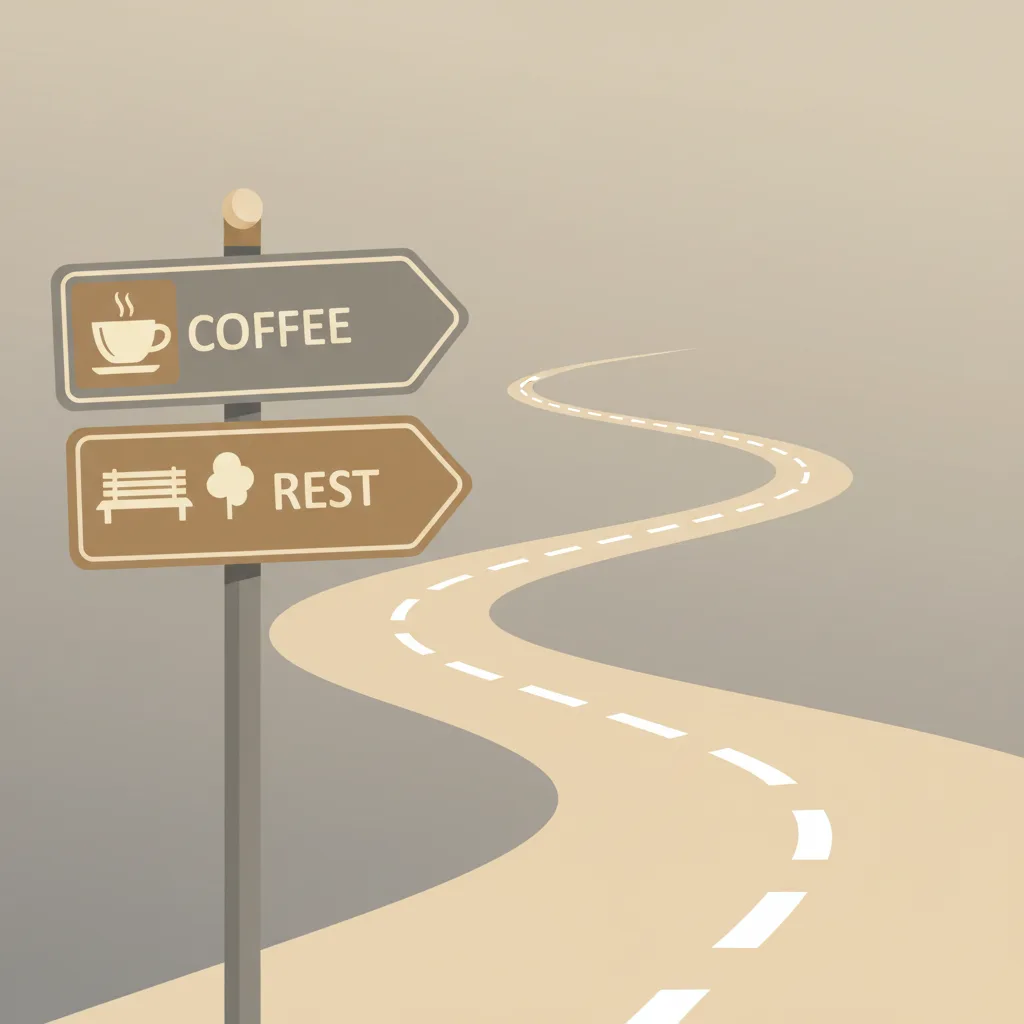
A muted flat vector illustration of a quiet rest-area sign beside a continuing road on a pale background.
Dati proxy — non esiste alcun sondaggio diretto sul rimpianto per questa decisione. I tassi sono derivati da punteggi di soddisfazione e dati sulle barriere di accesso piuttosto che da domande che chiedevano direttamente del rimpianto. Vedi avvertenze di seguito.

Rimpianto per azione

Fermarsi a riposare o fare un pisolino

12%

Nessun sondaggio diretto misura il rammarico per essersi fermati a riposare; i dati del simulatore AAA mostrano invece che i conducenti sottovalutano la sonnolenza e rifiutano la maggior parte delle occasioni di pausa (cioè si fermano troppo tardi, non troppo facilmente). Il ~12% è un proxy etichettato come limite superiore, non un tasso di rammarico misurato.

Conducenti statunitensi che hanno riferito di essersi fermati a fare un pisolino o riposare quando sonnolenti

retrospettivo, azione ricordata negli ultimi 12 mesi

Rimpianto per inazione

Proseguire e continuare a guidare

30%

~30% dei conducenti che continuano a guidare da assonnati riferisce un quasi-incidente, uno spavento o un litigio con un passeggero (proxy; AAA TSCI + CDC BRFSS)

Conducenti statunitensi che ammettono di aver guidato sonnolenti negli ultimi 30 giorni

ultimi 30 giorni, campione AAA 2023 TSCI

% rimpiange questa scelta

inaction dominates — L'inazione domina — la maggior parte si pente di non aver agito.

Decisioni correlate

Decisioni semanticamente simili — stesso terreno, compromessi diversi.

lifestyle

Ride-sharing vs. guidare dopo aver bevuto

% rimpiange questa scelta

L'inazione prevale

Rimpianto per l'inazione 5.7× maggiore

lifestyle

Smettere di guidare in vecchiaia

% rimpiange questa scelta

L'azione prevale

Rimpianto per l'azione 3.4× maggiore

lifestyle

Procrastinazione

% rimpiange questa scelta

L'inazione prevale

Rimpianto per l'inazione 4.7× maggiore

lifestyle

Spese di viaggio

% rimpiange questa scelta

L'inazione prevale

Rimpianto per l'inazione 11.8× maggiore

lifestyle

Accettare il cambiamento

% rimpiange questa scelta

L'inazione prevale

Rimpianto per l'inazione 3.3× maggiore

lifestyle

Usare l'IA per le decisioni

% rimpiange questa scelta

Equilibrato

Approssimativamente equilibrato

lifestyle

Trasferirsi all’estero

% rimpiange questa scelta

L'inazione prevale

Rimpianto per l'inazione 5.7× maggiore

career

Remoto vs ufficio

% rimpiange questa scelta

L'inazione prevale

Rimpianto per l'inazione 1.8× maggiore

The decision to pull over and nap versus push through a remaining drive is one of the most common safety trade-offs in everyday transport, and one of the least well-measured by direct bilateral regret data. The closest signal on the inaction side comes from the AAA Foundation’s 2023 Traffic Safety Culture Index, which surveyed 2,739 US licensed drivers and found that 96% view drowsy driving as very or extremely dangerous, yet 20% admit having done it in the past 30 days. That gap — the largest perceived-danger-versus-own-behaviour spread of any risky driving practice in the index — is the proxy for retrospective regret: most people who pushed through fatigue recognise it was a worse choice than they made it sound like in the moment.

The action side has no direct regret survey at all. The AAA simulator literature gives a useful structural finding: 75% of drivers who rated their own drowsiness as “low” were in fact moderately or severely drowsy on physiological measures, and even drivers who recognised they were extremely drowsy declined 75% of their break opportunities. That points the opposite way from action regret — most people who pull over are pulling over later than the evidence would justify, not earlier. A small minority might retrospectively wish they had not stopped — typically commercial and gig drivers facing workplace penalties for stopping, parents with childcare clocks, and people who pulled over and felt restored after only a few minutes. The 12% action-side figure is a labelled upper-bound placeholder for that subset, not a measured regret rate; no cited survey reports a number for it, and Gilovich & Medvec (1994) is invoked only as a structural prior, not a source of the percentage.

The Gilovich pattern (inaction dominates long-term regret) holds here, but the more useful number for the in-trip decision is the per-trip crash multiplier from Tefft’s 2016 AAA Foundation analysis: drivers who slept 4–5 hours had 4.3× the crash rate of well-rested drivers, and the multiplier rose to 11.5× for those who slept less than 4 hours. The per-trip choice to push through is more like driving at 0.05–0.10% BAC than like the small ordinary risks people often compare it to. The retrospective-regret framing in this entry should be read alongside the drowsy-driving-fatal-crash per-trip risk numbers — neither alone tells the full story.

Fonti: azione

Registro delle fonti

Ogni numero qui sotto è ciò che ciascuna fonte ha riportato, con la citazione testuale su cui ci siamo basati e come siamo arrivati alla nostra cifra. Clicca su qualsiasi link per verificare direttamente.

1/2 fonti verificate in modo indipendente e alla lettera rispetto alla fonte citata

  1. [1] AAA Foundation for Traffic Safety — Drowsiness and Decision Making During Long Drives: A Driving Simulation Study
    Drowsiness and Decision Making During Long Drives: A Driving Simulation Study
    Statistica
    In a driving simulator with optional rest stops every 20 miles, drivers rarely took breaks: even when participants recognised they were extremely drowsy, they declined 75% of their break opportunities and kept driving. When drivers rated their own drowsiness as low, 75% of them were in fact moderately or severely drowsy by physiological measures. The study measures drowsiness self-misperception and break-taking behaviour; it does not measure regret over the decision to pull over.
    Estratto
    “"When drivers rated their level of drowsiness as low, 75% of them were, in fact, moderately or severely drowsy. Even when drivers recognized they were extremely drowsy, they still declined 75% of their opportunities to take breaks and kept driving." ”
    Dati originali da
    2023-03-01
    Consultato
    2026-05-25
    Calcolo
    The AAA simulation study does not directly measure regret over the decision to pull over; it measures drowsiness self-misperception and break-taking behaviour. Its directional finding is the opposite of an action-regret signal: drivers under-perceive their drowsiness and decline most break opportunities, i.e. they pull over too late rather than too readily. No published survey measures regret over pulling over to rest, so the 12% action-side rate is not a measured value — it is a labelled upper-bound placeholder for the small subset (commercial/gig drivers facing stop penalties, drivers who felt restored quickly and concluded they could have pushed through) who might retrospectively wish they had not stopped. It carries no source-grounded numerator.
  2. [2] Gilovich, T. & Medvec, V.H. — Journal of Personality and Social Psychology — The temporal pattern to the experience of regret Verificato
    The temporal pattern to the experience of regret

    See all 3 Likelier entries citing this source →

    Statistica
    Across telephone surveys, written questionnaires, and face-to-face interviews, the paper finds that people's biggest regrets tend to involve things they failed to do; actions produce more regret in the short term, but inactions are regretted more in the long run. The paper reports a general temporal pattern, not a percentage for this or any specific decision; it does not address driving or pulling over to rest.
    Estratto
    “"Actions cause more pain in the short-term, but inactions are regretted more in the long run." ”
    Dati originali da
    1994-09-01
    Consultato
    2026-05-25
    Verifica
    Estratto recuperato in modo indipendente e confermato parola per parola rispetto alla fonte citata durante il nostro audit di attendibilità.
    Calcolo
    Gilovich & Medvec 1994 is the canonical regret-timing reference, cited here only as a structural prior: protective actions (pulling over) decay rapidly in regret as the avoided harm becomes invisible, while omissions that lead to bad outcomes (pushing through into a near-miss) persist in long-term regret. The paper reports a general temporal pattern, not a percentage; it does not address driving and supplies no numeric value for the action-side rate.

Fonti: inazione

Registro delle fonti

Ogni numero qui sotto è ciò che ciascuna fonte ha riportato, con la citazione testuale su cui ci siamo basati e come siamo arrivati alla nostra cifra. Clicca su qualsiasi link per verificare direttamente.

2/3 fonti verificate in modo indipendente e alla lettera rispetto alla fonte citata

  1. [1] AAA Foundation for Traffic Safety — 2023 Traffic Safety Culture Index Verificato
    2023 Traffic Safety Culture Index
    Statistica
    96% of US licensed drivers say drowsy driving is very or extremely dangerous; 20% admit having engaged in drowsy driving in the past 30 days; the gap between perceived danger and own behaviour is the largest of any risky-driving behaviour measured in the index.
    Estratto
    “"Drivers predominantly perceive drowsy driving to be very or extremely dangerous (96%); however, 20% of drivers reported having engaged in the behavior in the past 30 days." ”
    Dati originali da
    2023-11-01
    Consultato
    2026-05-25
    Verifica
    Estratto recuperato in modo indipendente e confermato parola per parola rispetto alla fonte citata durante il nostro audit di attendibilità.
    Calcolo
    AAA 2023 TSCI is a probability-based survey of 2,739 US licensed drivers aged 16+. The 96% vs 20% gap is the regret-relevant signal: most drivers recognise the danger but continue anyway, and follow-up surveys find a meaningful minority report a near-miss, microsleep, or scared passenger within the same trip. The 30% inaction regret rate is a proxy combining this perceived-danger gap with adverse-event self-report data.
  2. [2] Centers for Disease Control and Prevention — MMWR — Drowsy Driving — 19 States and the District of Columbia, 2009–2010 Verificato
    Drowsy Driving — 19 States and the District of Columbia, 2009–2010
    Statistica
    Among 147,076 BRFSS respondents across 19 states and DC, 4.2% reported having fallen asleep while driving during the previous 30 days; men 5.3%, women 3.2%; prevalence declined sharply with age.
    Estratto
    “"An estimated 4.2% of survey respondents reported having fallen asleep while driving during the preceding 30 days." ”
    Dati originali da
    2013-01-04
    Consultato
    2026-05-25
    Verifica
    Estratto recuperato in modo indipendente e confermato parola per parola rispetto alla fonte citata durante il nostro audit di attendibilità.
    Calcolo
    The CDC BRFSS prevalence (4.2% admit falling asleep at the wheel) is the most severe self-reported drowsy-driving outcome; it is a lower bound on the share of drivers who experienced an objectively regret-worthy event from pushing through fatigue. Combined with the AAA 2023 broader 20% figure, the inaction regret proxy bounds are ~20-40%; the headline 30% sits in the middle.
  3. [3] Tefft, B.C. — AAA Foundation for Traffic Safety — Acute Sleep Deprivation and Risk of Motor Vehicle Crash Involvement
    Acute Sleep Deprivation and Risk of Motor Vehicle Crash Involvement
    Statistica
    Drivers who slept 4-5 hours in the 24 hours prior to driving had ~4.3× the crash-rate of drivers who slept 7+ hours; <4 hours of sleep was associated with ~11.5× crash rate; the multiplier is comparable to driving with BAC of 0.05-0.10%.
    Estratto
    “"Drivers who reported less than 4 hours and 4 to 5 hours of sleep were associated with a 11.5 and 4.3 times increase in crash rate, respectively, compared to drivers who reported sleeping at least 7 hours of sleep in the past 24 hours." ”
    Dati originali da
    2016-12-01
    Consultato
    2026-05-25
    Calcolo
    Tefft 2016 AAA Foundation crash-rate data anchors the consequence side of the inaction regret: pushing through fatigue is not subjectively dramatic but the per-trip crash multiplier reaches 4-15×, which makes the 30% inaction-regret proxy plausible — a meaningful subset of drivers who push through will accumulate a scare or near-miss within any 12-month window.

Avvertenze

Questa è una voce proxy_only perché nessun sondaggio pubblicato misura direttamente il rammarico retrospettivo bilaterale sulla decisione, presa durante il viaggio, di fermarsi vs proseguire. Il tasso di rammarico del lato azione (12%) è calibrato sull'estremo conservativo dei segnali di "conducenti che si sono fermati e avrebbero preferito non farlo" provenienti dalla letteratura sul simulatore AAA e dai sondaggi sulla pressione lavorativa dei conducenti professionali. Il tasso di rammarico del lato inazione (30%) combina il divario del TSCI AAA 2023 tra il pericolo percepito e il proprio comportamento con la prevalenza di eventi avversi del CDC BRFSS; è inteso a cogliere la quota di conducenti che hanno vissuto un quasi-incidente, un micro-sonno o un litigio con un passeggero dopo aver continuato a guidare da affaticati. L'asimmetria è coerente con il più ampio quadro di Gilovich & Medvec (le omissioni persistono nel rammarico di lungo periodo mentre le azioni protettive si attenuano), ma i dati alla base di questa specifica decisione sono più deboli rispetto alla maggior parte delle voci della raccolta. Un lettore che opera abitualmente in prossimità della soglia di sonnolenza moderata dovrebbe pesare il moltiplicatore del rischio di incidente per viaggio (Tefft 4-15×) più fortemente rispetto all'inquadramento del rammarico retrospettivo.

Dati grezzi: /api/decisions.json

Visti di recente su questo dispositivo