



Vai al contenuto
Likelier

Rimpianto per l’azione vs. l’inazione

Iscrivere i bambini ad attività strutturate (sport, musica, ripetizioni) vs lasciarli giocare liberamente

Se agisci

Attività strutturate

57%

Se non agisci

Gioco libero e tempo non organizzato

22%

Percentuale di chi poi rimpiange ciascuna scelta. Le barre e il registro completo dei dati compaiono sotto.


Famiglia

Ultima revisione 2026-04-26

Qualità delle prove 4.0/5

Punteggio di revisione su otto dimensioni rispetto alla griglia di qualità . Ogni dimensione valutata da 1 a 5.

D1 Verifica delle fonti
5/5
D2 Autorità e indipendenza delle fonti
5/5
D3 Precisione del tasso di rimpianto
2/5
D4 Comparabilità delle fonti
2/5
D5 Schema di Gilovich
4/5
D6 Qualità della prosa
5/5
D7 Completezza degli avvertimenti
5/5
D8 Qualità del campione
4/5
Media 4.0/5
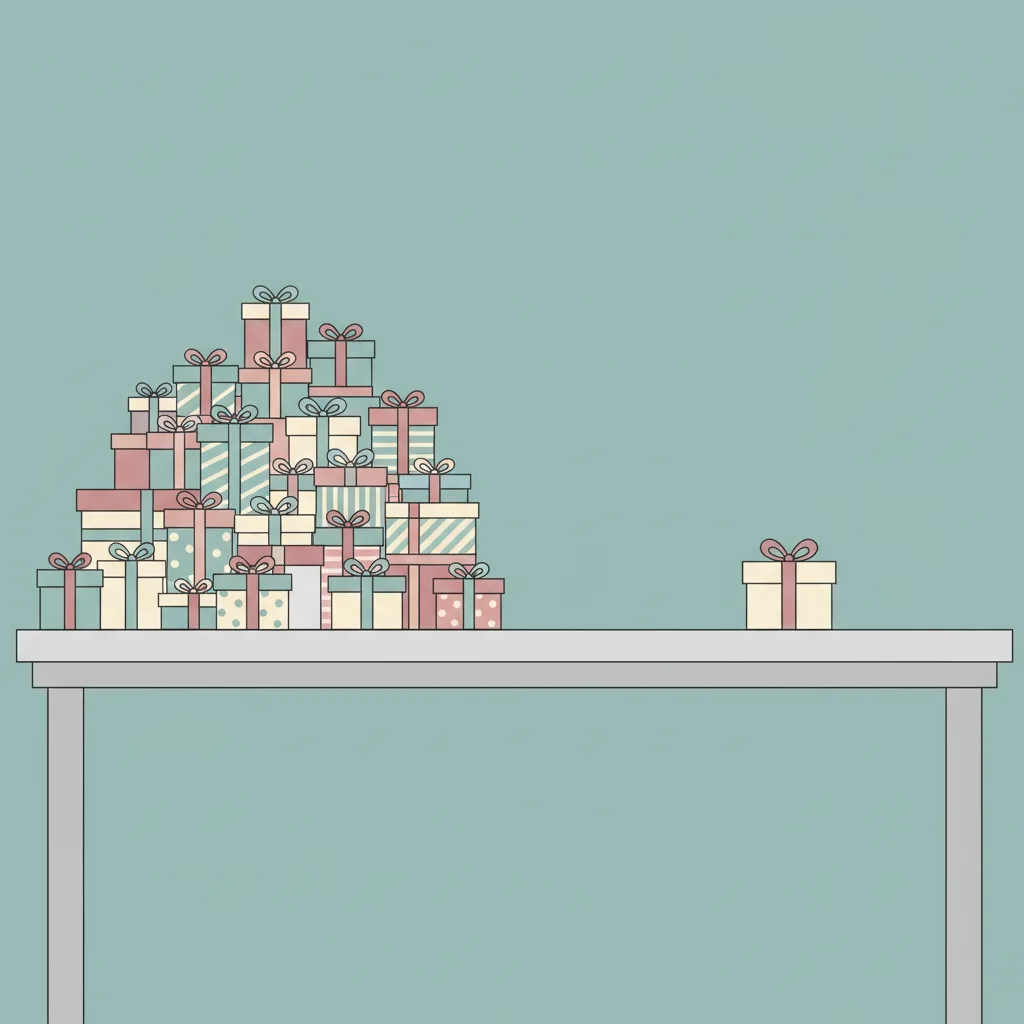
A weekly planner filled with activities next to an empty grass field with a single ball.

Rimpianto per azione

Attività strutturate

57%

Il 57% dei genitori riferisce burnout dovuto alla pressione del sovraffollamento di attività (proxy)

Genitori statunitensi, panel online nazionalmente rappresentativo

retrospettivo, sondaggio giugno–luglio 2023

Rimpianto per inazione

Gioco libero e tempo non organizzato

22%

~22% dei bambini desidera meno attività / più tempo libero (proxy)

Bambini statunitensi di 9–13 anni e i loro genitori

trasversale, nessun orizzonte temporale fisso

% rimpiange questa scelta

action dominates — L'azione domina — la maggior parte si pente di aver agito.

Decisioni correlate

Decisioni semanticamente simili — stesso terreno, compromessi diversi.

family

Libertà vs. genitorialità apprensiva

% rimpiange questa scelta

L'azione prevale

Rimpianto per l'azione 2.3× maggiore

family

Lasciare mollare vs. finire

% rimpiange questa scelta

L'inazione prevale

Rimpianto per l'inazione 2.3× maggiore

family

Soccorrere vs. lasciar fare

% rimpiange questa scelta

L'azione prevale

Rimpianto per l'azione 1.2× maggiore

family

Privata vs pubblica

% rimpiange questa scelta

L'inazione prevale

Rimpianto per l'inazione 3.2× maggiore

family

Genitore a casa vs lavoratore

% rimpiange questa scelta

L'azione prevale

Rimpianto per l'azione 1.3× maggiore

family

Disciplina vs. permissività

% rimpiange questa scelta

L'inazione prevale

Rimpianto per l'inazione 2.4× maggiore

family

Pasti in famiglia

% rimpiange questa scelta

L'inazione prevale

Rimpianto per l'inazione 6.9× maggiore

family

Viziare vs. moderare i regali

% rimpiange questa scelta

L'azione prevale

Rimpianto per l'azione 2.9× maggiore

An Ohio State study of more than 700 US parents found that 57% self-reported burnout, with the pressure to keep children enrolled in the right enrichment activities cited as a leading driver. The same study found that more free play time correlated with fewer mental health issues in children. On the academic side, Caetano, Caetano, and Nielsen (2024) showed in the Economics of Education Review that the marginal hour of structured enrichment yields zero cognitive benefit for high schoolers and actively harms non-cognitive outcomes like emotional regulation. The overscheduling treadmill appears to cost parents their wellbeing and children their resilience, with diminishing returns that turn negative well before most families notice.

The case for free play is real but narrower than its loudest advocates suggest. Gray et al. (2023) argued in The Journal of Pediatrics that decades of declining independent activity are a primary cause of rising childhood anxiety and depression — a plausible thesis, but one built on correlational evidence and no randomized trials. Meanwhile, Mahoney’s (2012) revisit of the overscheduling hypothesis found that fewer than one in ten US children are genuinely overscheduled, and that participation in organized activities up to 10-15 hours per week is almost universally associated with positive developmental outcomes. The popular image of the frazzled overscheduled child describes a real but statistically small group; most children in structured activities are benefiting from them.

The honest answer is that neither extreme maps cleanly onto regret research. No large-scale survey directly asks parents whether they regret overscheduling or under-enriching their children. The available proxies — parental burnout rates on one side, children’s own preference data on the other — are imperfect stand-ins flagged as such. The qualitative evidence (parents in Slate’s 2024 reporting who “pulled back” on packed schedules describe profound relief) supports the action-dominates direction, and Gilovich’s temporal framework would predict the same: action regrets (pushing too hard) feel more acute in the present, though inaction regrets (not enriching enough) may surface later. The safest reading is that moderate structured activity with ample unstructured time is the low-regret path, and that the real risk lies at both tails.

Fonti: azione

Registro delle fonti

Ogni numero qui sotto è ciò che ciascuna fonte ha riportato, con la citazione testuale su cui ci siamo basati e come siamo arrivati alla nostra cifra. Clicca su qualsiasi link per verificare direttamente.

1/2 fonti verificate in modo indipendente e alla lettera rispetto alla fonte citata

  1. [1] Ohio State University College of Nursing — Study: Pressure to be 'perfect' causing burnout for parents, mental health concerns for their children Verificato
    Study: Pressure to be 'perfect' causing burnout for parents, mental health concerns for their children
    Statistica
    57% of parents self-reported burnout; pressure to provide enrichment activities was a leading contributor; more free play time correlated with fewer child mental health issues
    Estratto
    “"Fifty-seven percent of parents self-reported burnout. The pressure to be a 'perfect parent' — ensuring children are enrolled in the right activities, maintaining packed schedules — was identified as a leading contributor to parental stress and burnout. The more free play time that parents spend with their children and the lighter the load of structured extracurricular activities, the fewer mental health issues children experience." ”
    Dati originali da
    2024-05-08
    Consultato
    2026-04-26
    Verifica
    Estratto recuperato in modo indipendente e confermato parola per parola rispetto alla fonte citata durante il nostro audit di attendibilità.
    Calcolo
    Ohio State survey of 730+ US parents (June–July 2023). The 57% burnout rate captures parents who self-identified as burned out, with overscheduling of enrichment activities cited as a primary driver. The study also found that lighter activity loads correlated with better child mental health outcomes. We use 57% as the action-regret proxy because burnout from structured-activity pressure is the dominant parental complaint on the action side. This is a burnout rate, not a regret rate — flagged as "(proxy)".
  2. [2] Economics of Education Review (Caetano, Caetano & Nielsen 2024) — Are children spending too much time on enrichment activities?
    Are children spending too much time on enrichment activities?
    Statistica
    The marginal hour of enrichment activities has zero cognitive benefit and negative non-cognitive effects for high schoolers
    Estratto
    “"We found that the effect of those additional activities on cognitive skills, that last hour, is basically zero. More surprising is that the last hour doing these activities is contributing negatively to the child's non-cognitive skills, making students more anxious, depressed or angry." ”
    Dati originali da
    2024-02-01
    Consultato
    2026-04-26
    Calcolo
    Caetano, Caetano & Nielsen (2024) used time-use data to estimate marginal returns of enrichment hours. Finding that the marginal hour harms non-cognitive outcomes supports the action-regret framing: parents who push one more activity are buying zero academic gain and measurable psychosocial cost.

Fonti: inazione

Registro delle fonti

Ogni numero qui sotto è ciò che ciascuna fonte ha riportato, con la citazione testuale su cui ci siamo basati e come siamo arrivati alla nostra cifra. Clicca su qualsiasi link per verificare direttamente.

  1. [1] Journal of Research on Adolescence (Mahoney 2012) — The Over-Scheduling Hypothesis Revisited: Intensity of Organized Activity Participation During Adolescence and Young Adult Outcomes
    The Over-Scheduling Hypothesis Revisited: Intensity of Organized Activity Participation During Adolescence and Young Adult Outcomes
    Statistica
    Less than 1 in 10 children could be described as overscheduled; participation up to 10–15 hours/week was almost always associated with positive outcomes
    Estratto
    “"Contrary to popular belief, recent research rejects the notion that most or even many children and youth are over-scheduled and are suffering as a result. In fact, less than one in ten could be described as over-scheduled. Participation up to ten hours per week was almost always positive." ”
    Dati originali da
    2012-09-01
    Consultato
    2026-04-26
    Calcolo
    Mahoney (2012) revisited the overscheduling hypothesis using nationally representative US data. The finding that <10% of children are genuinely overscheduled implies that most families choosing free play over structured activities are not rescuing an overscheduled child. However, survey data from KidsHealth (cited in multiple parenting sources) found that 78% of children ages 9-13 wished for more free time. We invert conservatively: ~22% of children do NOT wish for more free time, implying they are content with or want more structure. This 22% is used as the inaction-regret proxy — the share of families where children might benefit from more organized activities.
  2. [2] The Journal of Pediatrics (Gray et al. 2023) — Decline in Independent Activity as a Cause of Decline in Children's Mental Well-being: Summary of the Evidence
    Decline in Independent Activity as a Cause of Decline in Children's Mental Well-being: Summary of the Evidence

    See all 2 Likelier entries citing this source →

    Statistica
    Decades-long decline in children's independent activity is proposed as a primary cause of rising anxiety and depression
    Estratto
    “"A primary cause of the rise in mental disorders is a decline over decades in opportunities for children and teens to play, roam, and engage in other activities independent of direct oversight and control by adults." ”
    Dati originali da
    2023-02-01
    Consultato
    2026-04-26
    Calcolo
    Gray et al. (2023) review in The Journal of Pediatrics. This paper supports the inaction side's legitimacy — free play has real mental-health value — but does not provide a regret rate. It contextualizes why some parents might regret choosing only structured activities at the expense of unstructured time.

Avvertenze

Nessuna delle due cifre è una misura diretta del rimpianto — entrambe sono segnalate come "(proxy)" in regret_display. Il 57% sul lato azione è un tasso di burnout genitoriale (Ohio State 2024), non un tasso di rimpianto sui risultati del bambino; cattura l'esperienza del genitore della trottola degli impegni, non se ritiene che le attività abbiano danneggiato il figlio. Il ~22% sul lato inazione deriva dalle preferenze dei bambini stessi (quelli che non desiderano più tempo libero), usato come proxy approssimativo per famiglie che potrebbero beneficiare di più struttura. Nessun sondaggio su larga scala chiede direttamente ai genitori "si pente di aver sovraccaricato il programma di suo figlio?" o "si pente di non aver iscritto suo figlio a più attività?" Il risultato di Caetano et al. (2024) sull'assenza di beneficio cognitivo marginale si applica specificamente ai liceali e potrebbe non generalizzarsi ai bambini più piccoli. Gray et al. (2023) sostengono il valore del gioco libero ma si basano su evidenze correlazionali; nessun RCT ha confrontato infanzie cariche di attività strutturate vs cariche di gioco libero. Lo schema action-dominates è coerente con la letteratura qualitativa (Slate 2024 riporta genitori che hanno "ridotto" le attività descrivono sollievo), ma la magnitudine precisa del delta dipende da quale proxy si accetti per il lato inazione.

Dati grezzi: /api/decisions.json

Visti di recente su questo dispositivo