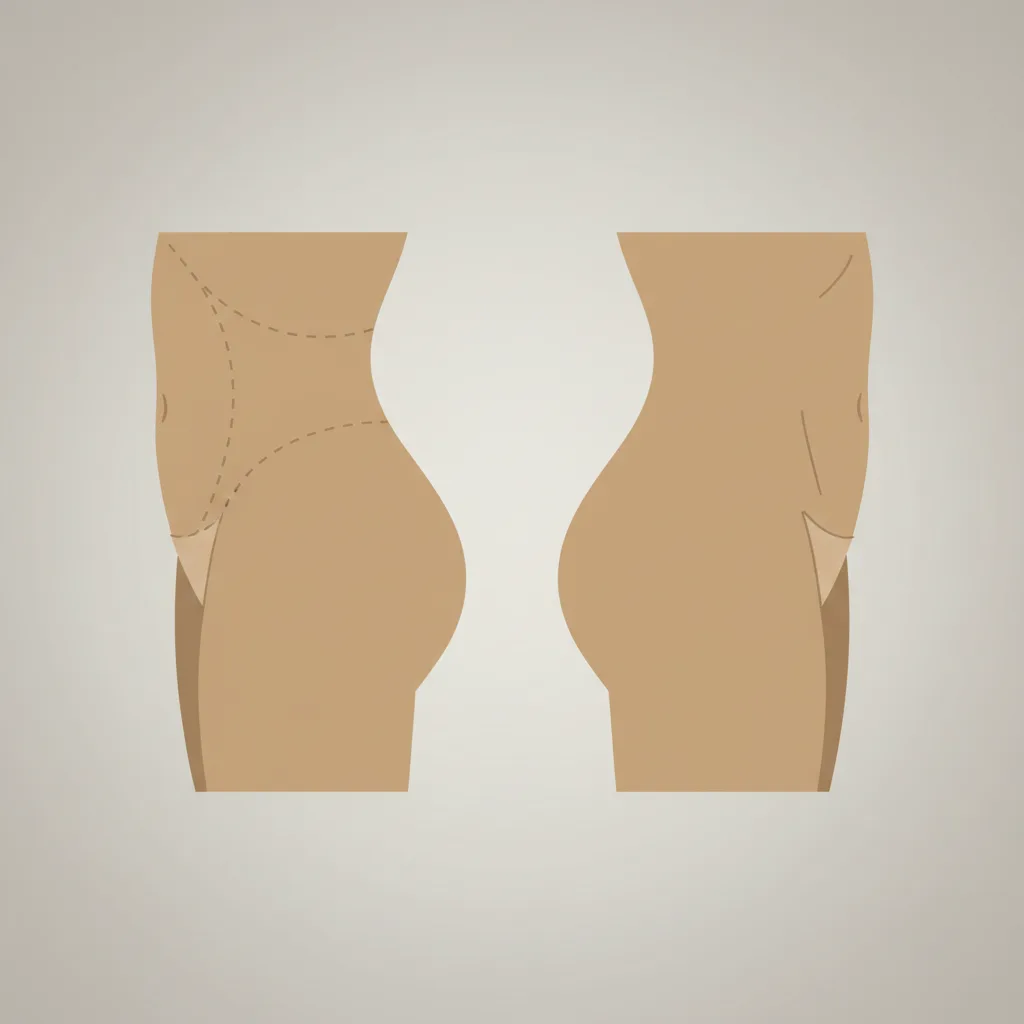
Poddanie się Brazilian Butt Lift (BBL) a jego niewykonanie
Jeśli działasz
Poddanie się BBL
14%
Jeśli nie działasz
Niepoddanie się BBL
8,0%
Odsetek osób, które później żałują każdego wyboru. Słupki i pełna kartoteka danych poniżej.
Zdrowie
Ostatnio sprawdzono 2026-05-10
Jakość dowodów 3.38/5
Ocena recenzji w ośmiu wymiarach względem
rubryki jakości
. Każdy wymiar oceniony w skali 1–5.
D1 Weryfikacja źródeł
4/5
D2 Autorytet i niezależność źródeł
4/5
D3 Dokładność wskaźnika żalu
1/5
D4 Porównywalność źródeł
2/5
D5 Wzorzec Gilovicha
3/5
D6 Jakość tekstu
5/5
D7 Kompletność zastrzeżeń
5/5
D8 Jakość próby
3/5
Średnia3.38/5
Dane zastępcze — dla tej decyzji nie istnieje bezpośrednie badanie żałowania. Wskaźniki są oparte na ocenach zadowolenia i danych o barierach dostępu, a nie na pytaniach bezpośrednio dotyczących żałowania. Zobacz zastrzeżenia poniżej.
Żal za działanie
Poddanie się BBL
14%
~14% (proxy odwróconej satysfakcji — bezpośrednia ankieta o żal nie istnieje)
Pacjenci BBL, kohorta retrospektywna; żal wnioskowany z niezadowolenia
retrospektywnie, obserwacja 2018–2022
Żal za zaniechanie
Niepoddanie się BBL
8,0%
~8% (oszacowanie proxy — bezpośrednia ankieta o żal z zaniechania nie istnieje)
Dorośli rozważający, ale nieprowadzący augmentacji pośladków; proxy niezadowolenia z ciała
retrospektywnie, bez stałego horyzontu
% żałuje tej decyzji
Poddanie się BBLNiepoddanie się BBL
14%8,0%
balanced — Mniej więcej zrównoważone — obie opcje wiążą się z podobnym żalem.
Powiązane decyzje
Semantycznie podobne decyzje — ten sam obszar, inne kompromisy.
The Brazilian Butt Lift occupies an unusual position in elective cosmetic
surgery: it carries the highest reported mortality rate of any aesthetic
procedure while simultaneously producing high patient satisfaction among
survivors. A 2024 retrospective cohort of 3,000 BBL patients (Güzey &
Ergan Şahin, Aesthetic Plastic Surgery) reported 86% satisfaction, implying
roughly 14% not satisfied. Crucially, no peer-reviewed study has applied a
validated decision-regret instrument specifically to BBL patients, so the
14% action-regret estimate is a satisfaction inverse — a proxy with an
inherent upward bias on the regret direction, since dissatisfaction and
regret are related but distinct constructs.
The mortality data provides essential context for why regret data is
structurally incomplete. Before the ASERF Multi-Society Task Force published
guidelines in 2018, the estimated BBL mortality rate was approximately
1:3,000 procedures — the highest ever recorded for elective cosmetic
surgery, driven by fat embolism when injected material entered the gluteal
venous plexus. Following adoption of subcutaneous-only injection techniques,
the 2019 follow-up survey reported a rate of approximately 1:14,952. The
implication is that any satisfaction or regret figure drawn from survivor
cohorts is subject to survivorship bias: patients who died or suffered
severe complications cannot report their preferences. Studies conducted
almost entirely at accredited facilities by board-certified surgeons further
select against the highest-risk surgical settings, where outcomes and
potential regret would almost certainly differ.
On the inaction side, no survey exists that directly measures regret among
people who considered but did not get a BBL. The same 2018 Ipsos survey
reports that 8% of respondents “always feel dissatisfied with how they
look,” regardless of setting — the most chronic, cross-situational tier of
body dissatisfaction it measures, distinct from the 37% who feel this way
specifically in front of a mirror. This entry uses that directly-reported 8%
as the inaction-side proxy, on the reasoning that persistent,
situation-independent dissatisfaction is a closer analogue to durable regret
than transient, situational dissatisfaction — though it remains a general
body-dissatisfaction measure, not a rate specific to foregoing this
procedure. Both the 8% inaction estimate and the 14% action estimate should
be treated as proxy constructs rather than directly measured regret rates.
The delta (0.06) and the “balanced” Gilovich pattern label reflect this
uncertainty: it is possible that, once properly measured with a validated
regret instrument, the pattern would shift in either direction. This entry’s
primary purpose is to surface the mortality risk context and the absence of
rigorous regret literature for one of the most socially prominent elective
procedures of the 2010s and 2020s.
Źródła: działanie
Rejestr twierdzeń
Każda liczba poniżej jest tym, co podało dane źródło — z dosłownym cytatem, na którym się oparliśmy, i sposobem, w jaki doszliśmy do naszej wartości. Kliknij dowolny link, żeby zweryfikować bezpośrednio.
[1]Aesthetic Plastic Surgery (Springer) — Brazilian Butt Lift: An Experience Over 3000 Patients
Recenzowane naukowo
86% of patients satisfied with outcomes; ~14% not satisfied
Cytat
“"[Paraphrase from abstract -- full text paywalled] Of 3000 patients who underwent BBL between 2018 and 2022, 86% expressed satisfaction with their outcomes. The study concluded that BBL is a safe and satisfactory surgery when performed by experienced surgeons who adhere to fundamental principles, with 70% of transferred fat surviving in the buttocks."
”
Dane źródłowe z
2024-04-01
Dostęp
2026-05-10
Obliczenie
Güzey and Ergan Şahin (2024) retrospective cohort of 3000 BBL patients. 86% satisfaction rate used as the inverse proxy for regret: 100% - 86% = 14%. This is NOT a direct regret-framed question; it measures general satisfaction. Dissatisfied patients are not necessarily regretful (they may intend revision surgery), and satisfied patients may still report some regret. The 14% is used as an upper-bound proxy for action regret, likely overstating true decision regret. No peer-reviewed study has applied a validated Decision Regret Scale specifically to BBL patients.
[2]Aesthetic Surgery Journal / ASERF — Report on Mortality from Gluteal Fat Grafting: Recommendations from the ASERF Task Force
Recenzowane naukowo
BBL career mortality rate estimated between 1:6,214 and 1:2,351; total fatal-or-nonfatal pulmonary fat embolism rate 1:1,473 over a career
Cytat
“"The calculated total rate of having either a fatal or a nonfatal PFE over a career is therefore 1:1473. ... The Task Force stresses that none of these estimates be construed as the actual rate." The survey, autopsy, and AAAASF-facility methodologies yielded death-rate estimates of 1:6214, ~1:4000, and 1:2351 respectively.
”
Dane źródłowe z
2018-03-01
Dostęp
2026-05-10
Obliczenie
ASERF task force anonymous survey of 4,843 plastic surgeons worldwide. Establishes baseline mortality context (not the regret rate). Post- guideline data (2019 ASERF follow-up published in Aesthetic Surgery Journal) showed the rate fell to approximately 1:14,952 after adoption of subcutaneous-only injection technique. Mortality is cited here as context for why complications drive regret, not as the regret rate itself. Cited to establish why action regret may be underreported: patients who died cannot report regret, and survivors with complications may not be captured in satisfaction surveys.
Źródła: bezczynność
Rejestr twierdzeń
Każda liczba poniżej jest tym, co podało dane źródło — z dosłownym cytatem, na którym się oparliśmy, i sposobem, w jaki doszliśmy do naszej wartości. Kliknij dowolny link, żeby zweryfikować bezpośrednio.
[1]Ipsos — Most Americans Experience Feeling Dissatisfied with How Their Body Looks from Time to Time↗ 2 other entries
Badanie pierwotne
8% of Americans always feel dissatisfied with their body regardless of location/situation; 37% feel dissatisfied specifically when looking in a mirror; 79% experience dissatisfaction at times (vs 21% never)
Cytat
“"Most Americans experience feeling dissatisfied with how their body looks from time to time, including nearly two in five who feel this way whenever they look in the mirror." ... "For another 8% of those surveyed, it doesn't matter where they are - they always feel dissatisfied with how they look."
”
Dane źródłowe z
2018-01-10
Dostęp
2026-07-07
Obliczenie
Ipsos survey of 1,004 US adults (RiverMend Health, Jan 3-5, 2018). The survey directly reports that 8% of respondents "always feel dissatisfied with how they look" regardless of setting -- the most chronic, cross-situational tier of dissatisfaction the survey measures, distinct from the 37% who are dissatisfied specifically when looking in a mirror and the 79% who are dissatisfied in at least one surveyed situation (vs 21% never). This entry uses that directly-reported "always, regardless of location" 8% figure as the inaction-side proxy, reasoning that persistent, situation- independent dissatisfaction is a closer analogue to durable inaction regret than the broader mirror-specific or at-least-sometimes figures -- though it remains a general body-dissatisfaction measure, not a rate specific to foregoing this procedure. No survey asks people who considered but did not get a BBL whether they regret that inaction; BBLs are a niche procedure, and the true share of the population whose lasting regret concerns specifically foregoing this surgery is unknown and could sit anywhere in the general body-dissatisfaction range (8%-37%) or outside it.
[2]International Society of Aesthetic Plastic Surgeons (ISAPS) — ISAPS Global Survey 2024: Full Report
Źródło referencyjne
Body and extremities procedures (the category that includes gluteal augmentation) totalled ~6 million worldwide in 2024, the largest surgical category, though volume fell 14.8% year-on-year
Cytat
“"There were 3.9 million breast procedures (-14.1%) and 6 million body and extremities procedures (-14.8%)."
”
Dane źródłowe z
2024-12-01
Dostęp
2026-05-10
Obliczenie
ISAPS annual global survey of member plastic surgeons. The body-and- extremities category (which includes gluteal augmentation) was the largest surgical category at ~6 million procedures worldwide in 2024, confirming that demand for body-contouring surgery is real and substantial and that a plausible pool of people consider but do not proceed. Note the category declined 14.8% year-on-year in the 2024 survey, so this is a demand-level (not a growth) claim; earlier reports do NOT place gluteal fat grafting in the global top-10 surgical procedures. Volume data does not translate to inaction-regret data. Cited to establish demand context, not as a regret measure.
Zastrzeżenia
Zarówno liczby po stronie działania, jak i zaniechania dla tego wpisu są konstrukcjami zastępczymi, a nie zmierzonymi wskaźnikami żalu. Żadne recenzowane badanie nie zastosowało walidowanego instrumentu żalu decyzyjnego konkretnie do pacjentów BBL. 14% po stronie działania to odwrotność 86% satysfakcji w 3000-pacjentowej tureckiej kohorcie (Güzey & Ergan Şahin, 2024) — satysfakcja i żal mierzą powiązane, ale odrębne konstrukty, a ta konwersja zawyża prawdziwy żal decyzyjny przy najbardziej hojnej interpretacji. 8% po stronie zaniechania nie ma żadnej bezpośredniej podstawy dowodowej; to spekulacyjne proxy z ogólnych danych o niezadowoleniu z ciała. Delta (0,06) i etykieta wzorca gilovich („zrównoważone”) powinny być traktowane jako redakcyjne szacunki, nie empiryczne ustalenia. Wtórnym komplikacją jest stronniczość przetrwania: BBL ma najwyższy raportowany wskaźnik śmiertelności spośród elektywnych procedur kosmetycznych (1:3000 w erze przed 2018; około 1:14 952 po wytycznych). Pacjenci, którzy doznali śmiertelnych lub poważnych komplikacji, nie mogą zgłosić żalu, systematycznie obniżając mierzony wskaźnik żalu z działania w kohortach przetrwałych. Dodatkowo wyniki BBL znacznie różnią się w zależności od ustawienia chirurgicznego i doświadczenia chirurga: procedury wykonywane poza akredytowanymi placówkami przez chirurgów bez certyfikacji rady niosą znacznie wyższe wskaźniki komplikacji i śmiertelności niż liczby z centrów akademickich raportowane w recenzowanych badaniach. Literatura o satysfakcji niemal wyłącznie uchwytuje wyniki z regulowanych ustawień chirurgicznych. Popyt napędzany mediami społecznościowymi — szczególnie wśród młodszych kobiet narażonych na estetykę „BBL body” — wprowadza efekty selekcji, które dodatkowo komplikują każdą próbę uogólnienia wskaźników żalu w populacji pacjentów BBL.