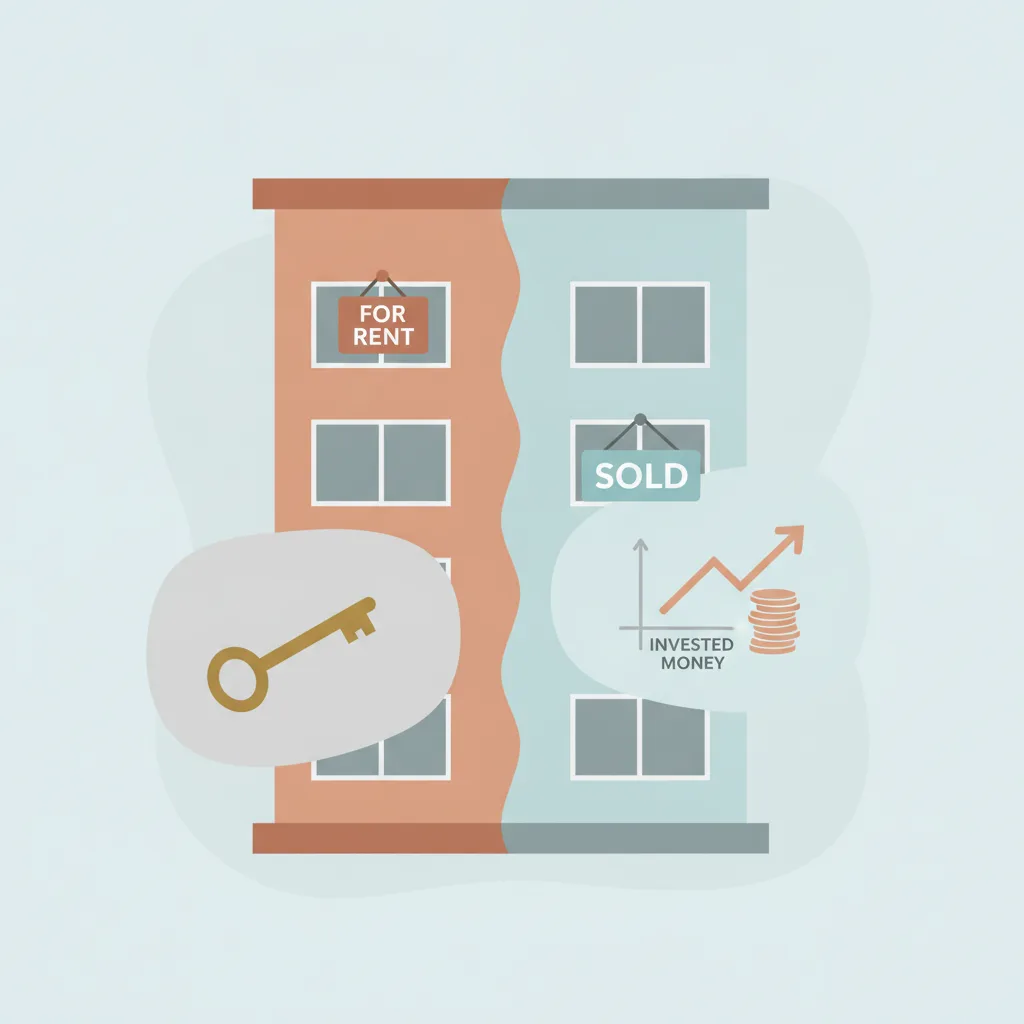
Wynajem posiadanej nieruchomości kontra sprzedaż i zainwestowanie pieniędzy
Jeśli działasz
Sprzedaż i inwestowanie
25%
Jeśli nie działasz
Zatrzymanie i wynajem
40%
Odsetek osób, które później żałują każdego wyboru. Słupki i pełna kartoteka danych poniżej.
Finanse
Ostatnio sprawdzono 2026-07-09
Jakość dowodów 4.13/5
Ocena recenzji w ośmiu wymiarach względem
rubryki jakości
. Każdy wymiar oceniony w skali 1–5.
D1 Weryfikacja źródeł
4/5
D2 Autorytet i niezależność źródeł
4/5
D3 Dokładność wskaźnika żalu
3/5
D4 Porównywalność źródeł
4/5
D5 Wzorzec Gilovicha
4/5
D6 Jakość tekstu
5/5
D7 Kompletność zastrzeżeń
4/5
D8 Jakość próby
5/5
Średnia4.13/5
Dane zastępcze — dla tej decyzji nie istnieje bezpośrednie badanie żałowania. Wskaźniki są oparte na ocenach zadowolenia i danych o barierach dostępu, a nie na pytaniach bezpośrednio dotyczących żałowania. Zobacz zastrzeżenia poniżej.
Żal za działanie
Sprzedaż i inwestowanie
25%
25% sprzedających żałuje sprzedaży — tęskni za domem, który oddali
Dorośli Amerykanie, którzy sprzedali dom w latach 2021–2022 (ankieta Clever Real Estate 2022)
retrospektywnie, w ciągu ~1–2 lat od sprzedaży
Żal za zaniechanie
Zatrzymanie i wynajem
40%
40% właścicieli nieruchomości na wynajem żałuje, że w ogóle zaczęło
Amerykańscy inwestorzy na rynku nieruchomości mieszkaniowych / wynajmujący (ankieta Clever Real Estate 2024)
retrospektywnie, obecni właściciele
% żałuje tej decyzji
Sprzedaż i inwestowanieZatrzymanie i wynajem
25%40%
inaction dominates — Bezczynność dominuje — większość żałuje, że nie podjęła działania.
Powiązane decyzje
Semantycznie podobne decyzje — ten sam obszar, inne kompromisy.
No survey pits “rent it out” directly against “sell it and invest the money,” so this pairs the two closest measured regrets. About 40% of residential rental owners wish they’d never started investing in real estate (Clever Real Estate’s 2024 survey of 764 investors), against about 25% of recent sellers who regret selling because they miss the home they gave up (Clever’s 2022 survey of 1,000 sellers). On those proxies, keeping-and-renting is the more-regretted path — the opposite of the intuition that selling is the move you might kick yourself for later.
The reason keep-and-rent regret runs high is that landlording is not the passive income it is sold as. In the same 2024 survey, 56% of owners had already had to evict a tenant, 61% were still chasing missed rent every month, and 87% reported some regret about their investment decisions. The NBER study of landlords’ own lease ledgers puts a price on the hassle: filing a single eviction costs the equivalent of two to three months’ rent, and nonpayment is common enough that many landlords tolerate months of it before acting. Against that, the seller’s regret is quieter and more emotional — missing a home — rather than a recurring operational drain.
Read the gap cautiously. This is a proxy pairing, flagged as such: the two numbers come from different people surveyed in different years, the seller figure includes forced moves that mix circumstance with choice, and the investor sample leans toward heavily-invested owners who may regret more than a one-flat landlord would. It also says nothing about the money — whether renting out or selling-and-investing wins financially depends on rental yield, local price growth, and what the sale proceeds earn elsewhere, none of which a regret rate measures. The Gilovich pattern (holding-and-managing regret accumulates while the sold home fades into a wistful memory) fits the direction here, but the evidence is indicative, not a head-to-head test.
Źródła: działanie
Rejestr twierdzeń
Każda liczba poniżej jest tym, co podało dane źródło — z dosłownym cytatem, na którym się oparliśmy, i sposobem, w jaki doszliśmy do naszej wartości. Kliknij dowolny link, żeby zweryfikować bezpośrednio.
[1]Clever Real Estate — American Home Seller Report: 2022 Edition
Źródło referencyjne
One-fourth of home sellers (25%) regretted selling because they miss their old home
Cytat
“"One-fourth of respondents (25%) regretted selling because they miss their old home" — from a survey of 1,000 people who sold a home in 2021 or 2022 (fielded Sept. 29 – Oct. 2, 2022).
”
Dane źródłowe z
2022-10-12
Dostęp
2026-07-09
Obliczenie
Used as a proxy for regret about the decision to sell itself. The 25% "miss their old home" figure is the cleanest available decision-construct regret for sellers — distinct from the much larger "process" regret numbers (priced too low, sold too fast, commission too high) that other seller surveys report, which measure regret about how the sale went, not regret about having sold. Because it is a proxy (not a head-to-head "sell vs rent-out" survey), this entry is flagged proxy_only.
Źródła: bezczynność
Rejestr twierdzeń
Każda liczba poniżej jest tym, co podało dane źródło — z dosłownym cytatem, na którym się oparliśmy, i sposobem, w jaki doszliśmy do naszej wartości. Kliknij dowolny link, żeby zweryfikować bezpośrednio.
[1]Clever Real Estate — Residential Real Estate Investing in 2024: More Rent Money, More Rental Problems↗ 1 other entry
Źródło referencyjne
40% of residential real estate investors wish they'd never started investing in real estate; 87% have regrets about their investment decisions; 56% have had to evict a tenant
Cytat
“"40% say they wish they'd never started investing in real estate [...] 87% [...] have regrets about their investment decisions [...] More than half of respondents (56%) have had to evict a tenant at some point." — survey of 764 US residential real estate investors, fielded May 18–June 9, 2024.
”
Dane źródłowe z
2024-07-01
Dostęp
2026-07-09
Obliczenie
The 40% "wish they'd never started" figure is used as the regret proxy for the keep-and-rent side. The broader 87% "have regrets" figure is not used as the headline because it spans market and financial regrets, not the decision to become a landlord specifically. Sample skews toward active, heavily-invested owners (90% had lost money on an investment).
[2]National Bureau of Economic Research (NBER Working Paper 33155) — Nonpayment and Eviction in the Rental Housing Market↗ 1 other entry
Badanie pierwotne
Filing an eviction costs landlords the equivalent of 2–3 months of rent; nonpayment is common and frequently tolerated before eviction
Cytat
“"Filing an eviction costs landlords the equivalent of 2-3 months of rent [...] Nonpayment is common, is frequently tolerated by landlords, and is often followed by recovery."
”
Dane źródłowe z
2024-11-01
Dostęp
2026-07-09
Obliczenie
Cited to explain why keep-and-rent regret runs high: landlording carries real, recurring costs (an eviction alone runs 2–3 months' rent), which the "passive income" framing understates. Corroboration for the regret driver, not a regret rate itself.
Zastrzeżenia
To zestawienie oparte wyłącznie na wskaźnikach zastępczych: żadna ankieta nie pyta tych samych osób, czy żałują decyzji o wynajmie nieruchomości zamiast jej sprzedaży i zainwestowania pieniędzy, więc każda strona korzysta z najbliższego dostępnego odpowiednika. Stronę sprzedaży przybliża 25% niedawnych sprzedających, którzy „tęsknią za dawnym domem" (Clever 2022); stronę zatrzymania i wynajmu — 40% właścicieli, którzy „żałują, że w ogóle zaczęli inwestować w nieruchomości" (Clever 2024). Obie liczby pochodzą z różnych prób (sprzedający vs. inwestorzy) z różnych lat (2022 vs. 2024), więc porównanie jest orientacyjne, a nie kontrolowane. Odsetek „tęsknię za domem" obejmuje osoby zmuszone do przeprowadzki przez zmianę pracy lub finanse, co miesza okoliczności z wyborem; próba inwestorów jest przechylona ku aktywnym, mocno zaangażowanym właścicielom (90% straciło pieniądze na jakiejś inwestycji), co zapewne zawyża żal osoby wynajmującej jedno odziedziczone lub opuszczone mieszkanie. Co kluczowe, wskaźniki żalu nic nie mówią o pieniądzach: to, czy lepszy wynik finansowy daje wynajem, czy sprzedaż i inwestycja, zależy od stopy zwrotu z najmu, lokalnego wzrostu cen i zwrotu z zainwestowanych środków ze sprzedaży — wszystko to zależne od czasu i rynku, i tu nieuwzględnione. Ujęcie amerykańskie; prawo chroniące lokatorów i koszty transakcyjne różnią się znacznie między krajami.