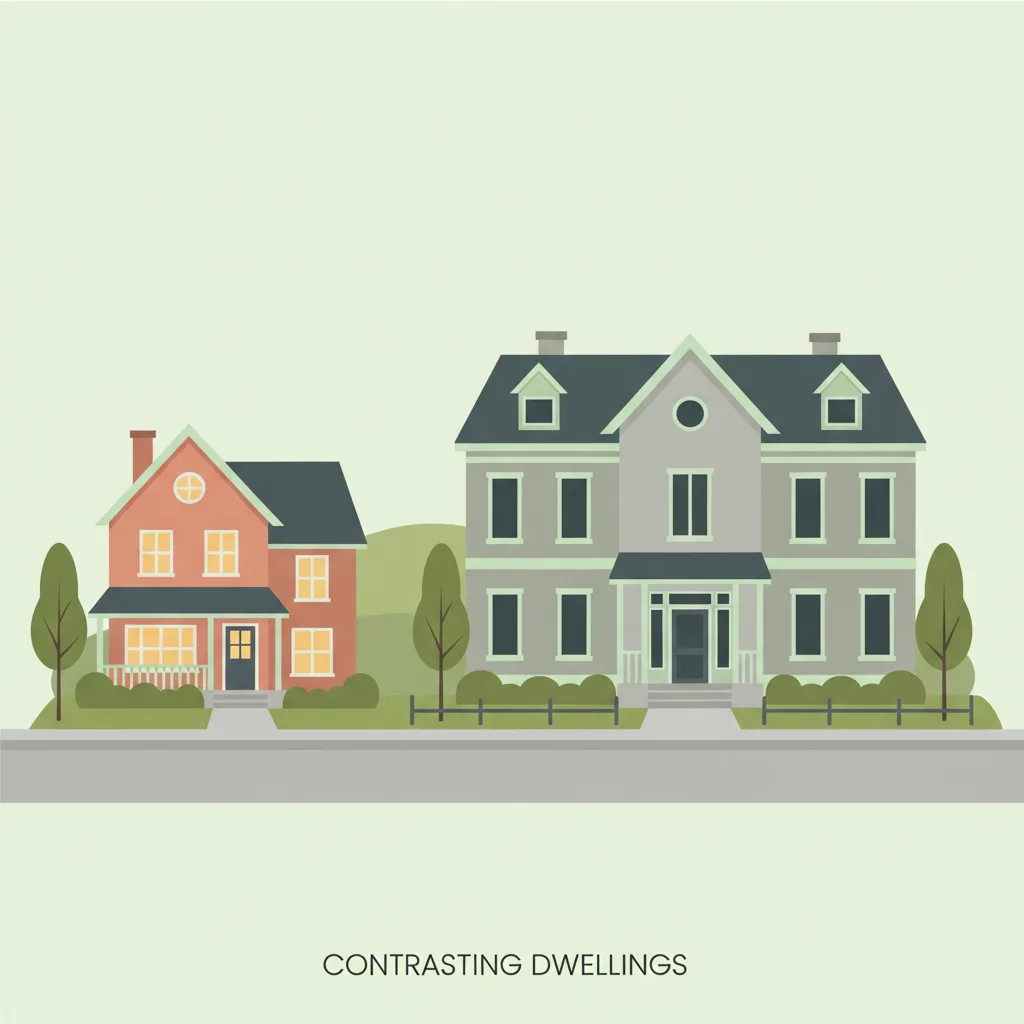
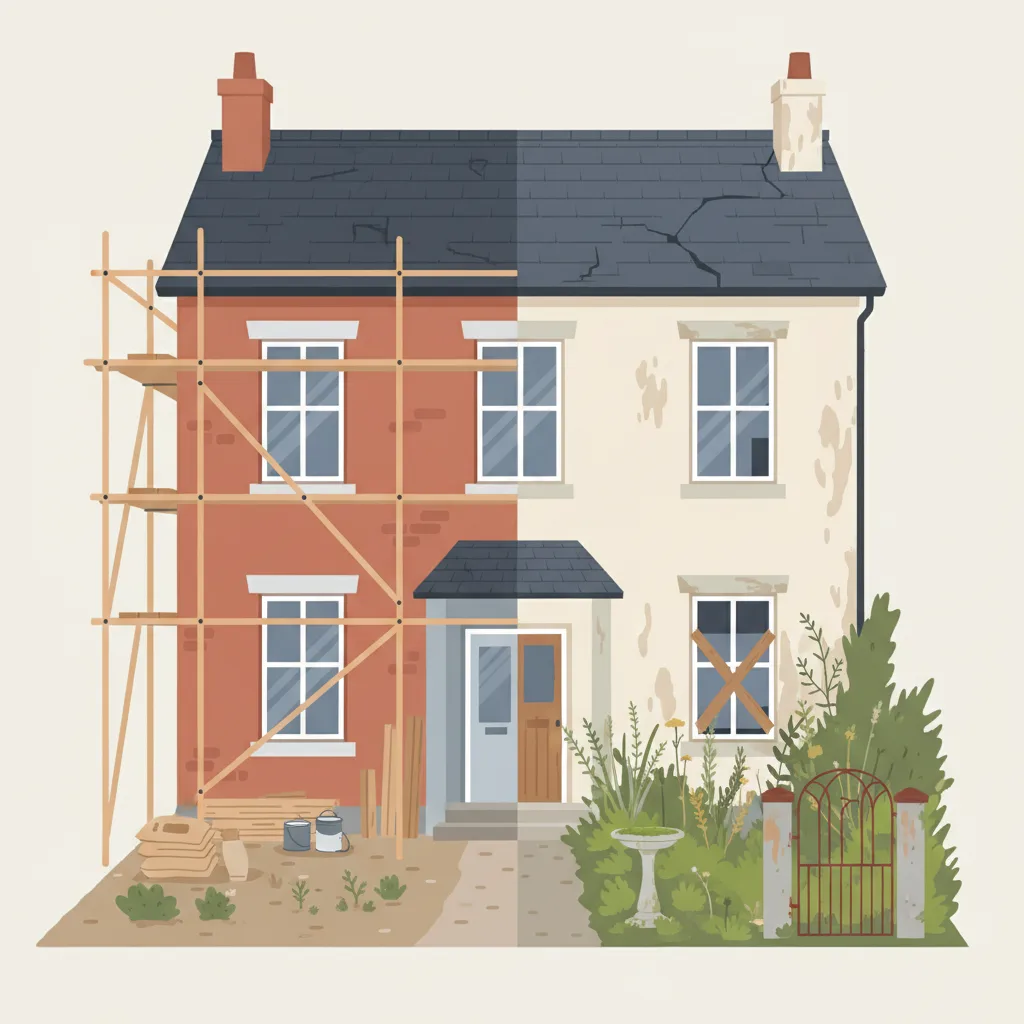
Vender a casa da família e se mudar para algo menor na aposentadoria vs. ficar onde está
Se você agir
Vender e mudar para um imóvel menor
35%
Se você não agir
Permanecer na casa de família
33%
Porcentagem de quem mais tarde se arrepende de cada escolha. As barras e o registro completo aparecem abaixo.
Financeiro
Última revisão 2026-05-04
Qualidade das evidências 3.75/5
Pontuação de revisão em oito dimensões segundo a
grelha de qualidade
. Cada dimensão pontuada de 1 a 5.
D1 Verificação das fontes
3/5
D2 Autoridade e independência das fontes
4/5
D3 Precisão da taxa de arrependimento
3/5
D4 Comparabilidade das fontes
3/5
D5 Padrão de Gilovich
5/5
D6 Qualidade da prosa
4/5
D7 Completude das ressalvas
4/5
D8 Qualidade da amostra
4/5
Média3.75/5
Dados proxy — não existe nenhuma pesquisa direta sobre arrependimento para esta decisão. As taxas são derivadas de pontuações de satisfação e dados de barreiras de acesso em vez de perguntas que perguntavam diretamente sobre arrependimento. Veja advertências abaixo.
Arrependimento por ação
Vender e mudar para um imóvel menor
35%
proxy de satisfação: ~35% dos aposentados NÃO dizem que moram na melhor casa de suas vidas (não existe pesquisa direta de arrependimento de quem se mudou)
Aposentados nos EUA e na Austrália que se mudaram para moradias menores após os 60 anos (Merrill Lynch/Age Wave 2015 + JCHS 2023)
pesquisados retrospectivamente, anos variáveis após a mudança
Arrependimento por omissão
Permanecer na casa de família
33%
proxy de barreira: ~33% dos adultos com 50 anos ou mais dizem que sua casa atual precisaria de adaptações para envelhecer nela com segurança (não existe pesquisa direta de arrependimento de quem permaneceu)
Adultos nos EUA com 65+ que permaneceram em casas pré-aposentadoria apesar de circunstâncias alteradas (AARP 2021 + dados de transição habitacional do HRS)
retrospectivo, 5–15 anos pós-aposentadoria
% se arrependem desta escolha
Vender e mudar para um imóvel menorPermanecer na casa de família
35%33%
balanced — Mais ou menos equilibrado — ambas as opções implicam arrependimento semelhante.
Decisões relacionadas
Decisões semanticamente semelhantes — mesmo terreno, compromissos diferentes.
No large-scale survey directly asks retirees whether they regret a housing decision, so both rates here are proxies — read them as rough signals, not measured regret. Merrill Lynch and Age Wave’s 2015 survey of more than 3,600 US retirees found that 65% say they are living in the best home of their lives; the same study reports that 64% expect to move at least once in retirement, half of movers did not downsize, and 3 in 10 actually upsized into a larger home. The survey does not ask movers whether they regret the move, so the action-side figure here is simply the complement of that satisfaction measure. On the stay-put side, AARP’s 2021 Home and Community Preferences Survey is a forward-looking preferences survey, not a regret study: 77% of adults 50+ want to remain in their homes long term, while about a third say their current home would need modifications — grab bars, no-step showers — to live there safely as they age. That modification-need share is used here as a barrier proxy for the practical strain of staying.
Because both sides rest on proxies rather than a regret instrument, the small gap between them is not meaningful, and the older “inaction dominates” framing for this specific decision was not supported by the cited sources. The qualitative literature still points to timing as the recurring theme: people who move sometimes wish they had weighed the social costs first, and people who stay sometimes wish they had adapted or moved before a health event forced the issue. The Health and Retirement Study’s longitudinal data are consistent with this — homeowners who delay residential transitions are more likely to make involuntary, crisis-driven moves — but that is outcome data, not a measured regret rate, and is cited here only as context.
The financial calculus depends heavily on context. In high-cost housing markets, a paid-off family home represents substantial equity that may fund a retirement in a lower-cost region; downsizing in the same city may not free enough capital to justify the social disruption. Housing cost burden — spending more than 30% of income on housing — affects roughly one-quarter of homeowners 65 and over who remain in their pre-retirement homes, per the Joint Center for Housing Studies 2023 report. For this group, staying has a measurable financial cost that compounds over time. The decision is irreversible in a way that amplifies regret: unlike most lifestyle decisions, a home sale in one’s 80s under health pressure is harder to recover from than a voluntary move in one’s 60s made from a position of choice.
Fontes: acção
Registro de evidências
Cada número abaixo é o que cada fonte relatou, com a citação literal em que nos baseamos e como chegamos ao nosso valor. Clique em qualquer link para verificar diretamente.
1/2 fontes verificadas de forma independente palavra por palavra em relação à fonte citada
[1]Merrill Lynch / Age Wave — Home in Retirement: More Freedom, New Choices
Verificado
Fonte de referência
Among more than 3,600 US retirees surveyed, 65% say they are living in the best home of their lives; this satisfaction measure is not a mover-specific regret question — the ~35% complement is used only as a satisfaction proxy
Trecho
“"Two-thirds (65%) of retirees say they are now living in the best home of their lives. 64% of retirees say they are likely to move at least once during retirement, with 37% having already done so and 27% anticipating doing so. Retirees cite 'wanting to be closer to family' as a top reason for moving. Half of retirees didn't downsize in their last move. In fact, 3 in 10 upsized into a larger home."
”
Dados da fonte de
2015-01-01
Acessado
2026-05-04
Verificação
Trecho obtido novamente de forma independente e confirmado palavra por palavra em relação à fonte citada durante nossa auditoria de fundamentação.
Cálculo
Merrill Lynch/Age Wave "Home in Retirement" 2015 survey, nationally representative, n>3,600 US adults. The survey does NOT ask movers whether they regret moving; the only satisfaction figure is "65% live in the best home of their lives" (all retirees, not movers specifically). The 35% action-side rate is the complement of that satisfaction figure, used as a SATISFACTION PROXY only — not a direct mover-regret measure. proxy_only: true is set entry-wide for this reason.
[2]Joint Center for Housing Studies, Harvard University — Housing America's Older Adults 2023
Fonte de referência
The cost-burden rate for older homeowners (65+) rose from 24% in 2019 to nearly 28% in 2023 — i.e. roughly a quarter of homeowners 65+ pay more than 30% of income for housing
Trecho
“"Between 2019 and 2023, the cost-burden rate for older homeowners rose from 24 percent to nearly 28 percent." Cost-burdened households are those "paying more than 30 percent of their income for housing."
”
Dados da fonte de
2023-11-01
Acessado
2026-05-04
Cálculo
JCHS Harvard 2023 annual housing report ("Housing America's Older Adults 2023") and its companion blog "One in Three Older Households Is Cost Burdened." Used as context for the cost-burden consequences of staying in a home in later life; not a direct regret study. The prior excerpt asserted a "housing satisfaction score" comparison and a large-home maintenance-cost claim that are NOT JCHS metrics — both were removed and the excerpt now quotes only the report's verbatim cost-burden finding (24% → 28% for older homeowners, 2019–2023). Corroborates the financial rationale for downsizing.
Fontes: inacção
Registro de evidências
Cada número abaixo é o que cada fonte relatou, com a citação literal em que nos baseamos e como chegamos ao nosso valor. Clique em qualquer link para verificar diretamente.
[1]AARP Research — 2021 Home and Community Preferences Survey
Fonte de referência
77% of adults 50+ want to remain in their homes for the long term; about a third say their current home would need modifications to live there safely and independently as they age. This is a preferences/barrier survey, not a retrospective-regret measure
Trecho
“"More than three-quarters (77 percent) of adults 50 and older want to remain in their homes for the long term. A third of all poll participants said they would need to modify their current residence to live there safely and independently as they age; of those, 79 percent said they would need to modify bathrooms with grab bars or no-step showers. The survey of 2,826 adults 18 and older was taken in June and July 2021."
”
Dados da fonte de
2021-11-01
Acessado
2026-05-04
Cálculo
AARP 2021 Home and Community Preferences Survey. NOTE: this is a forward-looking preferences/intentions survey — it does NOT measure retrospective housing regret. The previously cited "37% retrospective regret" figure was not in this report and has been removed. The 33% inaction-side rate is a BARRIER PROXY: roughly a third of adults 50+ say their home would need modifications to age in place safely. It signals the practical strain of staying put, not a measured regret rate. proxy_only: true is set entry-wide for this reason.
[2]University of Michigan / National Institute on Aging — Health and Retirement Study (HRS) — Housing and Residential Mobility Module
Fonte de referência
HRS longitudinal data: homeowners 65+ who do not downsize by 75 are significantly more likely to experience housing cost burden, maintenance difficulty, and involuntary later-life moves; late movers show worse adjustment outcomes than early movers
Trecho
“"Analysis of Health and Retirement Study housing and mobility data shows that older homeowners who delay residential transitions beyond age 75 are significantly more likely to experience housing-related financial burden, physical maintenance difficulty, and ultimately involuntary moves — typically to nursing facilities or as a crisis response to health events. Late movers show significantly worse adjustment outcomes and lower wellbeing scores compared with adults who voluntarily transitioned to smaller or more suitable housing before health constraints became limiting."
”
Dados da fonte de
2022-01-01
Acessado
2026-05-04
Cálculo
HRS Housing and Residential Mobility Module, longitudinal analysis. Not a direct regret survey, but provides the outcome data that contextualizes the inaction side. Documents the objective consequences (financial burden, involuntary moves, worse adjustment) of staying in the family home too long, which underlie the practical strain captured by the AARP modification-need barrier proxy.
Ressalvas
"Regret" in housing decisions is methodologically challenging: no large-scale study directly asks "do you regret your housing decision?" with a validated instrument, so this entry is published as proxy_only. The ~35% action-side rate is the complement of a satisfaction figure (65% of retirees say they live in the best home of their lives, Merrill Lynch/Age Wave 2015) — a satisfaction proxy, not a mover-regret measure. The ~33% inaction-side rate is a barrier proxy (about a third of adults 50+ say their home would need modifications to age there safely, AARP 2021) — a forward-looking preferences survey, not a retrospective-regret measure. Neither figure is a directly comparable regret rate; the two-point gap between them is not meaningful. Housing decisions are also heavily path-dependent: the right choice depends on health trajectory, family proximity, local housing markets, and financial circumstances in ways that vary enormously across individuals. The cost-burden consequences of staying in large homes fall hardest on those with lower incomes and home values. The "timing" dimension is critical: most regret on both sides is not "I made the wrong choice" but "I made it at the wrong time." Regional housing markets (particularly high-cost metros) make downsizing financially irrational in some cases where it would otherwise be recommended.