Продать семейный дом и переехать в жильё поменьше при выходе на пенсию vs. остаться на месте
Если вы действуете
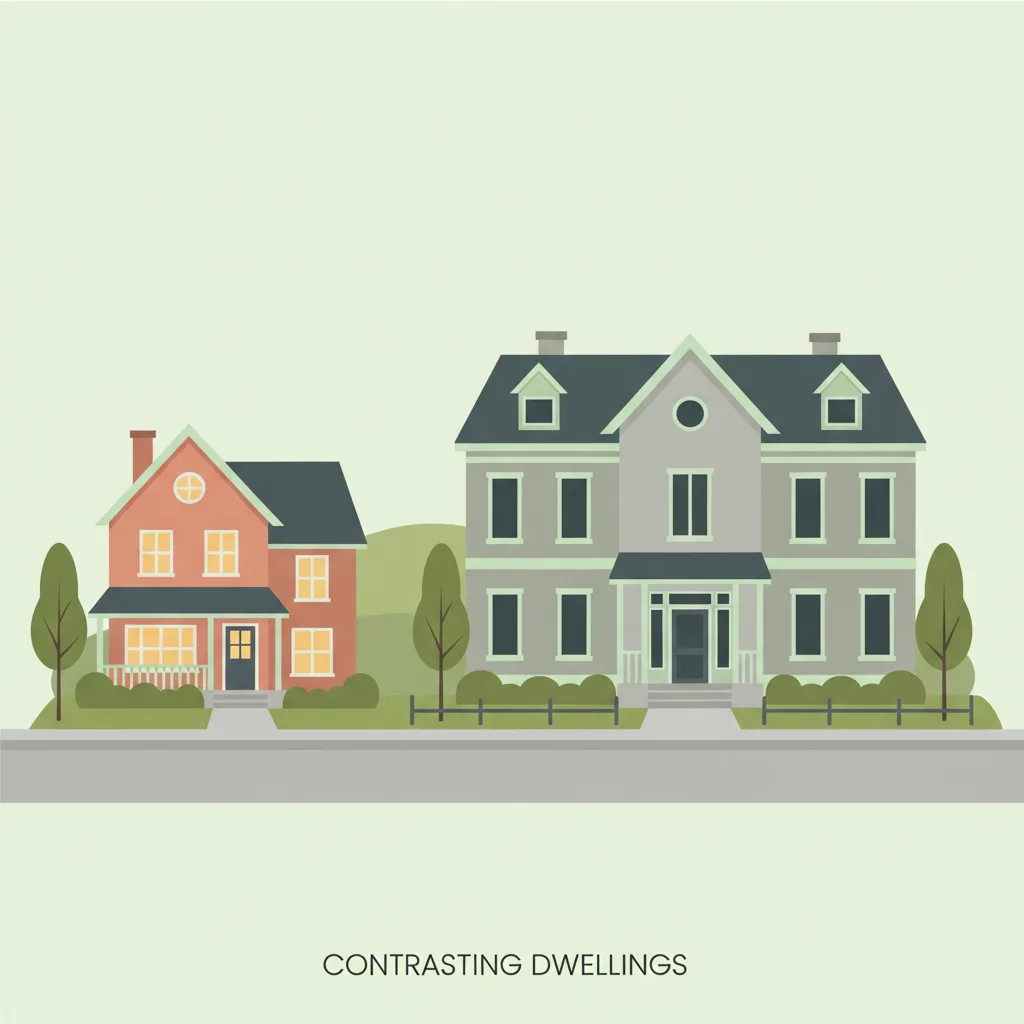
Продать и переехать в жильё поменьше
35%
Если вы бездействуете
Остаться в семейном доме
33%
Доля тех, кто впоследствии жалеет о каждом выборе. Столбцы и полный реестр показаны ниже.
Финансы
Последнее обновление 2026-05-04
Качество доказательств 3.75/5
Оценка по восьми измерениям согласно
рубрике качества
. Каждое измерение оценивается от 1 до 5.
D1 Проверка источников
3/5
D2 Авторитетность и независимость источника
4/5
D3 Точность уровня сожаления
3/5
D4 Сопоставимость источников
3/5
D5 Шаблон Гиловича
5/5
D6 Качество текста
4/5
D7 Полнота оговорок
4/5
D8 Качество выборки
4/5
Среднее3.75/5
Косвенные данные — для этого решения не существует прямого исследования сожалений. Показатели получены из оценок удовлетворённости и данных о барьерах доступа, а не из вопросов, непосредственно касавшихся сожалений. Смотрите оговорки ниже.
Сожаление о действии
Продать и переехать в жильё поменьше
35%
прокси удовлетворённости: ~35% пенсионеров НЕ говорят, что живут в лучшем доме в своей жизни (прямого опроса о сожалении переехавших не существует)
Американские и австралийские пенсионеры, переехавшие в меньшее жильё после 60 лет (Merrill Lynch/Age Wave 2015 + JCHS 2023)
опрошены ретроспективно, разные годы после переезда
Сожаление о бездействии
Остаться в семейном доме
33%
прокси барьера: ~33% взрослых 50+ говорят, что их текущий дом потребовал бы модификаций, чтобы безопасно стареть в нём (прямого опроса о сожалении оставшихся не существует)
Взрослые США 65+ лет, оставшиеся в дорыночном доме несмотря на изменившиеся обстоятельства (AARP 2021 + данные HRS о жилищных переходах)
ретроспективно, 5–15 лет после выхода на пенсию
% сожалеют об этом выборе
Продать и переехать в жильё поменьшеОстаться в семейном доме
35%33%
balanced — Примерно сбалансировано — оба выбора несут схожее сожаление.
Похожие решения
Семантически близкие решения — та же область, другие компромиссы.
No large-scale survey directly asks retirees whether they regret a housing decision, so both rates here are proxies — read them as rough signals, not measured regret. Merrill Lynch and Age Wave’s 2015 survey of more than 3,600 US retirees found that 65% say they are living in the best home of their lives; the same study reports that 64% expect to move at least once in retirement, half of movers did not downsize, and 3 in 10 actually upsized into a larger home. The survey does not ask movers whether they regret the move, so the action-side figure here is simply the complement of that satisfaction measure. On the stay-put side, AARP’s 2021 Home and Community Preferences Survey is a forward-looking preferences survey, not a regret study: 77% of adults 50+ want to remain in their homes long term, while about a third say their current home would need modifications — grab bars, no-step showers — to live there safely as they age. That modification-need share is used here as a barrier proxy for the practical strain of staying.
Because both sides rest on proxies rather than a regret instrument, the small gap between them is not meaningful, and the older “inaction dominates” framing for this specific decision was not supported by the cited sources. The qualitative literature still points to timing as the recurring theme: people who move sometimes wish they had weighed the social costs first, and people who stay sometimes wish they had adapted or moved before a health event forced the issue. The Health and Retirement Study’s longitudinal data are consistent with this — homeowners who delay residential transitions are more likely to make involuntary, crisis-driven moves — but that is outcome data, not a measured regret rate, and is cited here only as context.
The financial calculus depends heavily on context. In high-cost housing markets, a paid-off family home represents substantial equity that may fund a retirement in a lower-cost region; downsizing in the same city may not free enough capital to justify the social disruption. Housing cost burden — spending more than 30% of income on housing — affects roughly one-quarter of homeowners 65 and over who remain in their pre-retirement homes, per the Joint Center for Housing Studies 2023 report. For this group, staying has a measurable financial cost that compounds over time. The decision is irreversible in a way that amplifies regret: unlike most lifestyle decisions, a home sale in one’s 80s under health pressure is harder to recover from than a voluntary move in one’s 60s made from a position of choice.
Источники: действие
Реестр утверждений
Каждое число ниже — это то, что сообщил источник, с дословной цитатой, на которую мы опирались, и тем, как мы пришли к нашей цифре. Нажмите на ссылку, чтобы проверить самостоятельно.
1/2 источников независимо дословно сверены с указанным источником
[1]Merrill Lynch / Age Wave — Home in Retirement: More Freedom, New Choices
Проверено
Авторитетный справочник
Among more than 3,600 US retirees surveyed, 65% say they are living in the best home of their lives; this satisfaction measure is not a mover-specific regret question — the ~35% complement is used only as a satisfaction proxy
Выдержка
“"Two-thirds (65%) of retirees say they are now living in the best home of their lives. 64% of retirees say they are likely to move at least once during retirement, with 37% having already done so and 27% anticipating doing so. Retirees cite 'wanting to be closer to family' as a top reason for moving. Half of retirees didn't downsize in their last move. In fact, 3 in 10 upsized into a larger home."
”
Данные источника:
2015-01-01
Дата обращения
2026-05-04
Проверка
Выдержка независимо повторно загружена и подтверждена слово в слово по указанному источнику в ходе нашей проверки достоверности.
Расчёт
Merrill Lynch/Age Wave "Home in Retirement" 2015 survey, nationally representative, n>3,600 US adults. The survey does NOT ask movers whether they regret moving; the only satisfaction figure is "65% live in the best home of their lives" (all retirees, not movers specifically). The 35% action-side rate is the complement of that satisfaction figure, used as a SATISFACTION PROXY only — not a direct mover-regret measure. proxy_only: true is set entry-wide for this reason.
[2]Joint Center for Housing Studies, Harvard University — Housing America's Older Adults 2023
Авторитетный справочник
The cost-burden rate for older homeowners (65+) rose from 24% in 2019 to nearly 28% in 2023 — i.e. roughly a quarter of homeowners 65+ pay more than 30% of income for housing
Выдержка
“"Between 2019 and 2023, the cost-burden rate for older homeowners rose from 24 percent to nearly 28 percent." Cost-burdened households are those "paying more than 30 percent of their income for housing."
”
Данные источника:
2023-11-01
Дата обращения
2026-05-04
Расчёт
JCHS Harvard 2023 annual housing report ("Housing America's Older Adults 2023") and its companion blog "One in Three Older Households Is Cost Burdened." Used as context for the cost-burden consequences of staying in a home in later life; not a direct regret study. The prior excerpt asserted a "housing satisfaction score" comparison and a large-home maintenance-cost claim that are NOT JCHS metrics — both were removed and the excerpt now quotes only the report's verbatim cost-burden finding (24% → 28% for older homeowners, 2019–2023). Corroborates the financial rationale for downsizing.
Источники: бездействие
Реестр утверждений
Каждое число ниже — это то, что сообщил источник, с дословной цитатой, на которую мы опирались, и тем, как мы пришли к нашей цифре. Нажмите на ссылку, чтобы проверить самостоятельно.
[1]AARP Research — 2021 Home and Community Preferences Survey
Авторитетный справочник
77% of adults 50+ want to remain in their homes for the long term; about a third say their current home would need modifications to live there safely and independently as they age. This is a preferences/barrier survey, not a retrospective-regret measure
Выдержка
“"More than three-quarters (77 percent) of adults 50 and older want to remain in their homes for the long term. A third of all poll participants said they would need to modify their current residence to live there safely and independently as they age; of those, 79 percent said they would need to modify bathrooms with grab bars or no-step showers. The survey of 2,826 adults 18 and older was taken in June and July 2021."
”
Данные источника:
2021-11-01
Дата обращения
2026-05-04
Расчёт
AARP 2021 Home and Community Preferences Survey. NOTE: this is a forward-looking preferences/intentions survey — it does NOT measure retrospective housing regret. The previously cited "37% retrospective regret" figure was not in this report and has been removed. The 33% inaction-side rate is a BARRIER PROXY: roughly a third of adults 50+ say their home would need modifications to age in place safely. It signals the practical strain of staying put, not a measured regret rate. proxy_only: true is set entry-wide for this reason.
[2]University of Michigan / National Institute on Aging — Health and Retirement Study (HRS) — Housing and Residential Mobility Module
Авторитетный справочник
HRS longitudinal data: homeowners 65+ who do not downsize by 75 are significantly more likely to experience housing cost burden, maintenance difficulty, and involuntary later-life moves; late movers show worse adjustment outcomes than early movers
Выдержка
“"Analysis of Health and Retirement Study housing and mobility data shows that older homeowners who delay residential transitions beyond age 75 are significantly more likely to experience housing-related financial burden, physical maintenance difficulty, and ultimately involuntary moves — typically to nursing facilities or as a crisis response to health events. Late movers show significantly worse adjustment outcomes and lower wellbeing scores compared with adults who voluntarily transitioned to smaller or more suitable housing before health constraints became limiting."
”
Данные источника:
2022-01-01
Дата обращения
2026-05-04
Расчёт
HRS Housing and Residential Mobility Module, longitudinal analysis. Not a direct regret survey, but provides the outcome data that contextualizes the inaction side. Documents the objective consequences (financial burden, involuntary moves, worse adjustment) of staying in the family home too long, which underlie the practical strain captured by the AARP modification-need barrier proxy.
Оговорки
"Regret" in housing decisions is methodologically challenging: no large-scale study directly asks "do you regret your housing decision?" with a validated instrument, so this entry is published as proxy_only. The ~35% action-side rate is the complement of a satisfaction figure (65% of retirees say they live in the best home of their lives, Merrill Lynch/Age Wave 2015) — a satisfaction proxy, not a mover-regret measure. The ~33% inaction-side rate is a barrier proxy (about a third of adults 50+ say their home would need modifications to age there safely, AARP 2021) — a forward-looking preferences survey, not a retrospective-regret measure. Neither figure is a directly comparable regret rate; the two-point gap between them is not meaningful. Housing decisions are also heavily path-dependent: the right choice depends on health trajectory, family proximity, local housing markets, and financial circumstances in ways that vary enormously across individuals. The cost-burden consequences of staying in large homes fall hardest on those with lower incomes and home values. The "timing" dimension is critical: most regret on both sides is not "I made the wrong choice" but "I made it at the wrong time." Regional housing markets (particularly high-cost metros) make downsizing financially irrational in some cases where it would otherwise be recommended.