


Перейти до вмісту
Likelier

Жаль від дії проти бездіяльності

Регулярне вживання алкоголю чи тверезість

Якщо ви дієте

Вживати алкоголь

70%

Якщо ви не дієте

Утриматися від алкоголю

12%

Відсоток тих, хто згодом шкодує про кожен вибір. Стовпчики та повний реєстр показані нижче.


Здоров’я

Остання перевірка 2026-04-26

Якість доказів 4.25/5

Восьмивимірна оцінка перевірки за рубрикою якості . Кожен вимір оцінений 1–5.

D1 Перевірка джерел
5/5
D2 Авторитет та незалежність джерела
4/5
D3 Точність частоти жалю
2/5
D4 Порівнянність джерел
3/5
D5 Шаблон Гіловича
5/5
D6 Якість прози
5/5
D7 Повнота застережень
5/5
D8 Якість вибірки
5/5
Середнє 4.25/5
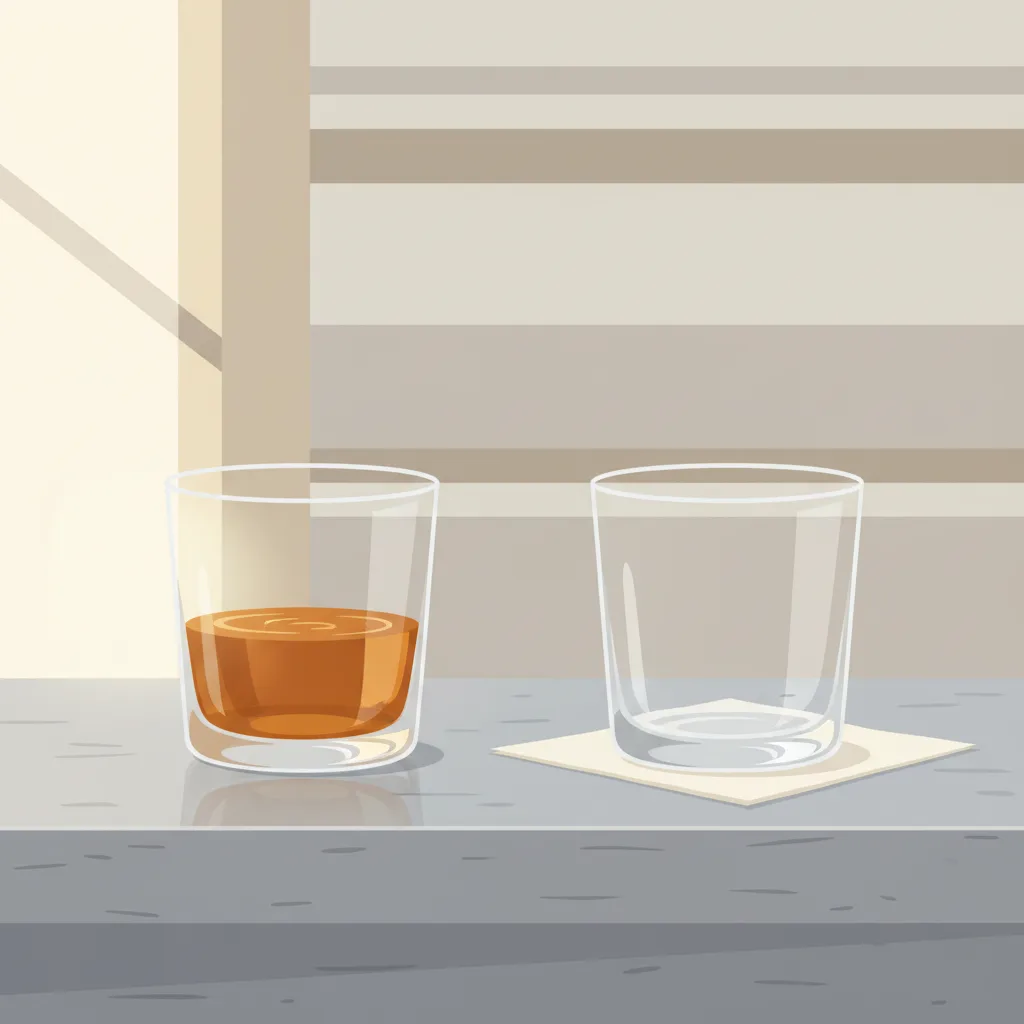
Two identical glasses on a bar surface, one filled with amber liquid, the other empty and clean.

Жаль за дію

Вживати алкоголь

70%

70 % тих, хто п'є, шкодували, що напилися протягом минулого року

глобально, 31 країна, самообрана онлайн-панель

останні 12 місяців

Жаль за бездіяльність

Утриматися від алкоголю

12%

~12 % (проксі соціального тертя, не прямий жаль про утримання)

фінські дорослі 15–79 років, на основі населення

ретроспективно, без фіксованого часу

% шкодує про цей вибір

action dominates — Дія переважає — більшість шкодує, що діяла.

Пов’язані рішення

Семантично близькі рішення — та сама сфера, інші компроміси.

lifestyle

Безалкогольна заміна

% шкодує про цей вибір

Переважає бездіяльність

Жаль за бездіяльність на 2.1× вищий

lifestyle

Порнографія vs утриманість

% шкодує про цей вибір

Переважає дія

Жаль за дію на 3.0× вищий

lifestyle

Вегетаріанська дієта

% шкодує про цей вибір

Переважає дія

Жаль за дію на 3.8× вищий

Здоров’я

Спорт

% шкодує про цей вибір

Переважає бездіяльність

Жаль за бездіяльність на 13.4× вищий

Здоров’я

Кинути палити

% шкодує про цей вибір

Переважає бездіяльність

Жаль за бездіяльність на 90.0× вищий

lifestyle

Мастурбація vs NoFap

% шкодує про цей вибір

Переважає бездіяльність

Жаль за бездіяльність на 3.0× вищий

lifestyle

Райдшерінг проти водіння після випивки

% шкодує про цей вибір

Переважає бездіяльність

Жаль за бездіяльність на 5.7× вищий

Здоров’я

Почав курити в підлітковому віці

% шкодує про цей вибір

Переважає дія

Жаль за дію на 36.0× вищий

Seventy percent of drinkers regretted getting drunk at least once in the prior year, according to the Global Drug Survey’s 2020 wave (82,821 respondents, 31 countries). The peer-reviewed analysis by Davies et al. in Substance Use & Misuse found that the median drinker got drunk six times a year and regretted two of those occasions. Among occasions when they got drunk, women regretted a higher median share (30%) than men (16.67%), against an overall median of 20%. Separately, a 2025 NCSolutions survey found that nearly half of Americans (49%) plan to drink less in 2025, up sharply from 34% in 2023 — a trend suggesting broad and growing dissatisfaction with current consumption levels. On the other side of the ledger, population-level data from Finland’s Drinking Habits Survey found that non-drinkers reported mostly positive social feedback, with only a small minority experiencing negative social consequences from abstaining.

The asymmetry here is striking but not symmetric in its evidence base. The action-regret figure is robust: an 82,821-person sample, replicated across dozens of countries, measuring a concrete experience (“did you regret getting drunk?”). The inaction figure is far weaker — and measures a different construct entirely. The Finnish study tracked negative social consequences (pressure, exclusion) among non-drinkers, not regret about the decision to abstain. No large study has directly asked non-drinkers whether they regret abstaining, because the question barely arises in public-health research. Alcohol Change UK’s Dry January data shows that 70% of participants still drink less six months later and only 28% revert to prior habits — suggesting that abstinence generates little lasting dissatisfaction, though this too measures behavior rather than regret.

The GDS found an inverse relationship between frequency and per-occasion regret — heavier drinkers regretted a smaller share of episodes — which hints at habituation rather than genuine satisfaction. The main caveat is sample bias: GDS respondents are self-selected, younger, and heavier- drinking than the general population. The true action-regret rate among all adults who drink, including the moderate majority, is certainly lower than 70%. The directional finding — that drinking generates far more regret than not drinking — is robust; the magnitude is an upper bound.

Джерела: дія

Реєстр тверджень

Кожне число нижче — це те, що повідомило джерело, з дослівною цитатою, на яку ми спиралися, та тим, як ми дійшли до нашої цифри. Натисніть на посилання, щоб перевірити самостійно.

  1. [1] Substance Use & Misuse / Davies, Puljević, Winstock & Ferris — Regrets, I've Had a Few: Exploring Factors Associated with Getting Drunk and Regret in an International Study of People Who Drink Alcohol
    Regrets, I've Had a Few: Exploring Factors Associated with Getting Drunk and Regret in an International Study of People Who Drink Alcohol

    See all 2 Likelier entries citing this source →

    Статистика
    70% of respondents who drank alcohol in the past 12 months reported regretting getting drunk at least once; median regretted occasions was 2 out of a median 6 times drunk
    Витяг
    “"In the last 12 months, the median times drunk was 6 and the median number of regretted occasions was 2. There was an inverse relationship between times drunk and regret, with respondents who got drunk more often regretting it a smaller percentage of the time than those who got drunk less often." ”
    Дані джерела:
    2024-01-16
    Дата звернення
    2026-04-26
    Розрахунок
    Data from the Global Drug Survey 2020 (n = 82,821, 31 countries). The 70% figure represents respondents who regretted getting drunk at least once in the prior year (28.3% reported zero regret). The per-occasion median regret percentage was 20% overall (women 30%, men 16.67%). We use the any-regret prevalence (70%) as the action-regret rate because it captures the share of drinkers who experienced regret at all, not the per-episode rate. The GDS sample is self-selected and skews younger and heavier- drinking than the general population, so 70% is an upper bound.
  2. [2] NCSolutions — Alcohol Statistics 2025 – Sober Curious Nation & Beverage Trends
    Alcohol Statistics 2025 – Sober Curious Nation & Beverage Trends
    Статистика
    49% of Americans plan to drink less in 2025, up from 34% in 2023 — a rising sober-curious trend
    Витяг
    “"Nearly half (49%) of Americans say they plan to drink less alcohol in 2025, up from 34% in 2023." ”
    Дані джерела:
    2025-01-01
    Дата звернення
    2026-04-26
    Розрахунок
    NCSolutions 2025 consumer survey. The plan-to-drink-less figure has risen year over year (34% in 2023, 41% in 2024, 49% in 2025). While not a direct regret measure, this rising share of people intending to cut back is directional evidence that drinking generates more dissatisfaction than abstinence. This replaces the prior second source (GDS 2020 report), which was the same underlying dataset as the Davies et al. peer-reviewed paper.

Джерела: бездіяльність

Реєстр тверджень

Кожне число нижче — це те, що повідомило джерело, з дослівною цитатою, на яку ми спиралися, та тим, як ми дійшли до нашої цифри. Натисніть на посилання, щоб перевірити самостійно.

1/2 джерел незалежно перевірено дослівно за вказаним джерелом

  1. [1] Substance Use & Misuse / Mustonen & Mäkelä — Non-Drinkers' Experiences of Drinking Occasions: A Population-Based Study of Social Consequences of Abstaining from Alcohol
    Non-Drinkers' Experiences of Drinking Occasions: A Population-Based Study of Social Consequences of Abstaining from Alcohol
    Статистика
    Non-drinkers reported mostly positive feedback from their social environments; negative consequences were reported most commonly among youth and former drinkers, least in the oldest age group
    Витяг
    “"The study indicates that nondrinkers' social environments may be more supportive than what has been suggested previously, yet coping mechanisms are required especially from youth and former drinkers. Nondrinkers reported relatively low levels of negative consequences, with reported consequences being least frequent in the oldest age group." ”
    Дані джерела:
    2022-01-15
    Дата звернення
    2026-04-26
    Розрахунок
    Finnish Drinking Habits Survey 2016 (N = 2,285 total; 330 nondrinkers; response rate 60%). The study does NOT report a single regret percentage. The 12% is estimated from the proportion of nondrinkers who reported any negative social consequence from abstaining. IMPORTANT: social consequences (pressure, exclusion) are not the same as regret about abstaining. This is a social friction proxy — no published survey directly measures abstinence regret in a general population sample. Dry January data (70% of participants still drinking less at 6 months, only 28% reverting) corroborates that abstinence generates minimal lasting dissatisfaction.
  2. [2] Alcohol Change UK — Dry January 2024: Kick-starting a year of change Перевірено
    Dry January 2024: Kick-starting a year of change
    Статистика
    70% of Dry January participants were still drinking less six months later; only 28% returned to previous drinking levels
    Витяг
    “"70% of those who take part are still drinking less alcohol six months later. 67% of people who take part in Dry January and access free tools and resources have a completely alcohol-free month." ”
    Дані джерела:
    2024-01-02
    Дата звернення
    2026-04-26
    Перевірка
    Витяг незалежно повторно отримано та дослівно підтверджено за вказаним джерелом під час нашого аудиту обґрунтованості.
    Розрахунок
    Alcohol Change UK campaign data, not a peer-reviewed cohort study. The 28% who returned to prior levels is a ceiling for possible abstinence regret; even among that 28%, returning to old habits does not necessarily imply regretting the break. The sober-curious movement further supports low abstinence regret: 49% of Americans plan to drink less (NCSolutions 2025), and nearly 4 in 10 US consumers follow a sober curious lifestyle (Mintel). These trends indicate that abstaining from alcohol generates satisfaction rather than regret in the general population.

Застереження

The action and inaction figures come from fundamentally different instruments and measure different constructs. The 70% action-regret rate measures any-episode regret among active drinkers (GDS 2020, self-selected online panel skewing younger and heavier-drinking than the general population). The GDS sample overrepresents people who drink enough to get drunk; the true population-level action-regret rate for all drinkers, including moderate ones who never get drunk, is certainly lower. The 12% inaction-side figure is a proxy derived from negative social consequences reported by Finnish non-drinkers — social pressure and exclusion, not regret about the decision to abstain. No published survey directly asks non-drinkers whether they regret abstaining. The two populations (global self-selected drinkers vs Finnish non-drinkers) are not comparable samples. The ~6:1 ratio should be read as directionally strong — regular drinkers overwhelmingly report regret — but the precise magnitude is inflated by both sample asymmetry and construct mismatch (regret vs social friction).

Вихідні дані: /api/decisions.json

Нещодавно переглянуті на цьому пристрої