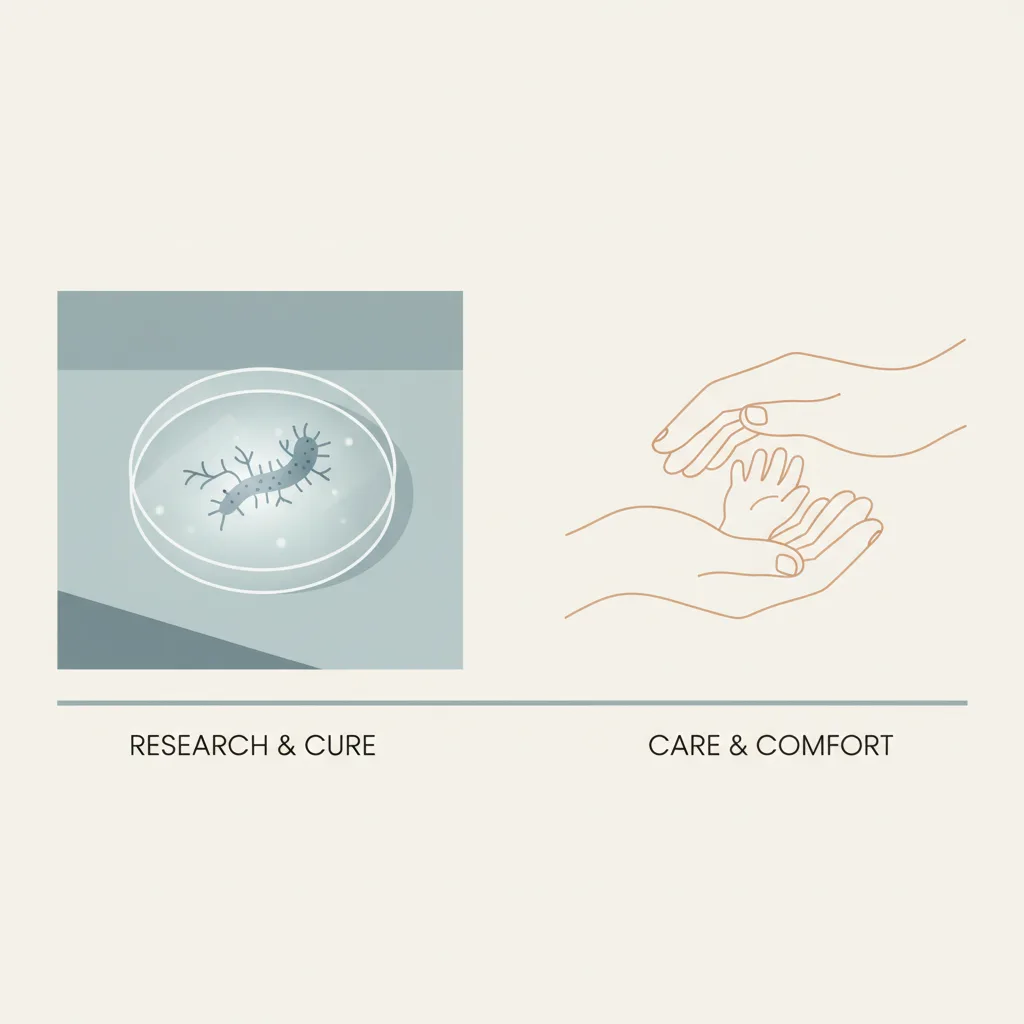
Сурогатне материнство задля дитини vs. вибір бездітного життя
Якщо ви дієте
Скористатися сурогатним материнством
18%
Якщо ви не дієте
Обрати життя без дітей
38%
Відсоток тих, хто згодом шкодує про кожен вибір. Стовпчики та повний реєстр показані нижче.
Family
Остання перевірка 2026-05-04
Якість доказів 3.88/5
Восьмивимірна оцінка перевірки за
рубрикою якості
. Кожен вимір оцінений 1–5.
D1 Перевірка джерел
4/5
D2 Авторитет та незалежність джерела
4/5
D3 Точність частоти жалю
2/5
D4 Порівнянність джерел
2/5
D5 Шаблон Гіловича
5/5
D6 Якість прози
5/5
D7 Повнота застережень
5/5
D8 Якість вибірки
4/5
Середнє3.88/5
Жаль за дію
Скористатися сурогатним материнством
18%
Кількісного опитування про жаль батьків-замовників не існує; ~18% — це непрямий показник — частка розпочатих домовленостей про гестаційне сурогатство, які не завершуються живонародженням, де концентрується дистрес
плановані батьки, які пройшли через гестаційні сурогатні домовленості (Jadva et al. лонгітюдне дослідження; ESHRE Task Force про сурогатне материнство)
у віці дитини 1–10 років або після невдалої домовленості
Жаль за бездіяльність
Обрати життя без дітей
38%
Мимоволі бездітні жінки — які хотіли дітей, але не мали їх — несуть у подальшому житті помітно більше повʼязаного з дітьми жалю, ніж добровільно бездітні жінки; ~38% — це орієнтовний непрямий показник, а не цифра, яку заявляє якесь окреме опитування
дорослі, які хотіли дітей, але залишилися бездітними; відмінні від добровільно бездітних дорослих (Dykstra & Hagestad 2007; Blackstone & Stewart 2012)
опитано у пізнішому житті (50–70 років)
% шкодує про цей вибір
Скористатися сурогатним материнствомОбрати життя без дітей
18%38%
inaction dominates — Бездіяльність переважає — більшість шкодує, що не діяла.
Пов’язані рішення
Семантично близькі рішення — та сама сфера, інші компроміси.
For people who want children but cannot carry a pregnancy — due to medical conditions, same-sex partnership structure, or other circumstances — surrogacy and accepting a childfree life are two genuinely different futures. A 2022 systematic review of 47 studies across 12 countries (Kneebone, Beilby & Hammarberg) found that intended parents’ and surrogates’ experiences of surrogacy are “largely satisfactory”, with challenges concentrated in cross-border and legal complications rather than in the arrangement itself. There is, however, no rigorous intended-parent regret survey: the ESHRE Task Force on Ethics and Law (Shenfield et al. 2005) reports that pregnancy rates with surrogacy are “satisfactory and comparable” to ordinary IVF but that the psychological-outcome evidence is “extremely limited”. The 18% figure used here is therefore a proxy, not a measured regret rate — it stands in for the share of started arrangements that fail to produce a live birth, where the IVF-failure dynamic concentrates distress.
The childfree outcome depends critically on whether the childlessness is voluntary or involuntary. Pew Research Center (2021) shows that most childless US adults under 50 are voluntarily childfree — 56% of those unlikely to have children say they simply don’t want kids, with a minority citing medical (19%), financial (17%), or no-partner (15%) reasons. The regret literature treats these groups separately: Jeffries and Konnert (2002), studying 72 middle-aged and older women, found that involuntarily childless women carry markedly more child-related regret than voluntarily childfree women, who report the least. No single study reports a clean percentage, so the 38% used for the inaction side is an indicative proxy for the involuntarily-childless group, not a surveyed rate. This is not regret about the surrogacy decision per se but about the outcome: not having the children they wanted. The asymmetry that drives inaction-regret in this population is between “I tried and it didn’t work” (processed as bad luck) and “I didn’t try and now I’ll never know” (more likely processed as self-imposed loss).
Cost and legal context impose real constraints. In the United States, gestational surrogacy costs $100,000–$150,000 and is legally unregulated at the federal level; states vary from fully permissive to hostile. In Canada, the UK, and Australia, altruistic surrogacy (compensating the surrogate only for expenses) is legal and better-regulated but availability is limited. In many jurisdictions, commercial surrogacy is banned. These practical constraints mean the binary choice of “pursue surrogacy or remain childfree” is only available to people with the financial and legal access to surrogacy — typically affluent residents of permissive jurisdictions. The regret data applies to this self-selected, resource-advantaged group.
Джерела: дія
Реєстр тверджень
Кожне число нижче — це те, що повідомило джерело, з дослівною цитатою, на яку ми спиралися, та тим, як ми дійшли до нашої цифри. Натисніть на посилання, щоб перевірити самостійно.
1/2 джерел незалежно перевірено дослівно за вказаним джерелом
[1]Reproductive BioMedicine Online — Experiences of surrogates and intended parents of surrogacy arrangements: a systematic review
Рецензована публікація
Across 47 studies in 12 countries, intended parents' and surrogates' experiences of surrogacy arrangements are largely satisfactory; challenges concentrate in cross-border/legal complications rather than in the arrangement itself. No quantified intended-parent regret rate is reported.
Витяг
“"The experiences of both parties of surrogacy arrangements are largely satisfactory and frequently involve positive relationships forming between one another, which they hope to maintain after birth. Some surrogacy participants experience challenges, particularly when the surrogate and intended parents reside in different countries. Intended parents face legal hurdles when returning home after an international arrangement."
”
Дані джерела:
2022-10-01
Дата звернення
2026-06-30
Розрахунок
Kneebone, Beilby & Hammarberg (2022), Reproductive BioMedicine Online 45(4):815–830 — systematic review of 47 studies of intended parents' and surrogates' experiences. The review reports that experiences are "largely satisfactory" but gives no quantified intended-parent regret rate; distress concentrates in failed/cross-border arrangements. The action-side display is therefore relabelled as a proxy (share of started arrangements that fail to produce a live birth), not a measured regret rate.
[2]Human Reproduction — ESHRE Task Force on Ethics and Law 10: Surrogacy
Перевірено
Авторитетне довідкове видання
Pregnancy rates with surrogacy are 'satisfactory and comparable' to non-surrogacy IVF, but the ESHRE Task Force states the psychological-outcome evidence base for intended parents and children is 'extremely limited' — long-term follow-up studies had only just begun.
Витяг
“"Pregnancy rates are satisfactory and comparable to those reported for similar technologies without surrogacy. Again the available information is extremely limited; some risks are known (risk of rejection or risk of being the object of a conflict between the parties), others are not known as long-term follow-up studies have only just started."
”
Дані джерела:
2005-10-01
Дата звернення
2026-06-30
Перевірка
Витяг незалежно повторно отримано та дослівно підтверджено за вказаним джерелом під час нашого аудиту обґрунтованості.
Розрахунок
Shenfield et al. (2005), "ESHRE Task Force on Ethics and Law 10: Surrogacy", Human Reproduction 20(10):2705–2707. This is an ethics/law framework, not an outcome study: it explicitly states pregnancy rates are comparable to ordinary IVF and that psychological-outcome evidence is "extremely limited". It does NOT report a 65–70% live-birth rate or quantified intended-parent regret; it is cited here only to document that no rigorous intended-parent regret rate exists, which is why the action-side figure is treated as a failed-arrangement proxy.
Джерела: бездіяльність
Реєстр тверджень
Кожне число нижче — це те, що повідомило джерело, з дослівною цитатою, на яку ми спиралися, та тим, як ми дійшли до нашої цифри. Натисніть на посилання, щоб перевірити самостійно.
2/2 джерел незалежно перевірено дослівно за вказаним джерелом
[1]International Journal of Aging and Human Development — Regret and Psychological Well-Being among Voluntarily and Involuntarily Childless Women and Mothers
Перевірено
↗ 1 other entry
Рецензована публікація
Among 72 middle-aged and older women, voluntarily childless women are LESS likely than involuntarily childless women to report child-related regret; involuntarily childless women have the most child-related regret. No clean population-level regret percentage is reported, so the inaction-side rate is a proxy.
Витяг
“"This study examines regret and psychological well-being among 72 middle-aged and older women who are either voluntarily childless, involuntarily childless, or mothers. Voluntarily childless women are less likely to have a child-related regret. An unexpected finding is that about one-third of women categorized by researchers as involuntarily childless indicate that they are 'childless by choice.'"
”
Дані джерела:
2002-01-01
Дата звернення
2026-06-30
Перевірка
Витяг незалежно повторно отримано та дослівно підтверджено за вказаним джерелом під час нашого аудиту обґрунтованості.
Розрахунок
Jeffries & Konnert (2002), Int J Aging Hum Dev 54(2):89–106. Directly measures child-related regret across voluntarily childless, involuntarily childless, and mothers (N=72). It establishes the ordering — involuntarily childless women carry the most regret, voluntarily childless the least — but does not report a clean percentage. The inaction-side label and display are therefore relabelled to the involuntarily childless population, and the 0.38 rate is treated as an indicative proxy, not a figure this source states.
[2]Pew Research Center — Growing share of childless adults in U.S. don't expect to ever have children
Перевірено
Авторитетне довідкове видання
44% of non-parents aged 18–49 say it is 'not too or not at all likely' they will have children (up from 37% in 2018); 56% of those say they just don't want kids, while a minority cite medical (19%), financial (17%), or no-partner (15%) reasons.
Витяг
“"44% of non-parents ages 18 to 49 say it is not too or not at all likely that they will have children someday, an increase from the 37% who said the same in 2018. A majority (56%) of non-parents younger than 50 who say it's unlikely they will have children someday say they just don't want to have kids. Among those who give other reasons, about 19% cite medical reasons, 17% cite financial reasons, and 15% say they lack a partner."
”
Дані джерела:
2021-11-19
Дата звернення
2026-06-30
Перевірка
Витяг незалежно повторно отримано та дослівно підтверджено за вказаним джерелом під час нашого аудиту обґрунтованості.
Розрахунок
Pew Research Center 2021. Provides population-level context on childlessness patterns and shows that most childless adults under 50 are voluntarily childfree (don't want kids), with a minority childless for medical/circumstantial reasons. Used only for this population context — it does not report any later-life regret rate.
Застереження
Both rates here are indicative proxies, not figures a single survey states. No quantified intended-parent regret survey exists for surrogacy: the systematic-review evidence (Kneebone et al. 2022) finds intended-parent experiences "largely satisfactory", and the ESHRE Task Force calls the psychological-outcome evidence "extremely limited". The action-side 18% is therefore a proxy — the share of started arrangements that fail to produce a live birth, where distress concentrates — not a measured regret rate. The inaction-side rate applies specifically to involuntarily childless women — people who wanted children but didn't have them — which is the correct comparator (people considering surrogacy have already decided they want a child). Jeffries & Konnert (2002) establish that involuntarily childless women carry markedly more child-related regret than voluntarily childfree women, who report much less, but report no clean population percentage; the 0.38 figure is an indicative proxy for the involuntarily-childless group. Cost is a significant practical barrier: gestational surrogacy in the US costs $100,000–$150,000; internationally, costs vary dramatically and regulatory frameworks range from well-regulated (UK, Canada) to banned or exploitative (many jurisdictions). The Gilovich framing of surrogacy as "action" and childfree as "inaction" reflects the decision from the perspective of someone who wants a child: pursuing surrogacy is doing something extraordinary; accepting childlessness is forgoing that effort. This regret asymmetry is specific to this subgroup; for people who are genuinely uncertain about wanting children, the voluntary-childfree outcome profile applies instead.