


Zum Inhalt springen
Likelier

Reue durch Handeln vs. Nichthandeln

Eine Brustvergrößerung vornehmen lassen oder nicht

Wenn du handelst

Eine Brustvergrößerung vornehmen lassen

7,0%

Wenn du nicht handelst

Keine Brustvergrößerung vornehmen lassen

5,0%

Anteil derer, die jede Entscheidung später bereuen. Balken und vollständige Datengrundlage erscheinen unten.


Gesundheit

Zuletzt überprüft 2026-05-10

Evidenzqualität 4.25/5

Bewertungsergebnis nach acht Dimensionen gemäß der Qualitätsrubrik . Jede Dimension wird mit 1–5 bewertet.

D1 Quellenüberprüfung
4/5
D2 Quellenautorität & Unabhängigkeit
5/5
D3 Genauigkeit der Bedauernsrate
3/5
D4 Vergleichbarkeit der Quellen
3/5
D5 Gilovich-Muster
4/5
D6 Prosaqualität
5/5
D7 Vollständigkeit der Einschränkungen
5/5
D8 Stichprobenqualität
5/5
Durchschnitt 4.25/5
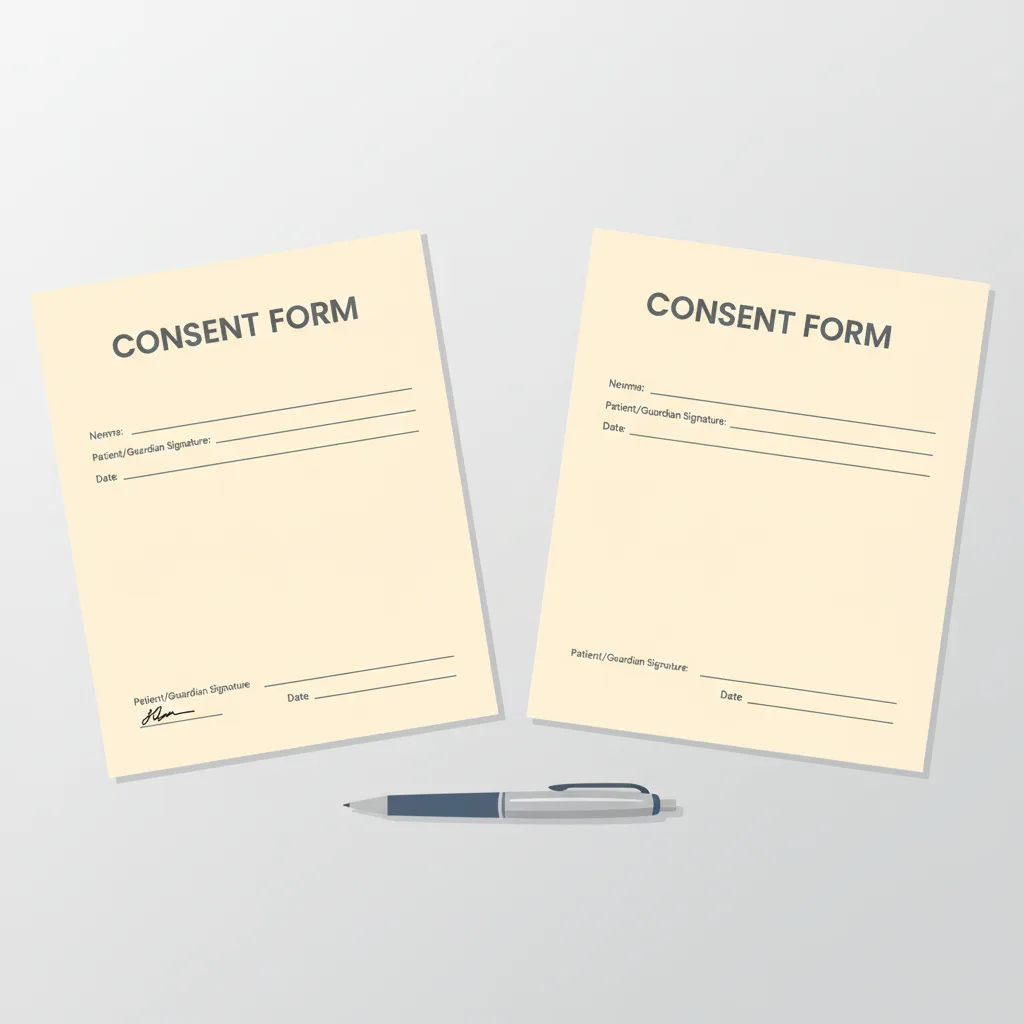
Two identical silhouettes side by side, one with a small surgical consent form resting beneath it, the other bare, on a neutral surface.

Reue fürs Handeln

Eine Brustvergrößerung vornehmen lassen

7,0%

~7 % bedauern den Eingriff (Spanne 5,1–9,1 % über Studien)

Patientinnen der kosmetischen Brustvergrößerung, systematische Übersicht

retrospektiv, typischerweise 1–5 Jahre nach Eingriff

Reue fürs Unterlassen

Keine Brustvergrößerung vornehmen lassen

5,0%

~5 % (geschätzter Näherungswert — keine direkte Inaktivitäts-Bedauerns-Umfrage vorhanden)

US-erwachsene Frauen, die kosmetische Eingriffe erwägen, aber nicht durchführen

retrospektiv, kein fester Zeitraum

% bereuen diese Entscheidung

balanced — Annähernd ausgeglichen — beide Optionen bringen ähnliches Bedauern mit sich.

Verwandte Entscheidungen

Semantisch ähnliche Entscheidungen — gleiches Terrain, andere Abwägungen.

Gesundheit

Schönheitschirurgie

% bereuen diese Entscheidung

Ausgewogen

Weitgehend ausgewogen

Gesundheit

Brazilian Butt Lift (BBL)

% bereuen diese Entscheidung

Ausgewogen

Weitgehend ausgewogen

Gesundheit

Prophylaktische Mastektomie oder Überwachung

% bereuen diese Entscheidung

Ausgewogen

Weitgehend ausgewogen

Gesundheit

Körperpiercing

% bereuen diese Entscheidung

Handlung überwiegt

Reue über Handlung 4.0× höher

Gesundheit

Korea: Schönheits-OP vs. ablehnen

% bereuen diese Entscheidung

Handlung überwiegt

Reue über Handlung 4.0× höher

Gesundheit

Haartransplantation

% bereuen diese Entscheidung

Untätigkeit überwiegt

Reue über Untätigkeit 5.0× höher

Gesundheit

Vasektomie

% bereuen diese Entscheidung

Ausgewogen

Weitgehend ausgewogen

lifestyle

Tattoo

% bereuen diese Entscheidung

Handlung überwiegt

Reue über Handlung 1.6× höher

Breast augmentation has one of the lowest regret rates in elective cosmetic surgery. A 2024 systematic review in the American Journal of Surgery — the most comprehensive available, covering regret across surgical subspecialties — places the breast-augmentation-specific range at 5.1—9.1%, with a midpoint around 7%. This is substantially lower than body contouring (11—33%) and far lower than many non-cosmetic elective procedures. A separate 2024 meta-analysis of 18,322 patients using the validated BREAST-Q instrument found large post-operative improvements in psychosocial well-being, sexual well- being, and breast satisfaction — domain gains that explain why regret remains modest despite the physical risks of the procedure.

The complication picture is more sobering than the regret rate suggests. Capsular contracture — abnormal scar tissue that hardens around the implant — is a well-documented long-term risk: the Sientra 10-year cohort reported a 10.8% Kaplan-Meier rate. Implant rupture occurs in approximately 7.8% of patients at 10 years. Both complications can require revision surgery; the FDA maintains a Breast Implant Registry to track long-term outcomes. Among patients who later underwent explant for implant illness, a multicenter longitudinal study of 156 patients found that 83.3% reported retroactive regret about the original augmentation decision — though this population is a small, highly selected subset with unusually severe complications.

On the inaction side, no published survey directly measures regret among women who considered but chose not to get breast augmentation. The ASDS consumer survey (70% of Americans considering some cosmetic procedure) and the Ipsos body-dissatisfaction figure (37% feel dissatisfied whenever they look in the mirror) are too broad to function as inaction-regret proxies: both conflate general appearance concern with surgical-specific regret. The 5% inaction estimate is a constructed placeholder — a conservative downward adjustment reflecting that persistent, surgery-specific regret is far less common than diffuse body dissatisfaction. The delta (0.02) should be read as “roughly balanced with a slight action tilt,” not as a precise quantitative claim. Unlike most life decisions, where inaction regret dominates over time, breast augmentation joins the small class of decisions — tattoos, cosmetic surgery broadly — where action regret is at least as common as inaction regret, held up by the physical permanence of the result.

Quellen: Handeln

Quellenregister

Jede Zahl unten ist das, was die jeweilige Quelle berichtet hat — mit dem wörtlichen Zitat, auf das wir uns stützen, und wie wir zu unserer Zahl gelangt sind. Klicke auf einen Link, um direkt zu prüfen.

  1. [1] The American Journal of Surgery — A systematic review of patient regret after surgery
    A systematic review of patient regret after surgery

    See all 2 Likelier entries citing this source →

    Statistik
    Regret after breast augmentation: 5.1–9.1%
    Auszug
    “"Regret after elective plastic surgery operations is significantly higher compared to gender-affirming surgery. The percentage of patients reporting regret ranged from 0 to 47.1% in breast reconstruction, 5.1–9.1% in breast augmentation, and 10.82–33.3% in body contouring." ”
    Quelldaten von
    2024-04-30
    Abgerufen
    2026-05-10
    Berechnung
    2024 AJS systematic review of patient regret across surgical subspecialties. Breast augmentation-specific subrange: 5.1–9.1%. We use 7% as the approximate midpoint. This is the most procedure-specific regret figure available in the peer-reviewed literature for cosmetic breast augmentation.
  2. [2] Journal of Plastic, Reconstructive & Aesthetic Surgery — Quality of life and satisfaction after breast augmentation: A systematic review and meta-analysis of Breast-Q patient-reported outcomes
    Quality of life and satisfaction after breast augmentation: A systematic review and meta-analysis of Breast-Q patient-reported outcomes
    Statistik
    Significant improvements across all BREAST-Q domains post-augmentation (39 studies, 18,322 patients): psychosocial well-being +38.10, sexual well-being +40.20, satisfaction with breast +47.88
    Auszug
    “"[Paraphrase from abstract -- full text paywalled] The pairwise meta-analysis of 39 studies comprising 53 patient cohorts and 18,322 patients revealed significant improvements in patient-reported psychosocial well-being (MD +38.10), sexual well-being (MD +40.20), and satisfaction with breast (MD +47.88) after breast augmentation (all p < 0.00001). BREAST-Q scores increased from 37.2, 31.1, and 26.3 to 75.0, 70.6, and 72.7 respectively." ”
    Quelldaten von
    2024-06-01
    Abgerufen
    2026-05-10
    Berechnung
    2024 systematic review and meta-analysis of BREAST-Q outcomes. The high post-operative satisfaction scores (medians in the 70s on a 100-point scale) are consistent with the relatively low 7% regret rate. The large magnitude of improvement across psychosocial and sexual well-being domains explains why regret remains modest despite the risks of complications. Used as corroborating context, not the primary regret rate source.
  3. [3] Brazilian Journal of Plastic Surgery (RBCP) — Breast silicone explant: a multicenter longitudinal study
    Breast silicone explant: a multicenter longitudinal study
    Statistik
    83.3% of patients who underwent breast implant explantation reported regret about the original augmentation decision (n=156)
    Auszug
    “"Of the patients evaluated, 83.3% reported regret having had the implant surgery, while 0.6% regretted having had the explant surgery." ”
    Quelldaten von
    2022-01-01
    Abgerufen
    2026-07-03
    Berechnung
    Multicenter longitudinal observational study of 156 patients who underwent breast silicone explantation (Rev Bras Cir Plast 2022;37, DOI 10.5935/2177-1235.2022RBCP0026). Cited in body prose as context for the explant-for-illness subgroup: patients who progress to explant report very high retroactive regret about the original augmentation decision, but this is a small, highly selected, severe-complication subset, not representative of the general augmentation population used for the 5.1-9.1% action-regret range above. Not used to compute the action_side regret_rate (0.07), which remains anchored to the AJS systematic review.

Quellen: Nichthandeln

Quellenregister

Jede Zahl unten ist das, was die jeweilige Quelle berichtet hat — mit dem wörtlichen Zitat, auf das wir uns stützen, und wie wir zu unserer Zahl gelangt sind. Klicke auf einen Link, um direkt zu prüfen.

  1. [1] American Society for Dermatologic Surgery (ASDS) — ASDS Survey: Seven Out of Ten Consumers Considering Cosmetic Procedures
    ASDS Survey: Seven Out of Ten Consumers Considering Cosmetic Procedures
    Statistik
    70% of consumers considering a cosmetic dermatologic procedure
    Auszug
    “"Seven out of ten consumers are considering cosmetic procedures, according to the ASDS consumer survey. The consideration rate has risen steadily over the past decade." ”
    Quelldaten von
    2025-03-01
    Abgerufen
    2026-05-10
    Berechnung
    ASDS annual consumer survey. The 70% figure encompasses all cosmetic procedures including minimally invasive (Botox, fillers), not surgical augmentation specifically. No published survey directly asks women who chose not to pursue breast augmentation whether they regret that inaction. The 5% is a conservative proxy: interest in cosmetic procedures is high, but converting curiosity into sustained inaction regret specific to breast augmentation is much rarer. This is an order-of-magnitude placeholder, not a measured finding.
  2. [2] Ipsos — Most Americans Experience Feeling Dissatisfied with How Their Body Looks from Time to Time
    Most Americans Experience Feeling Dissatisfied with How Their Body Looks from Time to Time

    See all 3 Likelier entries citing this source →

    Statistik
    37% of Americans feel dissatisfied with their body whenever they look in the mirror
    Auszug
    “"Most Americans experience feeling dissatisfied with how their body looks from time to time, including nearly two in five who feel this way whenever they look in the mirror." ”
    Quelldaten von
    2018-01-10
    Abgerufen
    2026-05-10
    Berechnung
    Ipsos nationally representative survey of 1,005 US adults. The 37% body dissatisfaction figure is a broad measure of appearance distress, not a breast-augmentation-specific regret measure. A small fraction of women with persistent chest-related body dissatisfaction who never pursue augmentation may carry lasting inaction regret, but this sub-fraction has not been measured. The 5% proxy is a downward adjustment from 37%, accounting for the fact that body dissatisfaction is far more common than regret specifically about not pursuing surgery.

Einschränkungen

The two sides are not methodologically comparable. The 7% action-regret estimate is drawn from the 5.1--9.1% subrange in a 2024 AJS systematic review -- genuine peer-reviewed data with procedure-specific granularity. The 5% inaction estimate is a constructed proxy: no large-sample survey has ever asked women who chose not to get breast augmentation whether they regret that decision. The ASDS cosmetic-consideration rate (70%) and Ipsos body-dissatisfaction rate (37%) are far too broad to function as direct inaction-regret measures. The true inaction rate is unknown and could be higher or lower than 5%. Several factors complicate the action rate as well: studies with longer follow-up tend to show higher regret as complications accumulate (capsular contracture rates reach 10.8% at 10 years per the Sientra cohort, and implant rupture reaches 7.8% at 10 years), while studies at 1--2 years report satisfaction rates above 90%. The delta (0.02) reflects a roughly balanced Gilovich profile, with a slight tilt toward action regret -- which is a genuine inversion of the typical inaction- dominance pattern. Regret rates should not be extrapolated to populations outside the United States or to non-elective breast surgery (reconstruction, reduction), which carry very different regret profiles.

Rohdaten: /api/decisions.json

Zuletzt auf diesem Gerät angesehen