Pedir un préstamo de día de pago vs. pasar sin el dinero
Si actúas
Pedir el préstamo de día de pago
37%
Si no actúas
Arreglárselas sin el préstamo
81%
Porcentaje de quienes luego se arrepienten de cada elección. Las barras y el registro completo aparecen abajo.
Financiero
Última revisión 2026-05-14
Calidad de la evidencia 4.75/5
Puntuación de revisión en ocho dimensiones según la
rúbrica de calidad
. Cada dimensión puntuada de 1 a 5.
D1 Verificación de fuentes
5/5
D2 Autoridad e independencia de las fuentes
5/5
D3 Precisión de la tasa de arrepentimiento
4/5
D4 Comparabilidad de las fuentes
4/5
D5 Patrón de Gilovich
5/5
D6 Calidad de la prosa
5/5
D7 Completitud de las advertencias
5/5
D8 Calidad de la muestra
5/5
Media4.75/5
Datos sustitutos — no existe ninguna encuesta directa sobre el arrepentimiento para esta decisión. Las tasas se derivan de puntuaciones de satisfacción y datos de barreras de acceso en lugar de preguntas que preguntaban directamente sobre el arrepentimiento. Ver advertencias más abajo.
Arrepentimiento por acción
Pedir el préstamo de día de pago
37%
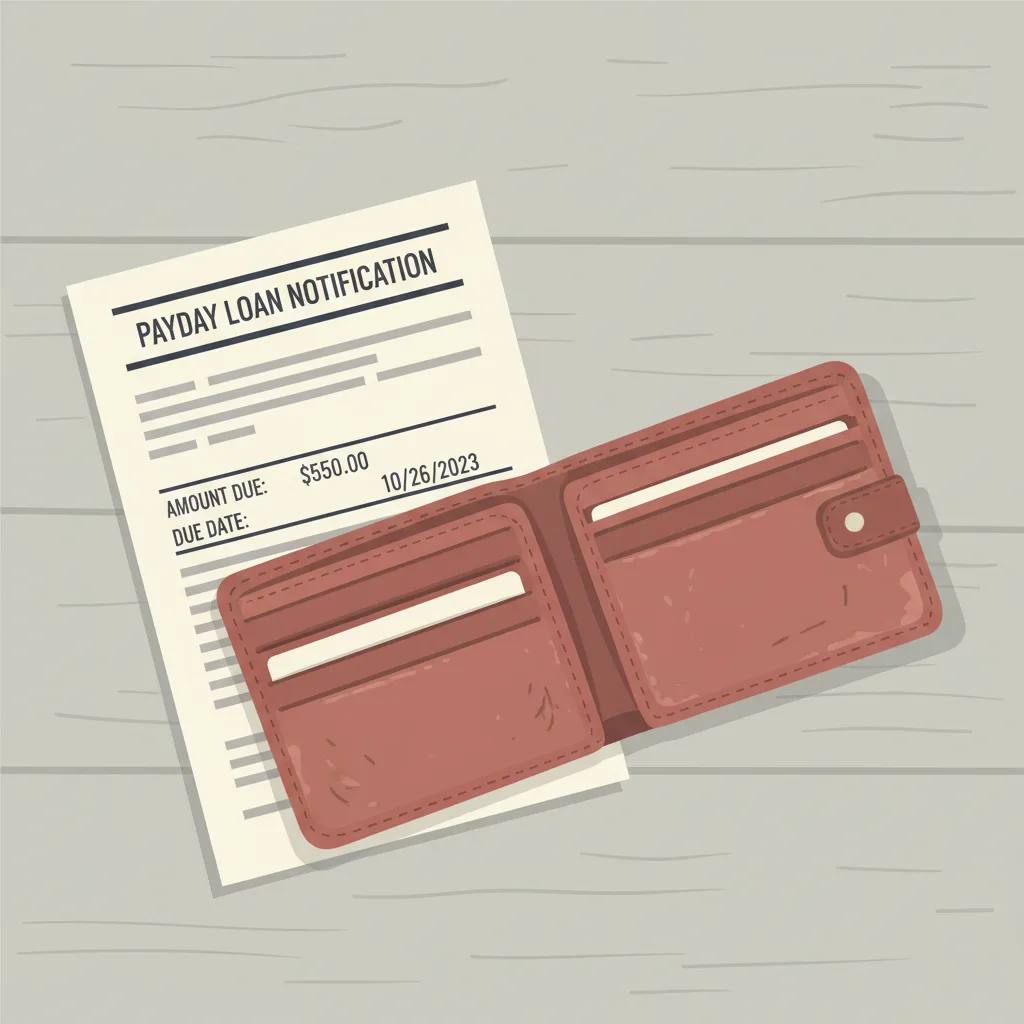
37% de los prestatarios payday dice que estaba en una situación financiera tan difícil que aceptaría un préstamo payday en cualquier término ofrecido
Prestatarios estadounidenses de préstamos payday, encuesta representativa a nivel nacional
retrospectivo, evaluado durante el préstamo activo
Arrepentimiento por inacción
Arreglárselas sin el préstamo
81%
81% de los prestatarios payday de tiendas físicas dice que recortaría gastos como comida y ropa si los préstamos payday no estuvieran disponibles
Prestatarios estadounidenses de préstamos payday de tiendas físicas que informan cómo se las arreglarían si el préstamo no estuviera disponible (encuesta representativa a nivel nacional)
retrospectivo, alternativa hipotética al préstamo
% que se arrepienten de esta elección
Pedir el préstamo de día de pagoArreglárselas sin el préstamo
37%81%
inaction dominates — Domina la inacción — la mayoría se arrepiente de no actuar.
Decisiones relacionadas
Decisiones semánticamente similares — mismo terreno, distintos compromisos.
Invertir los ahorros en criptomonedasMantenerse en activos tradicionales
46%16%
Acción dominante
Arrepentimiento por acción 2.9× mayor
A Pew Charitable Trusts survey of more than 33,000 US adults found that 37% of payday loan borrowers say they were in such a difficult financial situation that they would take a loan on any terms offered — desperation, not free choice, drives a large share of the borrowing. Pew separately found that a majority of borrowers say the loans take advantage of them. The same research documented why the harm runs deep: the average borrower spends five months repaying what is marketed as a two-week product, paying $520 in fees to repeatedly service a $375 principal. That fee-to-principal ratio of 139% explains the harm — the product routinely transforms a short-term cash shortfall into a multi-month debt spiral before the borrower can exit.
Independent analysis by the Consumer Financial Protection Bureau, drawing on 12 million storefront payday loans, found that four out of five loans are rolled over or renewed within two weeks. Only 15% of borrowers repay without re-borrowing within 14 days; over 60% of all loans go to borrowers in sequences of seven or more consecutive loans. The gap between the marketed product (a short-term bridge) and the actual product (a recurring fee mechanism) is the structural reason harm rates are as high as they are.
The inaction side carries real costs. Pew asked borrowers what they would do if payday loans were unavailable: 81% said they would cut back on expenses such as food and clothing, and majorities said they would delay paying some bills, borrow from family or friends, or sell possessions. In other words, the underlying cash shortfall does not disappear when the loan is off the table — it gets shifted onto other necessities and bills. That is the hardship going without imposes. But it is the same shortfall that borrowers who take the loan also carry: Pew separately reports that a majority of borrowers say the loans take advantage of them. Going without the money produces hardship for a large share of people in that position, yet without adding the fee-driven debt spiral that the loan brings. The two figures shown here are proxies drawn from different survey questions — the 37% is Pew’s desperation measure (would borrow on any terms), the 81% is Pew’s coping measure (would cut back on necessities without the loan) — so the raw gap between them is not a clean regret comparison. The signal that survives is severity: CFPB’s rollover data show the harm from taking the loan, when it lands, is deep and prolonged, whereas going without shifts the same shortfall onto other bills without the debt trap.
Fuentes: acción
Registro de evidencia
Cada número a continuación es lo que reportó cada fuente, con la cita textual en la que nos basamos y cómo llegamos a nuestra cifra. Haz clic en cualquier enlace para verificarlo directamente.
1/2 fuentes verificadas de forma independiente palabra por palabra frente a la fuente citada
[1]Pew Charitable Trusts — Payday Lending in America: How Borrowers Choose and Repay Payday Loans (Overview)
Estudio primario
37% of borrowers say they have been in such a difficult financial situation that they would take a payday loan on any terms offered; a majority of borrowers say payday loans take advantage of them
Extracto
“"Desperation also influences the choice of 37 percent of borrowers who say they have been in such a difficult financial situation that they would take a payday loan on any terms offered." ... "A majority of borrowers say payday loans take advantage of them, and a majority also say they provide relief."
”
Datos de la fuente de
2013-02-20
Accedido
2026-06-30
Cálculo
Pew Charitable Trusts "Payday Lending in America" series, drawn from the same nationally representative survey of 33,576 US adults. The 37% figure is Pew's exact, directly reported measure of borrowers who say they were so financially desperate they would accept a payday loan on any terms — a desperation/harm-sentiment construct, NOT a self-report that the loan "made their finances worse" (no such Pew statistic exists). It is used as the action-side rate to label the share of borrowers who took the loan out of acute desperation rather than genuine choice; Pew separately finds a majority say the loans take advantage of them. This is a relabeled sentiment proxy, not a direct regret survey.
[2]Consumer Financial Protection Bureau — CFPB Finds Four Out of Five Payday Loans Are Rolled Over or Renewed
Verificado
Informe gubernamental
80% of payday loans are rolled over or renewed within 14 days; over 60% of loans go to borrowers in sequences of 7 or more loans; only 15% of borrowers repay without re-borrowing
Extracto
“"Four out of five payday loans are rolled over or renewed within two weeks. Over 60 percent of loans are made to borrowers in the course of loan sequences lasting seven or more loans. Only 15 percent of borrowers repay all of their payday debts when due without re-borrowing within 14 days."
”
Datos de la fuente de
2014-03-25
Accedido
2026-05-14
Verificación
Extracto recuperado de forma independiente y confirmado palabra por palabra frente a la fuente citada durante nuestra auditoría de fundamentación.
Cálculo
CFPB analysis of 12 million storefront payday loans over a 12-month period, published March 2014. The 80% rollover rate and the finding that only 15% of borrowers escape without re-borrowing corroborate the action-side harm framing: the debt-trap structure makes the loan more harmful and prolonged than most borrowers anticipate at origination, consistent with Pew's finding that desperation, not free choice, drives a large share of borrowing. These figures are from the CFPB press release, which cites the full study: https://files.consumerfinance.gov/f/201403_cfpb_report_payday-lending.pdf
Fuentes: inacción
Registro de evidencia
Cada número a continuación es lo que reportó cada fuente, con la cita textual en la que nos basamos y cómo llegamos a nuestra cifra. Haz clic en cualquier enlace para verificarlo directamente.
[1]Pew Charitable Trusts — Payday Lending in America: Who Borrows, Where They Borrow, and Why
Estudio primario
If payday loans were unavailable, 81% of borrowers say they would cut back on expenses such as food and clothing, and majorities say they would delay paying some bills — the shortfall the loan was meant to cover is not resolved but shifted
Extracto
“"If faced with a cash shortfall and payday loans were unavailable, 81 percent of borrowers say they would cut back on expenses. Many also would delay paying some bills, rely on friends and family, or sell personal possessions." ... "Eighty-one percent of those who have used a storefront payday loan would cut back on expenses such as food and clothing. Majorities also would delay paying bills, borrow from family or friends, or sell or pawn possessions."
”
Datos de la fuente de
2012-07-19
Accedido
2026-05-14
Cálculo
The 0.81 inaction-side rate is Pew's exact, directly reported figure: 81% of those who have used a storefront payday loan say they would cut back on expenses such as food and clothing if payday loans were unavailable. It is used here as a hardship proxy for the inaction side — the share who, without the loan, absorb the cash shortfall by cutting back on necessities (and, for majorities, delaying bills, borrowing from family or friends, or selling possessions). This is a coping-response proxy, NOT a direct regret survey of people who went without a payday loan (no such survey exists); "would cut back on food and clothing" is disclosed as a hardship-sentiment stretch rather than a self-reported regret measure. The number itself is taken verbatim from Pew's stated 81%; it is not adjusted or derived downward, because no source states any intermediate value and inventing one would be ungrounded.
Advertencias
La tasa del 37% del lado acción es la medida exacta de Pew de los prestatarios que dicen que estaban en una situación financiera tan difícil que aceptarían un préstamo payday en cualquier término ofrecido — una construcción de desesperación/percepción de daño, NO un autoinforme de que el préstamo «empeoró su situación financiera» (no existe tal estadística de Pew). Proviene de la encuesta representativa a nivel nacional de 33.576 adultos estadounidenses de la serie «Payday Lending in America»; Pew informa por separado que una mayoría de prestatarios dice que los préstamos se aprovechan de ellos. La tasa del 81% del lado inacción es la cifra exacta y directamente reportada de Pew: 81% de los prestatarios payday de tiendas físicas recortaría gastos como comida y ropa si los préstamos payday no estuvieran disponibles — usada aquí como proxy de dificultad para el lado de renunciar, no una encuesta directa de arrepentimiento de personas que rechazaron préstamos payday (no se encontró tal encuesta). Como los dos proxies se basan en preguntas distintas (desesperación por pedir prestado en cualquier término vs. recortar gastos en necesidades si el préstamo no está), la brecha entre ellos (delta = -0,44) es una comparación indicativa de proxies, no un delta de arrepentimiento preciso: apunta direccionalmente a que renunciar es la vía más costosa — el 81% que recorta en necesidades es una señal de dificultad más amplia que la medida más estrecha del 37% de desesperación por pedir prestado — pero la magnitud no es una diferencia calibrada. La señal más fiable es la severidad, no la tasa: en el lado acción, el análisis CFPB de 12 millones de préstamos encontró que más del 80% se renueva dentro de 14 días y solo el 15% de los prestatarios escapa sin re-pedir prestado — indicando que el daño cuando ocurre es profundo y prolongado. Renunciar al préstamo traslada la dificultad a otras facturas y necesidades pero evita la espiral de deuda impulsada por comisiones. Los datos Pew 2012 preceden a la regla de préstamos payday del Consumer Financial Protection Bureau de 2017 (posteriormente reducida en 2020), lo que significa que las dinámicas estructurales de tarifas pueden diferir de los productos actuales. Las poblaciones de comparación entre los dos lados no son idénticas — los datos del lado acción cubren prestatarios confirmados mientras que los datos del lado inacción se infieren de las alternativas hipotéticas de los mismos prestatarios — introduciendo una limitación de coincidencia.