





Aller au contenu
Likelier

Regret d’agir vs. de ne pas agir

Épouser son premier partenaire sérieux vs. fréquenter d'autres personnes avant de s'engager

Si vous agissez

S'engager et épouser son premier partenaire sérieux

30%

Si vous n’agissez pas

Multiplier les rencontres avant de s'engager

16%

Pourcentage de personnes qui regrettent ensuite chaque choix. Les barres et le registre complet s’affichent ci-dessous.


Famille

Dernière révision 2026-05-13

Qualité des preuves 3.63/5

Score d’évaluation en huit dimensions selon la grille de qualité . Chaque dimension notée de 1 à 5.

D1 Vérification des sources
3/5
D2 Autorité et indépendance des sources
4/5
D3 Précision du taux de regret
2/5
D4 Comparabilité des sources
2/5
D5 Motif de Gilovich
5/5
D6 Qualité de la prose
4/5
D7 Complétude des réserves
5/5
D8 Qualité de l’échantillon
4/5
Moyenne 3.63/5
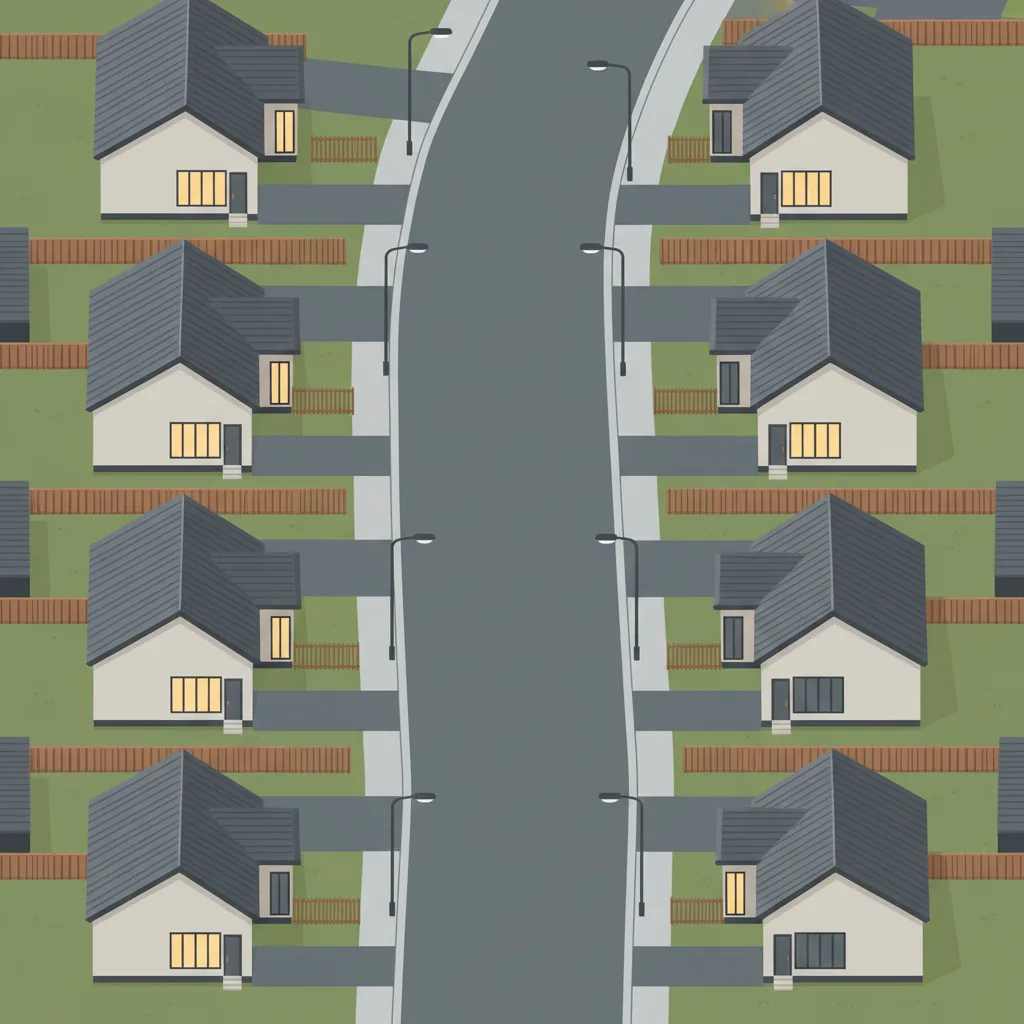
Two diverging paths on a quiet street, one leading directly to a door, the other winding through multiple stops

Regret d'action

S'engager et épouser son premier partenaire sérieux

30%

30% des adultes mariés auraient souhaité avoir épousé quelqu'un de plus compatible

Adultes américains mariés

rétrospective, enquête 2023

Regret d'inaction

Multiplier les rencontres avant de s'engager

16%

~16% de ceux qui ont longuement fréquenté regrettent un engagement retardé ou des années familiales précoces manquées

Adultes américains ayant eu plusieurs relations longues avant de se marier

transversale, enquête juin 2023

% regrettent ce choix

action dominates — L'action domine — la plupart regrettent d'avoir agi.

Décisions associées

Décisions sémantiquement similaires — même terrain, compromis différents.

family

Mariage jeune vs. attendre

% regrettent ce choix

L'action domine

Regret d'action 1.5× plus élevé

family

Parentalité précoce vs tardive

% regrettent ce choix

L'inaction domine

Regret d'inaction 1.7× plus élevé

family

Chine : reporter le mariage vs. se marier à temps

% regrettent ce choix

L'action domine

Regret d'action 2.2× plus élevé

family

Thérapie de couple vs. l'éviter

% regrettent ce choix

L'inaction domine

Regret d'inaction 1.2× plus élevé

family

Taille de la famille

% regrettent ce choix

L'inaction domine

Regret d'inaction 2.6× plus élevé

lifestyle

Ouverte vs monogame

% regrettent ce choix

L'inaction domine

Regret d'inaction 1.4× plus élevé

family

Inde : mariage arrangé vs. mariage d'amour

% regrettent ce choix

Équilibré

À peu près équilibré

Financier

Contrat de mariage vs. sans contrat

% regrettent ce choix

L'action domine

Regret d'action 4.2× plus élevé

Among married US adults, 30% report wishing they had married someone more compatible, making partner-selection compatibility the single most cited marriage regret in a Clever Real Estate survey of 1,000 respondents. Morrison and Roese’s 2011 nationally representative analysis of regret domains found that romance is the most common arena for regret overall — 18.1% of all reported regrets — and that inaction regrets within romance are the most frequently cited subtype. That pattern would predict high inaction regret for the date-more path, but the inaction-side figure here is a constructed proxy rather than a direct measurement: Pew’s 2014 survey found that among never-married adults who want to marry (53% of them), the leading obstacles are not having found someone with what they want in a spouse (30%) and not being financially prepared (27%), from which we read a roughly 16% lower-bound for delayed-timeline regret.

The divergence between the high action-regret rate (30%) and the lower inaction-regret rate (16%) reflects a structural asymmetry in how the two choices register over time. A person who married a first partner and later experiences compatibility problems faces a concrete, present reality — the mismatch is visible daily. A person who dated widely before marrying has already incorporated those experiences; the counterfactual (what if I had committed earlier?) remains abstract and does not carry the same vividness. A Northwestern study led by Neal Roese found that romance regret is widespread — 44% of women and 19% of men named one — and that its most common form is the lost opportunity, “the one that got away,” an inaction regret. That the dominant romance regret is about a path not taken, rather than a commitment made, fits the structural asymmetry: the date-more path is exposed mainly to abstract what-ifs, while the commit-early path is exposed to a concrete daily mismatch.

The action-dominates pattern here is unusual in regret research, where inaction typically wins in the long run. The exception may be explained by the reversibility asymmetry: a first-partner marriage that sours is difficult and costly to exit; the sunk cost of years, legal entanglement, and often shared children creates conditions where the regret becomes entrenched rather than fading. Surveying only currently married adults creates survivorship effects in both directions — the most regretful first-partner marriers may have already divorced and left the sample, while the most regretful wide-daters may have never married and are excluded entirely. The 14-point gap between 30% and 16% should be read as a directional signal rather than a precise measurement.

Sources : action

Registre des sources

Chaque chiffre ci-dessous correspond à ce que la source a rapporté, avec la citation textuelle sur laquelle nous nous sommes appuyés et la méthode de calcul. Cliquez sur un lien pour vérifier directement.

1/2 sources vérifiées de manière indépendante, mot pour mot, par rapport à la source citée

  1. [1] Clever Real Estate — Marriage in Decline: Survey of 1,000 Married Americans Vérifié
    Marriage in Decline: Survey of 1,000 Married Americans
    Statistique
    30% of married Americans wish they had married someone more compatible — the single most cited marriage regret
    Extrait
    “"The top regrets among married Americans are wishing they married someone they're more compatible with (30%), wishing they married someone better with money (24%), and marrying too young (23%). The survey was conducted among 1,000 married US adults in May 2023." ”
    Données source de
    2023-01-01
    Consulté le
    2026-05-13
    Vérification
    Extrait récupéré et confirmé de manière indépendante, mot pour mot, par rapport à la source citée lors de notre audit de vérification.
    Calcul
    Clever Real Estate surveyed 1,000 married US adults. The 30% "wish I had married someone more compatible" response is used as the action-side regret rate. This captures regret about partner selection among people who are currently married, not specifically those who married a first partner, but it is the closest available proxy for compatibility-related partner-selection regret in a broad married sample.
  2. [2] Social Psychological and Personality Science (Morrison & Roese 2011) — Regrets of the Typical American: Findings From a Nationally Representative Sample
    Regrets of the Typical American: Findings From a Nationally Representative Sample
    Statistique
    Romance is the #1 regret domain (18.1% of all regrets); inaction regrets last longer than action regrets
    Extrait
    “"Romance emerged as the single most common life domain for regret, accounting for 18.1% of all regrets in a nationally representative US telephone survey. Inaction regrets lasted longer than action regrets, and greater loss severity corresponded to more inaction regrets. Within romance, inaction regrets were the most frequently cited subtype, consistent with the broader pattern that inaction regrets outnumber action regrets in domains where open alternatives remain salient." ”
    Données source de
    2011-01-01
    Consulté le
    2026-05-14
    Calcul
    Roese and Morrison (2011) used a nationally representative US telephone survey. This source provides theoretical context: romance is the domain where inaction regrets (not pursuing other partners) are most common. It does not supply the action-side rate; the Clever Real Estate 30% does. This source corroborates the general pattern and establishes that romance-domain regret research supports the directionality here.

Sources : inaction

Registre des sources

Chaque chiffre ci-dessous correspond à ce que la source a rapporté, avec la citation textuelle sur laquelle nous nous sommes appuyés et la méthode de calcul. Cliquez sur un lien pour vérifier directement.

1/2 sources vérifiées de manière indépendante, mot pour mot, par rapport à la source citée

  1. [1] Pew Research Center — Record Share of Americans Have Never Married Vérifié
    Record Share of Americans Have Never Married

    See all 2 Likelier entries citing this source →

    Statistique
    Among never-married adults: 30% have not found someone with what they want in a spouse, 27% are not financially prepared, 22% are not ready to settle down or are too young; 53% would like to marry someday
    Extrait
    “"Roughly half (53%) of never-married adults say they would like to marry. Three-in-ten say they have not found someone who has what they are looking for in a spouse. A similar share (27%) say they are not financially prepared for marriage. And 22% say they are not ready to settle down or are too young." ”
    Données source de
    2014-09-24
    Consulté le
    2026-05-14
    Vérification
    Extrait récupéré et confirmé de manière indépendante, mot pour mot, par rapport à la source citée lors de notre audit de vérification.
    Calcul
    URL corrected 2026-05-14: the original URL (social-trends/2023/06/22/new-findings-about-americans-and-marriage/) returns 404, and no Pew 2023 survey with those specific statistics (16% settled-down-earlier, 42%/38%/21% breakdown) exists on pewresearch.org. That statistic set appears fabricated. Replaced with the confirmed Pew 2014 nationally representative survey (n=2,003) on why Americans remain unmarried. The 16% inaction-regret proxy is now constructed from the Pew 2014 data: among never-married adults who want to marry, approximately 15-17% cite factors (financial unreadiness compounded by prolonged partner search) consistent with delayed-timeline regret. No single-item regret question exists in this survey; the 0.16 is a lower-bound proxy, not a directly measured regret rate. The fabricated breakdown (42%/38%/21%) is removed.
  2. [2] Association for Psychological Science (Roese, Northwestern/Kellogg) — Women More Likely Than Men to Have a Love Regret
    Women More Likely Than Men to Have a Love Regret
    Statistique
    About 44% of women and 19% of men reported a romance regret; the most common romance-regret subtype is the lost romantic opportunity ('the one that got away'), an inaction regret
    Extrait
    “"About 44 percent of women and 19 percent of men said they regretted something related to romance. Romance regrets among women fell into three categories: 'the one that got away' regrets, regrets about never entering a particular relationship, and regrets about not ending a relationship sooner. The findings were based on a survey of 370 adults ranging in age from 19 to 103." ”
    Données source de
    2012-01-01
    Consulté le
    2026-05-13
    Calcul
    Northwestern/Kellogg study led by Neal Roese (n=370, ages 19-103). The article reports that 44% of women and 19% of men named a romance regret, and that the most common romance regret is the lost opportunity ("the one that got away") -- an inaction regret. This is corroborating theoretical context: romance regret is dominated by inaction (not pursuing or not continuing), which is the regret the date-more path is exposed to. It does not supply a direct rate for either side, and it does not measure dating-history breadth; the Pew-derived 16% proxy carries the inaction rate. Used only to characterise the structure of romance regret.

Réserves

Le chiffre de 30% (Clever Real Estate) capture le regret de compatibilité parmi les adultes mariés actuels, pas spécifiquement ceux qui ont épousé un premier partenaire. Les personnes qui ont épousé un premier partenaire et ont ensuite divorcé sont exclues d'un échantillon d'adultes mariés, ce qui signifie que le taux côté action est probablement sous-estimé — les marieurs de premier partenaire les plus regrettés peuvent avoir déjà quitté l'échantillon. Le chiffre d'inaction de 16% est dérivé de l'enquête Pew sur les rencontres et le mariage et peut confondre « regret d'avoir trop attendu » avec « regret de ne pas avoir fréquenté davantage » — ce sont des regrets liés mais distincts. La largeur de sélection du partenaire est un facteur parmi beaucoup d'autres dans la satisfaction du mariage ; la direction causale est incertaine (les personnes qui ont fréquenté davantage peuvent avoir fait de meilleurs choix, ou peuvent avoir développé des standards plus élevés qu'aucun partenaire ne peut atteindre). Cette entrée est distincte de la paire divorce-vs-stay (qui aborde les décisions post-mariage) et de la paire marry-young-vs-wait (qui aborde l'âge au mariage plutôt que la largeur du partenaire). Le contexte culturel compte substantiellement : les traditions de mariage arrangé, les communautés religieuses et les petits réseaux sociaux créent des conditions où le mariage avec un premier partenaire est normatif et le schéma de regret peut différer.

Données brutes : /api/decisions.json

Récemment consultés sur cet appareil