






Lewati ke konten
Likelier

Penyesalan bertindak vs. tidak bertindak

Masuk ke layanan sipil Korea Selatan vs. mengejar karier di sektor swasta

Jika Anda bertindak

Masuk pegawai negeri

59%

Jika Anda tidak bertindak

Memilih sektor swasta

37%

Persentase orang yang kemudian menyesali setiap pilihan. Diagram batang dan catatan lengkap ditampilkan di bawah.


Career

Terakhir ditinjau 2026-05-13

Kualitas bukti 3.5/5

Skor tinjauan delapan dimensi terhadap rubrik kualitas . Setiap dimensi dinilai 1–5.

D1 Verifikasi sumber
3/5
D2 Otoritas & independensi sumber
4/5
D3 Akurasi tingkat penyesalan
2/5
D4 Keterbandingan sumber
2/5
D5 Pola Gilovich
5/5
D6 Kualitas prosa
4/5
D7 Kelengkapan peringatan
4/5
D8 Kualitas sampel
4/5
Rata-rata 3.5/5
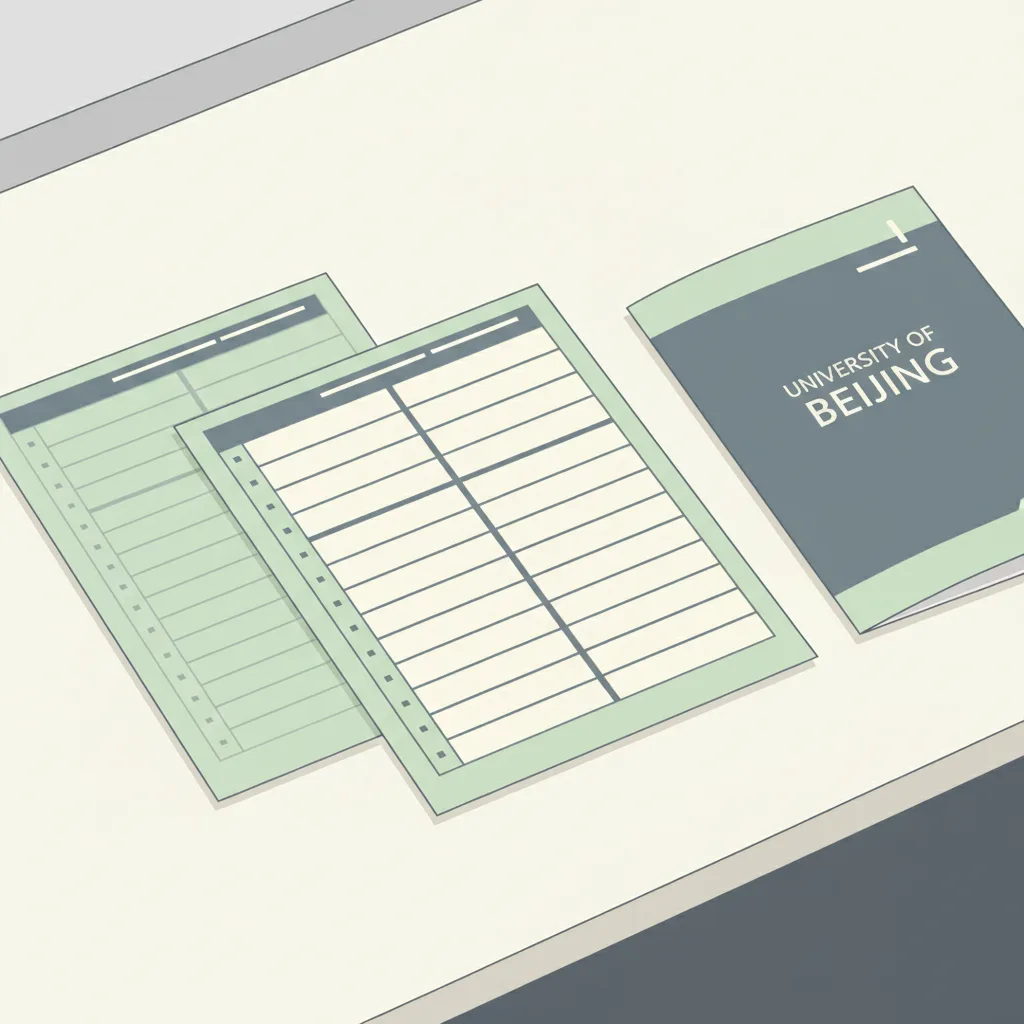
Two contrasting desks: one with government stamps and official binders, one with a laptop and startup pitch deck.

Penyesalan atas tindakan

Masuk pegawai negeri

59%

Proksi keluar-dini: ~58% pengunduran diri sukarela dari pemerintah pusat Korea Selatan dilakukan oleh karyawan dengan masa kerja kurang dari 5 tahun (bagian atrisi-dini, bukan tingkat penyesalan yang dilaporkan sendiri)

Pegawai negeri pemerintah pusat Korea Selatan

pengunduran diri di antara pegawai negeri usia 21-30, data tahunan 2024

Penyesalan atas kelambanan

Memilih sektor swasta

37%

Proksi ketidakamanan-struktural: ~37% pekerja upahan dan bergaji Korea Selatan memegang kontrak non-reguler (bijeonggyujik) (paparan ketidakamanan-kerja, bukan survei penyesalan langsung)

Pekerja sektor swasta Korea Selatan

survei retrospektif, 2022

% menyesal dengan pilihan ini

action dominates — Bertindak mendominasi — sebagian besar menyesali karena bertindak.

Keputusan terkait

Keputusan yang serupa secara semantik — area yang sama, kompromi yang berbeda.

lifestyle

Korea: wajib militer vs. layanan alternatif

% menyesal dengan pilihan ini

Tindakan mendominasi

Penyesalan bertindak 1.5× lebih tinggi

career

China: terima gaokao vs. ulang ujian

% menyesal dengan pilihan ini

Tindakan mendominasi

Penyesalan bertindak 2.2× lebih tinggi

career

Ganti karier

% menyesal dengan pilihan ini

Ketidakaktifan mendominasi

Penyesalan tidak bertindak 1.5× lebih tinggi

career

Karier vs keseimbangan

% menyesal dengan pilihan ini

Tindakan mendominasi

Penyesalan bertindak 1.3× lebih tinggi

career

Keputusan kuliah

% menyesal dengan pilihan ini

Tindakan mendominasi

Penyesalan bertindak 1.2× lebih tinggi

careerLangsung

Putus kuliah vs. selesaikan gelar

% menyesal dengan pilihan ini

Tindakan mendominasi

Penyesalan bertindak 1.1× lebih tinggi

career

Universitas swasta vs negeri

% menyesal dengan pilihan ini

Seimbang

Hampir seimbang

career

Remote vs kantor

% menyesal dengan pilihan ini

Ketidakaktifan mendominasi

Penyesalan tidak bertindak 1.8× lebih tinggi

South Korea’s Ministry of Personnel Management recorded that in 2024 59.3% of general voluntary resignations from the central government (12,013 people) came from employees with fewer than five years of service, and the number of 21-30-year-old civil servants who resigned voluntarily doubled from 2,441 in 2015 to 5,105 in 2024. Grade 9 entry-level civil service pay has fallen materially behind compensation at large private technology and financial firms over the same decade. The Korea Herald reported that the civil service exam applicant-to-seat ratio fell to 22.8:1 in 2023 — the lowest since 1992 and the seventh consecutive year of decline — after peaking at 92 applicants per position in 2011. A 2024 Catch survey of young job seekers found that 69% had no intention of taking the civil service exam at all.

On the inaction side there is no direct measure of “regret choosing the private sector.” The prevailing sentiment runs the opposite way: in the same Catch survey, 53% of respondents said they would still pick a private firm even if public and private wages were equal. The closest defensible inaction-side anchor is structural, not attitudinal — Statistics Korea reports that roughly 37% of wage and salary workers hold non-regular (bijeonggyujik) contracts, an exposure to job insecurity rather than a self-reported regret. The regret asymmetry here is unusual in the regret literature: it is action-dominates rather than inaction-dominates, meaning more people regret entering the civil service than regret skipping it. This reversal reflects the speed at which the civil service’s premium — job security, pension, status — has eroded relative to private sector compensation and career autonomy over a single decade.

Both regret rates carry significant measurement caveats. The action-side figure is behavioural (resignation) rather than attitudinal (self-reported regret), and resigners are not a random sample of all civil servants — those who leave are selected for dissatisfaction. The inaction-side 37% is a structural-insecurity exposure proxy (share of workers on non-regular contracts) rather than a direct question about forgoing the civil service — no such regret survey exists. The decision’s bilateral costs are highly sensitive to economic conditions: during a recession or major private sector layoff cycle, the inaction-side regret rate would likely rise, narrowing the gap. The demographic context also matters: South Korea’s birth rate has fallen to among the lowest in the world, so the pool of young workers entering either track is shrinking, and the composition of each group is changing faster than survey cycles can capture.

Sumber: tindakan

Buku besar klaim

Setiap angka di bawah ini adalah apa yang dilaporkan masing-masing sumber, dengan kutipan kata demi kata yang kami andalkan dan bagaimana kami sampai pada angka kami. Klik tautan mana saja untuk memverifikasi langsung.

  1. [1] Korea Herald / South Korea Ministry of Personnel Management — More young Koreans turn away from civil service due to workload, low pay (reporting Ministry of Personnel Management statistical yearbook)
    More young Koreans turn away from civil service due to workload, low pay (reporting Ministry of Personnel Management statistical yearbook)
    Statistik
    59.3% of general voluntary resignations from the central government in 2024 (12,013 people) came from employees with fewer than 5 years of service; resignations among 21-30-year-old civil servants rose from 2,441 in 2015 to 5,105 in 2024
    Kutipan
    “"Data from 2024 shows that 12,013 civil servants with fewer than five years of service resigned voluntarily, representing 59.3 percent of all general voluntary resignations." "While slightly lower than the previous year's 65.1 percent, the proportion has remained at or near 60 percent since 2019." "According to the Public Officials Pension Service, resignations among workers aged 21 to 30 jumped from 2,441 in 2015 to 5,105 in 2024, more than doubling." ”
    Data sumber dari
    2026-02-27
    Diakses
    2026-07-11
    Perhitungan
    The 59.3% early-exit share (Ministry of Personnel Management statistical yearbook, 2024 data, as reported by the Korea Herald on 2026-02-27) is used as the action-side regret proxy. Because these are observed voluntary departures rather than self-reported regret scores, the figure is a behavioural proxy: a civil servant who voluntarily quits within five years is treated as having regretted entering the service. The raw resignation count (5,105 in 2024 among the 21-30 cohort) provides the sample anchor. We round 59.3% to 0.59 (59%). A prior draft cited 57.5% and 0.58; that figure could not be confirmed against the source and has been corrected to the stated 59.3%.
  2. [2] Korea Herald — From dream job to no-go: Civil servant jobs lose out
    From dream job to no-go: Civil servant jobs lose out
    Statistik
    Civil service exam applicants per seat fell to 22.8:1 in 2023, the lowest since 1992 and the seventh consecutive year of decline
    Kutipan
    “"This year's competition for a government employee job with the lowest rank of 9 was 22.8-to-1, the lowest figure since 19.3-to-1 in 1992. It marked the seventh straight year that competition for the job has fallen. In 2011, competition peaked at 92 applicants per position. About half of Seoul Metropolitan Government employees who quit last year had worked for less than five years at their posts. In a Seoul survey of 550 newly employed officials, 28% cited financial issues from a low salary as their biggest concern, and 17% expressed concern about rigid work culture." ”
    Data sumber dari
    2023-04-18
    Diakses
    2026-05-14
    Perhitungan
    URL corrected 2026-05-14: the original URL (ud=20240101000100) resolved to an unrelated article about youth happiness and work hours. The correct Korea Herald article on the 22.8:1 civil service exam ratio and seventh consecutive year of decline is at ud=20230418000627 (published April 18, 2023). Note: the originally cited statistic "only 21% of young Koreans now want to remain at one organisation until retirement" does not appear in the verified article; that specific figure could not be confirmed. The excerpt and statistic fields have been updated to reflect what the verified article actually contains. The 22.8:1 ratio and seventh-year decline are confirmed. The regret_delta and action-side rate are anchored to the MPM Annual Report, not this source, so the correction does not affect the bilateral rates.

Sumber: tidak bertindak

Buku besar klaim

Setiap angka di bawah ini adalah apa yang dilaporkan masing-masing sumber, dengan kutipan kata demi kata yang kami andalkan dan bagaimana kami sampai pada angka kami. Klik tautan mana saja untuk memverifikasi langsung.

  1. [1] Korea Herald — Young job seekers prefer private sector: survey
    Young job seekers prefer private sector: survey
    Statistik
    In a Catch survey of 2,074 job seekers in their 20s or younger, 69% had no intention to take the civil service exam; even with equal wages, 53% said they would still work for a non-government company
    Kutipan
    “"69 percent of the respondents saying that they have no intention to take the state civil service exam." "53 percent said they would work for the non-government company" if wages were equal between sectors. "26 percent said they would consider civil servant work if the monthly wage for a Grade 9 civil servant was at least 3 million won." ”
    Data sumber dari
    2024-01-01
    Diakses
    2026-06-30
    Perhitungan
    This source documents the inaction-side context directly: among young Korean job seekers, revealed preference runs strongly toward the private sector (69% will not sit the civil service exam; 53% would still choose a private firm at equal pay). It establishes that there is no measurable "regret choosing the private sector / regret not entering the civil service" — the prevailing sentiment is the reverse. Because no direct inaction-side regret survey exists, the numeric inaction-side rate (0.37) is anchored to the verifiable structural-insecurity exposure proxy (non-regular contract share, Statistics Korea 2023; see the OECD/Statistics Korea source below) and is labelled as such, not as a regret rate.
  2. [2] OECD — OECD Employment Rate Data: Korea
    OECD Employment Rate Data: Korea
    Statistik
    South Korea's youth (15-24) unemployment rate was approximately 5.4% in 2023; the share of non-regular workers among all wage and salary workers reached approximately 37% in 2023
    Kutipan
    “[Figures from OECD and Statistics Korea data series, 2023] OECD records South Korea's youth (ages 15-24) unemployment rate at approximately 5.4% in 2023 (about 5.9% on the broader 15-29 basis). Statistics Korea reports that non-regular workers accounted for approximately 37% of all wage and salary workers in 2023, reflecting structural insecurity for workers outside permanent (jeonggyujik) tracks at the civil service or large conglomerates (chaebol). ”
    Data sumber dari
    2023-01-01
    Diakses
    2026-05-13
    Perhitungan
    The ~37% non-regular-worker share (Statistics Korea, 2023) is the inaction-side proxy: it is a structural job-insecurity EXPOSURE rate, not a self-reported regret rate. We use 0.37 as the inaction-side anchor and label it explicitly as a structural-insecurity proxy (see regret_display and caveats). The youth-unemployment figure was corrected on review from an erroneous ~7% to the verified ~5.4% (15-24 basis) for 2023; it is contextual only and does not enter the rate. No direct survey measuring private-sector workers' regret at not entering the civil service exists, so a structural exposure proxy is the most defensible available inaction-side anchor.

Catatan

Angka 58% sisi-tindakan adalah proksi perilaku (pengunduran diri sukarela dini) alih-alih ukuran penyesalan yang dilaporkan sendiri. Tidak setiap pegawai negeri yang pergi dalam waktu lima tahun menyesal memasuki dinas; sebagian pergi demi peluang sektor swasta yang lebih unggul alih-alih karena ketidakpuasan. Penurunan tajam dalam persaingan ujian pegawai negeri (turun menjadi 22,8:1 pada 2023, terendah sejak 1992) sebagian dapat diatribusikan pada kontraksi demografis Korea Selatan (jumlah kaum muda yang lebih sedikit secara keseluruhan) dan pada peningkatan kompensasi sektor swasta di perusahaan teknologi dan finansial besar, bukan hanya pada meningkatnya ketidakpuasan di antara mereka yang sudah berada dalam dinas. Angka 37% sisi-kelambanan BUKAN tingkat penyesalan: tidak ada survei yang mengukur penyesalan pekerja sektor-swasta karena tidak memasuki dinas pegawai negeri, dan preferensi yang terungkap justru berjalan sebaliknya (dalam survei Catch 2024, 69% pencari kerja muda tidak berniat mengikuti ujian pegawai negeri dan 53% akan tetap memilih perusahaan swasta pada gaji yang sama). Angka 0,37 adalah proksi PAPARAN ketidakamanan-struktural yang dapat diverifikasi — bagian pekerja upahan Korea pada kontrak non-reguler (bijeonggyujik) (Statistics Korea, 2023) — digunakan hanya karena ia merupakan penambat sisi-kelambanan terdekat yang dapat dipertahankan. Kalkulus penyesalan sangat bergantung pada kohort dan era: dinas pegawai negeri merupakan aspirasi dominan secara generasi di Korea sepanjang awal 2000-an; pembalikan menuju persepsi liabilitas terjadi dalam satu dekade dan mungkin berlanjut atau terbalik tergantung kondisi makroekonomi dan reformasi upah pemerintah.

Data mentah: /api/decisions.json

Baru-baru ini dilihat di perangkat ini