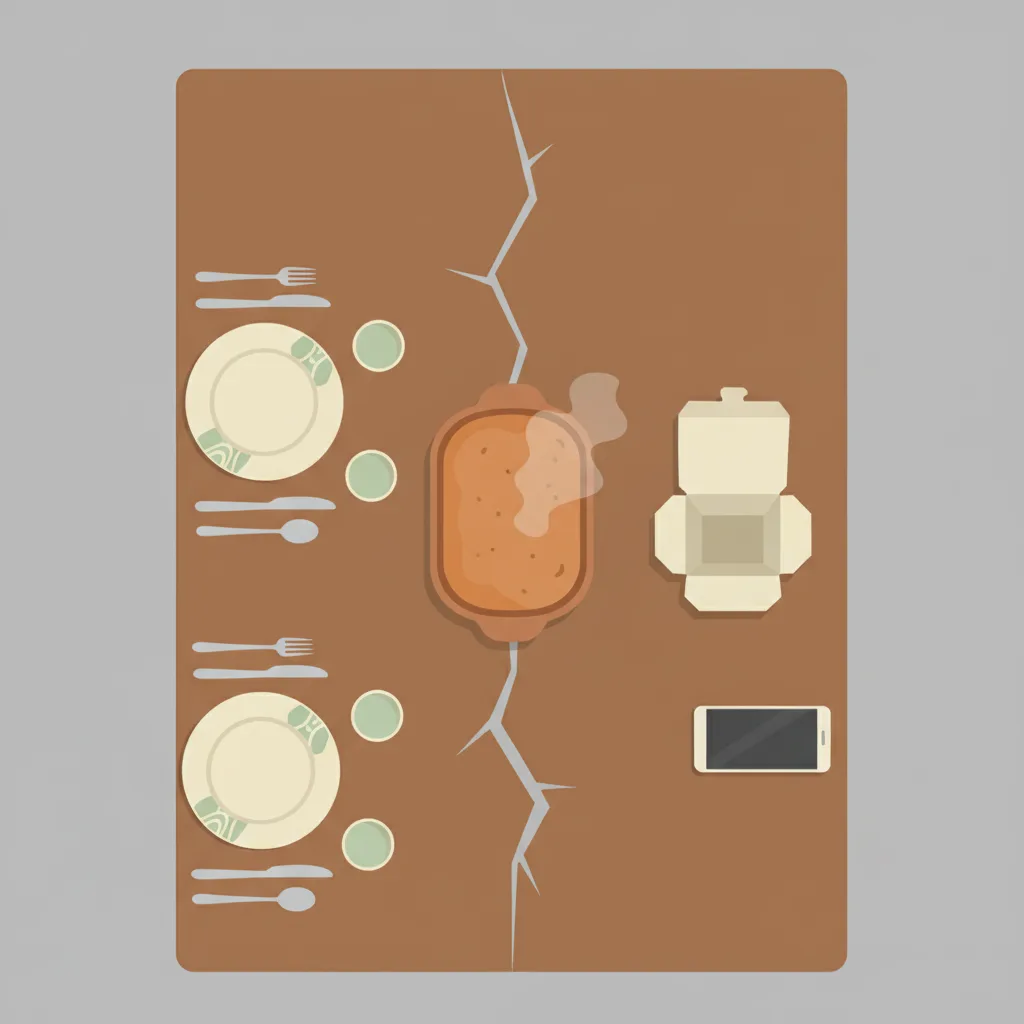
Secara rutin memposting kehidupan anak Anda di media sosial vs. melindungi privasi digital mereka
Jika Anda bertindak
Rutin membagikan kehidupan anak di media sosial (sharenting)
52%
Jika Anda tidak bertindak
Melindungi privasi digital anak, menjauhkannya dari media sosial
8,0%
Persentase orang yang kemudian menyesali setiap pilihan. Diagram batang dan catatan lengkap ditampilkan di bawah.
Family
Terakhir ditinjau 2026-05-13
Kualitas bukti 4.38/5
Skor tinjauan delapan dimensi terhadap
rubrik kualitas
. Setiap dimensi dinilai 1–5.
D1 Verifikasi sumber
4/5
D2 Otoritas & independensi sumber
5/5
D3 Akurasi tingkat penyesalan
5/5
D4 Keterbandingan sumber
4/5
D5 Pola Gilovich
4/5
D6 Kualitas prosa
4/5
D7 Kelengkapan peringatan
4/5
D8 Kualitas sampel
5/5
Rata-rata4.38/5
Data proksi — tidak ada survei penyesalan langsung untuk keputusan ini. Tingkat diturunkan dari skor kepuasan dan data hambatan akses daripada pertanyaan yang langsung menanyakan tentang penyesalan. Lihat peringatan di bawah.
Penyesalan atas tindakan
Rutin membagikan kehidupan anak di media sosial (sharenting)
52%
52% orang tua khawatir anak mereka akan merasa malu saat dewasa karena apa yang dibagikan (proksi kekhawatiran, bukan penyesalan yang terukur)
Orang tua AS yang secara teratur memposting foto atau video anak mereka di media sosial
lintas-bagian, 2015
Penyesalan atas kelambanan
Melindungi privasi digital anak, menjauhkannya dari media sosial
8,0%
Tidak ada survei yang mengukur penyesalan di kalangan orang tua yang melindungi privasi; ~8% yang ditampilkan adalah penampung sementara yang diperkirakan, bukan tingkat yang terukur
Orang tua AS yang secara aktif membatasi atau menghindari posting tentang anak-anak mereka di media sosial
lintas-bagian, 2019
% menyesal dengan pilihan ini
Rutin membagikan kehidupan anak di media sosial (sharenting)Melindungi privasi digital anak, menjauhkannya dari media sosial
52%8,0%
action dominates — Bertindak mendominasi — sebagian besar menyesali karena bertindak.
Keputusan terkait
Keputusan yang serupa secara semantik — area yang sama, kompromi yang berbeda.
Membagikan kisah pribadi sensitif secara publik (media sosial, tulisan, atau media)Menyimpan kisah sensitif tetap pribadi, tidak membagikannya secara publik
Among US parents of children age four and under, 52% are concerned their child might be embarrassed when older by what is shared about them on social media, and roughly two-thirds are concerned about private information (68%) or photos (67%) being found, according to the C.S. Mott Children’s Hospital National Poll on Children’s Health (fielded 2014, n=569). These are concerns about a hypothetical future, not retrospective regret, and they coexist with continued sharing: a 2020 Pew Research Center survey found that 82% of social-media-using parents have posted photos, videos, or information about their children, yet only 16% say they worry sometimes or often that their child will later be upset about it. On the inaction side, no published survey directly asks non-sharing parents whether they regret their restraint. The ~8% shown for that side is an imputed placeholder, not a measured rate; the entry is flagged as a proxy comparison.
The decision differs structurally from most regret pairs because its full consequences unfold over years, not weeks. A child photographed extensively in infancy cannot consent and may, at age 12 or 16, discover years of publicly archived posts depicting their private developmental milestones, childhood embarrassments, or medical experiences. Once content is indexed, screenshot, or held by third-party data brokers, deletion from the original platform does not reliably remove it. The Mott Poll was fielded in late 2014, before the normalization of Stories, Reels, and TikTok — current sharenting rates are substantially higher, and the volume of archived content per child has grown accordingly.
Gilovich and Medvec’s temporal asymmetry research predicts that action regrets are more vivid in the short term but that inaction regrets accumulate over time. Sharenting is unusual in that the short-term feedback is consistently positive (social validation, likes, grandparent engagement) while the long-term cost accrues to the child, not the parent. This feedback mismatch — positive reinforcement at time of posting, negative consequence to a third party years later — may cause parents to systematically underestimate action-side regret at the moment of decision and encounter it only retrospectively, when the child is old enough to object.
Sumber: tindakan
Buku besar klaim
Setiap angka di bawah ini adalah apa yang dilaporkan masing-masing sumber, dengan kutipan kata demi kata yang kami andalkan dan bagaimana kami sampai pada angka kami. Klik tautan mana saja untuk memverifikasi langsung.
1/2 sumber diverifikasi secara independen kata demi kata terhadap sumber terkutip
[1]C.S. Mott Children's Hospital National Poll on Children's Health — Parents on Social Media: Likes and Dislikes of Sharenting
Studi primer
52% of parents are concerned that, when older, their child might be embarrassed about what has been shared on social media; 68% are concerned about private information about their child being found, and 67% about photos being shared
Kutipan
“"More than two-thirds of parents are concerned about someone finding out private information about their child (68%) or sharing photos of their child (67%). Over half (52%) are concerned that, when older, their child might be embarrassed about what is shared on social media."
”
Data sumber dari
2015-03-16
Diakses
2026-06-30
Perhitungan
C.S. Mott Children's Hospital National Poll on Children's Health, Vol. 23 Issue 2 ("Parents on Social Media: Likes and Dislikes of Sharenting"), survey fielded November/December 2014, N=569 parents of children age 4 and under. Nationally representative US sample. The 52% captures parents concerned that their child might be embarrassed about shared content when older -- the side label is a forward-looking concern about future embarrassment, not a direct "I regret what I posted" question. The 0.52 numeral is the poll's verbatim embarrassment-concern reading but is a concern proxy, not measured regret.
[2]Pew Research Center — Parents' attitudes -- and experiences -- related to digital technology
Terverifikasi
Studi primer
82% of parents who use social media have posted photos, videos or other information about their children on these sites; 16% say they sometimes or often worry their children might be upset in the future about what was posted (83% rarely or never worry)
Kutipan
“"82% of parents who use social media say they have posted photos, videos or other information about their children on these sites. ... The majority of parents who share photos, videos and information about their children on social media say they rarely or never (83%) worry that in the future their children might be upset about the things they posted about them on social media sites. Just 16% say they worry about this sometimes or often."
”
Data sumber dari
2020-07-28
Diakses
2026-06-30
Verifikasi
Kutipan diambil ulang secara independen dan dikonfirmasi kata demi kata terhadap sumber terkutip selama audit pendasaran kami.
Perhitungan
Pew Research Center, "Parenting Children in the Age of Screens" (American Trends Panel Wave 63, fielded March 2-15, 2020). Documents that sharenting is near-universal among social-media-using parents (82% have posted about their children) while only a 16% minority worry sometimes/often that their child will later be upset -- a lower self-reported worry rate than the Mott concern figures. Used as corroborating evidence on the action side, not in rate arithmetic.
Sumber: tidak bertindak
Buku besar klaim
Setiap angka di bawah ini adalah apa yang dilaporkan masing-masing sumber, dengan kutipan kata demi kata yang kami andalkan dan bagaimana kami sampai pada angka kami. Klik tautan mana saja untuk memverifikasi langsung.
[1]Pew Research Center — Parenting Children in the Age of Screens↗ 1 other entry
Studi primer
Among parents whose under-12 child uses a voice-activated assistant, about 39% are at least somewhat concerned about the data the assistant collects about their child (11% very concerned)
Kutipan
“"About four-in-ten parents of a child age 11 or younger who uses or interacts with a voice-activated assistant (39%) say they are at least somewhat concerned about the data these assistants collect about their child, including 11% who say they are very concerned."
”
Data sumber dari
2020-07-28
Diakses
2026-06-30
Perhitungan
Pew Research Center, "Parenting Children in the Age of Screens" (American Trends Panel Wave 63, fielded March 2-15, 2020). This source documents that parental concern about child data collection is real but partial (39% concerned about voice-assistant data among the relevant subgroup) -- it establishes the motivation behind privacy protection. It does NOT measure regret among privacy-protective parents. No published survey asks non-sharing parents whether they regret their restraint, so the inaction side carries no reliable regret estimate (see regret_display).
Catatan
Kedua tingkat pada entri ini merupakan proksi, bukan penyesalan yang terukur -- entri ini ditandai proxy_only. Angka sisi tindakan menangkap KEKHAWATIRAN orang tua, bukan penyesalan retrospektif: 52% orang tua dalam jajak pendapat C.S. Mott mengatakan mereka khawatir anak mereka mungkin merasa malu saat dewasa karena apa yang dibagikan, dan jajak pendapat yang sama menemukan 68%/67% khawatir tentang informasi atau foto pribadi. Ini adalah kekhawatiran ke depan, bukan jawaban "saya menyesali unggahan tertentu", dan banyak orang tua yang menyuarakannya tetap berbagi (Pew menemukan 82% orang tua pengguna media sosial telah mengunggah tentang anak mereka, tetapi hanya 16% yang kadang atau sering khawatir anak mereka nantinya akan kesal). Angka sisi kepasifan sebesar 8% BUKAN tingkat yang terukur: tidak ada survei terpublikasi yang menanyakan kepada orang tua pelindung privasi apakah mereka menyesali sikap menahan diri mereka, sehingga angka tersebut merupakan penampung sementara yang diperkirakan, dipertahankan hanya karena skema mengharuskan adanya angka -- perlakukan sisi kepasifan sebagai tidak memiliki perkiraan penyesalan yang andal. Ciri khas keputusan ini adalah bahwa penyesalan dapat meningkat seiring anak bertumbuh: anak yang difoto secara ekstensif pada masa kanak-kanak awal tidak dapat menyetujui jejak digital mereka dan mungkin nantinya menolak unggahan yang diarsipkan secara publik selama bertahun-tahun. Konten yang diunggah ke platform antara 2010 dan 2025 kemungkinan bertahan tanpa batas waktu bahkan setelah dihapus, mengingat pengarsipan, tangkapan layar, dan broker data pihak ketiga. Jajak pendapat Mott dilakukan pada 2015, sebelum normalisasi luas Instagram Stories, TikTok, dan berbagi spontan bergaya BeReal -- tingkat sharenting dan kekhawatiran yang menyusul kemungkinan telah meningkat sejak saat itu.