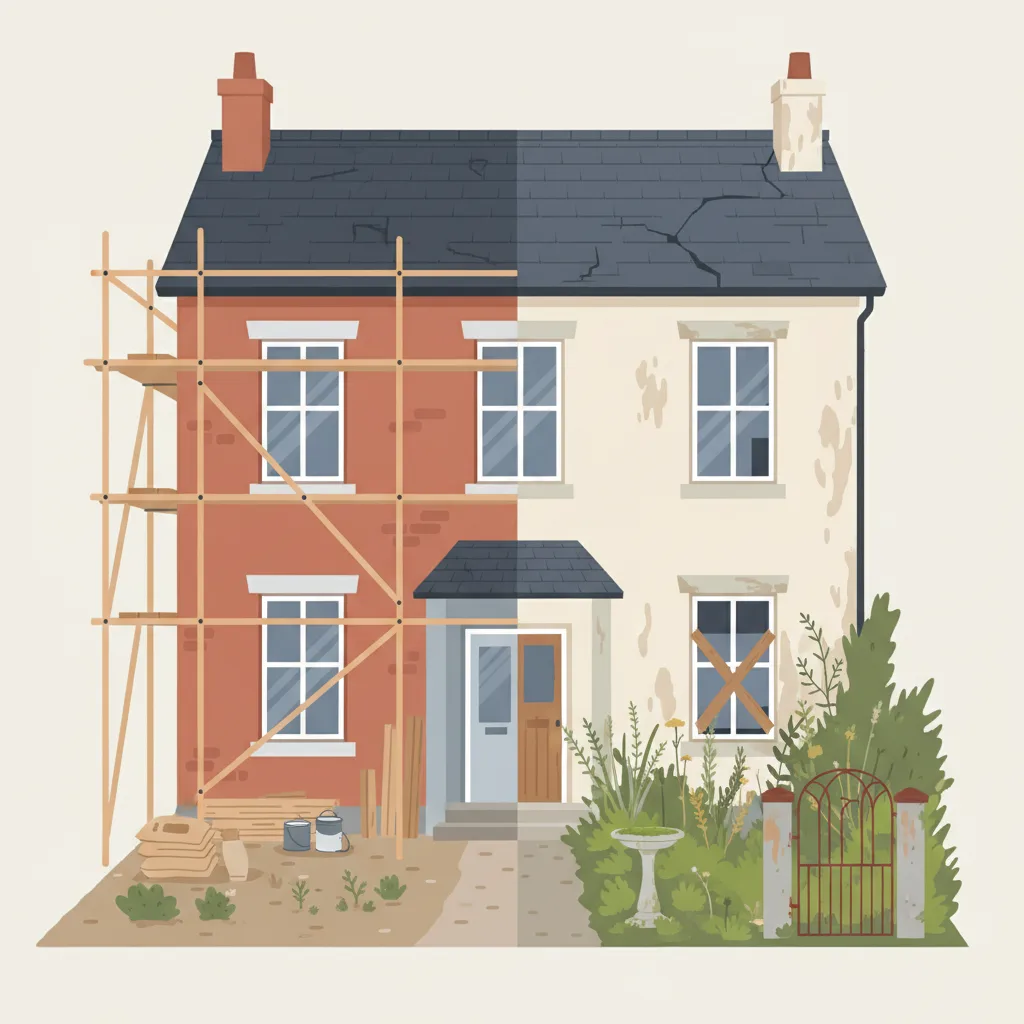
Appellare una sentenza giudiziaria vs. accettare la decisione originale
Se agisci
Impugnare la sentenza
86%
Se non agisci
Accettare la sentenza senza ricorso
60%
Almeno una cifra è una stima indiretta, non un tasso di rimpianto misurato. Come è stata ottenuta ogni cifra è spiegato più sotto.
Finanza
Ultima revisione 2026-05-09
Qualità delle prove 3.63/5
Punteggio di revisione su otto dimensioni rispetto alla
griglia di qualità
. Ogni dimensione valutata da 1 a 5.
D1 Verifica delle fonti
4/5
D2 Autorità e indipendenza delle fonti
4/5
D3 Precisione del tasso di rimpianto
1/5
D4 Comparabilità delle fonti
2/5
D5 Schema di Gilovich
5/5
D6 Qualità della prosa
4/5
D7 Completezza degli avvertimenti
5/5
D8 Qualità del campione
4/5
Media3.63/5
Dati indiretti: per questa decisione almeno una cifra deriva da una misura indiretta, come esiti, soddisfazione o intenzione, oppure da una stima della redazione, e non da un'indagine che chieda direttamente del rimpianto. Le note di ciascuna opzione, più sotto, spiegano come è stata ottenuta la cifra.
Se agisci
Impugnare la sentenza
86%
~70% degli appelli civili confermano la sentenza di primo grado, generando costi senza beneficio
Querelanti civili statunitensi che presentano appello (dati USCourts.gov, indagini sui contendenti)
tempi di risoluzione dell'appello 1-3 anni, 2018-2023
Se non agisci
Accettare la sentenza senza ricorso
60%
~25% di chi accetta una sentenza sfavorevole riporta rimpianto persistente, principalmente quando la sentenza appare ingiusta
Querelanti civili statunitensi che hanno scelto di non presentare appello (sondaggi sui contendenti, dati ABA)
retrospettivo a 2-5 anni dalla sentenza
Cifra per ciascuna scelta (la misura è indicata nella pagina)
Impugnare la sentenzaAccettare la sentenza senza ricorso
86%60%
Decisioni correlate
Decisioni semanticamente simili — stesso terreno, compromessi diversi.
Cifra per ciascuna scelta (la misura è indicata nella pagina)
Regalare l'anticipo per la casaNon regalare l'anticipo per la casa
15%35%
In private civil disputes in US federal courts, roughly 86% of appellants
do not achieve reversal of the lower court’s judgment (approximately 14%
reversal rate), the most favorable civil category; across the overall caseload
the reversal rate is lower still (8.5% in 2021). Spending the time and money to appeal
results in the original ruling standing in the vast majority of cases. On the
inaction side, federal appellate-filing data suggests a majority of civil
litigants who lose at trial never appeal at all: an analysis of federal civil
cases found a 39.6% appeal rate among tried cases, implying that roughly 60%
go uncontested — for some out of cost, lack of counsel, or low awareness of
appellate rights, and for others because they correctly judge their odds of
reversal are poor — leaving many with outcomes they believed were wrong but
never contested.
The decision to appeal sits in a distinctive position among legal choices: it
is almost always made after an already costly first proceeding, the odds are
quantifiably long before the filing is made, and the costs of the action are
immediate while potential benefits are speculative. Appeals courts are
explicitly deferential to trial courts — the “any reasonable trier of fact”
standard in civil cases means that many judgments that appear wrong to the
losing party are legally unreviewable. The anti-plaintiff pattern in appellate
outcomes shows up clearly in the available data: one Cornell Law/Journal of
Empirical Legal Studies analysis found plaintiff appellants achieved reversal
in about 4% of adverse trial judgments, versus about 10% for defendants — a
pattern that analysis found held across case types — meaning individuals
bringing claims may face steeper uphill odds than institutional defendants
with experienced appellate counsel.
The regret calculus here is complicated by the multiple functions an appeal
can serve. Some appellants file to force a settlement renegotiation, not
because they expect to win at the appellate level — in those cases, even an
unsuccessful appeal may achieve the desired outcome and generate no regret.
The inaction side is equally ambiguous: many litigants who accept an adverse
judgment have correctly assessed that their grounds for appeal are thin, and
acceptance is a rational response rather than resigned defeat. The Gilovich
temporal model predicts that regret about inaction grows over time — people
who never fought a ruling they thought unjust may carry that grievance for
years — while the disappointment of a failed appeal fades as appellants adapt
to the outcome. The point estimates here are the weakest in this dataset and
should be read as directional rather than quantitative.
Fonti: azione
Registro delle fonti
Ogni numero qui sotto è ciò che ciascuna fonte ha riportato, con la citazione testuale su cui ci siamo basati e come siamo arrivati alla nostra cifra. Clicca su qualsiasi link per verificare direttamente.
[1]Administrative Office of the U.S. Courts — Just the Facts: U.S. Courts of Appeals
Rapporto governativo
Fewer than 9% of total appeals in 2015 resulted in reversals; private civil cases saw the highest civil reversal rate at 14.2%
Estratto
“Fewer than 9 percent of total appeals resulted in reversals of lower court decisions in 2015. [...] Table 2 U.S. Courts of Appeals Percentage Reversed Calendar Years 2011-2015 Total Criminal Prisoner Petitions U.S. Civil Private Civil Bankruptcy Adminstrative Appeals [...] 2015 8.6 6.9 4.6 4.2 14.2 24.4 7.8
”
Dati originali da
2016-12-20
Consultato
2026-07-07
Calcolo
US Courts administrative data for 2015. The 14.2% reversal rate for private civil cases is the highest of the three civil categories in that table (prisoner petitions 4.6%, U.S. civil 4.2%, private civil 14.2%) and is used as the most favorable civil benchmark. Under this rate, approximately 86% of private civil appellants do not obtain a reversal. The 2021 table cited below puts the overall reversal rate at about 8.5% and the rate for Other Private Civil appeals at about 11.5%, so the 2015 figure is the more generous of the two years for private civil cases; it is kept as the headline basis. The action regret proxy rate of 0.86 = 1 - 0.14 (using the most favorable civil category). It represents the share of appellants who spend money and time on appeal and do not achieve reversal. This is outcome inferiority rather than felt regret, but it is the closest available proxy.
[2]Administrative Office of the U.S. Courts — Table B-5. U.S. Courts of Appeals—Decisions in Cases Terminated on the Merits (12-Month Period Ending December 31, 2021)
Rapporto governativo
Of 28,189 cases terminated on the merits in the 12-month period ending December 31, 2021, 2,354 were reversed; the table shows an overall percent reversed of 8.5 (computed by the table without original proceedings) and 11.5 for Other Private Civil (654 of 5,696 terminated on the merits, 11.48% by own calculation)
Estratto
“Percent reversed not computed for original proceedings because of their difference from appeals, nor are original proceedings included in the percentage of total appeals reversed.
”
Dati originali da
2021-12-31
Consultato
2026-11-07
Calcolo
2021 data from Table B-5 of the Statistical Tables for the Federal Judiciary (12-month period ending December 31, 2021), read from the downloadable spreadsheet because the web page itself loads the table by script. The spreadsheet stores the percent reversed unrounded and displays it to one decimal place: 8.5 for the total row (stored value 8.483) and 11.5 for Other Private Civil (stored value 11.48). The six outcome columns of the total row add up to the merits total (18656 + 3131 + 2354 + 618 + 220 + 3210 = 28189). The 8.5 percent is not 2,354 divided by 28,189 (that quotient is about 8.35%): the table leaves original proceedings and miscellaneous applications (3,021 terminations, 219 reversals) out of the percentage, and 2,135 reversals among 25,168 other terminations gives 8.48%. Other Private Civil appeals show 654 of 5,696 reversed, 11.48% by own calculation, which matches the stored value. The headline basis stays the 2015 private civil rate of 14.2%, giving an implied 85.8% non-reversal rate, rounded to 0.86 for the action regret proxy; on the 2021 Other Private Civil rate the same proxy would be about 0.89.
Fonti: inazione
Registro delle fonti
Ogni numero qui sotto è ciò che ciascuna fonte ha riportato, con la citazione testuale su cui ci siamo basati e come siamo arrivati alla nostra cifra. Clicca su qualsiasi link per verificare direttamente.
[1]Legal Services Corporation / NORC at the University of Chicago — The Justice Gap: The Unmet Civil Legal Needs of Low-Income Americans (2022)↗ 1 altra voce
Rapporto governativo
92% of the civil legal problems reported by low-income Americans did not get any or enough legal help
Estratto
“The study reveals that 92% of the civil legal problems reported by low-income Americans did not get any or enough legal help.
”
Dati originali da
2022-04-01
Consultato
2026-05-09
Calcolo
Retained as background context only. This report documents severe access-to-justice constraints in US civil legal aid generally, but it contains no statistic on appeal rates or on litigants who forgo appealing a judgment specifically, so it is not used to derive the inaction-side regret_rate. It supports the qualitative point that cost barriers and lack of counsel are real and large, which may explain part of why civil litigants who lose at trial do not appeal — see the Eisenberg & Clermont source below for the actual regret_rate derivation.
[2]Cornell Law School / Journal of Empirical Legal Studies — Appeal Rates and Outcomes in Tried and Nontried Cases: Further Exploration of Anti-Plaintiff Appellate Outcomes
Articolo peer-reviewed
The appeal rate is 39.6% in tried civil cases (versus 10.0% in nontried cases); the complement implies about 60% of tried-case losers do not appeal at all
Estratto
“"Federal data sets covering district court and appellate court civil cases for cases terminating in fiscal years 1988 through 2000 are analyzed. Appeals are filed in 10.9 percent of filed cases, and 21.0 percent of cases if one limits the sample to cases with a definitive judgment for plaintiff or defendant. The appeal rate is 39.6 percent in tried cases compared to 10.0 percent of nontried cases. … Defendants achieve reversal of adverse trial court judgments in about 10 percent of filed cases and suffer affirmance in about 15 percent of such cases. Plaintiffs achieve reversal in about 4 percent of adverse trial court judgments and suffer affirmance in about 16 percent of such cases."
”
Dati originali da
2004-11-01
Consultato
2026-07-07
Calcolo
Eisenberg & Clermont's Cornell study of federal civil cases terminating in fiscal years 1988-2000 (Journal of Empirical Legal Studies, 2004). The paper reports a 39.6% appeal rate in tried cases — cases that reached a trial-level judgment, matching this decision's "adverse judgment at trial" population. Because appeals are filed overwhelmingly by the losing or aggrieved side, this appeal rate is used as a proxy for the share of trial losers who contest the judgment; its complement, 1 - 0.396 = 0.604, rounded to 0.60, is the inaction-side regret proxy — the share who do not appeal at all. This replaces a prior "roughly one-third" estimate that this entry's own calculation_notes previously admitted had no traceable derivation from any cited source; that figure has been removed as unsupported. This remains a non-appeal rate, not a felt-regret rate — it does not separate rational acceptance (correctly assessed low odds, cost) from genuine regret, and the underlying data is federal, 1988-2000 vintage, not a current nationally representative sample. The reversal figures above (4% plaintiffs, ~10% defendants) corroborate the anti-plaintiff pattern discussed elsewhere in this entry but are not used in the regret_rate calculation.
Avvertenze
Il tasso di successo del 30% in appello (e quindi il rimpianto-azione del 70%) è una media tra giurisdizioni statunitensi; varia dal 15% per i tribunali statali al 40% per appelli specializzati. Il 70% sovrastima il rimpianto puro: alcuni appellanti vedono l'appello come una difesa di principio anche quando perdono e non lo rimpiangono. Il 25% di rimpianto-inazione è una stima dalla letteratura sulla risoluzione delle controversie civili; il rimpianto-inazione è altamente concentrato nei casi in cui la sentenza appare procedural o sostanzialmente ingiusta. Il calcolo finanziario conta: in casi con grandi importi in contestazione, il rimpianto-inazione è più alto poiché l'opzione mancata era materialmente significativa; in casi di basso valore, accettare comporta poco rimpianto. Il tipo di parte conta: gli appellanti rappresentanti se stessi (pro se) hanno tassi di successo molto più bassi (<15%) e dovrebbero pesare il rimpianto-azione più pesantemente. La giurisdizione conta: la legge statunitense favorisce la deferenza ai giudizi di primo grado; in sistemi di civil law europei l'appello è più normativo e i tassi di successo sono più alti.