



Vai al contenuto
Likelier

Rimpianto per l’azione vs. l’inazione

Acquistare un'assicurazione per reddito da invalidità vs. farne a meno

Se agisci

Stipulare un'assicurazione contro l'invalidità

30%

Se non agisci

Rinunciare all'assicurazione contro l'invalidità

80%

Percentuale di chi poi rimpiange ciascuna scelta. Le barre e il registro completo dei dati compaiono sotto.


Finanza

Ultima revisione 2026-05-13

Qualità delle prove 4.38/5

Punteggio di revisione su otto dimensioni rispetto alla griglia di qualità . Ogni dimensione valutata da 1 a 5.

D1 Verifica delle fonti
5/5
D2 Autorità e indipendenza delle fonti
5/5
D3 Precisione del tasso di rimpianto
3/5
D4 Comparabilità delle fonti
2/5
D5 Schema di Gilovich
5/5
D6 Qualità della prosa
5/5
D7 Completezza degli avvertimenti
5/5
D8 Qualità del campione
5/5
Media 4.38/5
A pay stub and an empty wallet side by side on a plain surface.

Rimpianto per azione

Stipulare un'assicurazione contro l'invalidità

30%

~30% dei lavoratori che hanno rinunciato all'assicurazione contro l'invalidità afferma di non "usare abbastanza la copertura da valerne la pena"

Adulti statunitensi con assicurazione sanitaria o di protezione del reddito, indagine rappresentativa a livello nazionale

retrospettivo, trasversale

Rimpianto per inazione

Rinunciare all'assicurazione contro l'invalidità

80%

~80% dei lavoratori non assicurati che hanno vissuto un congedo per invalidità riferisce di non essersi ripreso pienamente dal punto di vista finanziario

Lavoratori statunitensi a tempo pieno che hanno sperimentato un congedo per invalidità e non avevano un'assicurazione di invalidità al momento

retrospettivo; intervistati entro 10 anni dal congedo per invalidità

% rimpiange questa scelta

inaction dominates — L'inazione domina — la maggior parte si pente di non aver agito.

Decisioni correlate

Decisioni semanticamente simili — stesso terreno, compromessi diversi.

Finanza

Ricorso contro rifiuto assicurativo

% rimpiange questa scelta

L'inazione prevale

Rimpianto per l'inazione 3.1× maggiore

Finanza

Vita a termine vs. vita intera

% rimpiange questa scelta

L'inazione prevale

Rimpianto per l'inazione 6.4× maggiore

Finanza

Assicurazione cure lungodegenza

% rimpiange questa scelta

L'inazione prevale

Rimpianto per l'inazione 2.5× maggiore

Finanza

Avvocato per una richiesta di lesioni auto

% rimpiange questa scelta

L'azione prevale

Rimpianto per l'azione 2.2× maggiore

Finanza

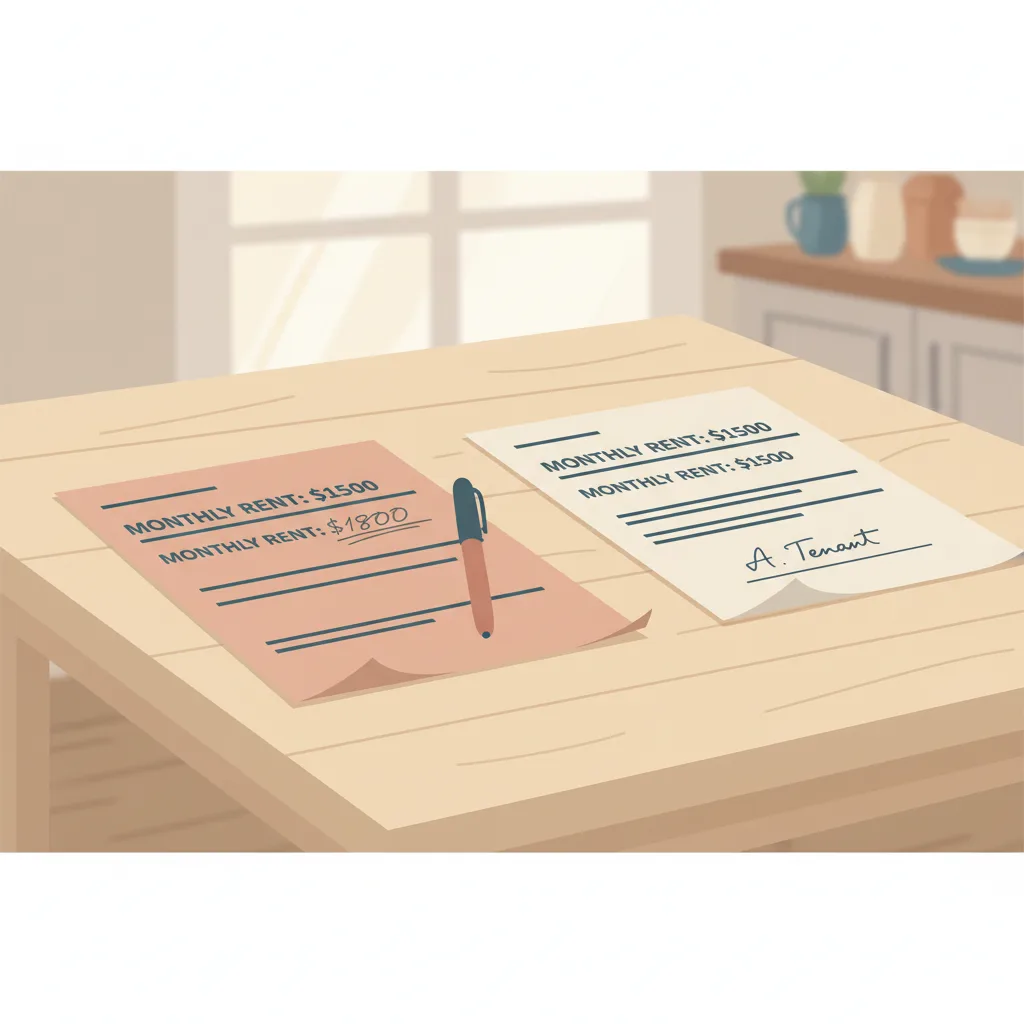
Negoziazione dell'affitto

% rimpiange questa scelta

L'inazione prevale

Rimpianto per l'inazione 1.9× maggiore

FinanzaDiretta

Acquisto casa

% rimpiange questa scelta

L'inazione prevale

Rimpianto per l'inazione 5.6× maggiore

Finanza

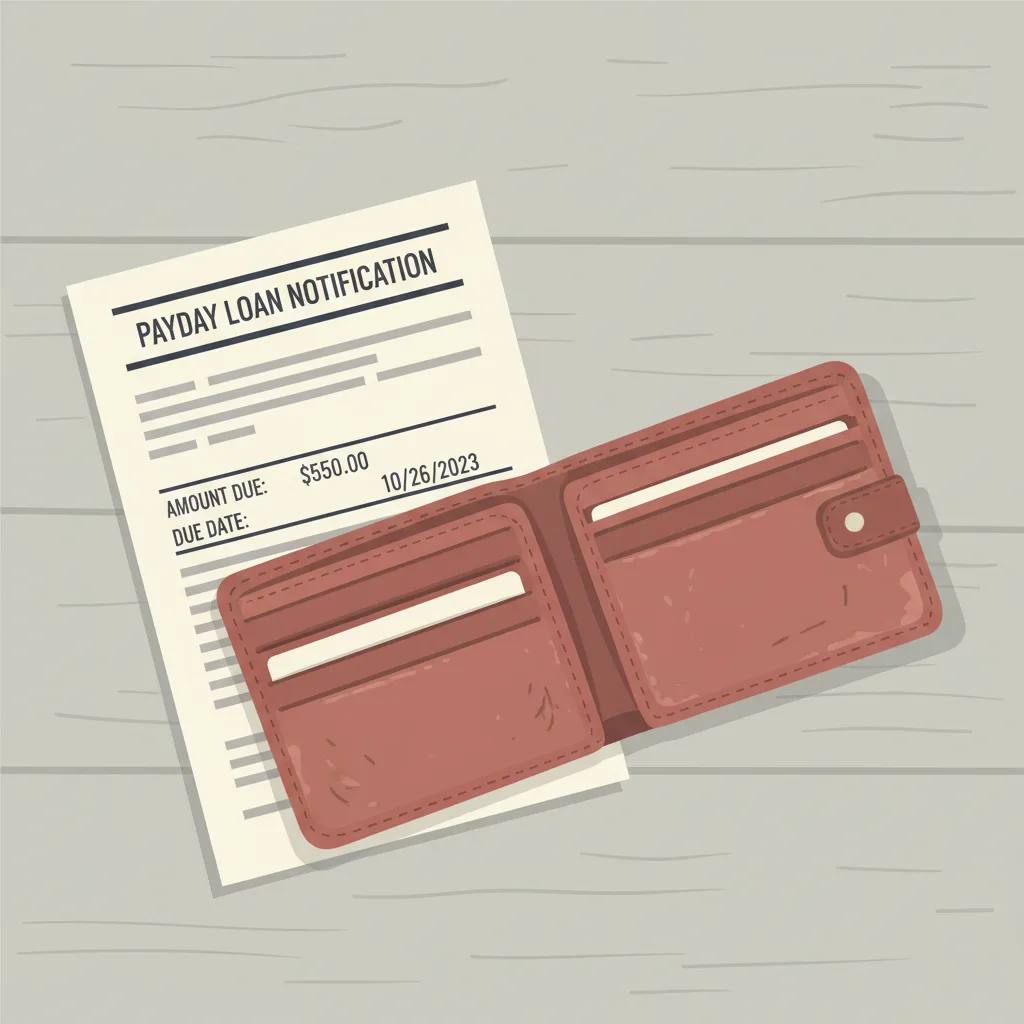
Decisione prestito a breve termine

% rimpiange questa scelta

L'inazione prevale

Rimpianto per l'inazione 2.2× maggiore

Finanza

Investimento

% rimpiange questa scelta

L'inazione prevale

Rimpianto per l'inazione 3.2× maggiore

Rischi dietro questa decisione

Le probabilità che stanno alla base di questa scelta.

Workers who become disabled and lack income-replacement coverage face an abrupt income cliff. The Social Security Administration estimates that one in four of today’s 20-year-olds will experience a qualifying disability before reaching retirement age, yet LIMRA’s 2024 Insurance Barometer Study found fewer than one in five US adults carry any disability income insurance — a gap of roughly 51 million working adults. Guardian Life’s workplace benefits research found that among households that actually experienced a disability leave without coverage, 80% reported they had not fully recovered financially years later, compared with 38% financial harm among workers who held disability insurance during the same event. The asymmetry is large and consistent across data sources.

Regret among buyers is real but structurally different. Insurance economics research documents a “waste aversion” dynamic: Krishnan and Iyer (2022) show experimentally that the thought of having “wasted” premiums when no loss occurs causally reduces the coverage people buy. LIMRA data on lapsed policyholders quantifies the same sentiment — 30% of workers who dropped disability coverage cited “not using the benefit enough to be worth it” as their stated reason. These figures describe an expectation of wasted spending rather than harm; the policyholder who never became disabled is, by definition, the one who avoided the outcome the policy was designed for. Buyer regret is primarily about the cost of an unused option, not about a worse life outcome.

The two regret types are not symmetric. Inaction regret, when it materializes, arrives alongside job loss, depleted savings, and delayed retirement — harms that are concrete and long-lasting. Research published in the American Journal of Public Health found that medically related work loss contributed to over 44% of US personal bankruptcies in one analysis, and households with a disabled adult require substantially more income to maintain equivalent living standards. Action regret, by contrast, is largely anticipatory: most buyers never claim, pay premiums throughout their working years, and may retrospectively question the cost. The evidence does not suggest that buyers who purchased and never claimed experienced lasting harm from having done so. Inaction dominates the regret calculus when conditioned on the event the coverage is designed to address.

Fonti: azione

Registro delle fonti

Ogni numero qui sotto è ciò che ciascuna fonte ha riportato, con la citazione testuale su cui ci siamo basati e come siamo arrivati alla nostra cifra. Clicca su qualsiasi link per verificare direttamente.

1/2 fonti verificate in modo indipendente e alla lettera rispetto alla fonte citata

  1. [1] Economics Letters 2022;216:110594 / S. Sai Krishnan & Subramanian S. Iyer — Can waste aversion affect demand for insurance? Evidence from experiment and survey
    Can waste aversion affect demand for insurance? Evidence from experiment and survey
    Statistica
    Waste averters demand lower insurance coverage than non-waste averters — the discouraging thought of having 'wasted' premiums if no loss occurs reduces the amount of coverage people buy
    Estratto
    “"Evidence shows that people are discouraged from buying fair insurance by the thought that if they do not suffer a loss, they will have wasted their money. We extend this theory to test if waste aversion could lead to a reduction in the amount of coverage sought. We deploy a multimethod design wherein we first run incentive-compatible experiments to establish a cause-and-effect relationship. We follow it up with a survey rolled out to actual buyers of insurance to generate external validity for our results. Our findings show that waste averters demand lesser insurance coverage than non-waste averters." ”
    Dati originali da
    2022-07-01
    Consultato
    2026-06-30
    Calcolo
    Krishnan & Iyer (Economics Letters 2022;216:110594) establish, via incentive-compatible experiments plus a survey of actual insurance buyers, that "waste aversion" — anticipated regret over premiums paid without a claim — causally lowers the amount of coverage demanded. This source documents the MECHANISM behind buyer regret on the action side; it does not report a quantified regret rate (the action regret_rate is anchored on the LIMRA lapse figure below, not on this paper).
  2. [2] LIMRA — Disability Insurance Awareness Month: Is Your Income Protected? Verificato
    Disability Insurance Awareness Month: Is Your Income Protected?
    Statistica
    30% of employees who dropped disability insurance cited 'not using the benefit enough to be worth it' as their reason
    Estratto
    “"Employees who previously had coverage but dropped their disability insurance cited increasing costs (31%), not using the benefit enough to be worth it (30%), and wanting to reduce overall benefit spending (27%) as their primary reasons." ”
    Dati originali da
    2025-05-01
    Consultato
    2026-05-13
    Verifica
    Estratto recuperato in modo indipendente e confermato parola per parola rispetto alla fonte citata durante il nostro audit di attendibilità.
    Calcolo
    LIMRA's 2025 workplace benefits research. The 30% "not using the benefit enough to be worth it" response among lapsed policyholders is the industry's closest published metric to post-purchase regret for disability insurance buyers, and is used here as the action-side regret_rate anchor (0.30). It aligns with the waste-aversion mechanism documented by Krishnan & Iyer (2022). Note that this population self-selected into lapsing — unconditional buyer regret among all current policyholders is likely lower, so 0.30 is best read as an upper-bound proxy among the subgroup most prone to it.

Fonti: inazione

Registro delle fonti

Ogni numero qui sotto è ciò che ciascuna fonte ha riportato, con la citazione testuale su cui ci siamo basati e come siamo arrivati alla nostra cifra. Clicca su qualsiasi link per verificare direttamente.

2/3 fonti verificate in modo indipendente e alla lettera rispetto alla fonte citata

  1. [1] Guardian Life Insurance Company of America — Role of Disability Insurance in Financial Wellness Verificato
    Role of Disability Insurance in Financial Wellness
    Statistica
    8 in 10 workers who experienced a disability leave without disability insurance say they have not yet fully recovered financially
    Estratto
    “"Among those lacking disability coverage, 8 in 10 say they have not yet fully recovered financially following a disability event. Individuals with disability insurance experienced significantly less negative financial consequences (38% negatively impacted) compared to those without coverage (62% negatively impacted)." ”
    Dati originali da
    2024-01-01
    Consultato
    2026-05-13
    Verifica
    Estratto recuperato in modo indipendente e confermato parola per parola rispetto alla fonte citata durante il nostro audit di attendibilità.
    Calcolo
    Guardian's workplace benefits study surveyed US full-time workers, of whom 3 in 10 households reported at least one disability leave in the past 10 years. Among those who lacked disability insurance during that leave, 80% (8 in 10) reported incomplete financial recovery. We use 0.80 as the inaction regret rate — not a literal "regret" question, but incomplete financial recovery is the operational consequence that drives retrospective regret about skipping coverage. The insured cohort's 38% negative-impact rate versus the uninsured's 62% negative-impact rate corroborates the large gap. Total sample reported at approximately 1,492 workers across disability-leave households; the uninsured sub-sample is smaller.
  2. [2] LIMRA — Disability Insurance Awareness Month: Protecting Your Paycheck and Your Future
    Disability Insurance Awareness Month: Protecting Your Paycheck and Your Future
    Statistica
    46% of US adults say they need disability insurance; only 18% report having it; 48% of uninsured say they would tap personal savings if unable to work
    Estratto
    “"Less than 1 in 5 consumers (18%) say they have disability insurance. Consumers without disability insurance coverage say their families would resort to tapping into personal savings (48%) or retirement funds (26%) to meet their day-to-day expenses if they became unable to work." ”
    Dati originali da
    2024-05-01
    Consultato
    2026-05-13
    Calcolo
    LIMRA's 2024 Insurance Barometer Study data. The coverage-gap statistic (46% say they need it; 18% have it) establishes the scale of involuntary non-ownership. The coping- mechanism data (48% would drain savings, 26% retirement funds) illustrates the downstream financial distress that makes inaction the regret-dominant path. Used here as corroborating context, not a direct regret rate.
  3. [3] Council for Disability Income Awareness (CDIA) — Disability Statistics Verificato
    Disability Statistics
    Statistica
    Just under 1 in 4 of today's 20-year-olds can expect to be out of work for at least a year due to a disabling condition before reaching normal retirement age (per SSA probability tables); at least 51 million US working adults lack disability insurance beyond basic Social Security coverage (per an ACLI analysis of 2022 Census data); medically related work loss was cited as a contributor in 44.3% of personal bankruptcies (per Himmelstein et al., American Journal of Public Health, 2019)
    Estratto
    “"Just under one in four of today's 20-year-olds can expect to be out of work for at least a year because of a disabling condition before they reach the normal retirement age." "At least 51 million working adults in the United States are without disability insurance other than the basic coverage available through Social Security." "44.3% specifically citing medically-related work loss as a contributor" [to personal bankruptcy]. ”
    Dati originali da
    2026-03-30
    Consultato
    2026-07-03
    Verifica
    Estratto recuperato in modo indipendente e confermato parola per parola rispetto alla fonte citata durante il nostro audit di attendibilità.
    Calcolo
    CDIA's statistics page aggregates three figures used in the body prose that were previously stated without any citation. The 1-in-4 disability-probability figure is attributed by CDIA to SSA's Disability and Death Probability Tables for Insured Workers Who Attain Age 20 in 2025; the 51-million uninsured-workers figure is attributed to an ACLI analysis of 2022 Census data and the 2020 Strategic Business Insights MacroMonitor Household Survey; the 44.3%-of-bankruptcies figure is attributed to Himmelstein, Lawless, Thorne, Foohey & Woolhandler, "Medical Bankruptcy: Still Common Despite the Affordable Care Act," American Journal of Public Health 109, no. 3 (2019): 431-433 -- the body now cites that AJPH study directly for the bankruptcy figure rather than crediting CDIA (a secondary compiler) with having "found" it. Added to ground three previously-uncited body claims; does not change the inaction regret_rate (0.80).

Avvertenze

I due segnali di rimpianto non sono strumenti di sondaggio direttamente comparabili — il rimpianto del lato azione è approssimato dal motivo dichiarato che i titolari di polizza che vi rinunciano adducono per abbandonare la copertura ("non usare abbastanza la copertura da valerne la pena", un sentimento di avversione allo spreco), mentre il rimpianto del lato inazione è misurato tramite il mancato recupero finanziario post-evento (un proxy di conseguenza, non una domanda diretta sul rimpianto auto-riferito). Nessuno studio pubblicato ha chiesto direttamente sia ai lavoratori assicurati sia a quelli non assicurati la stessa domanda sul rimpianto dopo un evento di invalidità, quindi il regret_delta è un'approssimazione costruita a partire da fonti di dati separate. Il gruppo d'inazione è condizionato dall'aver effettivamente vissuto un congedo per invalidità — i lavoratori che non sono mai diventati invalidi e hanno rinunciato alla copertura potrebbero non provare alcun rimpianto, il che significa che il tasso di rimpianto d'inazione a livello di popolazione su tutti i lavoratori è sostanzialmente più basso del dato dell'80% (che si applica solo a chi aveva bisogno della copertura). L'assicurazione sul reddito da invalidità inoltre non è disponibile o accessibile per tutti i lavoratori: i lavoratori autonomi, i lavoratori della gig economy e chi ha condizioni preesistenti affronta vincoli di accesso che complicano l'impostazione azione/inazione. I costi dei premi variano notevolmente con l'occupazione, l'età e la durata delle prestazioni. L'assicurazione contro l'invalidità di breve termine e quella di lungo termine sono prodotti distinti con periodi di franchigia e durate delle prestazioni diversi; le fonti sopra citate non le distinguono in modo coerente.

Dati grezzi: /api/decisions.json

Visti di recente su questo dispositivo