





Vai al contenuto
Likelier

Rimpianto per l’azione vs. l’inazione

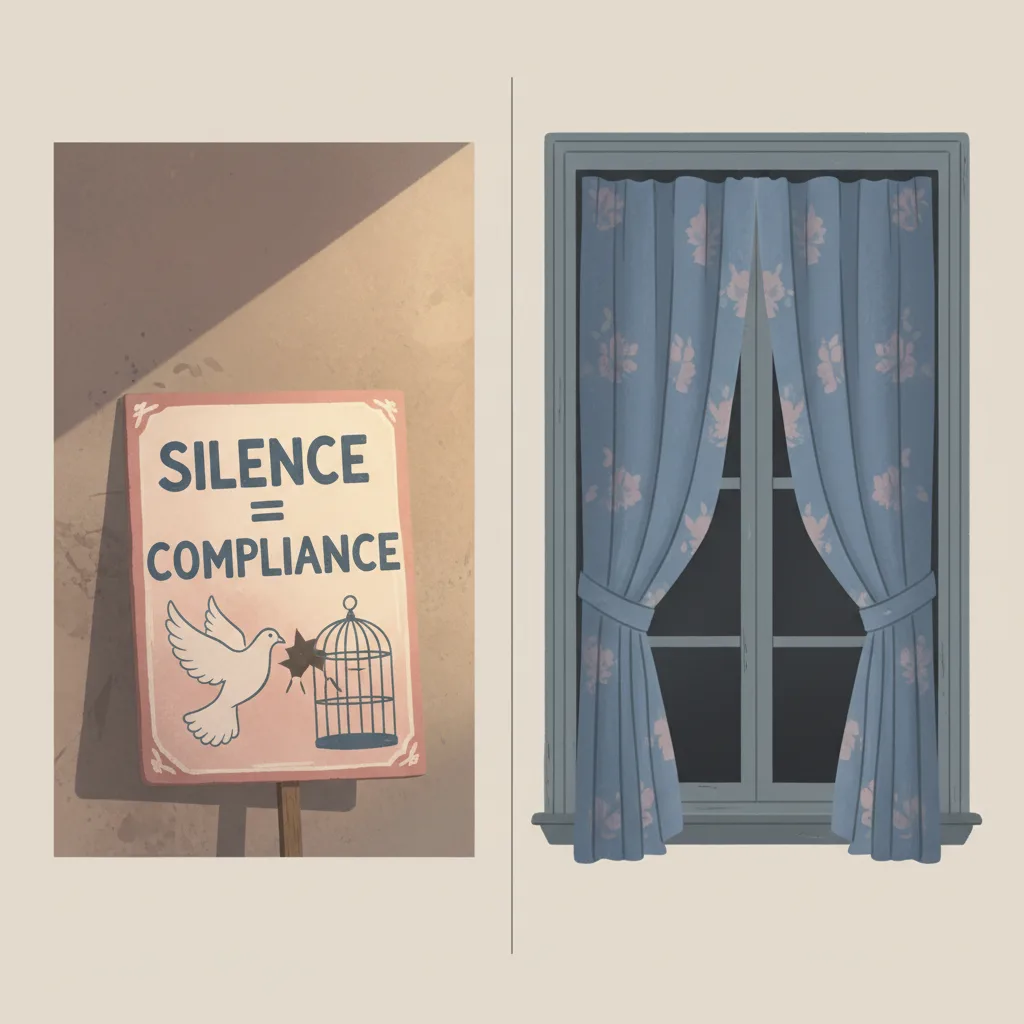
Parlare di un problema vs tacere per evitare conflitti

Se agisci

Parlare apertamente

38%

Se non agisci

Restare in silenzio

53%

Percentuale di chi poi rimpiange ciascuna scelta. Le barre e il registro completo dei dati compaiono sotto.


Carriera

Ultima revisione 2026-04-26

Qualità delle prove 4.75/5

Punteggio di revisione su otto dimensioni rispetto alla griglia di qualità . Ogni dimensione valutata da 1 a 5.

D1 Verifica delle fonti
5/5
D2 Autorità e indipendenza delle fonti
5/5
D3 Precisione del tasso di rimpianto
4/5
D4 Comparabilità delle fonti
5/5
D5 Schema di Gilovich
5/5
D6 Qualità della prosa
5/5
D7 Completezza degli avvertimenti
5/5
D8 Qualità del campione
4/5
Media 4.75/5
Prova diretta
Two identical office chairs at a conference table, one pushed back with a microphone in front, the other tucked in with an empty place setting.

Rimpianto per azione

Parlare apertamente

38%

Il 38% si pente di aver parlato in una riunione

Lavoratori in USA, Regno Unito, Francia, Germania

retrospettivo, nessun arco temporale fisso

Rimpianto per inazione

Restare in silenzio

53%

Il 53% si pente di non aver parlato in una riunione

Lavoratori in USA, Regno Unito, Francia, Germania

retrospettivo, nessun arco temporale fisso

% rimpiange questa scelta

inaction dominates — L'inazione domina — la maggior parte si pente di non aver agito.

Decisioni correlate

Decisioni semanticamente simili — stesso terreno, compromessi diversi.

career

Cambio di carriera

% rimpiange questa scelta

L'inazione prevale

Rimpianto per l'inazione 1.5× maggiore

careerDiretta

Chiedere un aumento

% rimpiange questa scelta

L'inazione prevale

Rimpianto per l'inazione 3.0× maggiore

career

Lasciare il lavoro

% rimpiange questa scelta

L'inazione prevale

Rimpianto per l'inazione 2.2× maggiore

career

Carriera vs equilibrio

% rimpiange questa scelta

L'azione prevale

Rimpianto per l'azione 1.3× maggiore

career

Promozione vs accettare ruolo

% rimpiange questa scelta

L'inazione prevale

Rimpianto per l'inazione 1.9× maggiore

lifestyle

Ammettere grave errore vs. nasconderlo

% rimpiange questa scelta

L'inazione prevale

Rimpianto per l'inazione 2.9× maggiore

career

Avviare un'attività

% rimpiange questa scelta

L'inazione prevale

Rimpianto per l'inazione 5.5× maggiore

lifestyle

Protesta vs. silenzio

% rimpiange questa scelta

L'inazione prevale

Rimpianto per l'inazione 3.3× maggiore

53% of workers say they have regretted not speaking up in a meeting, compared to 38% who regret having spoken up, according to Resume Now’s International Career Regrets Survey of 1,000 workers across the US, UK, France, and Germany. The gap is real but moderate — a 1.4:1 ratio that puts workplace voice closer to “balanced” than the lopsided inaction dominance seen in domains like travel or career risk-taking. A separate Zety survey of over 1,000 US workers found that 98% harbored some form of career regret, with women regretting not speaking up at a rate 34% higher than men.

The academic underpinning comes from Detert and Edmondson’s 2011 research on implicit voice theories — the taken-for-granted beliefs employees hold about when speaking up is risky or futile. Across 190 interviews and follow-up survey studies, they documented five distinct self-censorship rules that suppress voice even when the message would benefit the organization. The mechanism is straightforward: people default to silence because the social cost of speaking up (embarrassing a manager, being labeled a troublemaker) feels immediate and concrete, while the cost of silence (a problem festers, an opportunity evaporates) is diffuse and delayed. Gilovich and Medvec’s temporal pattern predicts exactly this: the sting of having spoken up fades as people rationalize or forget, but the nagging sense of “I should have said something” compounds over time.

The modest delta here deserves a caveat the flashier regret pairs do not need. Speaking up at work is not costless — 43% of employees fear retaliation for voicing concerns, and research shows that frequent or low-quality voice can lower status and performance ratings. This is one of the few domains where action regret holds non-trivial ground because the consequences of speaking up (a damaged relationship, a lost promotion) can be concrete and lasting. The directional finding still favors action, consistent with the broader regret literature, but the margin is narrow enough that blanket advice to “always speak up” would overstate what the data support.

Fonti: azione

Registro delle fonti

Ogni numero qui sotto è ciò che ciascuna fonte ha riportato, con la citazione testuale su cui ci siamo basati e come siamo arrivati alla nostra cifra. Clicca su qualsiasi link per verificare direttamente.

1/2 fonti verificate in modo indipendente e alla lettera rispetto alla fonte citata

  1. [1] Resume Now — The Road Not Taken: Greatest Career Regrets Revealed Verificato
    The Road Not Taken: Greatest Career Regrets Revealed

    See all 8 Likelier entries citing this source →

    Statistica
    38% of workers have regretted speaking up in a meeting
    Estratto
    “"53% have regretted not speaking up in a meeting, compared to 38% who have regretted speaking up in a meeting." ”
    Dati originali da
    2025-01-10
    Consultato
    2026-04-26
    Verifica
    Estratto recuperato in modo indipendente e confermato parola per parola rispetto alla fonte citata durante il nostro audit di attendibilità.
    Calcolo
    Resume Now International Career Regrets Survey of 1,000 workers across four countries (US, UK, France, Germany), fielded January 2024. The 38% figure represents those who specifically regretted having voiced an opinion in a meeting. Used directly as action- side regret rate.
  2. [2] Journal of Management Studies — An Exploratory Study of Employee Silence: Issues that Employees Don't Communicate Upward and Why
    An Exploratory Study of Employee Silence: Issues that Employees Don't Communicate Upward and Why
    Statistica
    85% of employees reported situations where they felt unable to raise an issue to a supervisor despite believing it was important; the most frequent reason was fear of being labeled negatively
    Estratto
    “"85% of respondents said they had been in situations where they felt unable to raise an issue to a supervisor even though they felt the issue was important. The most frequently mentioned reason for remaining silent was the fear of being viewed or labeled negatively, and as a consequence, damaging valued relationships." ”
    Dati originali da
    2003-09-01
    Consultato
    2026-04-26
    Calcolo
    Milliken, Morrison & Hewlin (2003), Journal of Management Studies 40(6), 1453-1476. Interviewed 40 full-time employees across diverse industries. The 85% figure establishes that the vast majority of employees have experienced the voice/silence dilemma. The fear of negative labeling explains why action regret (38%) is non-trivially high in this domain — speaking up carries real social risk that does not fade easily.

Fonti: inazione

Registro delle fonti

Ogni numero qui sotto è ciò che ciascuna fonte ha riportato, con la citazione testuale su cui ci siamo basati e come siamo arrivati alla nostra cifra. Clicca su qualsiasi link per verificare direttamente.

2/4 fonti verificate in modo indipendente e alla lettera rispetto alla fonte citata

  1. [1] Resume Now — The Road Not Taken: Greatest Career Regrets Revealed Verificato
    The Road Not Taken: Greatest Career Regrets Revealed

    See all 8 Likelier entries citing this source →

    Statistica
    53% of workers have regretted not speaking up in a meeting
    Estratto
    “"53% have regretted not speaking up in a meeting, compared to 38% who have regretted speaking up in a meeting." ”
    Dati originali da
    2025-01-10
    Consultato
    2026-04-26
    Verifica
    Estratto recuperato in modo indipendente e confermato parola per parola rispetto alla fonte citata durante il nostro audit di attendibilità.
    Calcolo
    Same Resume Now survey as the action side. The 53% figure represents those who specifically regretted remaining silent in a meeting when they had something to say. Used directly as inaction-side regret rate.
  2. [2] Academy of Management Journal — Implicit Voice Theories: Taken-for-Granted Rules of Self-Censorship at Work
    Implicit Voice Theories: Taken-for-Granted Rules of Self-Censorship at Work
    Statistica
    Employees hold five distinct implicit theories that systematically suppress workplace voice even when speaking up would be pro-organizational
    Estratto
    “"Qualitative data from 190 interviews conducted in a knowledge-intensive multinational corporation suggest that fine-grained implicit theories underlie reluctance to voice even pro-organizational suggestions. Survey measures across subsequent studies establish that these implicit voice theories are widely held and significantly augment explanation of workplace silence." ”
    Dati originali da
    2011-06-01
    Consultato
    2026-04-26
    Calcolo
    Detert & Edmondson (2011), Academy of Management Journal 54(3), 461-488. This peer-reviewed study does not provide a single regret percentage but establishes the psychological mechanism behind self-censorship at work. It documents that employees routinely silence themselves based on taken-for-granted beliefs about hierarchy, even when speaking up would benefit the organization. Used as the theoretical anchor for why inaction regret in this domain is so prevalent.
  3. [3] Crucial Learning (formerly VitalSmarts) — Costly Conversations: How Lack of Communication is Costing Organizations Thousands in Revenue Verificato
    Costly Conversations: How Lack of Communication is Costing Organizations Thousands in Revenue
    Statistica
    43% of 1,100 employees estimate wasting two weeks or more ruminating about unresolved workplace problems; 1 in 3 estimate silence cost their organization at least $25,000
    Estratto
    “"43 percent of respondents estimate they waste two weeks or more ruminating about an unresolved problem at work. 1 in 3 employees estimate their inability to speak up in a crucial moment has cost their organization at least $25,000." ”
    Dati originali da
    2022-02-15
    Consultato
    2026-04-26
    Verifica
    Estratto recuperato in modo indipendente e confermato parola per parola rispetto alla fonte citata durante il nostro audit di attendibilità.
    Calcolo
    Crucial Learning (formerly VitalSmarts) survey of 1,100 employees, December 2021 (follow-up to 2016 study). The 43% rumination figure and the financial cost estimates demonstrate that workplace silence generates significant ongoing regret and cognitive burden. Independently sourced from the Resume Now survey, corroborating the high inaction-regret pattern.
  4. [4] Zety — Biggest Career Regrets Revealed: Learn from Others' Mistakes
    Biggest Career Regrets Revealed: Learn from Others' Mistakes
    Statistica
    98% of 1,000+ respondents experienced career regret; women regretted not speaking up at work at a rate 34% higher than men
    Estratto
    “"Female respondents most frequently lamented not speaking up about a problem at work, at a rate of 34 percent more than men. Just 2 percent reported they had no career regrets." ”
    Dati originali da
    2019-10-01
    Consultato
    2026-04-26
    Calcolo
    Zety survey of 1,000+ US workers. The 98% figure refers to overall career regret, not speaking-up regret specifically. The 34% gender gap highlights that not speaking up is disproportionately regretted by women. Used as corroborating evidence for the inaction-regret pattern.

Avvertenze

I tassi principali di azione e inazione (38% e 53%) provengono dalla stessa indagine Resume Now, che è un punto di forza per il confronto diretto ma una limitazione in quanto il campione è auto-selezionato di utenti di siti di carriera — probabilmente più impegnati professionalmente della popolazione generale. La domanda chiede specificamente di riunioni, non di tutto il silenzio sul posto di lavoro; il rimpianto per essere rimasti in silenzio su questioni etiche o di sicurezza può essere sostanzialmente più alto. La corroborazione indipendente proviene da tre fonti aggiuntive: Milliken, Morrison & Hewlin (2003) hanno trovato che l'85% dei dipendenti aveva sperimentato il dilemma voce/silenzio; l'indagine 2021 di Crucial Learning di 1.100 dipendenti ha trovato che il 43% sprecano due settimane o più ruminando su problemi irrisolti; e il divario di genere del 34% di Zety punta nella stessa direzione. Il rapporto 1,4:1 è modesto secondo gli standard delle coppie di rimpianto; la voce sul posto di lavoro è uno dei pochi domini in cui il rimpianto dall'azione è non banalmente alto, probabilmente perché parlare comporta un rischio professionale reale (ritorsione, perdita di status) che non svanisce facilmente come altri rimpianti dall'azione.

Dati grezzi: /api/decisions.json

Visti di recente su questo dispositivo