






本文へスキップ
Likelier

行動 vs. 不行動の後悔

十代のときに喫煙を始める vs 一度も始めない

行動した場合

十代のときに喫煙を始めた

72%

行動しなかった場合

一度も喫煙を始めなかった

2.0%

それぞれの選択を後で後悔した人の割合。バーと完全な記録は下に表示されます。


健康

最終確認 2026-05-22

証拠の質 4.5/5

8次元のレビュー評価。基準は 品質ルーブリック 。各次元は1〜5で評価。

D1 出典の検証
5/5
D2 出典の権威性と独立性
5/5
D3 後悔率の正確性
4/5
D4 出典の比較可能性
2/5
D5 ギロヴィッチ・パターン
5/5
D6 文章の質
5/5
D7 注意事項の完全性
5/5
D8 サンプルの質
5/5
平均 4.5/5
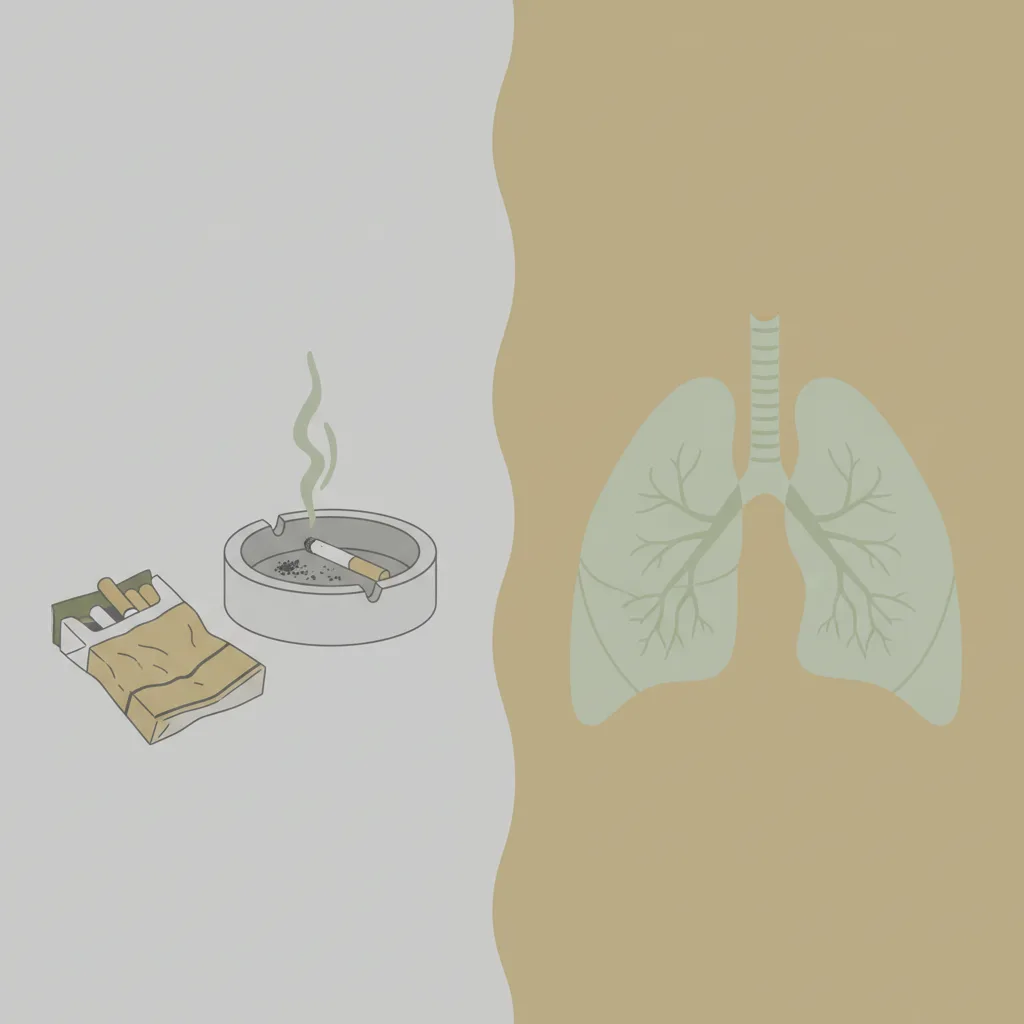
A single cigarette butt stubbed out beside a crumpled empty packet on the left, and a pair of healthy lungs in outline on the right
代替データ — この決断に関する直接的な後悔調査は存在しません。比率は後悔を直接尋ねる質問ではなく、満足度スコアとアクセス障壁のデータから導出されています。以下の注意事項を参照してください。

行動への後悔

十代のときに喫煙を始めた

72%

成人喫煙者の72%が喫煙を始めたことを後悔

現在喫煙する米国成人、全国代表

横断的、遡及的

不作為への後悔

一度も喫煙を始めなかった

2.0%

決して喫煙しなかった人の約2%が喫煙しなかったことを後悔(推定上限;直接調査は存在しない)

決して喫煙しなかった米国成人(このグループの直接後悔調査は存在しない;割合は推定上限)

直接的な遡及的後悔測定なし;横断的推定

この選択を後悔した割合

action dominates — 行動が優勢 — 多くは行動したことを後悔しています。

関連する決断

意味的に類似する決断 — 同じ領域、異なるトレードオフ。

健康

禁煙

この選択を後悔した割合

不作為が優勢

不作為の後悔が90.0倍高い

健康

ボディピアス

この選択を後悔した割合

行動が優勢

行動の後悔が4.0倍高い

健康

運動習慣

この選択を後悔した割合

不作為が優勢

不作為の後悔が13.4倍高い

健康

治療を求める vs. 依存症を隠す

この選択を後悔した割合

不作為が優勢

不作為の後悔が4.3倍高い

lifestyle

タトゥー

この選択を後悔した割合

行動が優勢

行動の後悔が1.6倍高い

lifestyle

菜食主義

この選択を後悔した割合

行動が優勢

行動の後悔が3.8倍高い

健康

依存症治療 vs 回避

この選択を後悔した割合

不作為が優勢

不作為の後悔が1.5倍高い

金融

医療費の交渉

この選択を後悔した割合

不作為が優勢

不作為の後悔が7.6倍高い

この決断の背後にあるリスク

この選択の根底にある確率。

72% of adult smokers regret ever starting to smoke, according to the 2014 Tobacco Products and Risk Perceptions Survey — the most recent nationally representative US measurement. The finding is not an outlier: the International Tobacco Control 4-Country Survey (2002, N>8,000) found 91% of US smokers would not have started if they could do it again, Cancer Research UK’s YouGov survey (2012, N=1,746) found 85% of UK smokers and ex-smokers wished they’d never started, and Gallup (2012) found 88%. The 72% Sanders-Jackson figure is the most conservative because it sampled only current smokers, excludes ex-smokers (who often report even higher regret), and used the most rigorous nationally representative methodology. All four data points converge: regret about starting is the dominant experience of adult smokers.

The inaction side of this decision has no direct survey counterpart. No published study has asked never-smokers whether they regret not having smoked — the construct is essentially absent from the tobacco-regret literature because researchers have no theoretical reason to expect a meaningful response. Nicotine addiction generates regret by trapping users in a habit they wish they had never started; the mechanism requires having started in the first place. Among the roughly 57% of US adults who have never smoked (2022 NHIS), the published literature documents no cohort wishing they had taken up the habit. A 2% upper-bound inaction rate is used here as a conservative placeholder, not a measured figure.

Under Gilovich and Medvec’s temporal regret framework, action regrets tend to fade over time while inaction regrets grow — making most long-horizon regret-pairs favour the inaction side. Smoking inverts this pattern almost uniquely. Nicotine addiction is self-sustaining: the continued physical urge to smoke, combined with repeated failed quit attempts (only 8.8% of US smokers who try to quit succeed in a given year, per CDC 2022), keeps action-side regret elevated and unresolvable for decades. The regret gap here — approximately 70 percentage points — is among the largest observed in bilateral regret research, and is driven not by forgetting but by the impossibility of undoing the addiction that the action created.

出典: 行動

根拠台帳

以下の各数値は各出典が報告した内容であり、引用した原文の抜粋と算出方法を記載しています。リンクをクリックして直接確認できます。

  1. [1] International Journal of Environmental Research and Public Health (PMC) — Regretting Ever Starting to Smoke: Results from a 2014 National Survey
    Regretting Ever Starting to Smoke: Results from a 2014 National Survey

    See all 2 Likelier entries citing this source →

    統計値
    71.5% of current smokers (95% CI: 68.6%–74.4%) regretted starting to smoke; an additional 20.7% were unsure
    抜粋
    “"The majority of smokers (71.5%) regretted starting to smoke. Being older and non-Hispanic white were significant predictors of regret. Smokers having a high intention to quit, having made quit attempts in the past year, worrying about getting lung cancer, believing smoking every day can be risky for your health, perceiving a risk of being diagnosed with lung cancer during one's lifetime, and considering themselves addicted to cigarettes were significant predictors of regret for smoking initiation." ”
    出典データ
    2017-04-07
    アクセス日
    2026-05-22
    計算過程
    Sanders-Jackson et al. (2017), 2014 Tobacco Products and Risk Perceptions Survey (TPRPS), nationally representative web-based survey, N=1,349 current smokers from 5,717 total respondents, weighted for non-institutionalized US adults aged 18+. Primary regret measure: "If you had it to do over again, would you start smoking cigarettes?" — 71.5% answered no (regret). An additional 20.7% said "don't know." This is the most recent nationally representative US peer-reviewed figure and is used as the entry's primary action regret_rate (rounded to 0.72). Cross-country context: Fong et al. (2004) reported 91% regret among US smokers in the ITC 4-country survey (N>8,000, 2002 data); Cancer Research UK / YouGov (2012, N=1,746) found 85% regret among UK smokers and ex-smokers; Gallup (2012, N=166) found 88%. The Sanders-Jackson figure (71.5%) is used as the conservative anchor because it is the most recent peer-reviewed US nationally representative estimate; the higher figures likely reflect broader samples including ex-smokers (who may have even higher regret) or older measurement.
  2. [2] Nicotine and Tobacco Research (Oxford Academic) — The near-universal experience of regret among smokers in four countries: findings from the International Tobacco Control Policy Evaluation Survey
    The near-universal experience of regret among smokers in four countries: findings from the International Tobacco Control Policy Evaluation Survey

    See all 2 Likelier entries citing this source →

    統計値
    About 90% of smokers across Canada, US, UK, and Australia agreed or strongly agreed they would not have started smoking if they could do it again; US-specific rate was 91%
    抜粋
    “"The proportion of smokers who agreed or agreed strongly with the statement 'If you had to do it over again, you would not have started smoking' was extremely high — about 90% — and nearly identical across the four countries." ”
    出典データ
    2004-11-01
    アクセス日
    2026-05-22
    計算過程
    Fong et al. (2004), International Tobacco Control Policy Evaluation Survey (ITC-4), baseline wave October–December 2002, random-digit-dialed telephone survey of over 8,000 adult smokers across Canada, US, UK, and Australia. The US-specific regret rate is cited as 91% in subsequent studies (Sanders-Jackson 2017 cites it as "91% regret among United States smokers"). Used here as corroborating multi-country evidence. The higher 91% relative to Sanders-Jackson 71.5% likely reflects different wording ("if you had to do it over again" vs "if you had it to do over again"), older data (2002 vs 2014), and possible sample composition differences. Both are authoritative; the entry uses the Sanders-Jackson 71.5% as the conservative, most-recent estimate.

出典: 不作為

根拠台帳

以下の各数値は各出典が報告した内容であり、引用した原文の抜粋と算出方法を記載しています。リンクをクリックして直接確認できます。

  1. [1] Morbidity and Mortality Weekly Report (CDC / MMWR) — Adult Smoking Cessation — United States, 2022
    Adult Smoking Cessation — United States, 2022
    統計値
    11.6% of US adults currently smoke; 67.7% of current smokers want to quit; 53.3% attempted to quit in the past year — consistent with zero reported regret about not having started among never-smokers
    抜粋
    “"Among adults who currently smoked, 67.7% wanted to quit, 53.3% tried to quit during the preceding year, and 8.8% successfully quit. There have been more former smokers than current smokers since 2002." ”
    出典データ
    2024-07-25
    アクセス日
    2026-05-22
    計算過程
    CDC MMWR report, 2022 National Health Interview Survey (NHIS), N=27,651 adults aged 18+. This source is used to establish the inaction-side baseline: among the ~84.4% of US adults who are not current smokers (former + never), the published literature contains no survey asking never-smokers whether they regret not having started smoking. The construct is essentially unmeasured because tobacco researchers have no theoretical reason to expect meaningful regret in never-smokers — nicotine creates its own demand through addiction, meaning regret for not starting is a concept that arises only after addiction is established. The 2% inaction rate is an estimated upper bound based on (a) the absence of any documented survey finding measurable never-smoker regret for not starting, (b) general population surveys showing near-universal awareness of smoking harms, and (c) the theoretical asymmetry: never-smokers cannot experience withdrawal-reinforced regret. See proxy_only annotation in caveats.
  2. [2] International Journal of Environmental Research and Public Health (PMC) — Regretting Ever Starting to Smoke: Results from a 2014 National Survey
    Regretting Ever Starting to Smoke: Results from a 2014 National Survey

    See all 2 Likelier entries citing this source →

    統計値
    Study sampled only current smokers (N=1,349); never-smokers were not assessed for regret about not starting, reflecting the field's consensus that this construct is not meaningfully present
    抜粋
    “"The majority of smokers (71.5%) regretted starting to smoke." ”
    出典データ
    2017-04-07
    アクセス日
    2026-05-22
    計算過程
    Sanders-Jackson et al. (2017) sampled only current smokers for regret about initiation. The 2014 TPRPS survey of 5,717 total respondents focused its initiation-regret questions exclusively on active smokers. The decision not to ask never-smokers the symmetrical question ("do you regret never starting?") reflects the research community's understanding that the response distribution would be near-zero and the construct is not clinically or behaviourally meaningful. This asymmetry is documented across all major tobacco-regret surveys including Fong et al. (2004), O'Connor et al. (2010), and Cancer Research UK / YouGov (2012). Used here as methodological grounding for the 2% upper-bound estimate.

注意事項

行動側には強固な直接後悔調査データがある(71.5%〜91%)。不作為側には直接調査がない。2%の不作為率は、喫煙未経験者が喫煙しなかったことを後悔しているという証拠が存在しないことに基づいた理論的上限値です。

生データ: /api/decisions.json

このデバイスで最近見た項目