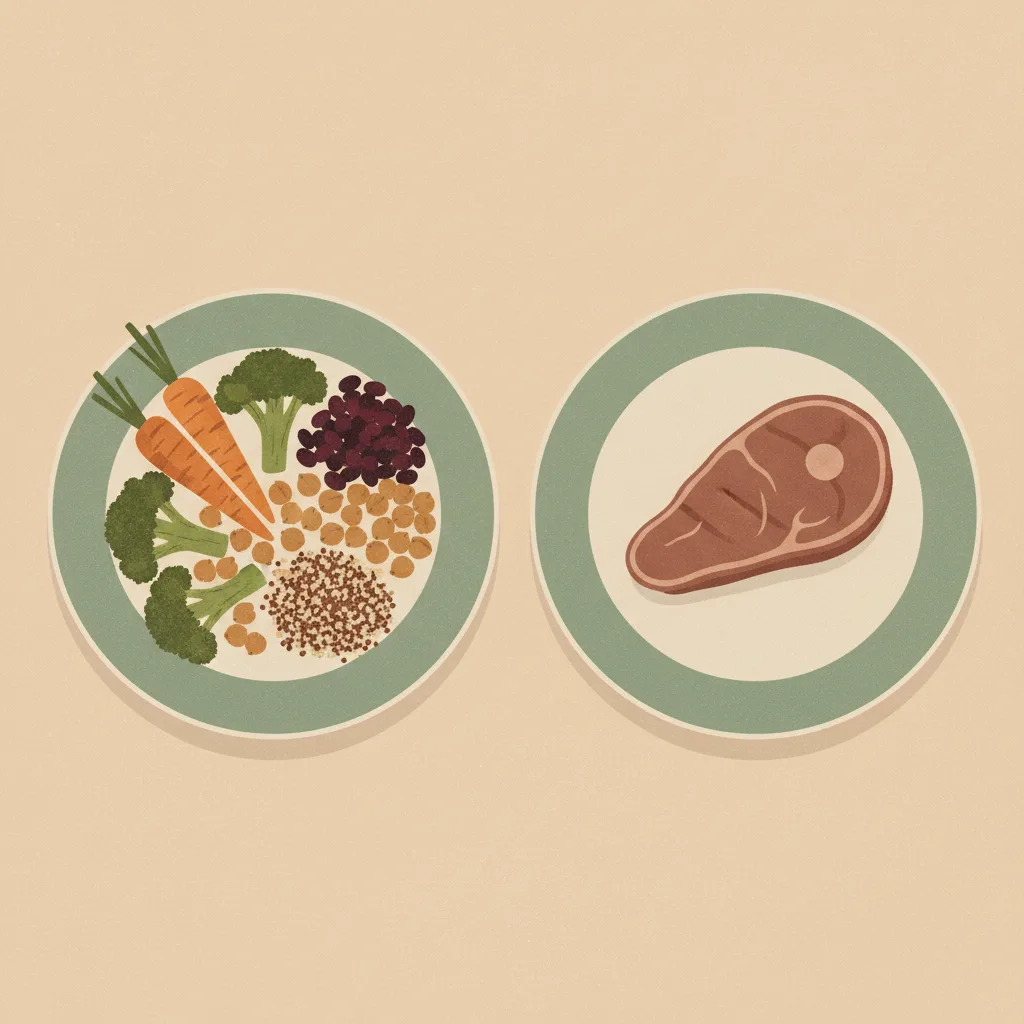




Of the people who adopted a vegetarian or vegan diet, 84% eventually returned to eating meat. The figure comes from Faunalytics’ 2014 survey of 11,399 US adults via Harris Interactive, the largest study of vegetarian and vegan retention. It serves directly as the action-side proxy above, in place of the previously constructed composite.
A lapse is not the same as regret, though. 37% of the lapsed expressed interest in re-adopting the diet. For them the regret attaches to stopping, or to barriers they could not overcome, and not to the diet itself. A Faunalytics obstacle analysis points to those barriers. Most lapses were driven by social isolation (84% were not part of any veg community), food access and the difficulty of preparing meals. Principled rejection of the diet was not the main driver.
The inaction side uses a 2022 Vegan Society survey of 2,000 non-vegan UK adults, in which 22% report feeling guilty about eating meat all of the time. That persistent-guilt figure is the proxy here. The combined 71% who report guilt “some” or “all” of the time was set aside, because persistent guilt maps more closely onto a regret-adjacent construct than intermittent discomfort does. The Vegan Society commissioned the survey and has an advocacy interest in high guilt numbers. Cognitive dissonance research (Bastian et al., 2012) also shows that meat eaters often resolve this guilt through justification strategies: “the guilt persists but produces no corresponding desire to act.”
So dietary identity is unstable. Most people who try vegetarianism quit, though many want to try again, and roughly one in five meat eaters carries persistent guilt about eating meat. The action-dominates pattern reflects a very high lapse rate set against a modest guilt rate, and the lapse rate mixes genuine dissatisfaction with situational barriers. Both numbers are proxies for different constructs, behavioral abandonment on one side and affective discomfort on the other. The large gap between them should be read with caution.