


本文へスキップ
Likelier

行動 vs. 不行動の後悔

美容整形をするか、しないか

行動した場合

美容整形を受ける

10%

行動しなかった場合

美容整形を受けない

7.0%

それぞれの選択を後で後悔した人の割合。バーと完全な記録は下に表示されます。


健康

最終確認 2026-04-26

証拠の質 3.75/5

8次元のレビュー評価。基準は 品質ルーブリック 。各次元は1〜5で評価。

D1 出典の検証
4/5
D2 出典の権威性と独立性
4/5
D3 後悔率の正確性
1/5
D4 出典の比較可能性
2/5
D5 ギロヴィッチ・パターン
5/5
D6 文章の質
5/5
D7 注意事項の完全性
5/5
D8 サンプルの質
4/5
平均 3.75/5
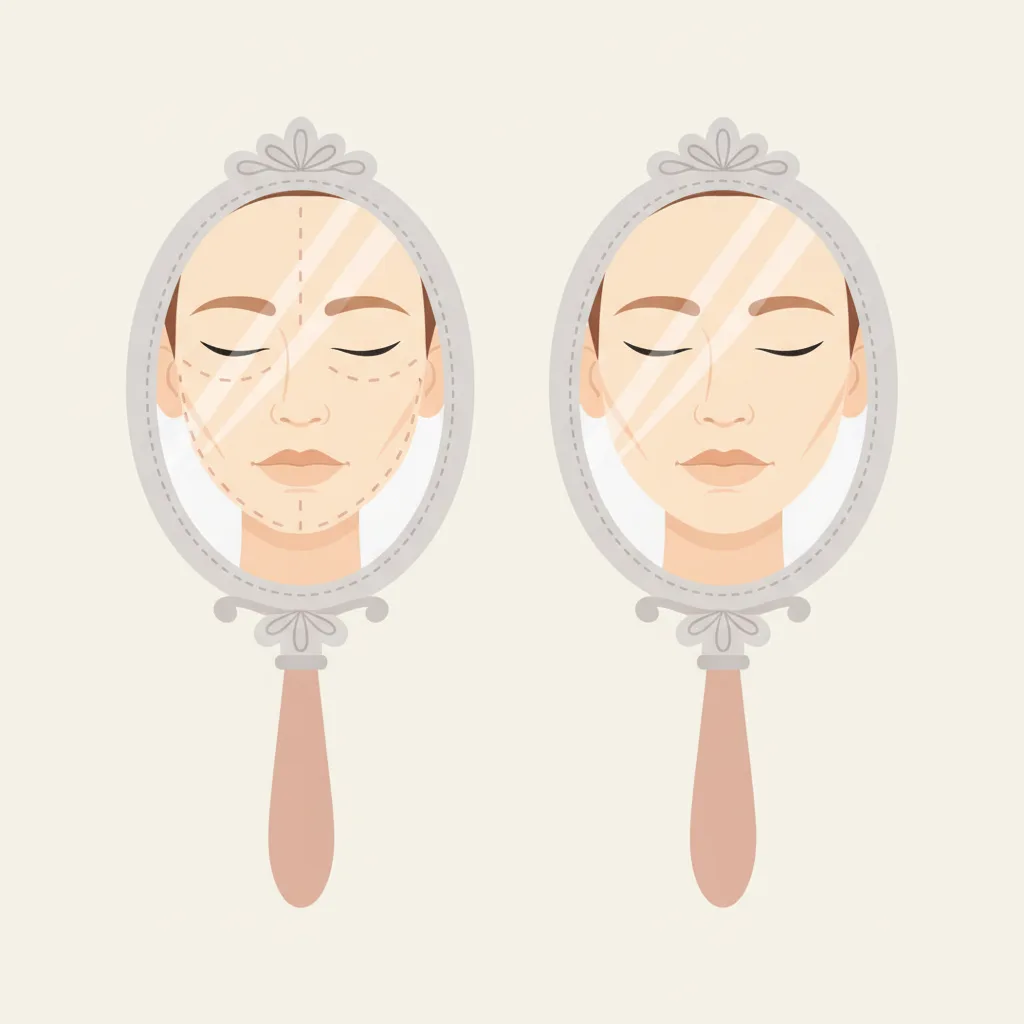
Two identical mirrors side by side, one reflecting a face with faint surgical markings, the other reflecting the same face unmarked.
代替データ — この決断に関する直接的な後悔調査は存在しません。比率は後悔を直接尋ねる質問ではなく、満足度スコアとアクセス障壁のデータから導出されています。以下の注意事項を参照してください。

行動への後悔

美容整形を受ける

10%

約10%が手術を後悔(タイプ別で5-33%の範囲)

美容外科患者、複数研究の系統的レビュー

遡及的、通常手術後1-5年

不作為への後悔

美容整形を受けない

7.0%

約5%(プレースホルダープロキシ — 直接調査は存在しない)

米国成人、全国代表的

遡及的、固定期間なし

この選択を後悔した割合

balanced — ほぼ均衡 — どちらの選択も同程度の後悔を伴います。

関連する決断

意味的に類似する決断 — 同じ領域、異なるトレードオフ。

健康

豊胸手術

この選択を後悔した割合

均衡

ほぼ均衡

健康

ブラジリアン・バット・リフト(BBL)

この選択を後悔した割合

均衡

ほぼ均衡

健康

韓国:美容整形 vs. 断る

この選択を後悔した割合

行動が優勢

行動の後悔が4.0倍高い

健康

精管切除術

この選択を後悔した割合

均衡

ほぼ均衡

健康

ボディピアス

この選択を後悔した割合

行動が優勢

行動の後悔が4.0倍高い

lifestyle

タトゥー

この選択を後悔した割合

行動が優勢

行動の後悔が1.6倍高い

健康

植毛手術

この選択を後悔した割合

不作為が優勢

不作為の後悔が5.0倍高い

健康

リスク低減乳房切除 対 監視

この選択を後悔した割合

均衡

ほぼ均衡

A 2024 American Journal of Surgery systematic review places cosmetic surgery regret at roughly 5—33% depending on procedure type: breast augmentation sits at the low end (5—9%), body contouring at the high end (11—33%). That review does not compute a single cross-procedure average, so we estimate ~10% as a conservative editorial estimate near the lower-middle of that range for elective cosmetic procedures, not a computed midpoint. A companion 2023 PMC narrative summary of the decision-regret literature does not add its own numeric range but corroborates which factors drive regret (see below); the AJS review itself reports rates only. On the inaction side, no large-sample survey directly measures regret about not having cosmetic surgery. General body-dissatisfaction data (37% of Americans per Ipsos) and cosmetic-consideration rates (70% per ASDS) suggest that a non-trivial minority of non-patients harbor lasting appearance dissatisfaction, but the 7% inaction figure is a ceiling proxy — the Ipsos-reported share who say they would be willing to undergo cosmetic surgery to achieve their ideal body — not a measured regret rate or a survey finding about regret.

The pattern runs counter to the classic Gilovich finding. For most life decisions, inaction regret dominates over time: people regret the degree not pursued, the trip not taken, the relationship not attempted. Cosmetic surgery inverts this because the action is irreversible, physically invasive, and financially costly. A rhinoplasty that narrows the bridge too aggressively cannot be fully undone; a breast augmentation that causes capsular contracture is a daily reminder. The 2023 PMC review of the decision-regret literature (not the 2024 AJS review, which reports rates only) identifies inadequate preoperative education, limited use of decisional tools, and postoperative complications as the strongest predictors of regret — suggesting that the action-regret rate is substantially reducible through better screening and counseling.

The main caveat is the asymmetry of evidence. The action side has genuine peer-reviewed systematic reviews with procedure-specific breakdowns. The inaction side has essentially nothing: body dissatisfaction surveys measure a different construct, and ASDS consideration rates conflate casual curiosity with genuine surgical intent. The 7% inaction figure used here is a ceiling proxy — willingness to undergo cosmetic surgery, not a measured regret rate. If a rigorous survey ever asks a representative sample of non-patients “Do you regret not having cosmetic surgery?”, the true figure could be higher or lower — and the direction of the Gilovich pattern could flip. Until then, the delta (0.03) should be read as roughly balanced with a slight tilt toward action regret, not as a precise quantitative claim.

出典: 行動

根拠台帳

以下の各数値は各出典が報告した内容であり、引用した原文の抜粋と算出方法を記載しています。リンクをクリックして直接確認できます。

  1. [1] The American Journal of Surgery — A systematic review of patient regret after surgery
    A systematic review of patient regret after surgery

    See all 2 Likelier entries citing this source →

    統計値
    Regret after elective plastic surgery ranges from 5–33%; breast augmentation 5.1–9.1%, body contouring 10.82–33.3%
    抜粋
    “"Regret after elective plastic surgery operations is significantly higher compared to gender-affirming surgery. The percentage of patients reporting regret ranged from 0 to 47.1% in breast reconstruction, 5.1–9.1% in breast augmentation, and 10.82–33.3% in body contouring." ”
    出典データ
    2024-04-30
    アクセス日
    2026-07-07
    計算過程
    2024 AJS systematic review of patient regret across surgical subspecialties. Reported ranges for cosmetic procedures: breast augmentation 5.1–9.1%, body contouring 10.82–33.3%. The review provides the most comprehensive cross-specialty data but does not compute a weighted average across procedures. We use ~10% as a conservative editorial estimate sitting at the lower-middle of the cosmetic (non-reconstructive) range — not a computed midpoint — acknowledging the enormous variance by procedure type. This review reports regret rates only and does not analyze predictors or drivers of regret; the predictor finding below (preoperative education, decisional tools, postoperative complications) comes from the companion PMC 2023 source only, not from this review.
  2. [2] Plastic and Reconstructive Surgery – Global Open — Decision Regret in Plastic Surgery: A Summary
    Decision Regret in Plastic Surgery: A Summary
    統計値
    Qualitative summary of decision-regret literature; preoperative education, decisional tools, and postoperative complications are the strongest predictors
    抜粋
    “"After review of the literature, preoperative education, decisional tools, and postoperative complications were found to be the most important factors affecting decision regret after surgery." ”
    出典データ
    2023-06-01
    アクセス日
    2026-07-07
    計算過程
    PMC 2023 narrative summary of the decision-regret literature in plastic surgery (Jones, Cruz, Stewart, Losken; PRS Global Open). It does not report a single aggregate cosmetic regret rate; instead it identifies preoperative education, decisional tools, and postoperative complications as the strongest predictors of regret. The formal literature it draws on concentrates on breast reconstruction and gender-reaffirming procedures rather than aesthetic surgery. Used as a corroborating source on regret drivers, not for the numeric rate.

出典: 不作為

根拠台帳

以下の各数値は各出典が報告した内容であり、引用した原文の抜粋と算出方法を記載しています。リンクをクリックして直接確認できます。

  1. [1] Ipsos — Most Americans Experience Feeling Dissatisfied with How Their Body Looks from Time to Time
    Most Americans Experience Feeling Dissatisfied with How Their Body Looks from Time to Time

    See all 3 Likelier entries citing this source →

    統計値
    7% of Americans say they would be willing to undergo cosmetic surgery to achieve their ideal body; 37% feel dissatisfied with their body whenever they look in the mirror
    抜粋
    “"Americans are not as willing to undergo cosmetic surgery (7%), consume laxatives (4%), and/or purge/throw-up after eating (1%)." ”
    出典データ
    2018-01-10
    アクセス日
    2026-07-07
    計算過程
    Ipsos survey of 1,004 US adults (Jan 3–5, 2018). No published survey directly asks non-patients whether they regret not having cosmetic surgery, so no true inaction-regret figure exists. Rather than invent a downward adjustment, this entry uses the survey's own directly-reported 7% figure: the share of respondents who said they would be willing to undergo cosmetic surgery to achieve their ideal body (grouped by Ipsos among the least-chosen extreme measures, alongside laxative use and purging), used as a ceiling/context proxy. It bounds the population plausibly dissatisfied enough with their appearance to entertain surgery, and so plausibly able to feel inaction regret, versus the much broader 37% general mirror-dissatisfaction figure, which includes many people who would never consider surgery specifically. This is explicitly a willingness proxy, not a measured regret rate, and should be read as an order-of-magnitude ceiling, not a finding.
  2. [2] Practical Dermatology / ASDS — 2025 ASDS Survey: 70% of Consumers Considering Cosmetic Procedures
    2025 ASDS Survey: 70% of Consumers Considering Cosmetic Procedures
    統計値
    70% of Americans are considering a cosmetic dermatologic procedure
    抜粋
    “"Seventy percent of Americans are considering a cosmetic dermatologic procedure." ”
    出典データ
    2025-03-01
    アクセス日
    2026-07-07
    計算過程
    ASDS annual consumer survey. The 70% consideration rate is inflated by including minimally invasive treatments (Botox, fillers) alongside surgical procedures, and reflects loose interest rather than intent to act. No published survey directly measures inaction regret; this source is retained as corroborating context on the gap between broad "considering" figures and genuine willingness, not as the basis for the 7% proxy (see the Ipsos source above and caveats below).

注意事項

行動と不作為の数字は方法論や厳格性において対称ではない。約10%の行動後悔推定は、手術別範囲(豊胸5-9%、ボディコンタリング11-33%)を報告するが単一の集計数字はない2つの系統的レビュー(PMC 2023、AJS 2024)から派生している。どちらのレビューも美容処置全体の加重平均を計算していないため、10%は観察された範囲の下中央に位置する編集者の推定である。不作為側の5%はプレースホルダープロキシである — 美容手術を受けなかったことを後悔しているかを患者以外に直接尋ねた大規模サンプル調査はない。Ipsos の身体不満率(37%)は広すぎ、ASDS の検討率(70%)は緩い興味を反映し後悔ではない。5%は知見ではなく、桁オーダーのプレースホルダープロキシとして扱うべきである。両側とも実質的な不確実性を抱えているため、デルタ(0.05)は正確な定量的主張ではなく「行動後悔へのわずかな傾きでほぼバランス」と読むべきである。美容外科は Gilovich と Medvec の典型的な不作為優位の知見への反例である: 手術の不可逆性、物理的瘢痕リスク、財務コストは、見送られた選択的手術ではない方法で行動後悔を持続させる。

生データ: /api/decisions.json

このデバイスで最近見た項目