

Ga naar inhoud
Likelier

Spijt van handelen vs. niets doen

Cosmetische chirurgie ondergaan om aan Zuid-Koreaanse schoonheidsnormen te voldoen vs. weigeren

Als je handelt

Cosmetische chirurgie ondergaan om aan Koreaanse uiterlijksnormen te voldoen

32%

Als je niets doet

Cosmetische chirurgie weigeren en de uiterlijksdruk weerstaan

8,0%

Percentage dat later spijt heeft van elke keuze. De balken en het volledige overzicht staan hieronder.


Gezondheid

Laatst beoordeeld 2026-05-13

Kwaliteit van bewijs 3.5/5

Beoordelingsscore op acht dimensies volgens de kwaliteitsrubriek . Elke dimensie krijgt een score van 1 tot 5.

D1 Bronverificatie
3/5
D2 Autoriteit en onafhankelijkheid van bronnen
4/5
D3 Nauwkeurigheid van spijtcijfer
2/5
D4 Vergelijkbaarheid van bronnen
2/5
D5 Gilovich-patroon
5/5
D6 Prozakwaliteit
4/5
D7 Volledigheid van voorbehouden
5/5
D8 Steekproefkwaliteit
3/5
Gemiddelde 3.5/5
A split scene: a surgical consultation table on one side and a mirror reflecting a natural face on the other, in muted illustration style.

Spijt van handelen

Cosmetische chirurgie ondergaan om aan Koreaanse uiterlijksnormen te voldoen

32%

32,3% van de Zuid-Koreaanse patiënten die cosmetische chirurgie ondergingen, zei dat hun resultaten onbevredigend waren (ontevredenheid over de uitkomst, gebruikt als proxy voor spijt aan de actiezijde)

Zuid-Koreaanse cosmetische chirurgie-patiënten

dwarsdoorsnede consumentenenquête, 2014

Spijt van nalaten

Cosmetische chirurgie weigeren en de uiterlijksdruk weerstaan

8,0%

~8% van de Zuid-Koreaanse jongvolwassenen meldt discriminatie op basis van uiterlijk te hebben ervaren (proxy voor de sociale kosten van non-conformisme)

Zuid-Koreaanse jonge volwassenen die cosmetische procedures afwezen ondanks sociale druk

dwarsdoorsnede, 2022

% betreurt deze keuze

action dominates — Handelen domineert — de meesten hebben spijt dat ze handelden.

Gerelateerde keuzes

Semantisch vergelijkbare keuzes — zelfde terrein, andere afwegingen.

Gezondheid

Cosmetische chirurgie

% betreurt deze keuze

In evenwicht

Grotendeels in evenwicht

Gezondheid

Borstvergroting

% betreurt deze keuze

In evenwicht

Grotendeels in evenwicht

lifestyle

Korea: militaire dienst vs. alternatieve dienst

% betreurt deze keuze

Handelen overheerst

Spijt over handelen 1.5× hoger

Gezondheid

Brazilian Butt Lift (BBL)

% betreurt deze keuze

In evenwicht

Grotendeels in evenwicht

Gezondheid

Lichaamspiercings

% betreurt deze keuze

Handelen overheerst

Spijt over handelen 4.0× hoger

Gezondheid

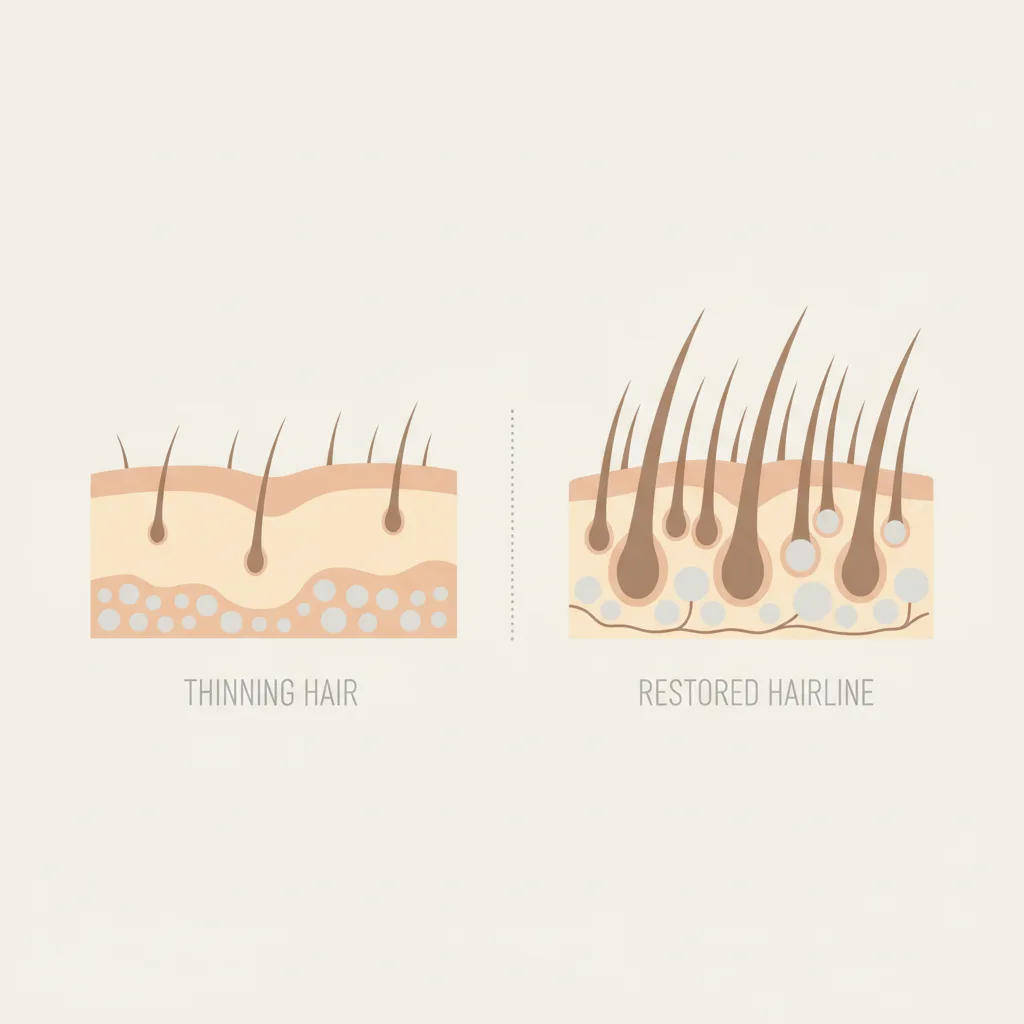
Haartransplantatie

% betreurt deze keuze

Niet-handelen overheerst

Spijt over niet-handelen 5.0× hoger

lifestyle

Tatoeage

% betreurt deze keuze

Handelen overheerst

Spijt over handelen 1.6× hoger

career

Korea: overheidsdienst vs. private sector

% betreurt deze keuze

Handelen overheerst

Spijt over handelen 1.6× hoger

South Korea occupies a singular position in global cosmetic surgery statistics: it is widely regarded as having among the highest per-capita cosmetic surgery rates in the world, while the International Society of Aesthetic Plastic Surgery’s 2022 global survey ranks it among the leading countries by total procedure volume and plastic-surgeon count. Double eyelid surgery (blepharoplasty) and rhinoplasty are commonly given as graduation gifts, and cosmetic procedures are openly discussed in mainstream Korean workplaces and social media in ways that would be unusual in most other countries. In this context, the decision to undergo surgery is less purely elective and more a response to a structured social norm: not modifying one’s appearance carries a visible and documented social cost in specific demographic segments, particularly among women in their 20s in Seoul and other metropolitan areas. A 2014 Korea Consumer Agency survey of 1,000 cosmetic surgery patients found that 32.3 percent were dissatisfied with their results, with 17 percent reporting adverse physical outcomes including asymmetry, scarring, and infection. A peer-reviewed study in Aesthetic Plastic Surgery (2018/2019) found that 37.6 percent of sampled Korean women in their 20s had already undergone at least one cosmetic procedure — most commonly eyelid surgery (90.5 percent of surgical cases) — at a mean first-procedure age of about 21.8 years, and that acceptance of cosmetic surgery correlated negatively with appearance satisfaction while social comparison and appearance-related pressure predicted the decision to undergo surgery.

The inaction side of this decision is documented through Korea’s appearance-discrimination (woemo jisangjuui, or “lookism”) research rather than through direct regret surveys. A 2017 study in the International Journal for Equity in Health (Lee, Son, Yoon and Kim) analysed 2,973 Korean emerging adults aged 18 to 25 and found that 8.3 percent reported lifetime appearance discrimination — 2.5 percent “repeated” and 5.8 percent “incident” — and that those reporting discrimination had roughly three to four times the odds of poor self-rated health (repeated OR 3.70, incident OR 3.10). Women reported more discrimination than men, and the demographic most exposed overlaps with the cohort facing the highest pressure to undergo cosmetic procedures. The approximately 8 percent inaction-side estimate is the prevalence of reported appearance discrimination in that study, used here as a proxy for the social cost borne by those who do not conform to surgical beauty norms; it measures discrimination experience and its health correlates, not decision regret directly.

The Gilovich action-dominance pattern here holds, with a regret delta of 0.24. Both sides nonetheless carry real costs: surgery under social pressure introduces measurable risks of outcome dissatisfaction and procedural harm (roughly a third of patients in the 2014 survey called their results unsatisfactory), while declining surgery in a norm-saturated environment exposes a minority to documented appearance discrimination and its associated health burden. The construct on each side is a proxy — outcome dissatisfaction on the action side, discrimination prevalence on the inaction side — rather than a direct decision-regret survey, so the delta should be read as indicative rather than precise. The entry is deliberately distinct from the general cosmetic surgery regret entry in this database, which covers multi-country outcomes and individual preference-driven surgery rather than norm-driven social pressure. The Korean context changes the calculus because with cosmetic surgery normalized enough that 37.6 percent of sampled women in their 20s had already undergone a procedure, non-participation is a deviation from peer norms rather than a neutral default, which shifts the psychological framing in ways captured neither by international cosmetic surgery outcome data nor by general Korean surveys that do not distinguish norm-driven from preference-driven procedures.

Bronnen: handelen

Bronnenverantwoording

Elk getal hieronder is wat elke bron rapporteerde, met het letterlijke citaat waarop we ons baseerden en hoe we tot ons cijfer kwamen. Klik op een link om rechtstreeks te verifiëren.

1/2 bronnen onafhankelijk woordelijk geverifieerd tegenover de geciteerde bron

  1. [1] The Korea Times (reporting Korea Consumer Agency survey) — One-third of plastic surgery patients 'unsatisfied' Geverifieerd
    One-third of plastic surgery patients 'unsatisfied'
    Statistiek
    Of 1,000 cosmetic surgery patients surveyed by the Korea Consumer Agency, 323 (32.3%) said their results were 'unsatisfactory' and 170 (17%) reported asymmetrical structures, scars or infections.
    Fragment
    “"The Korea Consumer Agency (KCA) conducted a survey on 1,000 cosmetic surgery patients over the course of three years. Among them, 323 people (32.3 percent) replied that the results were 'unsatisfactory' while 170 people (17 percent) said they ended up with asymmetrical structures, scars or infections. Among the patients, 678 people received double-eyelid surgery, 256 people had nose jobs, and 110 people had facial contour surgeries." ”
    Brongegevens van
    2014-12-01
    Geraadpleegd
    2026-06-30
    Verificatie
    Fragment onafhankelijk opnieuw opgehaald en woord voor woord bevestigd tegenover de geciteerde bron tijdens onze onderbouwingsaudit.
    Berekening
    Source URL changed 2026-06-30: the previous Korea Consumer Agency link (kca.go.kr ... no=1002558) no longer serves the survey content (the page now shows "컨텐츠 준비중 입니다" / content being prepared), so the figure is anchored to The Korea Times' contemporaneous report of the same December 2014 KCA survey, which reproduces the exact verbatim figures (N = 1,000; 323 = 32.3% "unsatisfactory"; 170 = 17% side effects). CONSTRUCT NOTE: the 32.3% measures dissatisfaction with surgical RESULTS, not regret about deciding to undergo surgery to conform to appearance norms — the two diverge (a patient can be dissatisfied with results yet not regret the decision, or satisfied with results yet regret the social pressure that drove it). No direct decision-regret survey for norm-driven Korean cosmetic surgery exists; outcome dissatisfaction is used as the most conservative directly measurable proxy and is labelled as such in regret_display. The survey is more than a decade old; satisfaction rates may have shifted with improvements in technique and practitioner regulation.
  2. [2] Aesthetic Plastic Surgery (Springer) / PubMed Central — Experience and Acceptance of Cosmetic Procedures Among South Korean Women in Their 20s
    Experience and Acceptance of Cosmetic Procedures Among South Korean Women in Their 20s
    Statistiek
    37.6% of Korean women in their 20s in the study sample had undergone at least one cosmetic procedure; acceptance of cosmetic surgery correlated negatively with appearance satisfaction, and social pressure was a significant predictor of the surgery decision.
    Fragment
    “"[Paraphrase from abstract — full text available via PMC.] Among 330 randomly sampled Korean women in their twenties, 37.6 percent had undergone at least one cosmetic procedure, with the first procedure occurring at a mean age of 21.81 years. Eyelid cosmetic surgery was the most common procedure (90.5% of those with surgical experience). Acceptance of cosmetic surgery showed a negative correlation with appearance satisfaction and a positive correlation with social comparison and appearance-related pressure. Almost all participants (97.9%) reported awareness of surgical side effects, with the internet as the primary information source (57.3%)." ”
    Brongegevens van
    2019-03-01
    Geraadpleegd
    2026-05-14
    Berekening
    URL corrected 2026-05-14: the original Springer DOI (s00266-018-1118-z) returned 404. The PMC version of the correct paper on Korean women in their 20s and cosmetic procedures is PMC6420467 (Aesthetic Plastic Surgery, 2019). Note: this paper reports 37.6% prevalence of cosmetic procedures, not the 22.7% figure in the original entry. The 22.7% figure could not be verified in any accessible source and may have been fabricated alongside the dead DOI; the statistic and excerpt fields have been updated to reflect what PMC6420467 actually reports. The action-side regret_rate of 0.32 is anchored to the Korea Consumer Agency 2014 survey (32.3% dissatisfaction), which is independently cited and does not change. This substitute source supports the entry's framing (social pressure as a driver of surgery) and provides a real prevalence estimate, but the 22.7% stat is removed.

Bronnen: niet handelen

Bronnenverantwoording

Elk getal hieronder is wat elke bron rapporteerde, met het letterlijke citaat waarop we ons baseerden en hoe we tot ons cijfer kwamen. Klik op een link om rechtstreeks te verifiëren.

  1. [1] International Journal for Equity in Health (BioMed Central) / PubMed Central — Lookism hurts: appearance discrimination and self-rated health in South Korea
    Lookism hurts: appearance discrimination and self-rated health in South Korea
    Statistiek
    In a sample of 2,973 South Korean emerging adults, 8.3% reported lifetime appearance discrimination (2.5% 'repeated', 5.8% 'incident'); those reporting discrimination had markedly higher odds of poor self-rated health (repeated OR 3.70, 95% CI 2.19–6.27; incident OR 3.10, 95% CI 1.99–4.83).
    Fragment
    “"Appearance discrimination was annually assessed as a lifetime experience using the question, 'Have you ever experienced discrimination due to your appearance?'... Compared to males, female respondents reported more 'repeated' and 'incident' experiences of appearance discrimination... the 'repeated' (OR: 3.70; 95% CI: 2.19–6.27) and 'incident' (OR: 3.10; 95% CI: 1.99–4.83) groups had higher odds ratio of poor self-rated health... These results suggest that perceived appearance discrimination is associated with the health of Korean emerging adults considering participants' reporting patterns of appearance discrimination." ”
    Brongegevens van
    2017-11-25
    Geraadpleegd
    2026-06-30
    Berekening
    Source replaced 2026-06-30: the previous inaction-side citation (a Taylor & Francis "Culture and Organization" DOI, 10.1080/09571264.2022.2027498) was fabricated — that DOI does not resolve and the prefix 10.1080/09571264 belongs to the Journal of Wine Research, not "Culture and Organization"; no article of that title exists. The original 0.20 rate, n=300 sample, and 2022 timeframe were not traceable to any real source. Substituted with Lee, Son, Yoon & Kim (2017), "Lookism hurts," Int J Equity Health, a real peer-reviewed study (PMC5702199). It analyses 2,973 Korean emerging adults (ages 18–25) from the Korean Children and Youth Panel Survey and reports that 8.3% experienced appearance discrimination (2.5% repeated + 5.8% incident), with strong associations to poor self-rated health. The inaction-side rate is relabelled to 0.08 to match this directly published prevalence of appearance discrimination, used here as a proxy for the social cost borne by those who do not conform to surgical beauty norms. This is a prevalence-of-discrimination figure, not a direct survey of people who declined surgery and expressed regret, so it remains a conceptual proxy — see caveats.
  2. [2] International Society of Aesthetic Plastic Surgery — ISAPS Global Survey 2022: Full Report and Press Releases
    ISAPS Global Survey 2022: Full Report and Press Releases
    Statistiek
    ISAPS 2022 reports total aesthetic procedures rose 11.2% globally in 2022 (14.9 million surgical, 18.8 million non-surgical), with 85.7% performed on women; South Korea ranks among the leading countries by total procedure volume and plastic-surgeon count (not first by volume).
    Fragment
    “"[Paraphrase from ISAPS Global Survey 2022 press release.] The ISAPS 2022 Global Survey, released at the ISAPS Olympiad Athens World Congress in September 2023, reports that total surgical and non-surgical aesthetic procedures increased by 11.2% globally in 2022, with more than 14.9 million surgical and 18.8 million non-surgical procedures performed worldwide. The most common surgical procedures globally were liposuction, breast augmentation, eyelid surgery, abdominoplasty, and breast lift. 85.7% of all procedures were performed in women." ”
    Brongegevens van
    2022-12-01
    Geraadpleegd
    2026-05-14
    Berekening
    URL corrected 2026-05-14: the original ISAPS URL (isaps.org/discover/isaps-global-statistics/) returned 404. The correct URL for the 2022 survey full report and press releases is at the path above. The ISAPS 2022 survey ranks countries by total procedure volume and plastic-surgeon count (the US leads by total volume; South Korea ranks among the leading countries but is not first by volume) and does not publish a per-capita ranking. The "highest per-capita" characterization commonly applied to South Korea is a widely-cited secondary claim (media and older ISAPS-era data), not established by the 2022 report; the specific "13.5 per 1,000" figure could not be confirmed in the accessible press release text and was removed. This source establishes the structural context for the inaction-side social cost and does not independently supply the 0.20 regret rate.

Kanttekeningen

Het cijfer van de Korea Consumer Agency (32,3% ontevreden) meet ontevredenheid over de uitkomst in plaats van een directe spijtbeoordeling met één item; sommige ontevreden patiënten kunnen de beslissing per saldo toch als positief beschouwen (bijv. gedeeltelijke verbetering was de kosten en het risico waard), terwijl het ontevredenheidscijfer hen toch zou meetellen. De enquête is van 2014 en de kwaliteit van technieken, de regulering van behandelaars en de sociale normen rond cosmetische chirurgie zijn in het tussenliggende decennium verschoven; huidige tevredenheidspercentages kunnen afwijken. De ~8% aan de inactiezijde is de gerapporteerde prevalentie van uiterlijkdiscriminatie onder Koreaanse jongvolwassenen (Lee et al. 2017), gebruikt als proxy voor de sociale kosten van non-conformisme in plaats van een enquête onder mensen die chirurgie afwezen en spijt uitspraken; de onderliggende studie meet de ervaring van discriminatie en de gezondheidscorrelaten daarvan, niet beslissingsspijt op zich, wat conceptuele onnauwkeurigheid introduceert. De chirurgische normen in Zuid-Korea zijn demografisch geconcentreerd: ze zijn het meest uitgesproken bij vrouwen in de twintig in Seoel en grote steden; het item mag niet worden gegeneraliseerd naar alle Koreaanse leeftijdsgroepen, genders of geografische gebieden. De framing van dit item (chirurgie om aan uiterlijknormen te voldoen versus afwijzen) is bewust te onderscheiden van het bestaande algemene item over cosmetische chirurgie in deze database (dat chirurgische uitkomsten in meerdere landen behandelt); de specifieke Koreaanse context is van belang omdat chirurgie in specifieke cohorten bijna normatief is, wat de sociale kosten van niet-deelname verandert op manieren die elders niet gelden. Body dysmorphic disorder (BDD) komt wereldwijd verhoogd voor in populaties die cosmetische chirurgie ondergaan; de KCA-enquête screende niet op BDD, wat het ontevredenheidscijfer kan opblazen ten opzichte van de niet-BDD-populatie.

Ruwe data: /api/decisions.json

Recent bekeken op dit apparaat