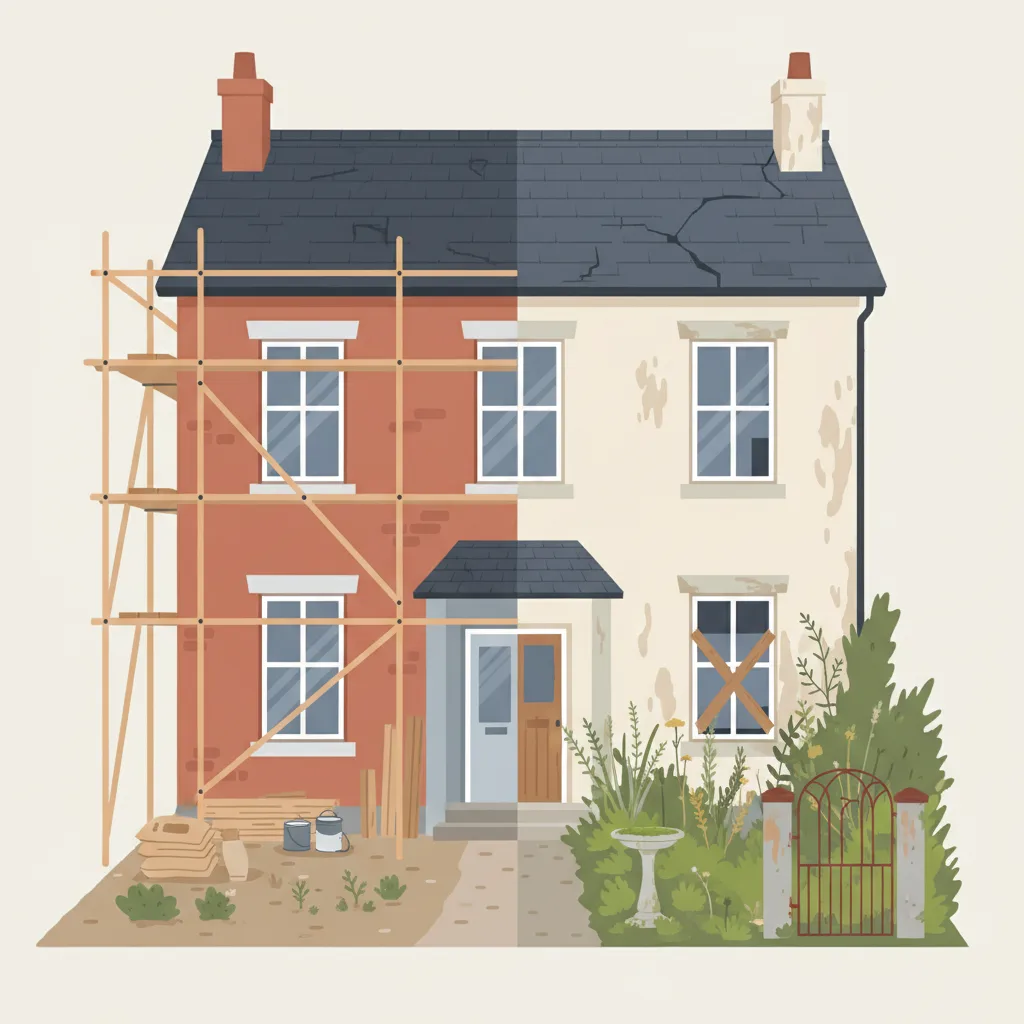
Rezygnacja z klauzuli technicznego odbioru nieruchomości, aby wygrać ofertę, vs utrzymanie prawa do inspekcji
Jeśli działasz
Rezygnacja z warunku technicznego odbioru
47%
Jeśli nie działasz
Utrzymanie prawa do inspekcji
15%
Odsetek osób, które później żałują każdego wyboru. Słupki i pełna kartoteka danych poniżej.
Finanse
Ostatnio sprawdzono 2026-05-11
Jakość dowodów 4.0/5
Ocena recenzji w ośmiu wymiarach względem
rubryki jakości
. Każdy wymiar oceniony w skali 1–5.
D1 Weryfikacja źródeł
4/5
D2 Autorytet i niezależność źródeł
4/5
D3 Dokładność wskaźnika żalu
2/5
D4 Porównywalność źródeł
3/5
D5 Wzorzec Gilovicha
5/5
D6 Jakość tekstu
5/5
D7 Kompletność zastrzeżeń
5/5
D8 Jakość próby
4/5
Średnia4.0/5
Dane zastępcze — dla tej decyzji nie istnieje bezpośrednie badanie żałowania. Wskaźniki są oparte na ocenach zadowolenia i danych o barierach dostępu, a nie na pytaniach bezpośrednio dotyczących żałowania. Zobacz zastrzeżenia poniżej.
Żal za działanie
Rezygnacja z warunku technicznego odbioru
47%
47% kupujących, którzy zrezygnowali z inspekcji, żałuje tej decyzji
Amerykańscy kupujący domy, którzy przeprowadzili się między 2020 a 2023
retrospektywnie, przeprowadzki 2020–2023
Żal za zaniechanie
Utrzymanie prawa do inspekcji
15%
żadna bezpośrednia ankieta tego nie mierzy; ~15% to miara zastępcza autora, ograniczona przez 18%, którzy stwierdzili, że odrzucone oferty utrudniały sprawę, oraz 31%, którzy złożyli 3 lub więcej ofert (frustracja, a nie zmierzony żal)
Amerykańscy kupujący domy na konkurencyjnych rynkach, którzy utrzymali zastrzeżenia
retrospektywnie, zakupy 2023–2025
% żałuje tej decyzji
Rezygnacja z warunku technicznego odbioruUtrzymanie prawa do inspekcji
47%15%
action dominates — Działanie dominuje — większość żałuje, że podjęła działanie.
Powiązane decyzje
Semantycznie podobne decyzje — ten sam obszar, inne kompromisy.
Negocjowanie rachunku medycznegoZapłacenie podanej kwoty w całości
5,0%38%
Zaniechanie dominuje
Żal za zaniechaniem 7.6× wyższy
Waiving a home inspection contingency became a common tactic in the 2020–2022 housing frenzy: buyers dropped the clause to make their offers more appealing in multi-bid situations. A 2023 survey of 1,000 Americans who had moved since 2020 found that 15% waived a home inspection — and of those, 47% came to regret it. The mechanism is predictable: inspections exist to surface hidden defects (structural issues, failing HVAC, water damage, electrical hazards) that sellers are not always required to disclose. Clever Real Estate’s 2025 annual buyer survey (n=986) found that 44% of recent buyers discovered undisclosed problems after moving in, a figure that has held steady across three years of surveys regardless of whether buyers had an inspection.
This entry is unusual in the dataset: the action-regret rate substantially exceeds the inaction-regret estimate, reversing the typical pattern. Most negotiation and risk-taking decisions generate more regret from inaction than action, because the unchosen path is idealized over time. Here, buyers who waived inspection took a real, specific risk — purchasing a property sight-unseen for major defects — and a large fraction paid for it. The buyers who held firm on inspection rights and eventually bought a different home did face friction (Clever Real Estate 2025 finds the median buyer made two offers before one was accepted, and 31% made three or more), but the market normalization of multiple-offer sequences means that holding out is not an outlier experience. It is the typical path.
The limitations are meaningful. The 47% figure comes from a survey commissioned by a home services company (All Star Home), and full methodology was not disclosed; the selection of buyers who moved during 2020–2023 oversamples a period of unusually intense bidding competition. NAR Realtors Confidence Index data shows inspection waivers peaked at roughly 30% of transactions in mid-2022 and have since receded to 13–23% as the market cooled; in today’s market, most buyers can include inspection contingencies without significant competitive disadvantage. The 15% inaction-regret estimate is a proxy with no direct survey equivalent. Forty-five percent of sellers who rejected contingent offers and held out for cleaner bids ultimately settled for lower prices (Clever Real Estate 2023) — suggesting that buyers who held contingencies often prevailed anyway, which further suppresses inaction regret in hindsight.
Źródła: działanie
Rejestr twierdzeń
Każda liczba poniżej jest tym, co podało dane źródło — z dosłownym cytatem, na którym się oparliśmy, i sposobem, w jaki doszliśmy do naszej wartości. Kliknij dowolny link, żeby zweryfikować bezpośrednio.
1/2 źródeł niezależnie zweryfikowanych słowo w słowo z podanym źródłem
[1]Pennsylvania Association of Realtors (citing All Star Home survey) — Why Americans Regret Moving Since 2020
Źródło referencyjne
15% of movers waived a home inspection; of those who waived, 47% regret forgoing one
Cytat
“"15% of movers waived a home inspection. Of those who waived, 47% regret forgoing a home inspection."
”
Dane źródłowe z
2023-01-01
Dostęp
2026-05-11
Obliczenie
All Star Home commissioned survey of n=1,000 Americans who moved between 2020 and 2023, published 2023 via Pennsylvania Association of Realtors. The 47% regret figure is the direct and only published US survey statistic specifically isolating regret among buyers who waived inspection — it is not a proxy. Caveat: All Star Home is a home services brand, not an independent research firm; full methodology (panel, margin of error, sampling frame) was not disclosed in the secondary source. Used as the best available direct measurement with appropriate uncertainty noted in caveats.
[2]Clever Real Estate — Home Buyer Report 2023
Zweryfikowane
Źródło referencyjne
33% of 2022–2023 buyers feel remorse about the upkeep their home needs (up from 25% in 2022); 39% said the seller was not upfront about how much maintenance the home would need
Cytat
“"One-third of buyers (33%) feel remorse about the upkeep their home needs, compared to 25% in 2022." "Purchasing a home that requires too much maintenance is the most common regret — especially when 39% of buyers said the seller was not upfront about how much maintenance the home would need."
”
Dane źródłowe z
2023-04-13
Dostęp
2026-05-11
Weryfikacja
Cytat niezależnie pobrany ponownie i potwierdzony słowo w słowo z podanym źródłem podczas naszego audytu ugruntowania.
Obliczenie
Clever Real Estate annual homebuyer sentiment survey, n=1,000 US adults who purchased a home in 2022–2023, fielded April 12–13, 2023. Does not include a direct "regret waiving inspection" question, but the 33% upkeep-remorse rate and the 39% who said the seller was not upfront about maintenance are contextual corroboration: post-purchase problem discovery is the primary mechanism through which inspection-waiver regret materializes. (The 2023 report does not publish an inspection-waiver rate or a post-move problem-discovery rate; those figures — 13% waived, 44% discovered undisclosed problems — come from Clever's 2025 wave, n=986, and are cited separately on the inaction side and in the prose.) Used to support the structural claim that skipping inspection creates measurable downstream regret, not as the primary regret rate source.
Źródła: bezczynność
Rejestr twierdzeń
Każda liczba poniżej jest tym, co podało dane źródło — z dosłownym cytatem, na którym się oparliśmy, i sposobem, w jaki doszliśmy do naszej wartości. Kliknij dowolny link, żeby zweryfikować bezpośrednio.
1/2 źródeł niezależnie zweryfikowanych słowo w słowo z podanym źródłem
[1]Clever Real Estate — Home Buyer Survey 2025
Źródło referencyjne
50% of 2023–2025 buyers made two or more offers; 31% made three or more; 18% reported rejected offers added difficulty
Cytat
“"50% of buyers made two or more offers before acceptance. 31% made three or more. 18% made four or more. 18% reported rejected offers added difficulty to their purchase."
”
Dane źródłowe z
2025-05-11
Dostęp
2026-05-11
Obliczenie
Clever Real Estate annual homebuyer sentiment survey, n=986 US adults who purchased a home in 2023–2025, fielded April 28–May 11, 2025. The median buyer made two offers before acceptance — meaning losing a house is the expected experience, not an outlier. That structural normality suppresses regret about individual lost bids. The 15% inaction-regret estimate is a proxy: it is bounded below by the 18% who reported rejected offers "added difficulty" (a frustration measure, not regret) and above by the 31% who made 3+ offers (indicating repeated friction). No direct "do you regret not waiving your inspection to win a bid?" question was identified in any published US survey. The 15% estimate reflects the typical outcome: the buyer who held contingencies and eventually bought a different home with inspection in place.
[2]Clever Real Estate — Home-Selling Trends: Successes and Struggles Heading Into 2024
Zweryfikowane
Źródło referencyjne
45% of sellers rejected an offer, only to then settle for a lower price (Clever survey of 1,000 people who sold a home in 2022 and 2023)
Cytat
“"45% of sellers rejected an offer, only to then settle for a lower price." "a new Clever survey of 1,000 people who sold a home in 2022 and 2023"
”
Dane źródłowe z
2023-10-23
Dostęp
2026-05-11
Weryfikacja
Cytat niezależnie pobrany ponownie i potwierdzony słowo w słowo z podanym źródłem podczas naszego audytu ugruntowania.
Obliczenie
Clever Real Estate 2023 Home-Selling Report, survey of n=1,000 US adults who sold a home in 2022–2023, fielded October 19–23, 2023. The seller-side finding (45% rejected an offer and then settled for a lower price) is structurally corroborating for buyers who held contingencies and eventually won: sellers often accept contingent offers rather than wait for a cleaner offer that never comes. This weakens the claim that holding contingencies necessarily means losing to another buyer, and supports the lower inaction-regret estimate. (Prior revision mis-attributed this figure to Clever's Home Buyer Report 2023, which does not contain it; re-anchored to the correct Home-Selling report where the 45% statistic appears verbatim.)
Zastrzeżenia
Wskaźnik 47% żalu po stronie działania (All Star Home / PAR, 2023) to jedyna opublikowana amerykańska ankieta, która bezpośrednio mierzy żal z rezygnacji z inspekcji. Organizacja przeprowadzająca ankietę to marka usług dla domu, a nie niezależna firma badania opinii; pełna metodologia nie została ujawniona w źródle wtórnym, co wprowadza rzeczywistą niepewność co do składu próby, doboru panelu i sformułowania pytań. Wskaźnik 15% żalu po stronie zaniechania to oszacowanie zastępcze bez bezpośredniego odpowiednika ankietowego — żadne opublikowane badanie nie pyta „czy żałujesz, że utrzymałeś warunek inspekcji?” Dane Clever Real Estate 2023/2025 na temat doświadczeń z wieloma ofertami są wykorzystywane strukturalnie (utrata domów jest normalna i spodziewana), a nie jako bezpośredni pomiar żalu. Dane NAR Realtors Confidence Index pokazują, że wskaźniki rezygnacji z inspekcji osiągnęły szczyt na poziomie ~30% transakcji w czerwcu 2022 podczas konkurencyjnego rynku pandemicznego i od tego czasu spadły do 13–23%; wskaźnik 47% żalu został wyprowadzony z kohorty obejmującej lata 2020–2023, która jest przechylona w stronę epoki, gdy rezygnacja była najczęstsza, a warunki rynkowe najbardziej ekstremalne. Kupujący, którzy zrezygnowali z inspekcji i nabyli domy działające bez zarzutu, nie pojawiają się w statystykach żalu — wskaźnik 47% żalu to wskaźnik wśród osób rezygnujących z inspekcji, a nie wśród wszystkich kupujących, którzy doświadczyli konkurencyjnego rynku. Ten wpis opisuje konkretną taktykę na rynku konkurencyjnym, a nie uniwersalny wybór negocjacyjny; na większości rynków kupującego warunki inspekcji są standardem i są akceptowane bez konkurencyjnej presji, by z nich rezygnować.