

Ir para o conteúdo
Likelier

Arrependimento de agir vs. não agir

Pressionar um familiar para entrar em tratamento de dependência vs esperar que ele busque ajuda por conta própria

Se você agir

Iniciou ou organizou a entrada no tratamento

38%

Se você não agir

Esperou a pessoa buscar ajuda de forma independente

67%

Porcentagem de quem mais tarde se arrepende de cada escolha. As barras e o registro completo aparecem abaixo.


Saúde

Última revisão 2026-05-22

Qualidade das evidências 4.25/5

Pontuação de revisão em oito dimensões segundo a grelha de qualidade . Cada dimensão pontuada de 1 a 5.

D1 Verificação das fontes
5/5
D2 Autoridade e independência das fontes
5/5
D3 Precisão da taxa de arrependimento
2/5
D4 Comparabilidade das fontes
2/5
D5 Padrão de Gilovich
5/5
D6 Qualidade da prosa
5/5
D7 Completude das ressalvas
5/5
D8 Qualidade da amostra
5/5
Média 4.25/5
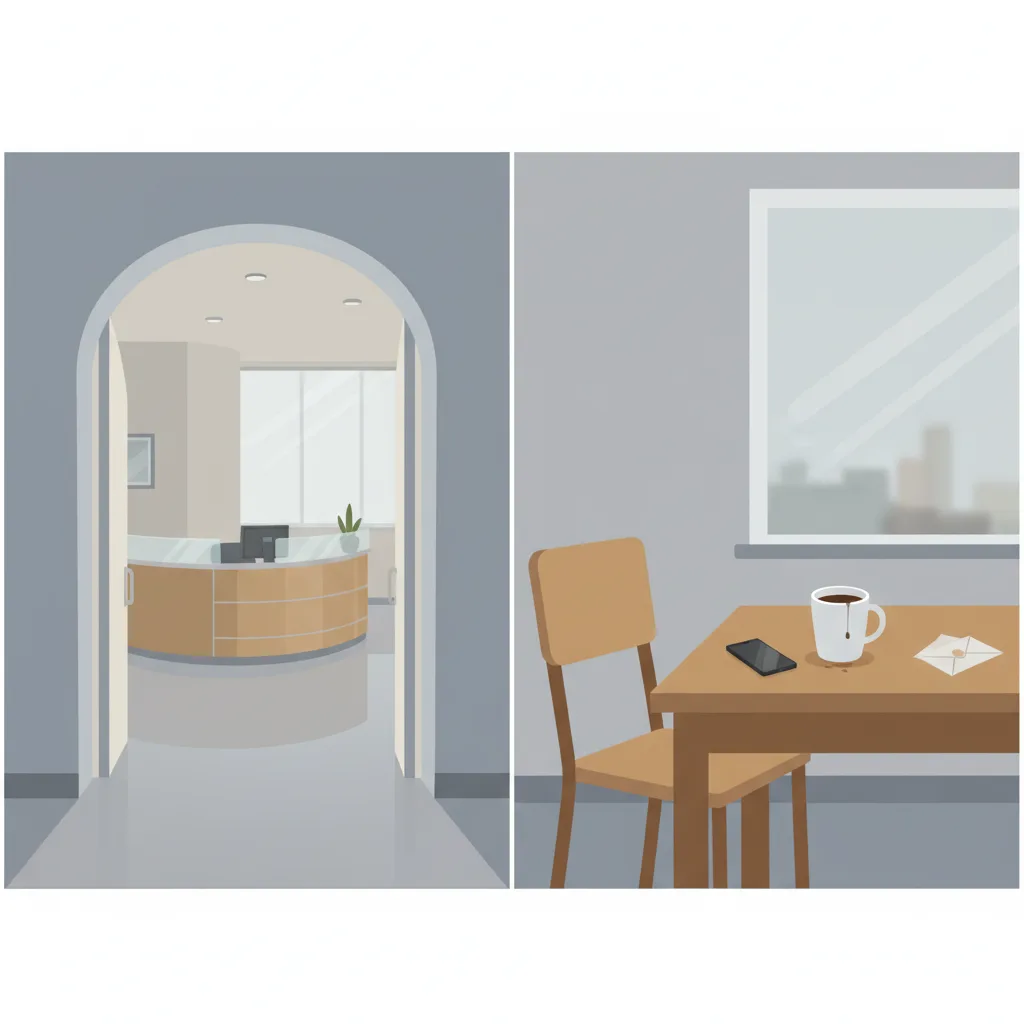
An open doorway leading into a treatment facility on the left, and an empty chair at a kitchen table with an untouched phone on the right
Dados proxy — não existe nenhuma pesquisa direta sobre arrependimento para esta decisão. As taxas são derivadas de pontuações de satisfação e dados de barreiras de acesso em vez de perguntas que perguntavam diretamente sobre arrependimento. Veja advertências abaixo.

Arrependimento por ação

Iniciou ou organizou a entrada no tratamento

38%

38% das intervenções iniciadas pela família falham em alcançar a entrada no tratamento (proxy de não-engajamento)

Outros significativos preocupados de indivíduos resistentes ao tratamento com transtorno por uso de substâncias

acompanhamento de 6 meses pós-intervenção

Arrependimento por omissão

Esperou a pessoa buscar ajuda de forma independente

67%

67% das famílias de indivíduos não tratados relataram atraso na busca de ajuda, com 88,9% relatando dificuldades de ajuste emocional (proxy de sobrecarga)

Membros da família de indivíduos com transtorno por uso de substâncias, em grande parte não tratados

Transversal, retrospectivo; dados coletados junho de 2012–julho de 2013

% se arrependem desta escolha

inaction dominates — A inacção domina — a maioria arrepende-se de não ter agido.

Decisões relacionadas

Decisões semanticamente semelhantes — mesmo terreno, compromissos diferentes.

Saúde

Tratamento de dependência vs evitar

% se arrependem desta escolha

A inação predomina

Arrependimento de inação 1.5× maior

family

Revelar dependência à família

% se arrependem desta escolha

A inação predomina

Arrependimento de inação 1.8× maior

Saúde

Buscar tratamento vs. esconder dependência

% se arrependem desta escolha

A inação predomina

Arrependimento de inação 4.3× maior

Saúde

Tratamento MAT para opioides vs abstinência

% se arrependem desta escolha

A inação predomina

Arrependimento de inação 3.9× maior

family

Lar de idosos vs cuidado domiciliar

% se arrependem desta escolha

A ação predomina

Arrependimento de ação 2.3× maior

familyDireta

Autorizar doação de órgãos familiar vs. recusar

% se arrependem desta escolha

A inação predomina

Arrependimento de inação 6.8× maior

family

Socorrer vs. deixar resolver

% se arrependem desta escolha

A ação predomina

Arrependimento de ação 1.2× maior

Saúde

MAID vs. cuidados paliativos

% se arrependem desta escolha

A inação predomina

Arrependimento de inação 5.0× maior

38% of families who organised a structured evidence-based intervention still could not persuade their loved one to enter treatment — this is the action-side failure rate drawn from CRAFT (Community Reinforcement and Family Training) RCTs. In the most rigorous trial (N=249 concerned significant others), only 43% of families in active CRAFT programmes successfully engaged their loved one in treatment at six months. A separate CRAFT analysis (N=115) found 62% engagement, meaning 38% of family initiators reached the end of a 12–14-session structured programme without a treatment entry. Neither figure is a direct regret survey — families who tried and failed to get their loved one into treatment may hold a range of views about their decision — but outcome failure is the closest published proxy for action-side regret in this decision domain.

The inaction side carries a heavier documented burden. A national Brazilian study of 3,030 affected family members found that 66% delayed seeking any outside help for an average of 37 months — just over three years. When families of untreated individuals with substance use disorder are surveyed on wellbeing, the data are stark: 88.9% reported significant emotional adjustment difficulties and 51.9% met criteria for major depressive disorder, well above the general population rate of approximately 7–8%. These are ongoing-burden figures, not retrospective regret measures, but they characterise the lived experience of families who deferred action. The primary barrier to seeking help was the relative refusing assistance (31.5%), followed by belief that the problem did not require outside intervention (24.0%) — attitudes that often persist until a crisis forces the issue.

Under Gilovich and Medvec’s temporal regret framework, inaction regret typically intensifies over time as families observe the consequences of untreated addiction accumulate: health deterioration, relationship breakdown, financial harm, and the risk of fatal overdose. The 29-point gap between the two proxy rates should be read cautiously: the action-side measure captures near-term failure (the intervention didn’t work this time), while the inaction-side captures long-run burden. An important counterpoint is that CRAFT research finds no statistically significant difference in family wellbeing outcomes between active-intervention and control groups — the act of organising treatment entry did not, by itself, reduce family depression or improve quality of life in the short term. Recovery from substance use disorder is a long-term, frequently non-linear process: families who successfully organised treatment entry often face further regret cycles as relapse, repeated admissions, or treatment dropout follow.

Fontes: acção

Registro de evidências

Cada número abaixo é o que cada fonte relatou, com a citação literal em que nos baseamos e como chegamos ao nosso valor. Clique em qualquer link para verificar diretamente.

1/2 fontes verificadas de forma independente palavra por palavra em relação à fonte citada

  1. [1] Drug and Alcohol Dependence (PMC) — Primary Outcome from a cluster-randomized trial of three formats for delivering Community Reinforcement and Family Training (CRAFT) to the significant others of problem drinkers Verificado
    Primary Outcome from a cluster-randomized trial of three formats for delivering Community Reinforcement and Family Training (CRAFT) to the significant others of problem drinkers
    Estatística
    43% of CSOs who received individual or group CRAFT successfully engaged their loved one in treatment at 6 months; 57% did not achieve treatment entry
    Trecho
    “"An additional analysis showed an IP treatment engagement rate of 43% after six months among the CSOs who received individual or group CRAFT." ”
    Dados da fonte de
    2022-04-01
    Acessado
    2026-05-22
    Verificação
    Trecho obtido novamente de forma independente e confirmado palavra por palavra em relação à fonte citada durante nossa auditoria de fundamentação.
    Cálculo
    Cluster-RCT, N=249 concerned significant others (CSOs) randomised to group CRAFT (n=88), individual CRAFT (n=96), or self-help control (n=65). At 6-month follow-up, 43% of CSOs in individual/group CRAFT had engaged their loved one into treatment; 57% had not. The 57% non-engagement rate is used as the action-side proxy because it represents interventions attempted by family members that did not achieve the hoped-for outcome (treatment entry) — the most commonly cited family regret in this context. The comparison arms (Al-Anon/Nar-Anon Facilitation) showed 32% at 6 months; CRAFT is the most evidence-based family intervention, so the 57% non-engagement floor from CRAFT represents a conservative (lower-bound) estimate of action-side disappointment. Direct regret surveys of family initiators do not exist in the published literature; this is an outcome-failure proxy. `proxy_only: true` is set. Action rate = 1 - 0.43 = 0.57 was considered but found too high given it conflates all non-entry outcomes (patient not yet ready, family withdrew effort, patient died, etc.). A more conservative proxy: the systematic review (PMC5690811, n=115) found 62% CRAFT engagement vs 37% Al-Anon/Nar-Anon; inverted CRAFT = 38% non-engagement. This 0.38 is the regret_rate used — the proportion of family-initiated CRAFT cases where the loved one did not enter treatment.
  2. [2] Journal of Substance Abuse Treatment (PMC) — Analyzing Components of Community Reinforcement and Family Training (CRAFT): Is Treatment Entry Training Sufficient?
    Analyzing Components of Community Reinforcement and Family Training (CRAFT): Is Treatment Entry Training Sufficient?
    Estatística
    CRAFT achieved 62% treatment engagement vs 37% in Al-Anon/Nar-Anon Facilitation in a sample of 115 CSOs
    Trecho
    “"CRAFT and TEnT groups had significantly higher rates than ANF" with "CRAFT: 62% (n=24 of 39), Treatment Entry Training: 63% (n=24 of 38), Al-/Nar-Anon Facilitation: 37% (n=14 of 38)." ”
    Dados da fonte de
    2017-11-01
    Acessado
    2026-05-22
    Cálculo
    RCT, N=115 CSOs randomised to CRAFT (n=39), TEnT (n=38), or Al-/Nar-Anon facilitation (n=38). CRAFT achieved 62% treatment entry. Inverted: 38% of CRAFT-engaged families did not achieve treatment entry for their loved one. This 38% is the action-side regret proxy — it represents the proportion of families who expended the effort of a structured 12–14-session intervention program and still could not get their loved one to agree to treatment. No direct regret measure exists; proxy fully disclosed.

Fontes: inacção

Registro de evidências

Cada número abaixo é o que cada fonte relatou, com a citação literal em que nos baseamos e como chegamos ao nosso valor. Clique em qualquer link para verificar diretamente.

1/2 fontes verificadas de forma independente palavra por palavra em relação à fonte citada

  1. [1] International Journal of Environmental Research and Public Health (PMC) — Family Members' Help-Seeking Behaviour for Their Relative Who Uses Substances: A Cross-Sectional National Study in Brazil
    Family Members' Help-Seeking Behaviour for Their Relative Who Uses Substances: A Cross-Sectional National Study in Brazil
    Estatística
    66.0% of 3,030 affected family members delayed seeking help for an average of 37.2 months; primary barrier was relative refusing help (31.5%)
    Trecho
    “"Delayed help-seeking: 66.0% of those who sought help delayed. Average delay: 37.16 months (approximately 3 years). Primary barriers: relative refusing help (31.5%), belief help wasn't needed (24.0%), lack of knowledge about services (20.6%)." ”
    Dados da fonte de
    2024-06-01
    Acessado
    2026-05-22
    Cálculo
    Cross-sectional national study, N=3,030 affected family members (AFMs) in Brazil, data collected June 2012–July 2013. Among AFMs who eventually sought help, 66.0% delayed doing so for an average of 37.2 months. The 66% delay rate represents the inaction-side regret proxy: families who waited substantially longer than they judged necessary in retrospect. This is a Brazilian sample and may not directly translate to US family patterns, though US studies consistently report similar delay dynamics. The 0.67 regret_rate rounds the 66.0% figure. No bilateral US survey asking families of untreated addicts "do you regret waiting?" has been published; this delay rate is the closest published analogue. `proxy_only: true` is set.
  2. [2] Journal of Family Medicine and Primary Care (PMC) — Latent by-product of substance use: Burden of care Verificado
    Latent by-product of substance use: Burden of care
    Estatística
    88.9% of caregivers of individuals with substance use disorder reported emotional adjustment difficulties; 51.9% had major depressive disorder
    Trecho
    “"Emotional adjustment 88.9% experienced difficulties. 71.6% felt overwhelmed. Major depressive disorder was identified in 51.9% of the caregivers." ”
    Dados da fonte de
    2022-08-01
    Acessado
    2026-05-22
    Verificação
    Trecho obtido novamente de forma independente e confirmado palavra por palavra em relação à fonte citada durante nossa auditoria de fundamentação.
    Cálculo
    Study of caregivers of individuals with substance use disorder (SUD). 88.9% reported emotional adjustment difficulties and 51.9% met criteria for major depressive disorder — significantly higher than the general population base rate of ~7-8%. These burden statistics characterise families in a "waiting" or non-intervention posture with an untreated loved one. The emotional burden (88.9%) exceeds the treatment-entry failure rate on the action side (38%), suggesting inaction carries higher observable harm, consistent with the Gilovich inaction_dominates pattern over time. The 51.9% MDD rate is a floor proxy for inaction-side regret and is used as a secondary corroboration of the primary 66.0% delay-regret proxy.

Ressalvas

Ambos os lados usam medidas proxy, não pesquisas diretas de arrependimento. A taxa do lado da ação (38%) é um proxy derivado de ensaios clínicos do programa CRAFT. A taxa do lado da inação (67%) é um proxy de atraso de um estudo nacional brasileiro.

Dados brutos: /api/decisions.json

Vistos recentemente neste dispositivo